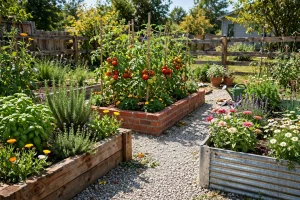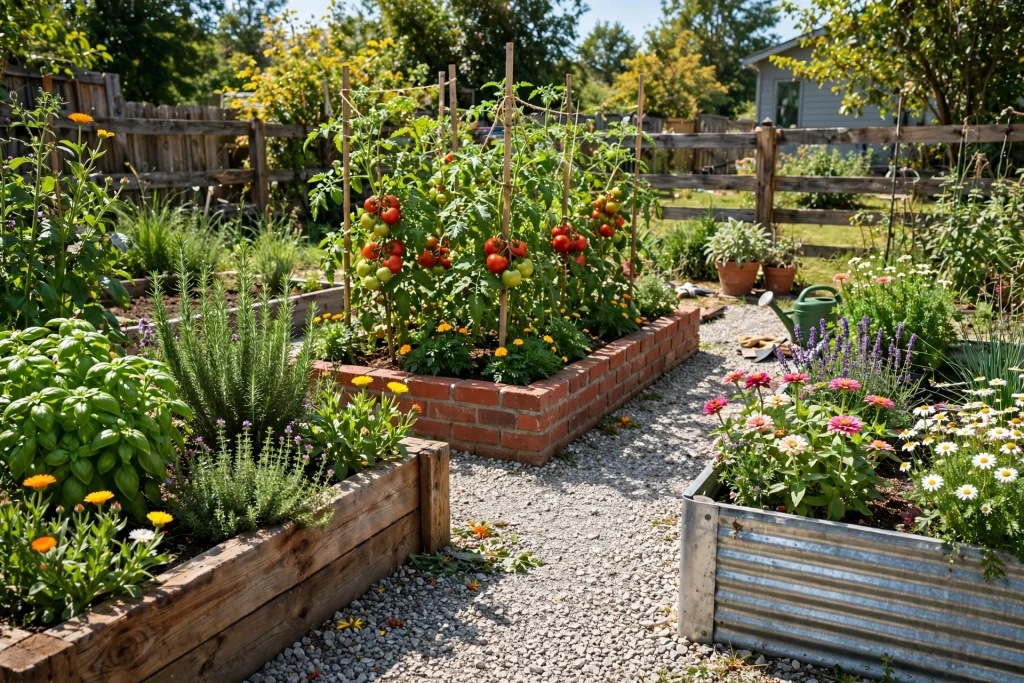
A raised garden bed can cost a small fortune if you buy it ready made, or it can cost less than a weekly shop if you build it from the right stuff. The difference is rarely the wood. It is knowing which shortcuts actually work, which materials last, and which ideas look good in a real garden instead of only in a photo.
The ideas below all start from that question: how do you get a bed that grows real food, looks tidy from the kitchen window, and does not eat your whole garden budget? Every one of them has been chosen because the materials are easy to find, the build is honest work you can finish in a weekend, and the result is something you will be glad to look at all summer. Pick the one that fits your space, your scrap pile, and your patience, and start with that.
Too Long; Didn’t Read
Raised garden beds work best when they are built from cheap, long lasting materials, filled in layers, and placed where they get at least six hours of sun. Simple pine boxes, cinder blocks, and corrugated metal are the cheapest reliable builds, and filling a deep bed with logs, leaves, and compost underneath the topsoil saves more money than any other single trick. If you are searching for raised garden bed ideas, diy raised garden bed plans, or cheap ways to start a vegetable garden, these 22 ideas cover small yards, slopes, fences, and balconies, all with practical costs, build times, and planting advice you can use this weekend.
What's Inside This Guide
ToggleThe Bed That Started With a Broken Fence
Three summers ago a storm took down half the fence at the back of our garden, and the fence boards were too weathered to put back up. I was about to pay for a skip when my neighbour pointed out that the boards were still solid where they had not rotted at the ends. We cut off the bad ends, screwed the good lengths into a simple rectangle, and filled it with soil from a bag sale at the garden centre. That bed cost me nothing but screws and an afternoon, and it grew the best tomatoes I have ever had.
The next spring I built two more beds the same way, and then a neighbour asked me to help with hers, using old bricks from a demolished wall. That is when I learned the lesson that runs through this whole list: a raised bed does not need to be bought, it needs to be built from what is already around you. The beds that look best are rarely the most expensive ones. They are the ones that fit the garden, use honest materials, and get planted the same weekend they are built.
The 3 Things That Make Raised Garden Beds Work
Before you pick a design, these three things decide almost everything.
1. Pick the spot before the materials.
A bed in full sun with a hose nearby will outgrow a fancy bed stuck in the shade every single time. Walk your garden at midday, note where the sun actually falls, and put the bed there, even if it is not the tidiest corner. You can always tidy the edges later, but you cannot move the sun.
2. Spend on soil, save on the frame.
The frame only holds the soil in place, but the soil is what grows the food. Cheap untreated pine, reclaimed boards, or dry stacked blocks are fine for the frame, while the money you save should go into good compost and topsoil. A plain box full of rich soil will beat a beautiful cedar bed full of poor soil in the first season.
3. Build it the size you can reach.
A bed wider than about four feet means you will step on the soil to reach the middle, and stepped on soil grows nothing well. Keep beds narrow enough to reach the centre from either side, leave paths wide enough for a wheelbarrow, and make the height comfortable for your back. A bed you can tend without kneeling in mud is a bed you will actually use.
Keep those three in mind and every idea below will make sense.
1. The Simple Pine Plank Box
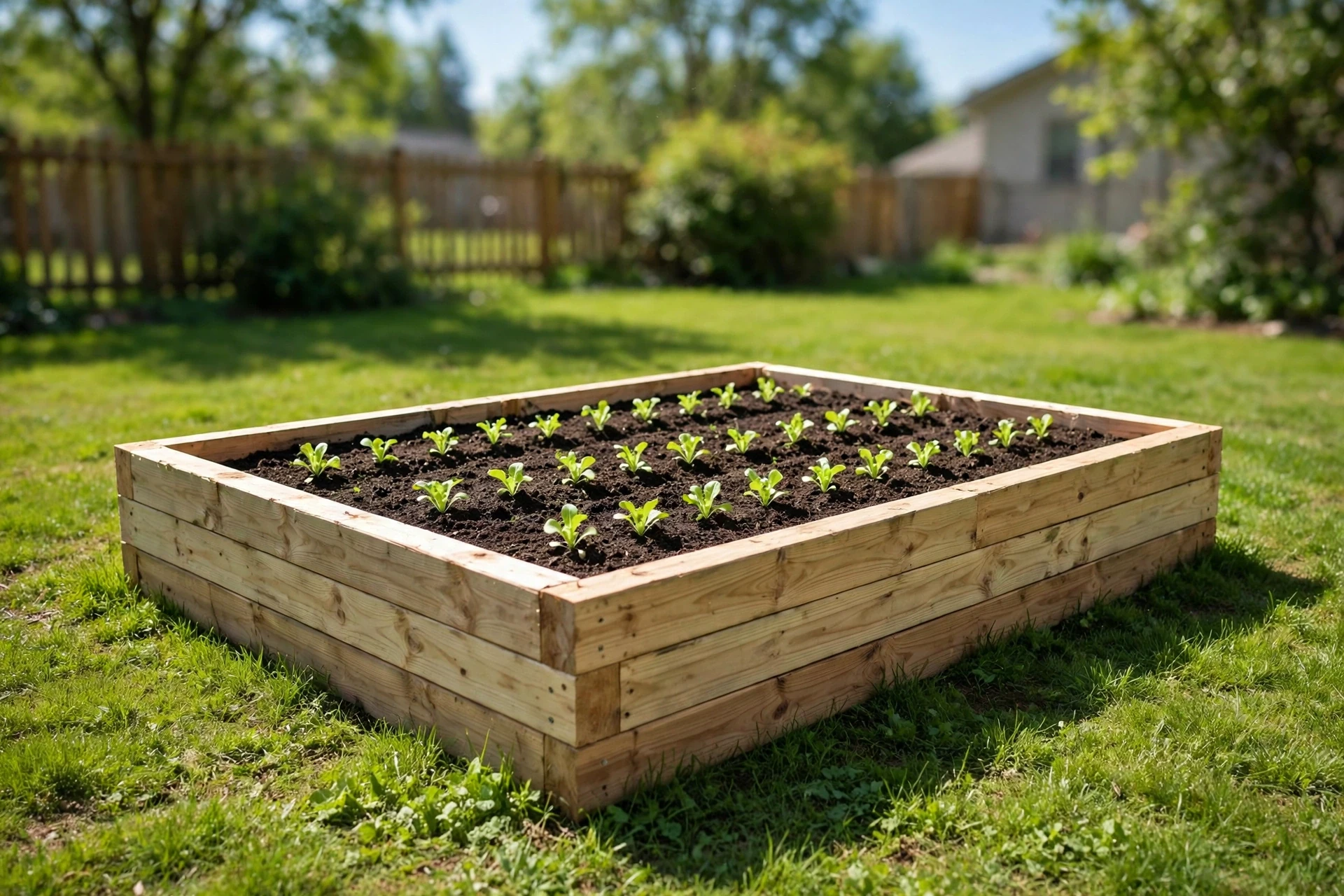
This is the bed most people should start with. Four pine planks, four short corner posts, and a box of screws are all it takes, and the whole thing goes together in under an hour with a drill and a saw. Pine is the cheapest timber at most garden centres, it cuts easily, and a single bed costs less than a bag of compost to build. Keep the bed about four feet wide and eight feet long, so you can reach the middle from both sides without stepping in.
The trick to making pine last is to keep it dry where it meets the ground. Set the box on a level patch, line the inside with a single layer of landscape fabric to slow soil contact, and leave a small gap under the bottom plank so water can drain instead of pooling. Paint the outside with a garden safe wood stain if you want it to look tidy, and the box will give you three or four good seasons before any board needs replacing.
Try this: Build two boxes side by side with a two foot path between them, so you can work both beds without ever stepping on the soil.
You may also like: 21 Front Yard Vegetable Gardens That Beat a Boring Lawn
2. The Dry Stacked Cinder Block Bed
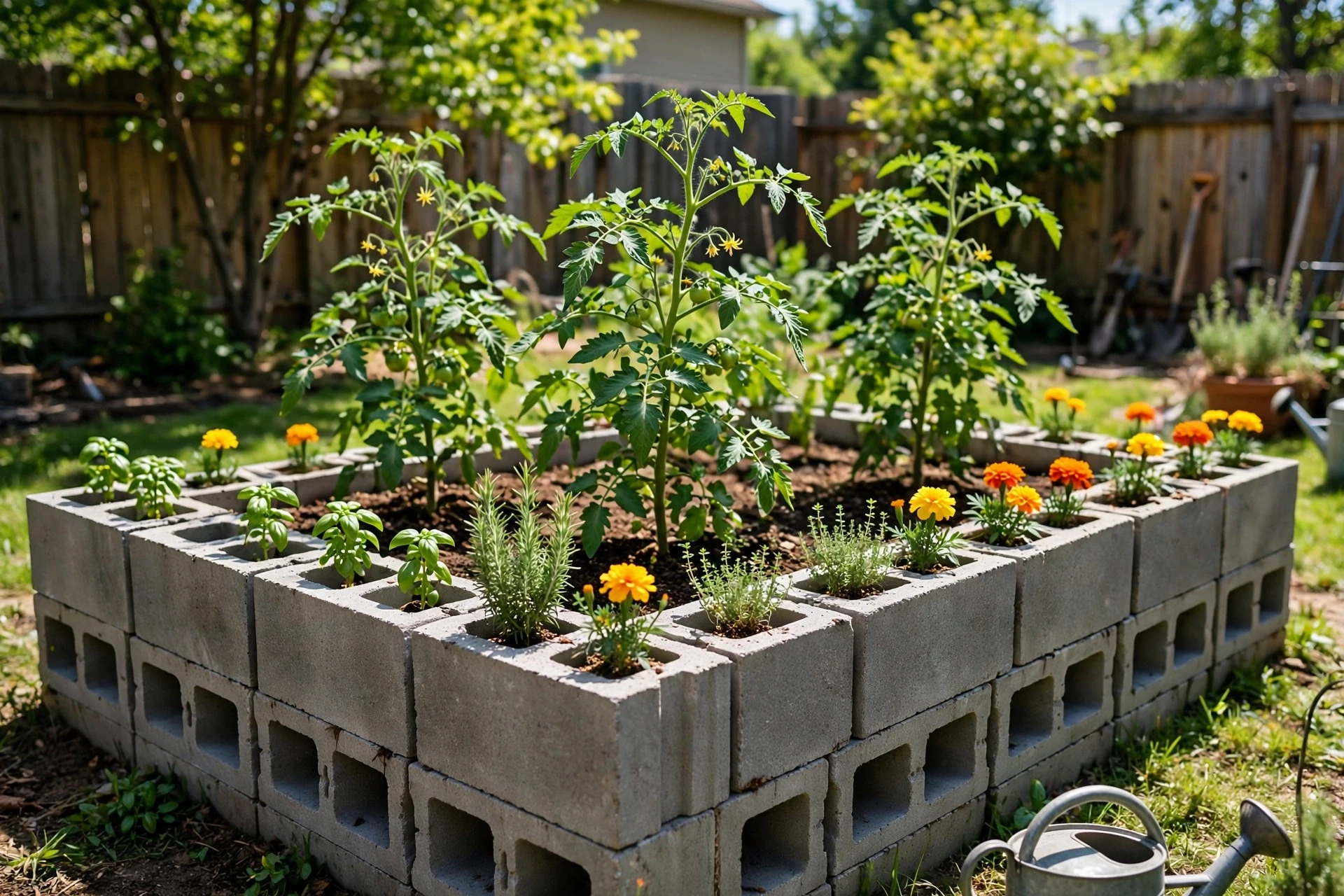
Cinder blocks are one of the cheapest ways to build a bed that will outlast the house. Stack them two high with no mortar at all, and the weight of the blocks plus the soil inside holds everything in place. A bed this size costs little more than the blocks themselves, and if you ever want to move it, you just lift the blocks apart and restack them somewhere else.
The holes in the blocks are a bonus, not a waste. Fill them with soil and plant herbs, strawberries, or marigolds in each pocket, so the edge of the bed becomes extra growing space instead of dead weight. Cap the top row with flat paving slabs if you want a neat seat for weeding, and the bed looks far smarter than its price suggests.
Try this: Plant a different herb in each block hole and label them with small wooden sticks, so the edge works like a herb garden of its own.
You may also like: 21 Backyard Landscaping Ideas That Change Your Outdoor Space
3. The Reclaimed Pallet Wood Bed
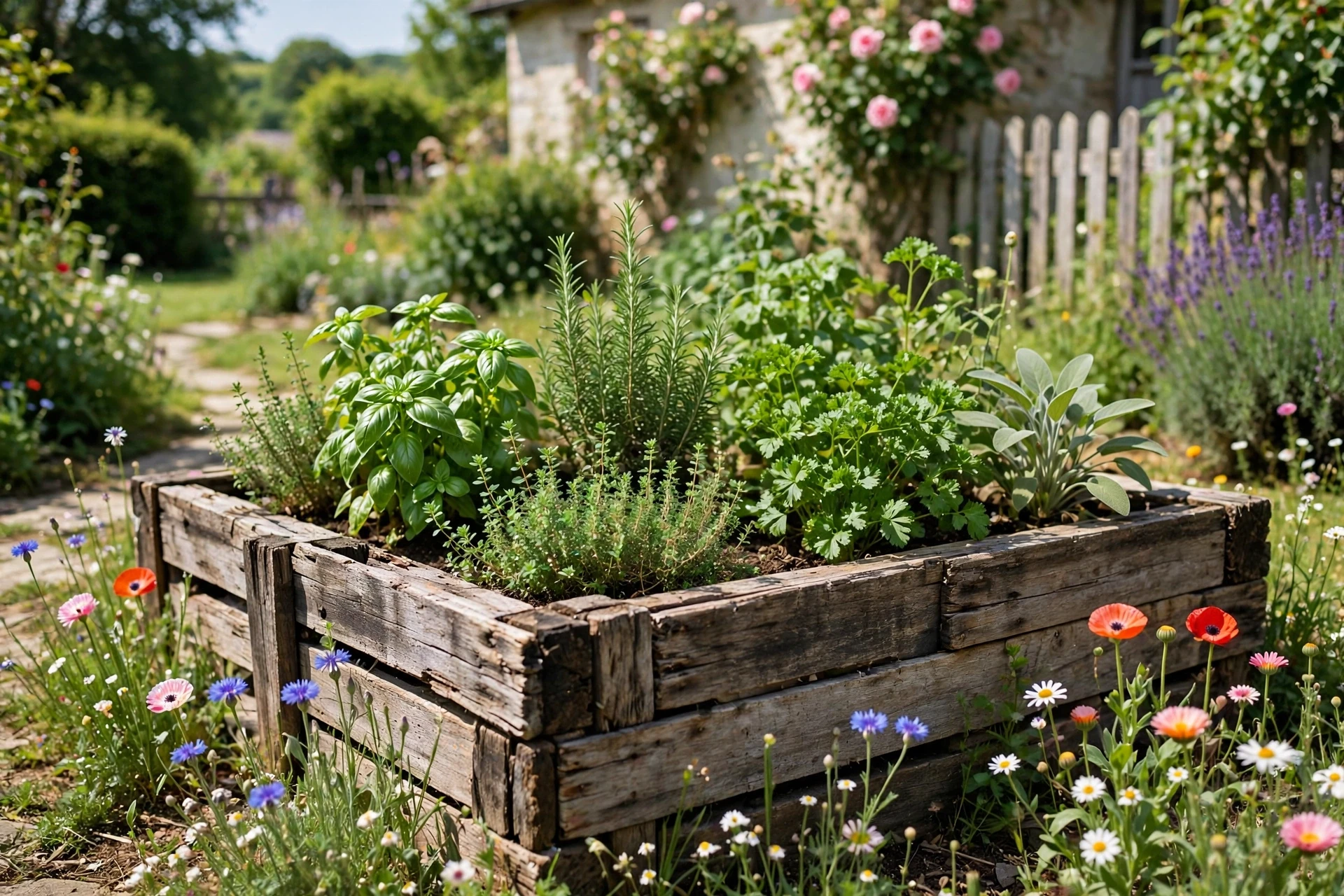
Old pallets are free in most towns if you ask at garden centres, tile shops, and building sites, and the wood is perfect for a rustic raised bed. Pull the planks apart carefully, knock out the nails, and screw the good lengths into a low box. The weathered grey wood looks like it has always been in the garden, and the whole bed can cost nothing but screws and an afternoon of work.
Check the pallet stamp before you use it, and only take pallets marked HT, which means heat treated, never ones marked MB, which means chemically treated. Sand the worst splinters off the top edge so it is safe to lean on, and line the inside with landscape fabric to keep soil from washing through the gaps between planks.
Try this: Use the leftover short pallet pieces to make a small cold frame lid for the same bed, so you can start seedlings weeks earlier.
You may also like: 21 Front Yard Landscaping Ideas for Instant Curb Appeal
4. The Galvanized Stock Tank Bed
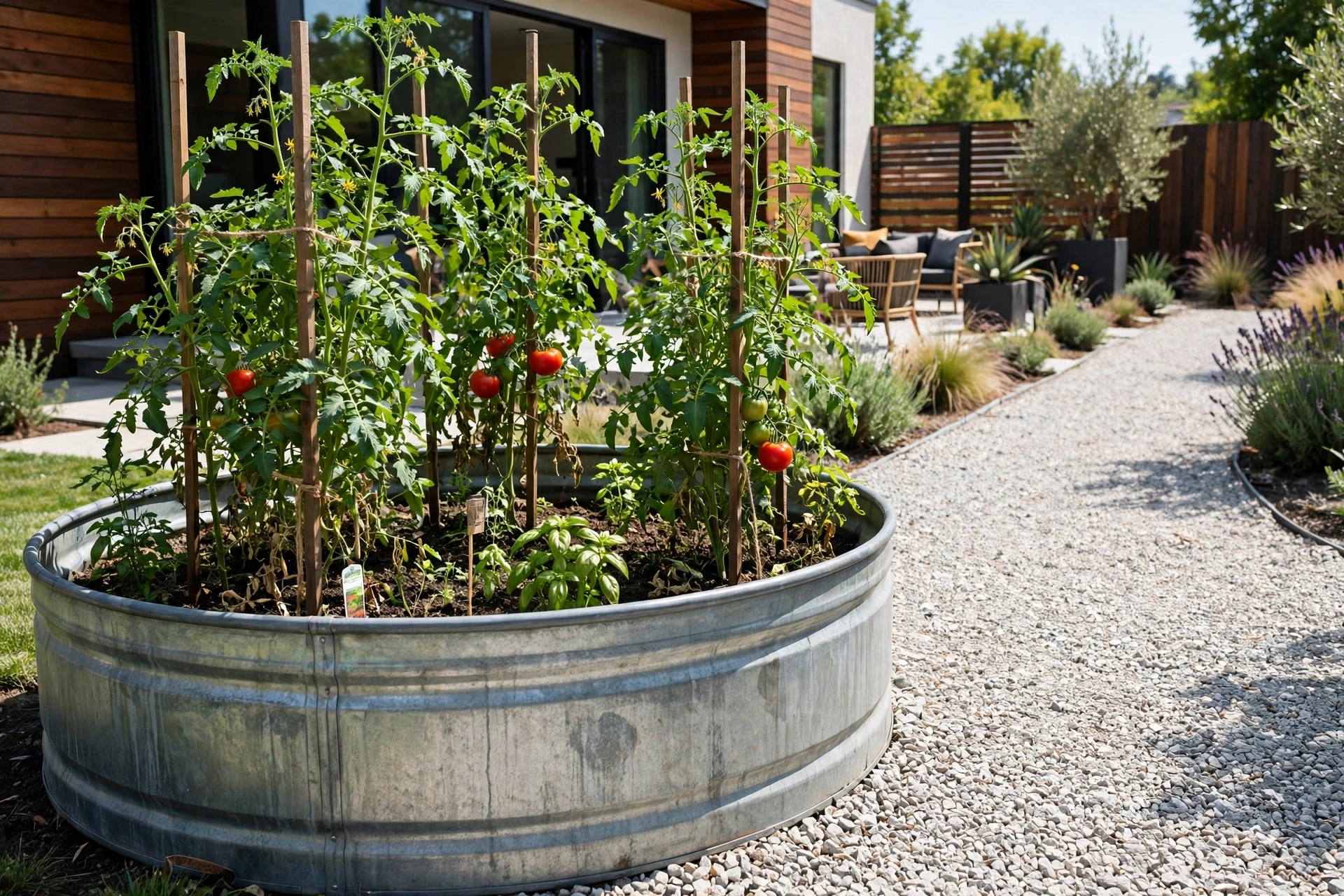
A galvanized stock tank is a ready made raised bed with no building at all. Drill a dozen drainage holes in the bottom, set it level on the ground, and fill it. The tall sides mean almost no bending, the metal lasts for decades, and the round or oval shape looks smart in a modern garden where a wooden box would look out of place.
Stock tanks are not the cheapest option if you buy new, so look for used ones at farm sales, auction sites, and classified ads, where a dented tank sells for a fraction of the shop price. A dent does not matter once it is full of soil. Paint the outside with a rust proof paint in a soft green or charcoal if you want it to blend in, and plant tall tomatoes in the centre where the depth suits them best.
Try this: Put the tank on a slight slope with the drain holes at the low end, so heavy rain never leaves the roots sitting in water.
You may also like: 22 Outdoor Patio Trends 2026 for Resort Style Living at Home
5. The Corrugated Metal and Timber Frame Bed
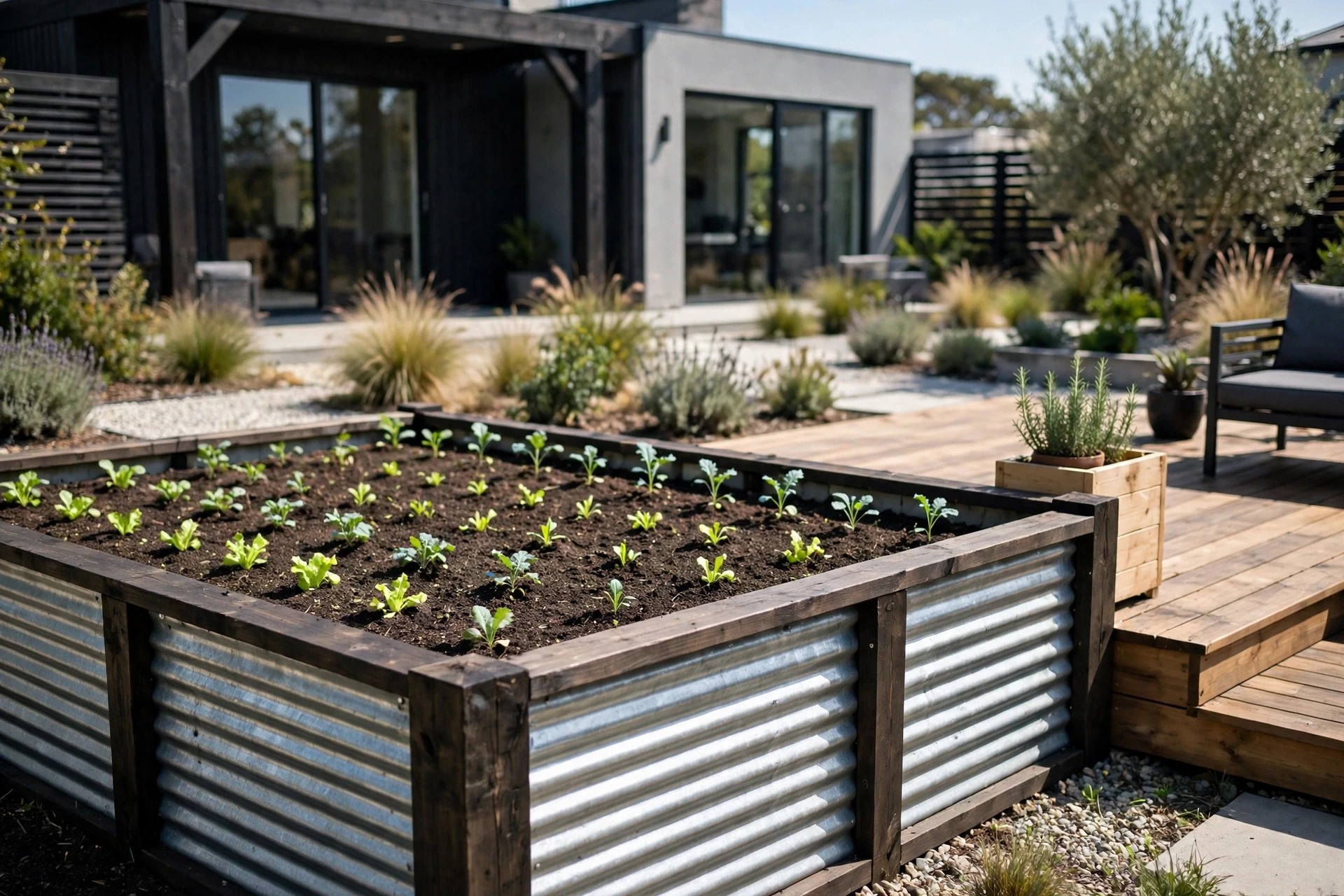
Corrugated metal sheets with a simple timber frame give you the look of an expensive garden bed for the price of offcuts. The metal panels do the heavy work of holding the soil, the timber posts at the corners hold the panels straight, and the whole bed goes up in an afternoon. It suits a modern garden, it never rots, and it reflects a little extra warmth onto the soil in spring, which helps seedlings get going.
Ask at roofing suppliers and builders merchants for offcut sheets, which they often sell cheap or give away. Cut the sheets to height with tin snips, fold the sharp top edge over a timber rail so nobody catches a hand on it, and screw the panels to the corner posts from the inside so the fixings do not show from the path.
Try this: Use the same metal and timber to build a matching compost bin beside the bed, so the whole corner of the garden looks planned.
You may also like: 21 European Patio Ideas That Feel Like Italy and France
6. The Salvaged Brick Bed
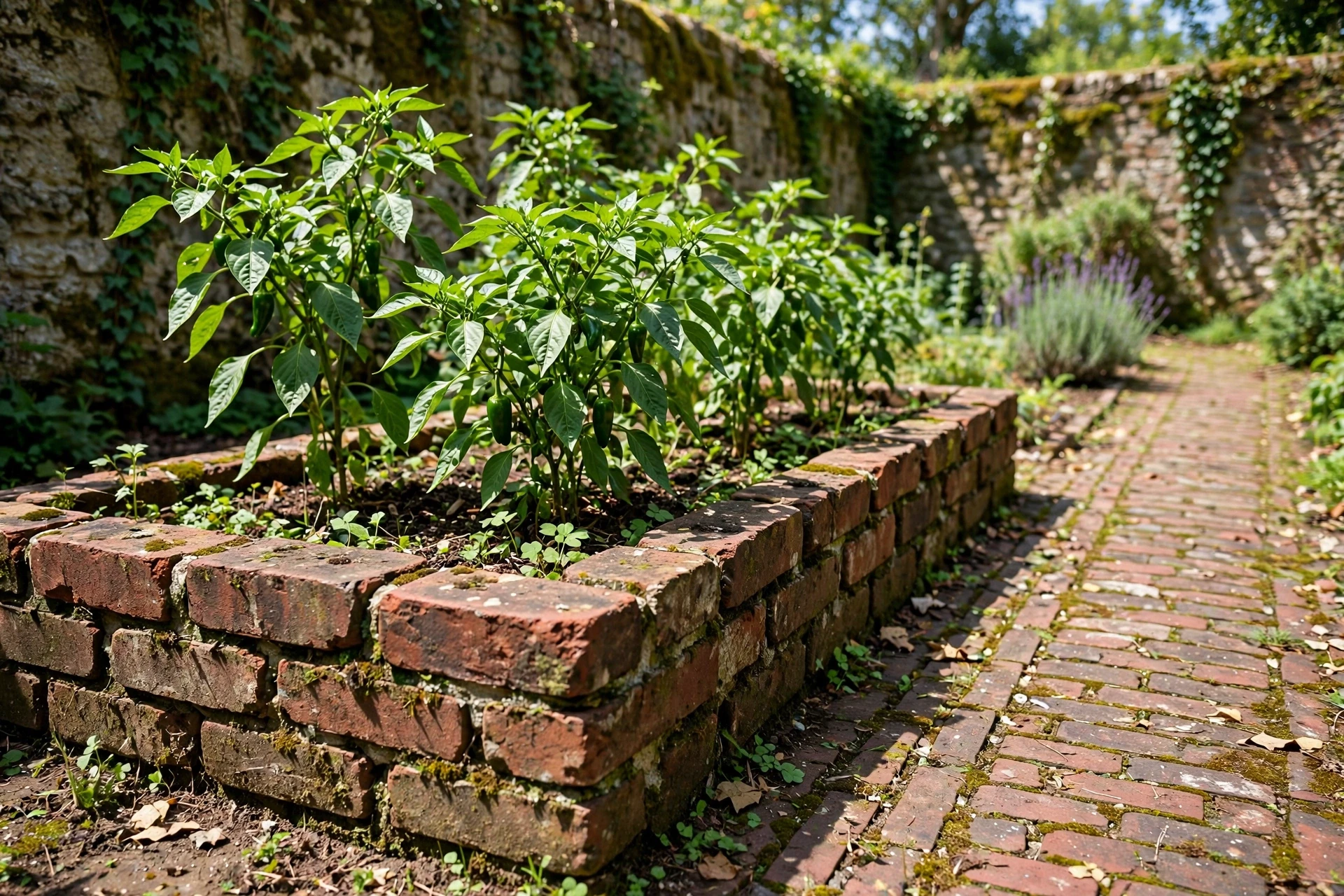
Old bricks from a demolished wall, a taken down chimney, or a neighbour’s patio make a raised bed that looks like it has been there for fifty years. Lay them in two or three courses with no mortar for a quick bed, or set them properly in mortar if you want it to last forever. Brick holds the heat of the day and gives it back at night, which peppers and chillies love.
The cost is usually nothing but collection and a bit of muscle, and mismatched bricks look better than perfect new ones because the colour variation reads as character. Lay the bottom course on a shallow trench of compacted gravel so the wall stays level, and keep the inside face straight so the soil presses evenly against it. A brick bed is heavy work to build, but you will never build it twice.
Try this: Plant trailing nasturtiums along the top edge, so the flowers spill over the brick and soften the whole wall.
You may also like: 21 Front Yard Vegetable Gardens That Beat a Boring Lawn
7. The Log Edged Rustic Bed
If you have a tree that came down in a storm, the logs are already a raised bed waiting to happen. Lay thick logs on their sides in a rectangle, pin them together with wooden stakes, and fill the middle with soil. The bark and the moss that grows on it make the bed look like part of the garden rather than something bought, and the logs slowly rot down and feed the soil over the years.
Choose logs at least six inches thick so they do not roll, and use hardwood like oak or ash rather than soft pine, which rots too fast. Pack soil firmly against the inside of the logs so there are no gaps for slugs to hide in, and plant shade loving herbs like mint and parsley at the damp ends where the logs hold moisture longest.
Try this: Tuck small logs upright at the corners as posts, so the rectangle holds its shape even as the side logs settle.
You may also like: 21 Backyard Landscaping Ideas That Change Your Outdoor Space

8. The No Build Straw Bale Bed
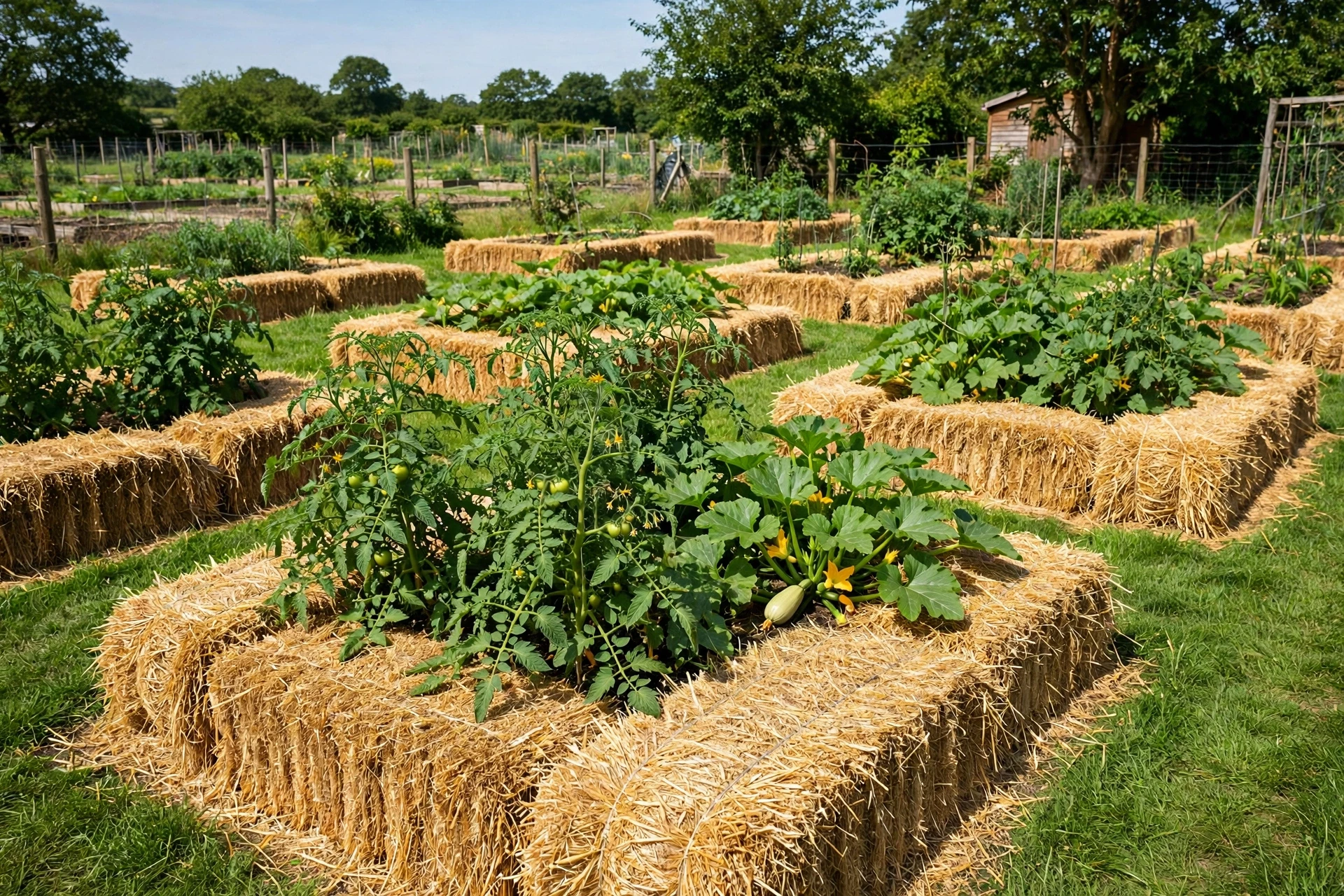
A straw bale bed needs no tools at all. Lay two or three straw bales side by side, water them well for ten days so they start to break down inside, then plant straight into the top of the bales. The bale is the bed, the soil, and the compost all at once, and by the end of the season it has rotted down into rich mulch you can spread on the rest of the garden.
This is the cheapest raised bed there is, and the best one for a first try, because there is nothing to build and nothing to throw away. Water the bales every day during the conditioning week, and push a handful of compost into each planting hole so the roots have something to start in. Tomatoes, squash, and cucumbers do best in bales because they love the warmth the rotting straw gives off.
Try this: Condition the bales with a watering can of diluted liquid seaweed each day, and the inside will heat up faster and be ready to plant sooner.
You may also like: 21 Front Yard Landscaping Ideas for Instant Curb Appeal
9. The Old Bathtub Bed
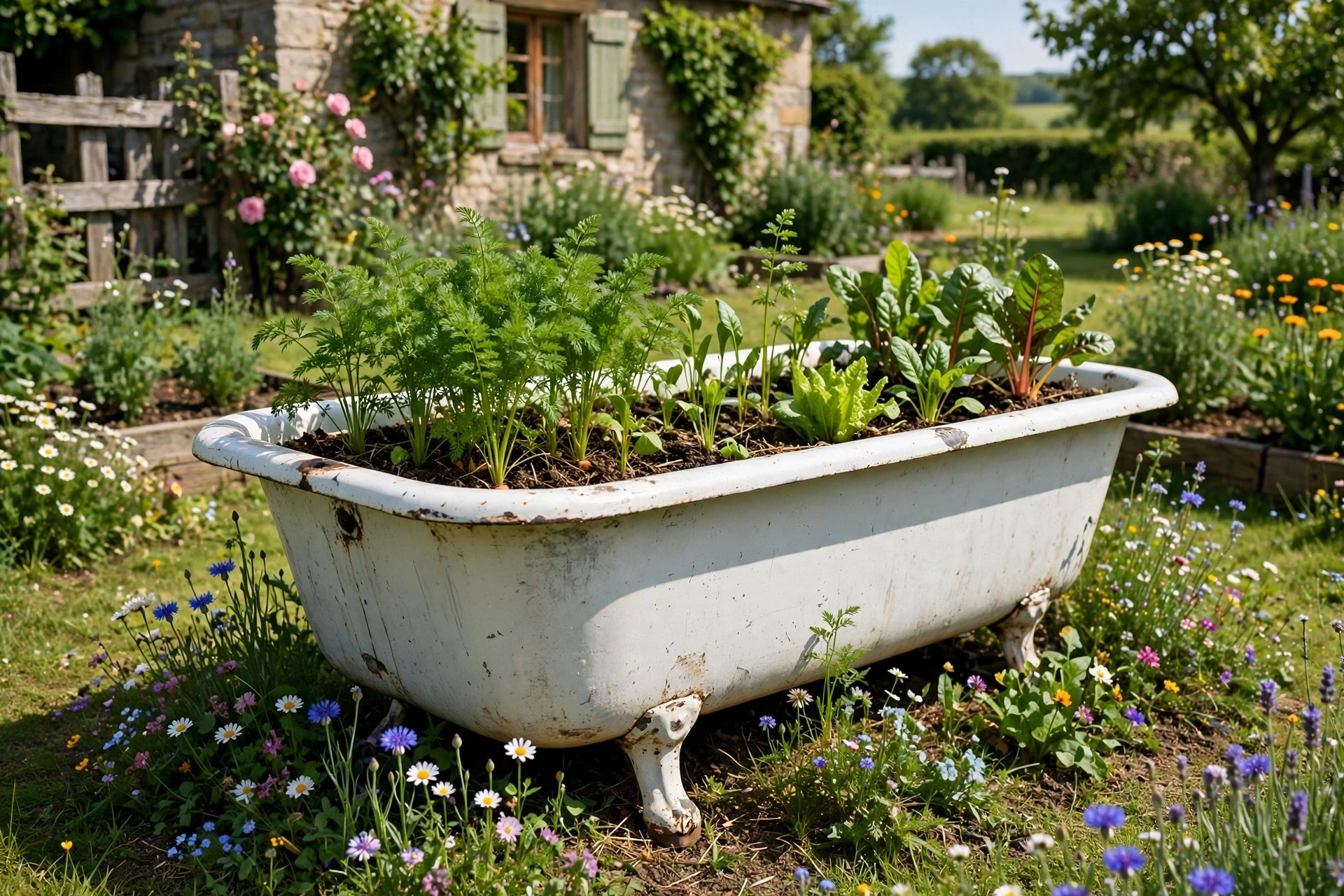
An old cast iron or enamel bathtub makes a deep, sturdy raised bed with a drain already built in. Set it on bricks so the plug hole can drain freely, fill the bottom with coarse gravel, and plant it up. The depth suits root vegetables like carrots and parsnips, and the white enamel looks charming against green leaves in a cottage garden.
Check local salvage yards, bathroom fitters, and online classifieds, where old baths are often free if you collect them. Scrub the inside well before planting, and if the enamel is chipped, line the tub with landscape fabric so no flakes mix into the soil. Paint the outside a soft sage green or leave it white, and it becomes a feature instead of a scrap.
Try this: Plant the bath with cut flowers instead of vegetables for one season, and it becomes the prettiest spot in the whole garden.
You may also like: 22 Outdoor Patio Trends 2026 for Resort Style Living at Home
10. The U Shaped Keyhole Bed
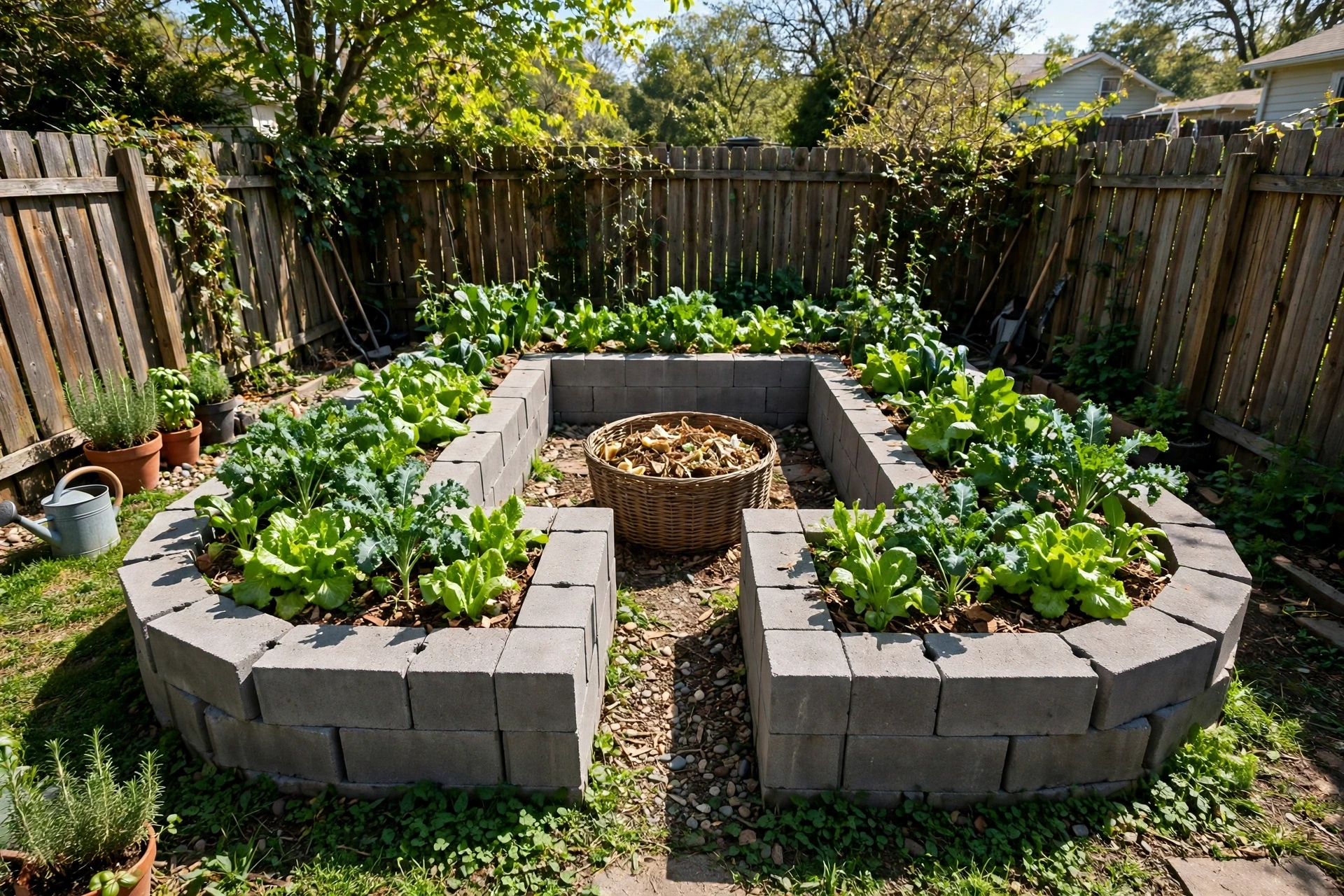
A U shaped bed gives you a huge growing area with a path built into the middle, so you can reach every plant without stepping on the soil. Build it from blocks, bricks, or timber in a squared U, leave a gap in the centre wide enough to stand in, and put a compost basket in the middle of the U so kitchen scraps feed the bed as they break down. It is the smartest shape for a small garden because it grows more in less space.
The keyhole shape works best when the arms of the U are no more than two feet deep, so you can reach across them from the centre path. Fill the middle basket with grass clippings and vegetable peelings, water it when you water the bed, and the nutrients wash out into the soil around it all season long.
Try this: Stand in the centre path to harvest, and you can pick from three sides without moving your feet.
You may also like: 21 European Patio Ideas That Feel Like Italy and France
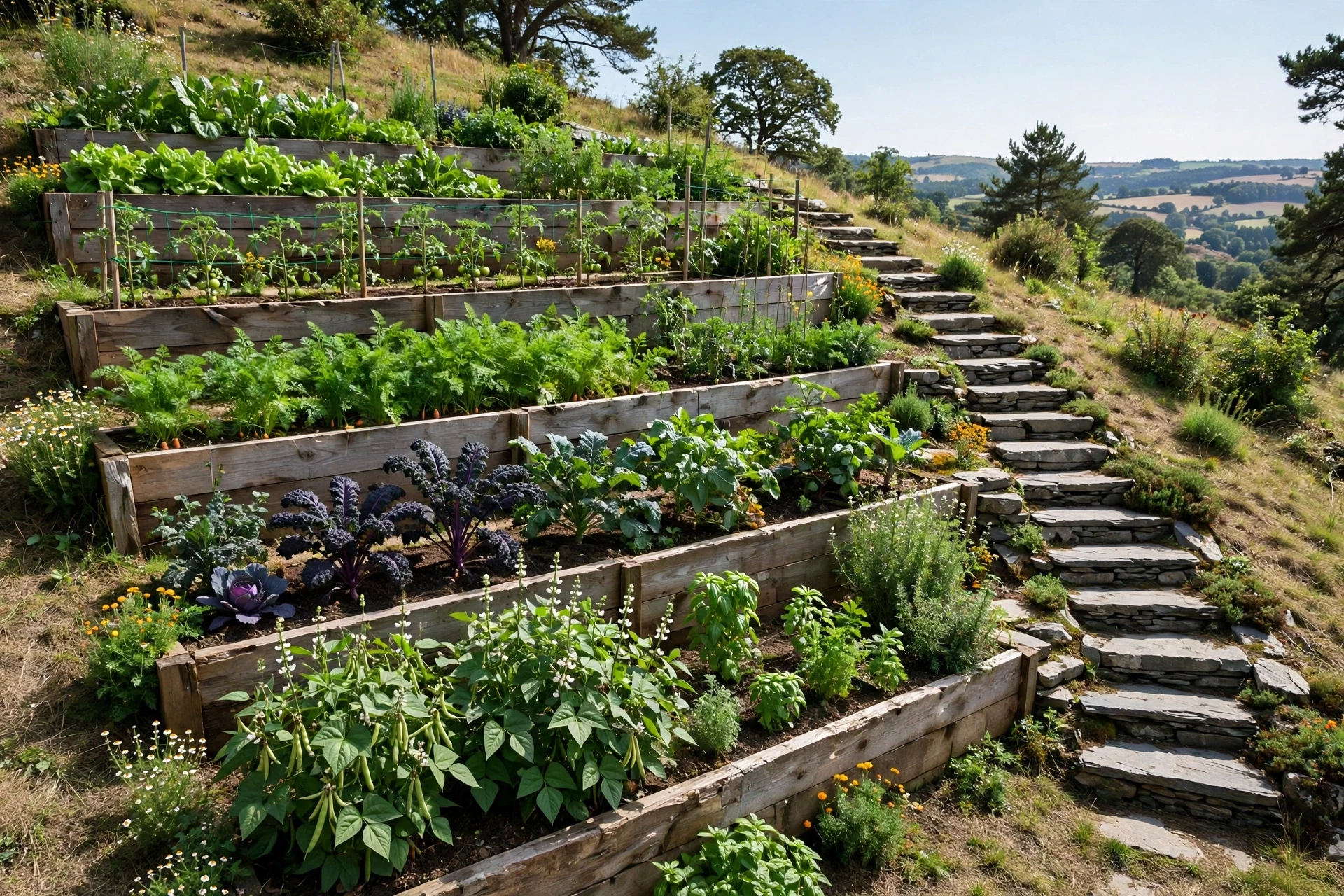
11. The Tiered Bed on a Slope
A sloping garden wastes water and soil, because both run downhill every time it rains. Tiered beds fix that by turning the slope into steps. Build two or three low timber boxes, one above the other, each level with the ground it sits on, and the slope becomes flat growing space instead of a problem. The steps look beautiful from the house, and each tier catches the water that runs off the one above it.
Build the lowest tier first and work uphill, so each box sits on solid ground and the soil you dig from the upper tier fills the lower one. Keep each tier no more than a foot high, so the steps stay easy to climb, and plant the sun lovers on the top tier where they get the most light, with leafy greens on the lower tiers where it stays cooler and damper.
Try this: Put a narrow gravel path along the side of the tiers, so you can reach every level with a wheelbarrow without climbing the beds.
You may also like: 21 Backyard Landscaping Ideas That Change Your Outdoor Space
12. The Narrow Bed Along the Fence
The strip of ground along a fence is usually wasted, but it is one of the best places for a raised bed. Build a bed just two feet wide and as long as the fence, and you turn dead space into a long growing strip that gets sun for most of the day. It suits climbing beans, peas, and cucumbers, which can grow straight up the fence behind them and need almost no floor space at all.
Fix a simple trellis or a few horizontal wires to the fence before you fill the bed, so the climbers have something to hold from day one. Leave a gap of a few inches between the bed and the fence boards so air can move and the wood does not stay damp. This bed costs very little because it only needs three sides of timber, with the fence doing the work of the fourth.
Try this: Grow peas in spring and beans in summer on the same fence wires, so the one bed feeds you from April to September.
You may also like: 21 Front Yard Vegetable Gardens That Beat a Boring Lawn

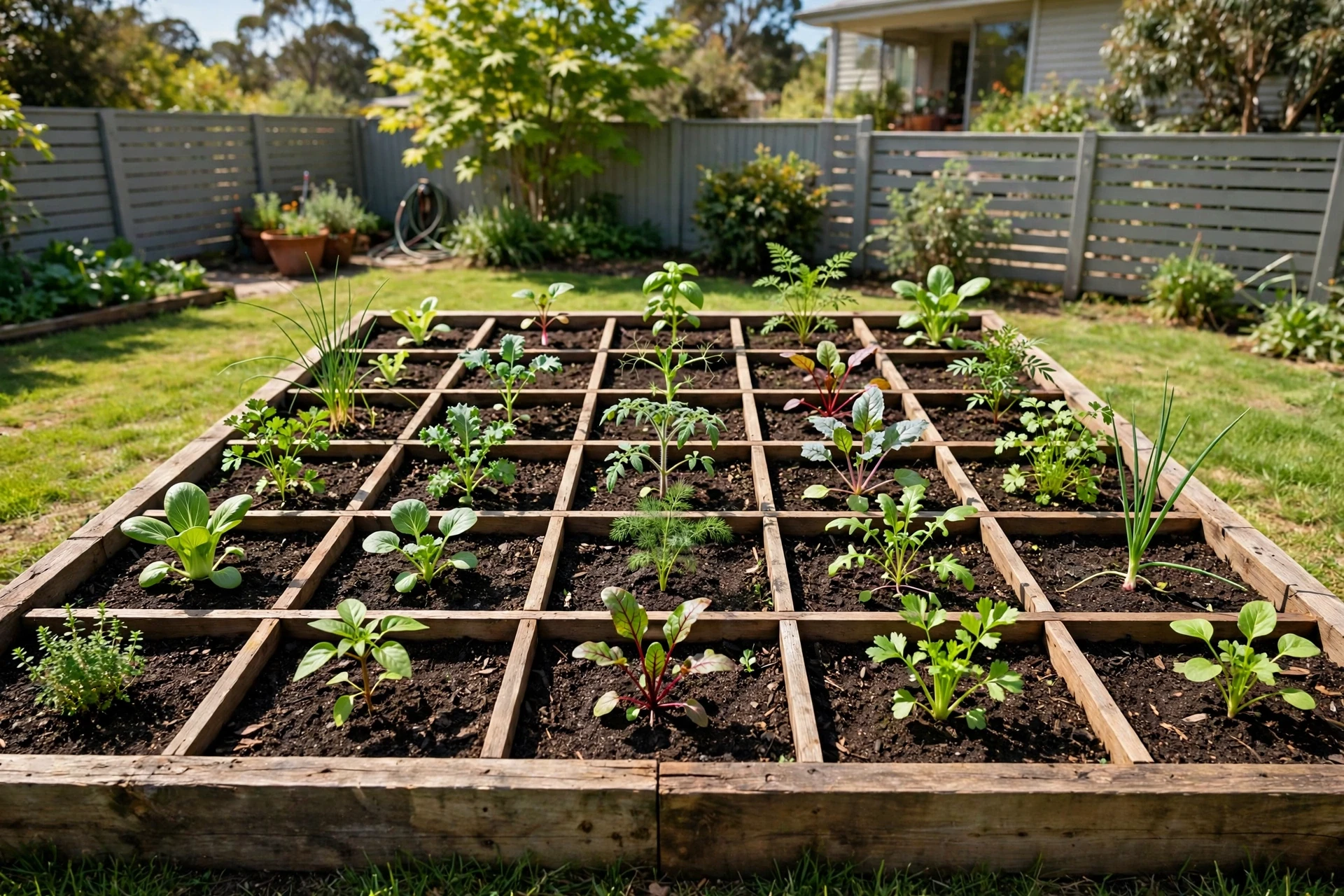
13. The Square Foot Grid Bed
A square foot bed takes the guesswork out of planting. Build a standard four foot square box, then lay a simple grid of thin battens across the top to divide it into sixteen one foot squares. Each square gets one kind of plant, with the number of plants per square decided by how big they grow, so one tomato takes a whole square and sixteen carrots share one.
This method saves money because you never buy more seed than you need, and you never waste space on rows of empty soil between plants. It is also the easiest bed for a beginner, because the grid tells you exactly where everything goes. Make the grid from thin strips of wood that lift off for weeding, and mark the squares with chalk on the timber so you can change the plan each season.
Try this: Draw the grid on paper first and plan one square of salad leaves for every two squares of main crops, so you always have something to pick.
You may also like: 21 Front Yard Landscaping Ideas for Instant Curb Appeal
14. The Hoop House Covered Bed
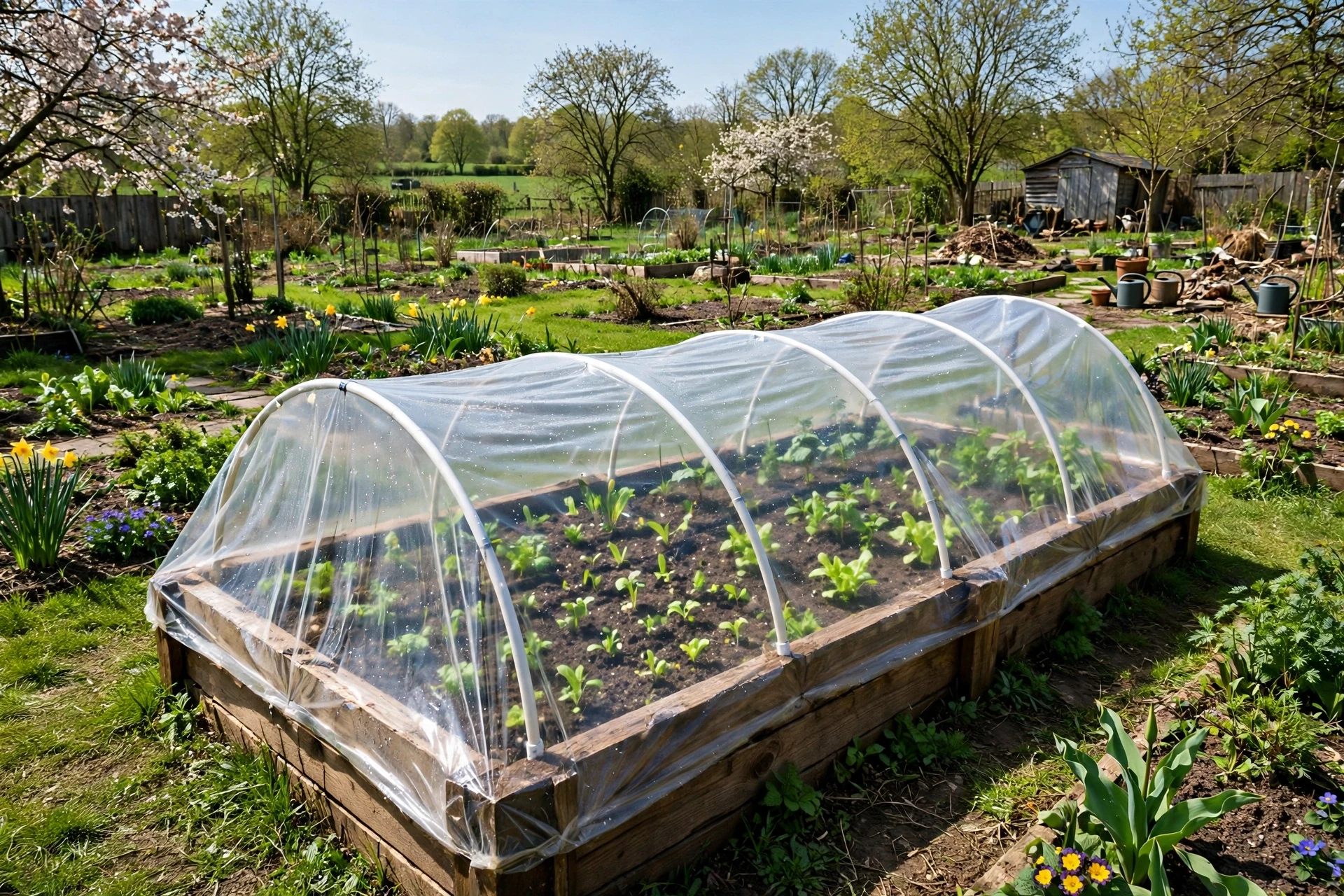
A hoop house turns an ordinary raised bed into a small greenhouse for the price of a few lengths of pipe. Push flexible PVC pipe into hoops across the bed, cover the hoops with clear plastic, and you can plant weeks earlier in spring and keep harvesting weeks later in autumn. The cover holds in warmth and keeps heavy rain off tender seedlings, which is worth more than any fertiliser in a cold spring.
Make the hoops from pipe pushed over short stakes driven into the inside of the bed, so the cover lifts off in seconds on a warm day. Weigh the plastic down with bricks along the edges, and open one end on sunny days so the plants do not cook. The same hoops take shade cloth in high summer, so the one bed works all year.
Try this: Use the hoop cover at night only in early spring, and lift it off each morning, so the seedlings harden off naturally.
You may also like: 22 Outdoor Patio Trends 2026 for Resort Style Living at Home
15. The Lasagna Layered Bed
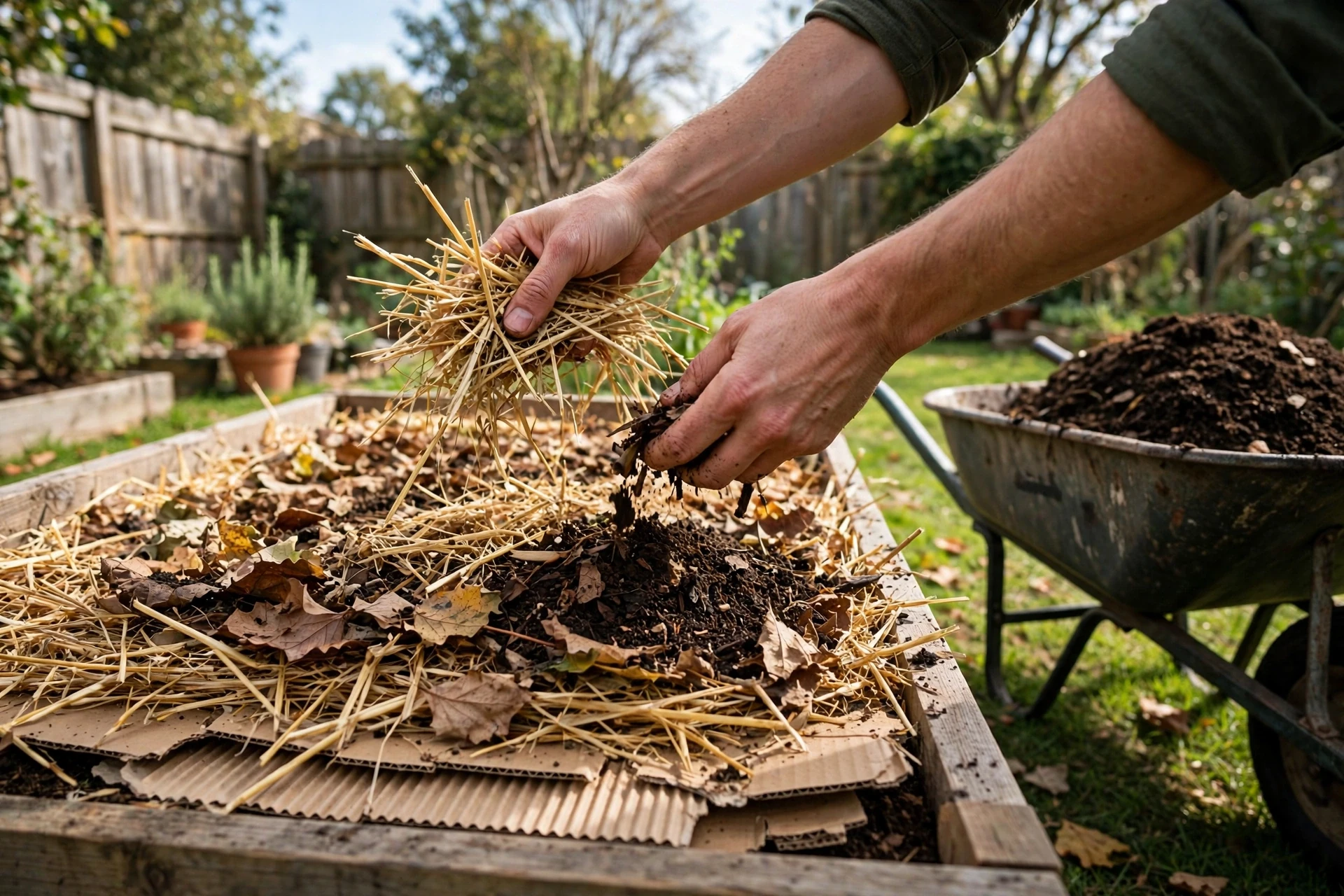
A lasagna bed is built like its name suggests, in layers, and it saves the most money of any bed in this list because you barely need to buy soil at all. Start with cardboard on the grass, then alternate layers of brown material like dry leaves and straw with green material like grass clippings and kitchen scraps, finishing with a few inches of compost on top. The layers rot down into rich soil while you plant straight into the top.
The cardboard underneath smothers the grass without any digging, and the layers hold water far better than plain topsoil, so you water less all summer. Build the bed in autumn if you can, so the layers have all winter to break down, and by spring you have a bed that is ready to plant and already full of worms. Hands in the photo show the layers going in, because the layering is the whole point of this bed.
Try this: Water each layer as you build it, so the pile stays damp and starts breaking down the same week.
You may also like: 21 European Patio Ideas That Feel Like Italy and France
16. The Waist High Table Bed
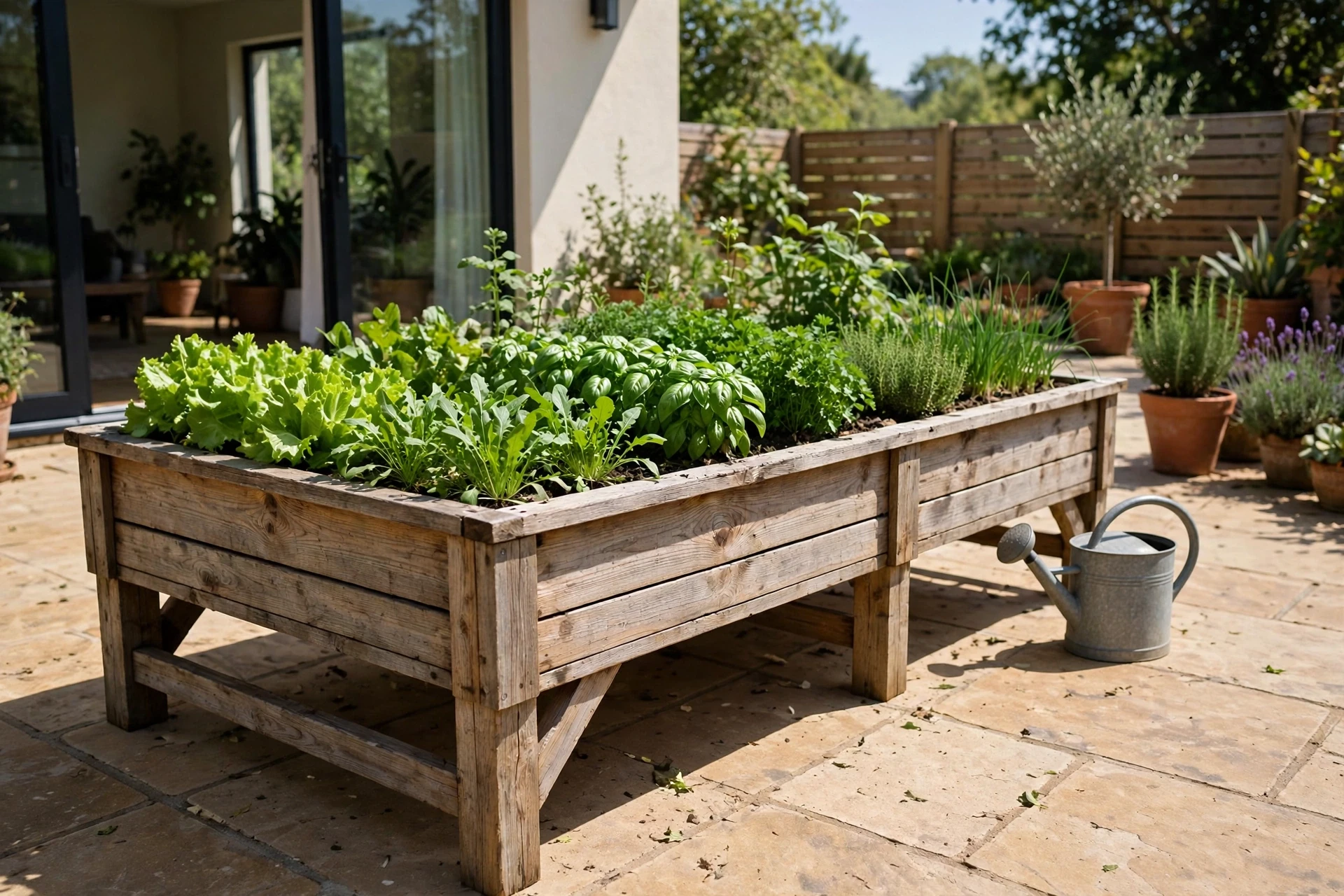
A waist high bed on legs is the answer for anyone with a bad back, and for anyone who gardens on a patio where there is no soil at all. Build a shallow timber box on four sturdy legs, line it with landscape fabric, and fill it with a light mix of compost and topsoil. You can tend it standing up, the slugs have further to climb, and it fits neatly against a sunny wall.
Keep the box shallow, no more than ten inches deep, so the weight of wet soil does not strain the legs, and brace the legs with cross pieces underneath. Salad leaves, herbs, and strawberries do best in a table bed because their roots are shallow, while deep root vegetables belong in a ground level bed instead. Put it on castors if you want to chase the sun across a small patio.
Try this: Grow cut and come again lettuce in a table bed by the kitchen door, and you can pick salad for dinner without going down the garden.
You may also like: 21 Front Yard Vegetable Gardens That Beat a Boring Lawn
17. The Corner L Shaped Bed
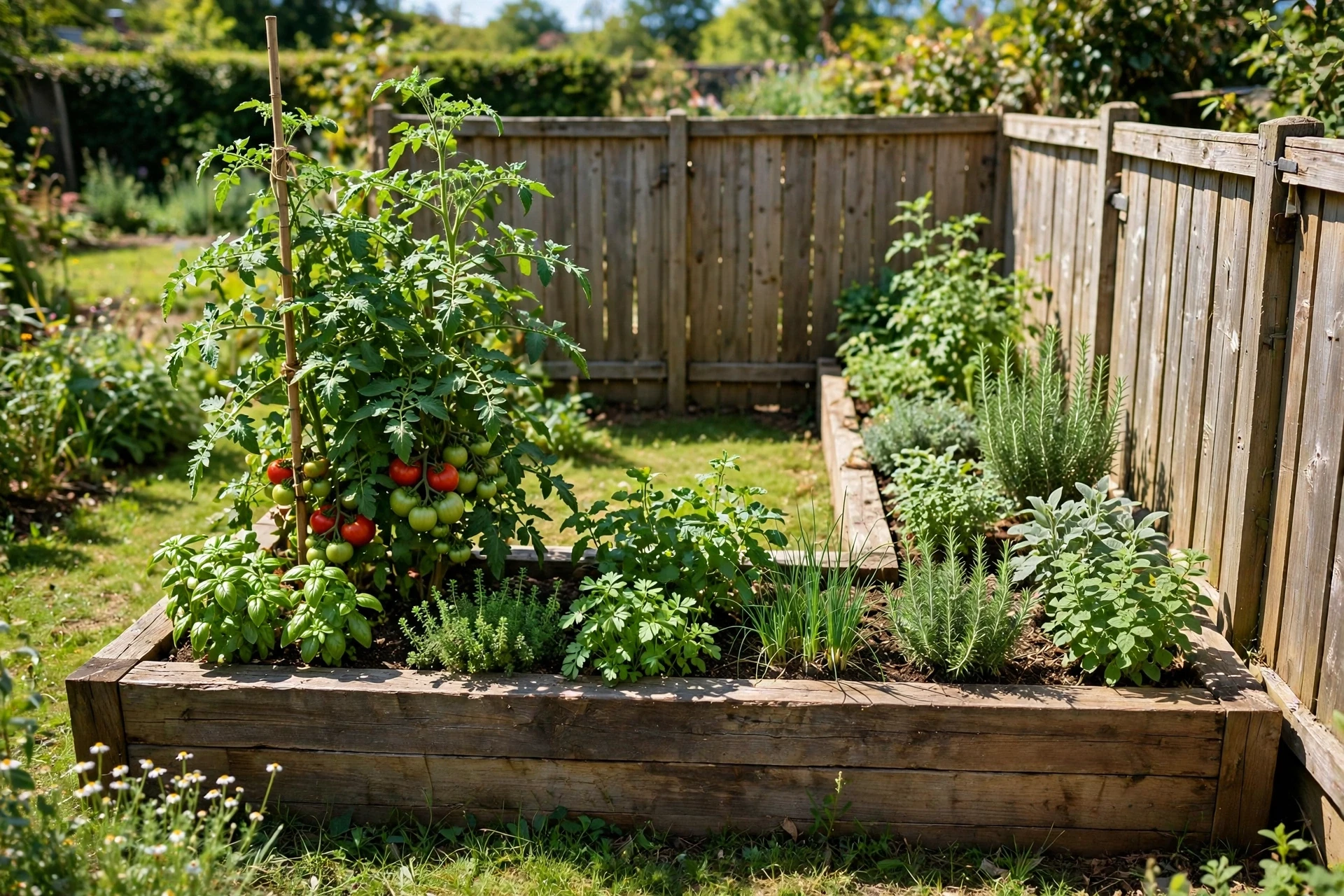
An L shaped bed turns an awkward corner into the best growing spot in the garden. Build two boxes that meet at a right angle in the corner of a fence or wall, and the corner itself becomes the deepest part of the bed, perfect for a big tomato plant or a small fruit bush that needs room to spread. The shape uses space that a straight bed would waste, and it looks deliberate rather than squeezed in.
The corner is also the easiest place to stand and reach both arms of the bed, so keep the arms no more than two feet deep and the corner no more than three feet across. Fill the corner with the richest compost you have, because the biggest plant in the bed will live there, and give it a tall stake from the start so it never needs moving later.
Try this: Put a small water butt in the angle behind the L, and the corner becomes a watering station as well as a bed.
You may also like: 21 Backyard Landscaping Ideas That Change Your Outdoor Space
18. The Reclaimed Deck Board Bed
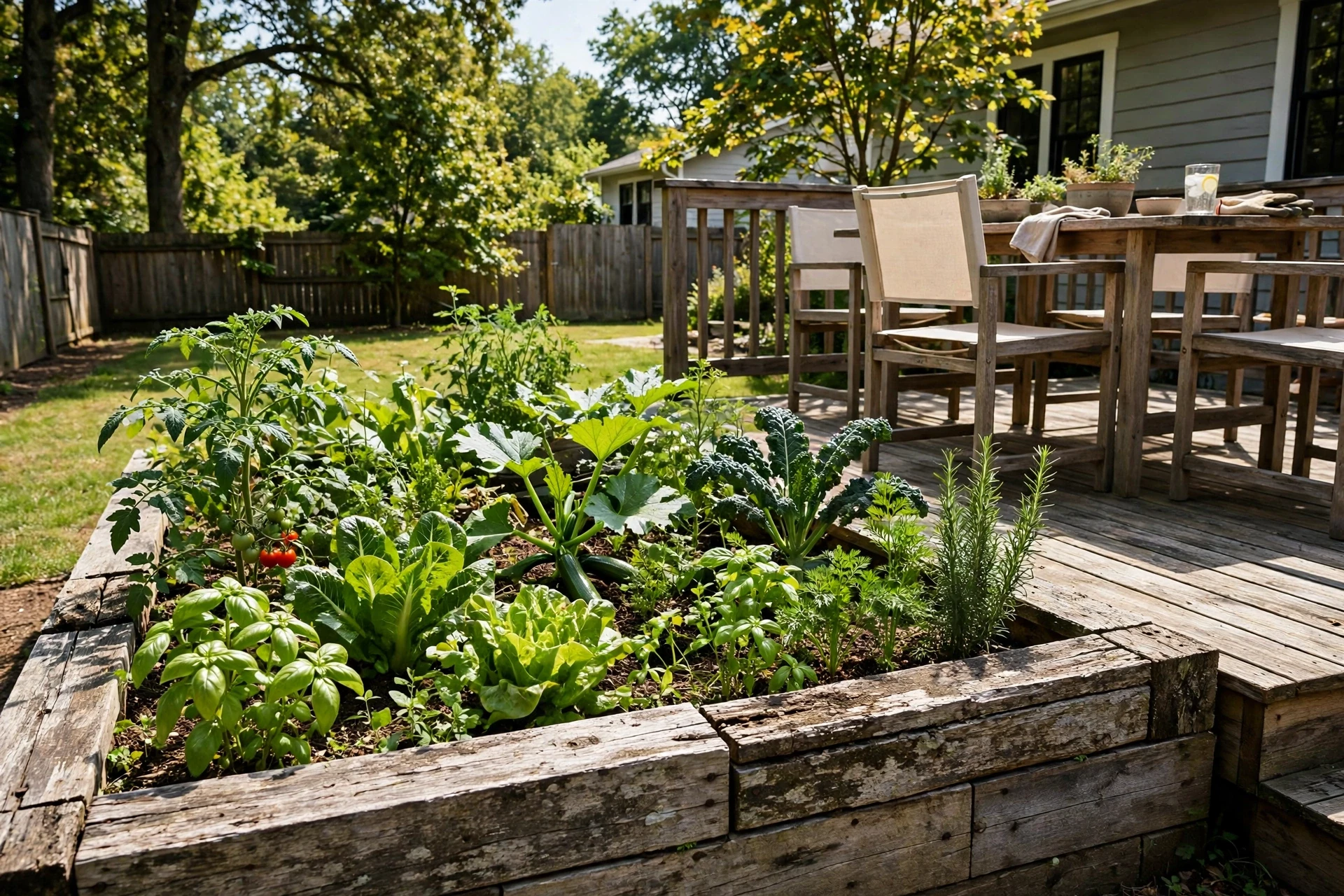
Old deck boards are thick, wide, and already weathered, which makes them ideal for a raised bed that looks smart from the day it is built. Pull up the boards from a deck that is being replaced, cut off the screw holes at the ends, and screw the good lengths into a deep box. The grooves on the face of the boards give the bed texture, and the timber is already proven to survive years outside.
Deck boards are usually hardwood or treated softwood, so check what yours are before you use them, and line the inside with landscape fabric if the treatment is unknown. The wide boards mean a bed only needs two courses to reach a good depth, so the build is fast, and the leftover short pieces make excellent plant labels and path edging.
Try this: Use the grooved side of the boards facing out, and the bed gets a ribbed texture that looks far more expensive than it is.
You may also like: 21 Front Yard Landscaping Ideas for Instant Curb Appeal
19. The Wicking Bed With a Water Reservoir
A wicking bed waters itself from underneath, which saves water and saves you a daily trip with the can. Build a deep box, line the bottom with pond liner, lay a layer of gravel with a perforated pipe through it, then cover the gravel with landscape fabric and fill the rest with soil. Water poured into the pipe fills the reservoir below, and the soil wicks the moisture up to the roots exactly when the plants need it.
This bed costs a little more to build because of the liner and pipe, but it pays for itself in a dry summer, when a normal bed needs watering every day and a wicking bed needs topping up once a week. Add an overflow pipe near the top of the gravel layer so heavy rain can escape, and plant thirsty crops like cucumbers, courgettes, and celery in it, because they are the ones that benefit most.
Try this: Check the reservoir with a dipstick made from a wooden dowel once a week, and top it up before the soil at the top starts to dry.
You may also like: 22 Outdoor Patio Trends 2026 for Resort Style Living at Home

20. The Herb Spiral Bed
A herb spiral is a raised bed wound into a spiral, high in the middle and low at the edges, and it grows more herbs in less space than any flat bed. Build it from bricks or stones in a coil, fill the centre high with gritty soil for rosemary and thyme, and let the bottom of the spiral stay damp for mint and parsley. One spiral gives you a dry sunny top, a shady damp bottom, and everything in between.
The spiral shape looks wonderful beside a patio or a kitchen door, and it uses far less material than a square bed of the same growing area. Start the coil at the centre and work outwards, keeping each turn a brick higher than the last, and plant the herbs that like it dry at the top and the ones that like it wet at the bottom. The spiral is the only bed in this list that is a garden feature in its own right.
Try this: Plant mint only at the very bottom of the spiral, where you can see it spreading, and it will not take over the rest of the bed.
You may also like: 21 European Patio Ideas That Feel Like Italy and France

21. The Half Veg Half Flower Bed
A bed that is half vegetables and half flowers grows better than a bed of vegetables alone, because the flowers bring in the pollinators and keep some pests away. Plant one side with tomatoes, beans, or courgettes, and the other side with marigolds, nasturtiums, and calendula, which are all edible and all useful in the kitchen. The bed looks like a flower border from the house and a vegetable patch from the garden, which is exactly the point.
This is the best bed for a front garden, where a plain vegetable bed might look untidy to the neighbours. The flowers hide the bare soil, they give you something to pick all summer, and the bees they attract will visit the vegetable flowers too, which means more fruit on every plant. Sow the flowers two weeks before the vegetables, so they are already in bloom when the vegetables start to flower.
Try this: Pick the nasturtium flowers for salads and the marigold petals for garnish, so the flower half of the bed feeds you too.
You may also like: 21 Front Yard Vegetable Gardens That Beat a Boring Lawn

22. The Rolling Bed for Renters
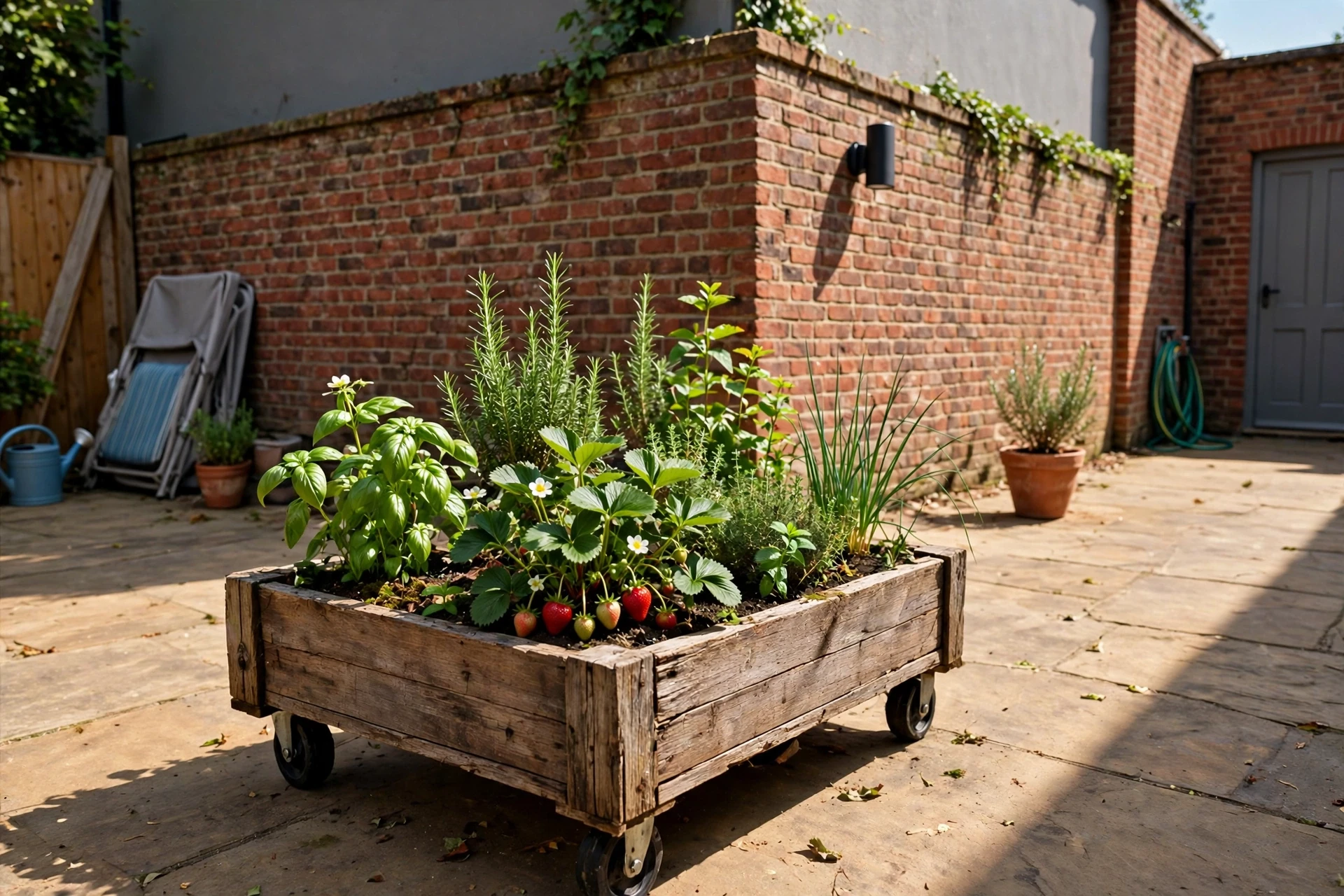
A rolling bed is a small raised bed on heavy duty castors, built for anyone who rents and cannot dig up the garden. Build a shallow timber box about three feet long, fit four locking castors underneath, and fill it with a light compost mix. You can roll it into the sun in the morning, back into the shade on a hot afternoon, and take it with you when you move house.
Keep the box light by using thin boards and a shallow depth, and never fill it with heavy wet clay soil, because the castors will not take the weight. Salad leaves, herbs, and strawberries are the right crops for a rolling bed, and the locking castors stop it moving in the wind once you have it where you want it. It is the smallest bed in this list, and for a renter it is the most useful one of all.
Try this: Lock the castors on the downhill side first, so the bed stays put while you work on it.
You may also like: 21 Backyard Landscaping Ideas That Change Your Outdoor Space
The 1-2-3 Raised Bed Method
If you remember nothing else from this guide, remember these three steps.
1
Pick the spot and the size first.
Find the sunniest flat patch you can reach with a hose, then mark out a bed no wider than four feet and as long as the space allows. The spot and the size decide everything else, so get them right before you buy a single plank.
2
Build the frame from what you already have.
Use the cheapest honest material that suits your garden, whether that is pine, blocks, bricks, or reclaimed boards, and build it level and square. A frame that is level holds soil evenly, drains evenly, and looks tidy, while a wonky frame leans worse every year.
3
Fill it in layers and plant it the same weekend.
Lay cardboard on the base, add logs or leaves at the bottom, then compost and topsoil on top, water it well, and plant straight away. A bed that sits empty loses moisture and invites weeds, while a bed planted the same weekend starts paying you back at once.
At a Glance
| Idea | Cost | Build time | Best for |
|---|---|---|---|
| 1. Simple Pine Plank Box | Low | 1 hour | Beginners |
| 2. Dry Stacked Cinder Block Bed | Low | 2 hours | Permanent beds |
| 3. Reclaimed Pallet Wood Bed | Free | 3 hours | Rustic gardens |
| 4. Galvanized Stock Tank Bed | Medium | 30 min | No build beds |
| 5. Corrugated Metal and Timber Bed | Low | 3 hours | Modern gardens |
| 6. Salvaged Brick Bed | Free | 4 hours | Cottage gardens |
| 7. Log Edged Rustic Bed | Free | 2 hours | Woodland gardens |
| 8. No Build Straw Bale Bed | Low | 30 min | First timers |
| 9. Old Bathtub Bed | Free | 1 hour | Root vegetables |
| 10. U Shaped Keyhole Bed | Low | 4 hours | Small gardens |
| 11. Tiered Bed on a Slope | Medium | 1 day | Sloping gardens |
| 12. Narrow Bed Along the Fence | Low | 2 hours | Climbing plants |
| 13. Square Foot Grid Bed | Low | 2 hours | Beginners |
| 14. Hoop House Covered Bed | Low | 2 hours | Early planting |
| 15. Lasagna Layered Bed | Free | 3 hours | Saving on soil |
| 16. Waist High Table Bed | Medium | 3 hours | Bad backs |
| 17. Corner L Shaped Bed | Low | 3 hours | Awkward corners |
| 18. Reclaimed Deck Board Bed | Free | 2 hours | Smart finish |
| 19. Wicking Bed With Reservoir | Medium | 1 day | Dry summers |
| 20. Herb Spiral Bed | Low | 4 hours | Herb gardens |
| 21. Half Veg Half Flower Bed | Low | 2 hours | Front gardens |
| 22. Rolling Bed for Renters | Low | 2 hours | Renters and patios |
Do This, Not That
| Do This | Not That |
|---|---|
| Pick the sunniest spot you can reach with a hose | Build in the shade because the corner is tidy |
| Keep beds no wider than four feet | Build a wide bed you have to step in |
| Spend the savings on good compost and soil | Spend it all on an expensive frame |
| Line the inside to slow soil washing out | Leave gaps that leak soil after every rain |
| Drill drainage holes in tanks and tubs | Let roots sit in standing water |
| Use only heat treated pallets marked HT | Use chemically treated pallets marked MB |
| Water each layer as you fill the bed | Fill a deep bed dry and water only the top |
| Plant the bed the same weekend you build it | Leave a new bed empty until next month |
| Leave a wheelbarrow wide path between beds | Squeeze beds together with no working room |
| Mulch the top of the soil after planting | Leave bare soil to dry out and crack |
Your Raised Bed Plan
If you want a raised bed that actually gets built, here is the plan that makes it happen.
The week before: Walk the garden at midday and pick the sunniest flat spot, then measure it and choose one idea from this list that fits the space. Collect the materials, which for most beds means timber or blocks, screws, and landscape fabric, and order the soil and compost for delivery on build day.
The day before: Clear the spot, level the ground roughly, and lay out the frame pieces where they will go. Soak any straw bales if you are building a bale bed, and check you have a drill, a saw, and a level ready, so build day is building and not shopping.
Build day: Build the frame level and square, line it, and fill it in layers with cardboard at the base, bulky material in the middle, and compost and topsoil on top. Water every layer as you go, then plant the same day, mulch the top, and water again.
After the build: Water new plants daily for the first week, then settle into watering deeply a few times a week. Top up the soil level after the first month, because fresh fill always settles, and keep a simple note of what grew well, so next year you build the second bed with confidence.
Take It Further
- Photograph your bed from the same spot once a month, so you can see how fast it fills in and what to change next year.
- Build a matching compost bin beside the bed from the same materials, so the whole corner looks planned and the soil never runs out.
- Try one bed filled in layers and one filled with bought topsoil, and compare what grows better for the same money.
- Save seed from your best tomato and your best bean, and plant them in the same bed next spring.
- Add a simple drip line or a soaker hose to the bed, so watering takes five minutes instead of half an hour.
- Plant a row of marigolds along the front edge of every bed, and watch how many fewer aphids you find.
- Keep a small notebook by the back door with the planting dates, so you know exactly when each crop went in.
- At the end of the season, sow a green manure like clover on any empty bed, and dig it in before spring planting.
Raised Bed Cheat Sheet
1
The rule: sunny spot, narrow bed, good soil
2
The width: no more than four feet, so you can reach the middle
3
The height: one foot is enough for most vegetables, two feet for root crops
4
The frame: cheapest honest material that suits your garden
5
The fill: cardboard, then bulky layers, then compost and topsoil
6
The soil: spend on compost, save on the frame
7
The water: water deeply a few times a week, not a little every day
8
The mulch: cover bare soil after planting to hold moisture
9
The test: plant the same weekend you build it
10
The best bed: simple pine box, filled in layers, planted with tomatoes
Questions People Ask
Most vegetables grow well in a bed that is twelve inches deep, because that gives the roots room to spread and the soil room to hold moisture. Root crops like carrots and parsnips do better in a bed eighteen inches deep, so they can grow straight instead of forking. If your bed sits on concrete or poor ground, go deeper, because the plants only have the soil in the bed to live in.
You do not need a solid liner, and a solid liner can cause drainage problems, so most beds do best with nothing but cardboard on the base. Cardboard smothers the grass underneath, lets worms through as it rots, and disappears within a season. Line the sides instead, with landscape fabric, to keep the soil from washing out through gaps in timber or blocks.
The simplest defences work best: a ring of crushed eggshells or copper tape around the bed, and a nightly check with a torch in damp weather. Planting marigolds and nasturtiums beside the vegetables pulls pests away from the crops, and a beer trap sunk into the soil catches slugs before they reach the lettuce. Raised beds already help, because the dry top edge is harder for slugs to cross than flat ground.
Yes, both work, and grass is the easier of the two. On grass, lay cardboard straight on the lawn and build on top, because the cardboard kills the grass and the worms do the rest. On concrete, drill drainage holes in the base of the frame or use a container with holes, and fill the bed deeper, because water has nowhere else to go and the plants only have the soil you give them.
The cheapest builds cost almost nothing, because a reclaimed timber bed or a pallet bed uses free materials and only needs screws. If you buy new, a raised garden bed kit is the simplest option, and most raised bed kits cost less than a single bag of premium compost. A cedar raised garden bed costs more than pine but lasts much longer, while a galvanized steel raised garden bed sits in the middle on price and lasts for decades. A wooden raised garden bed built from pine is the best value for a first bed, because the timber is cheap and easy to cut.
There is no single best material, because the right choice depends on your garden and your budget. Metal raised garden beds last the longest and suit a modern garden, and metal garden beds in corrugated steel are a good middle price. Cedar raised beds resist rot naturally and look warm and tidy, while wooden raised beds in pine are the cheapest way to start. Galvanized raised beds are a smart compromise, because the steel shell lasts for years and the timber frame keeps the look soft.
A simple plan saves money, because it stops you buying timber you do not need and building a bed that does not fit the space. Start with raised garden bed plans that show the size and the materials, and compare a few raised garden bed designs before you choose one. A diy raised garden bed is easiest when you follow raised bed plans that match your tools, and raised garden bed design plans from a garden centre or a book give you exact cutting lists. Even a sketch on paper with the measurements written on it counts as a plan, and it is enough for most beds.
Almost anything grows in a raised bed, because the soil is deep, warm, and easy to keep rich. Raised vegetable beds suit tomatoes, beans, courgettes, and salad leaves, and vegetable garden beds are the easiest place to start if you are new to growing food. Raised flower beds work just as well for cutting flowers, and raised planter boxes are deep enough for herbs, strawberries, and even small fruit bushes. If you like building things, raised garden boxes diy projects let you size the bed to the crop, so a deep box for carrots and a shallow one for lettuce.
If you take one thing from this list, let it be the bed you can build this weekend. Pick the spot, use what you already have, fill it in layers, and plant it the same day, and the garden will pay you back all summer.