Every spring, my street wakes up to the same show. Lawns get mowed into neat green rectangles, sprinklers hiss at dawn, and by July half of them are brown anyway. A few doors down, one neighbour stopped playing that game years ago. She pulled up her lawn and planted tomatoes, rainbow chard, and basil along the walkway instead. Her front yard smells like summer, her kitchen never runs out of salad, and strangers slow down to look at it. Mine just looks like grass.
That is the whole case for a front yard vegetable garden. A lawn gives you nothing back except a mowing chore. A vegetable garden feeds you, looks better than a flat patch of green, and turns the most boring part of your property into the most interesting one. The trick is to design it like a garden, not like a farm plot that wandered into the suburbs.
These 21 front yard vegetable garden ideas show you how. Raised beds that look like furniture, edible borders that frame the walkway, herbs by the front door, and trellises that turn a plain fence into a green wall. Pick one or two to start, and your front yard will work harder than your lawn ever did.
Too Long; Didn’t Read
A front yard vegetable garden can look better than a lawn and feed you at the same time, if you design it like landscaping instead of a farm plot. Start with raised beds in cedar or stone, keep the paths clean and the edges sharp, and mix in flowers and herbs so the beds read as a garden, not a vegetable patch. Most vegetables need six to eight hours of sun, so map the sunny spots before you dig anything. Check your HOA or city rules first, because some places limit bed height or front yard structures. Fast growers like lettuce, radishes, and spinach give you a harvest in weeks, while tomatoes, peppers, and herbs carry the summer. Water deeply, mulch well, and keep one path clear to the front door. If you are searching for front yard vegetable garden ideas, edible landscaping, or how to grow vegetables in your front yard, this guide covers all three, with 21 ideas you can start this weekend.
What's Inside This Guide
ToggleThe Lawn I Stopped Mowing
I used to mow my lawn every Saturday, and I hated every minute of it. The mower was loud, the grass grew back by Tuesday, and the whole thing felt like paying rent on a patch of green that gave me nothing. One spring I left a strip unmowed near the fence, just to see what would happen. Weeds came first, then a few brave tomato seedlings from a plant I had dropped the year before. By August that strip had tomatoes, and I had a small, stubborn thought: what if the whole front yard worked this hard?
I started small, with one raised bed by the walkway and a row of basil by the front steps. The neighbours asked about it, then a few of them copied it. Three summers later my front yard grows dinner, and the lawn is a memory. The lesson was simple. A front yard does not have to be a lawn to be beautiful. It has to be cared for, and a vegetable garden is the most rewarding kind of care there is.
The 3 Things That Make Front Yard Vegetable Gardens Work
Before you dig anything, these three things decide whether your front yard garden looks like a magazine photo or a messy plot.
1. Design it like landscaping, not like a farm. Straight edges, repeated shapes, and clean paths are what make a vegetable garden look intentional. Raised beds in the same material, a clear border along the walkway, and one strong focal point, like an arch or a tall trellis, tell the eye this is a designed garden. Random beds in mixed materials read as clutter, even when the vegetables are thriving.
2. Mix in flowers and herbs. Marigolds, nasturtiums, zinnias, and lavender do real work: they pull in pollinators, confuse pests, and add colour that vegetables alone cannot give you. A bed of tomatoes edged with basil and marigolds looks like a garden. A bed of tomatoes alone looks like a farm row. The flowers are not decoration. They are part of the design.
3. Keep the sunny spots for the vegetables. Most vegetables need six to eight hours of direct sun a day. Watch your front yard for a week and note where the sun actually falls, morning and afternoon. Put the beds there, and use the shadier corners for paths, a bench, or shade-tolerant herbs like mint and parsley. A beautiful bed in full shade will grow nothing but disappointment.
Keep those three in mind and every idea below will make sense.
21 Front Yard Vegetable Garden Ideas
1. Cedar Raised Beds With Clean Lines
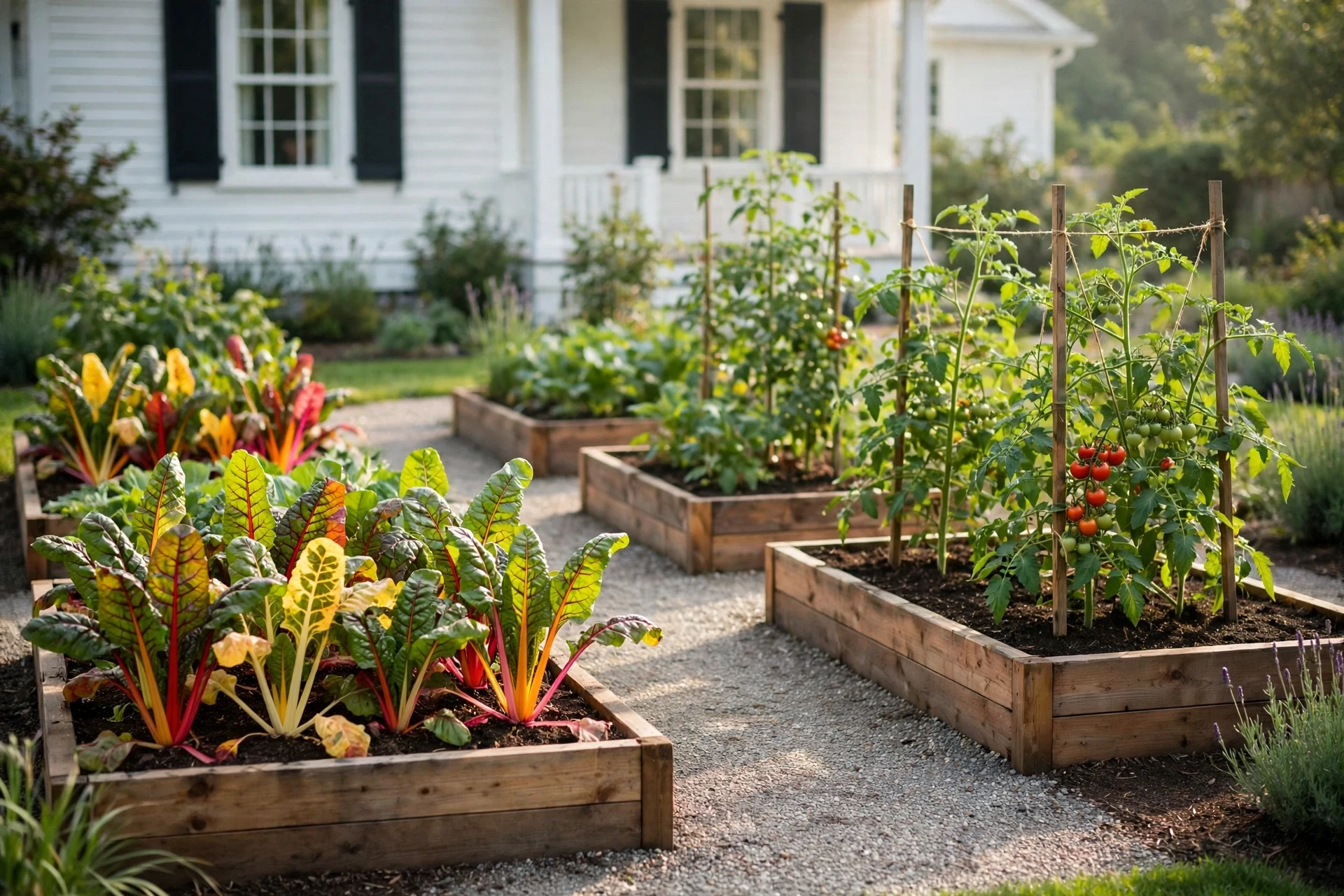
Cedar raised beds are the fastest way to make a front yard vegetable garden look like it belongs there. The wood weathers to a soft grey, the straight lines match the house, and the beds lift the soil above whatever poor ground your lawn was sitting on. Build them three to four feet wide so you can reach the middle from either side without stepping in, and keep them all the same height for a calm, repeated rhythm along the yard.
Fill them with a mix of topsoil and compost, not garden soil straight from the bag. A good mix drains well, holds moisture, and gives roots room to grow deep. Plant tall things like tomatoes and peppers at the back, and low things like lettuce and radishes at the front, so every plant gets sun and the bed reads like a layered planting, not a flat field.
Try this: Stain or oil the cedar once a year to keep the colour warm, and cap the bed edges with a flat board so you have a place to sit while you weed.
You may also like: 21 Backyard Landscaping Ideas That Change Your Outdoor Space
2. A Stone Edged Kitchen Garden by the Walkway
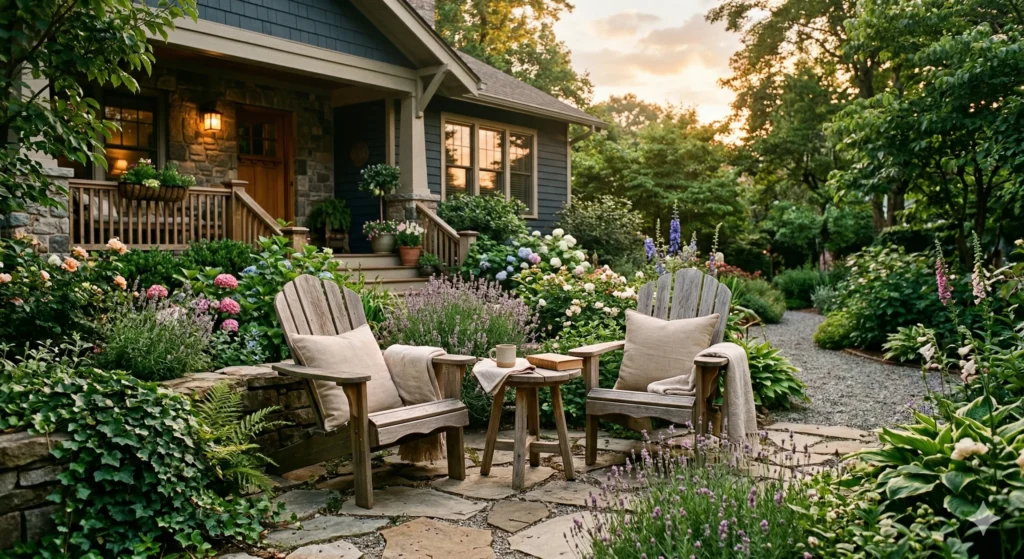
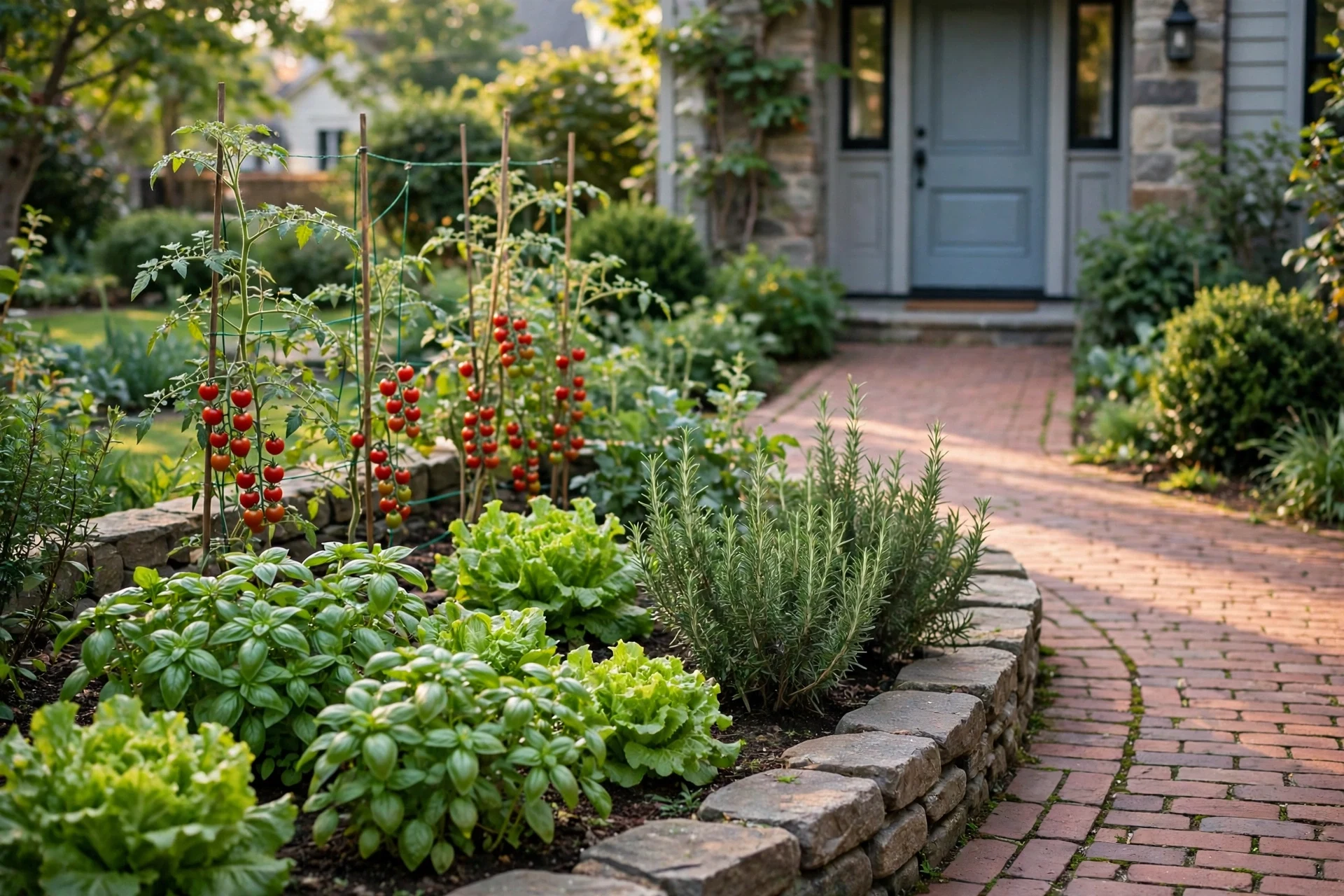
A low stone border along the front walkway turns the path to your door into a garden tour. Stack flat stones or use a low stone wall, about a foot high, and plant the strip behind it with herbs and salad greens. Thyme and rosemary spill over the edge, lettuce fills the middle, and a few cherry tomato plants at the back give the bed height. Guests brush past basil on the way in, and the whole entry smells wonderful.
Stone holds heat, which helps herbs and tomatoes, and it never rots the way wood can. Keep the border level and the stones tight so the edge looks finished, and mulch the bed with straw or bark so the soil stays dark and tidy between plants.
Try this: Plant a row of marigolds right at the front edge. Their orange and yellow flowers hide bare soil and keep aphids away from the lettuce.
You may also like: Front Yard Landscaping Ideas That Instantly Boost Curb Appeal
3. A Trellis Arch Over the Front Path
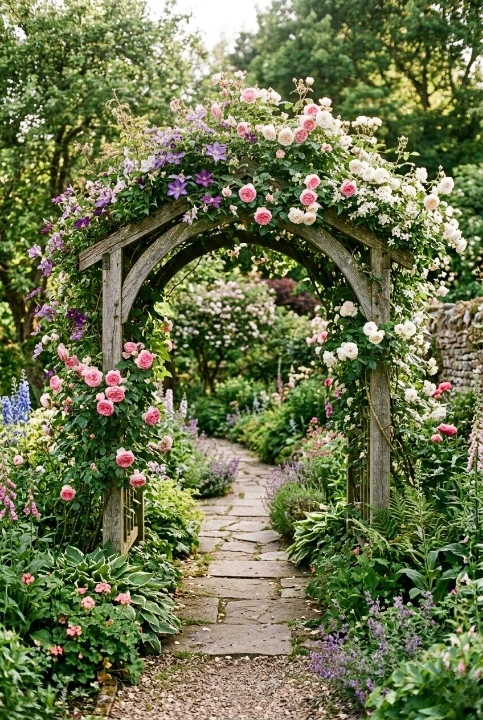
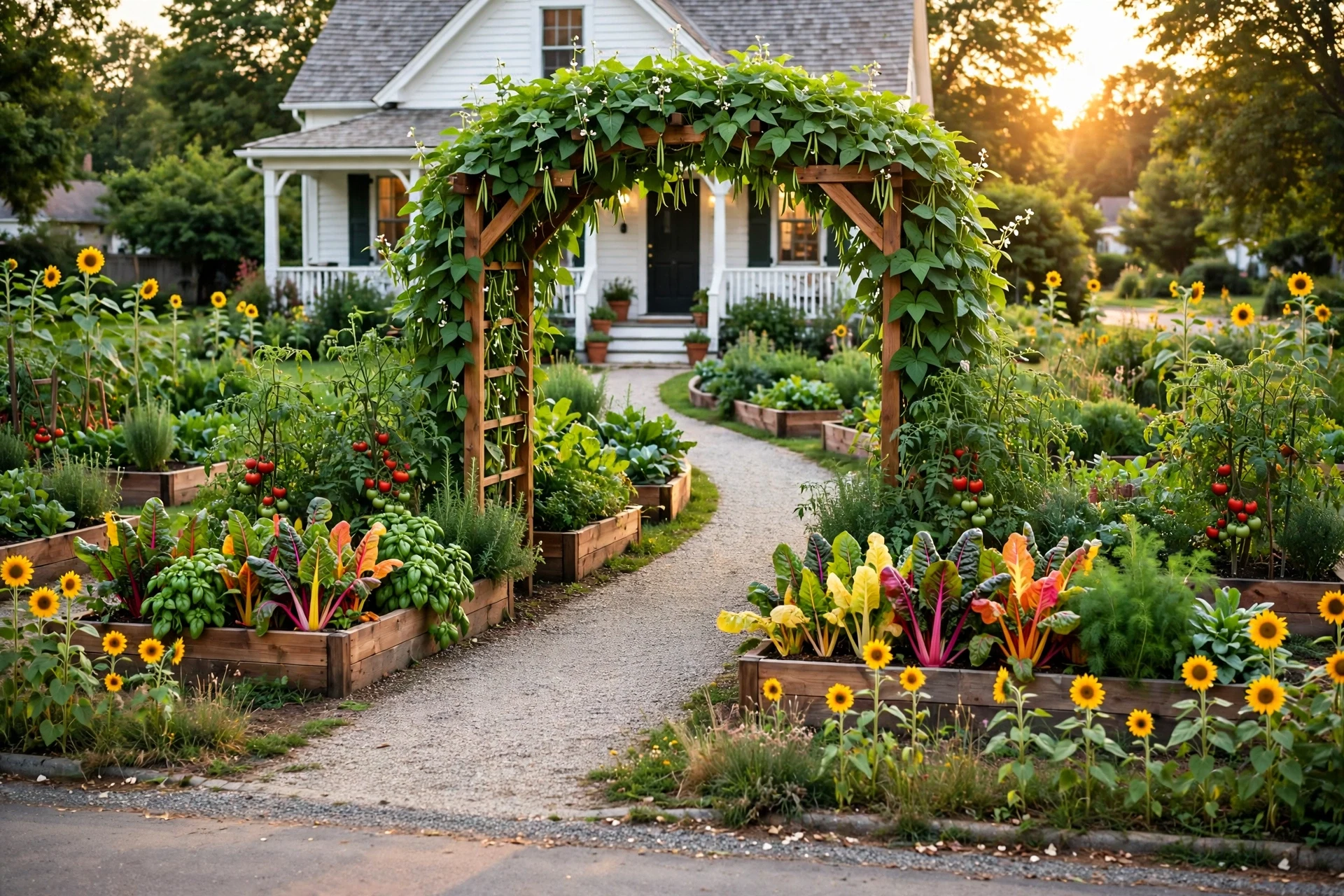
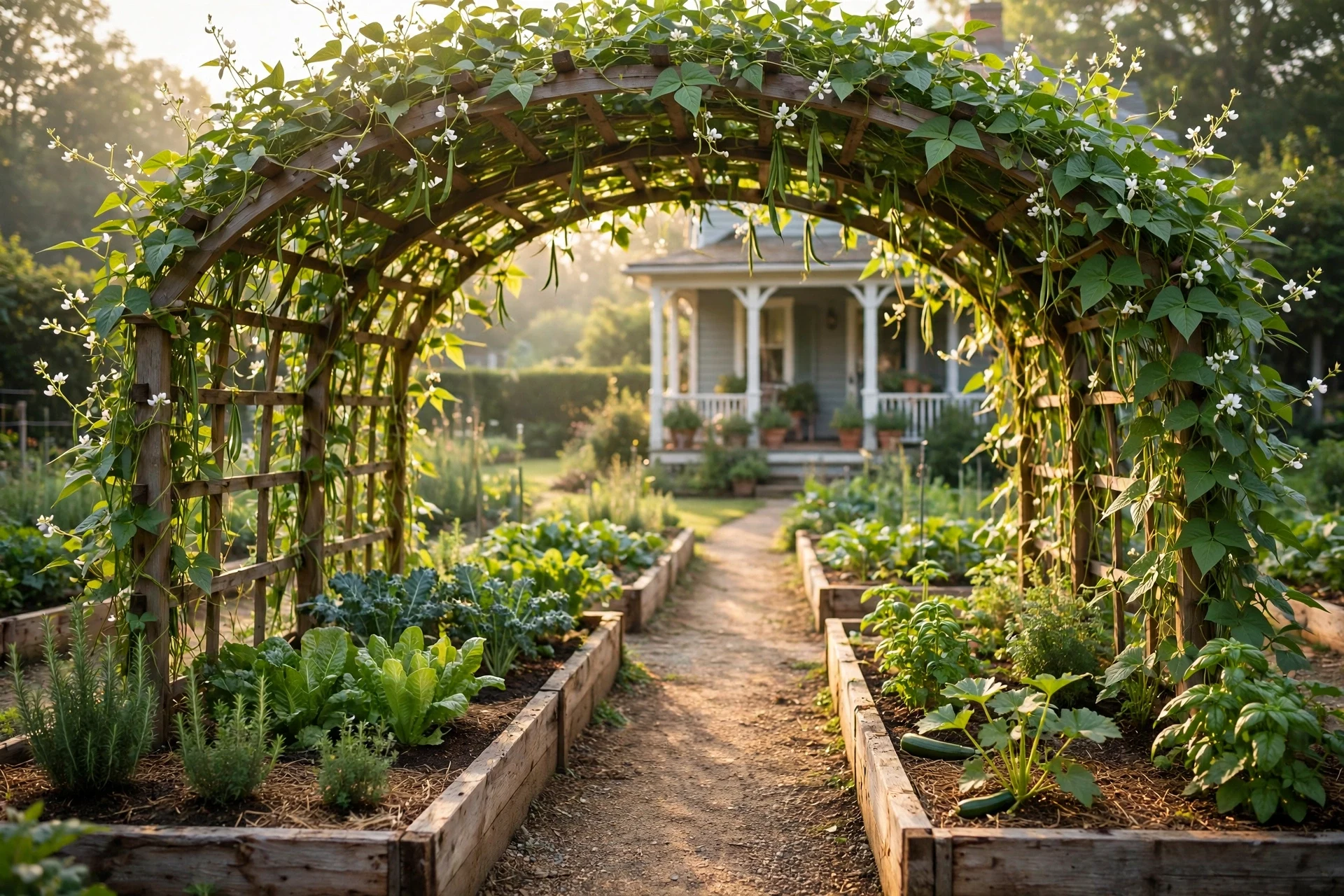
A trellis arch over the front path is the single most dramatic thing you can add to a front yard vegetable garden. Beans, peas, or cucumbers climb the arch and turn a plain walkway into a green tunnel by midsummer. It gives the garden a clear entrance, it uses vertical space that would otherwise go to waste, and it makes the whole yard feel designed instead of planted.
Build the arch from cedar or metal, at least seven feet tall so nobody ducks, and anchor it well so wind cannot rock it. Plant climbing beans on both sides in spring, and by July you will be picking dinner from above your head. In autumn, swap the beans for a climbing rose or a clematis if you want the arch to look good year round.
Try this: Hang a small lantern from the top of the arch. It makes the entrance glow at dusk and marks the garden as a place to walk through, not just look at.
You may also like: 21 Fall Front Porch Ideas With Wreaths That Welcome You Home
4. Rainbow Chard as a Living Border
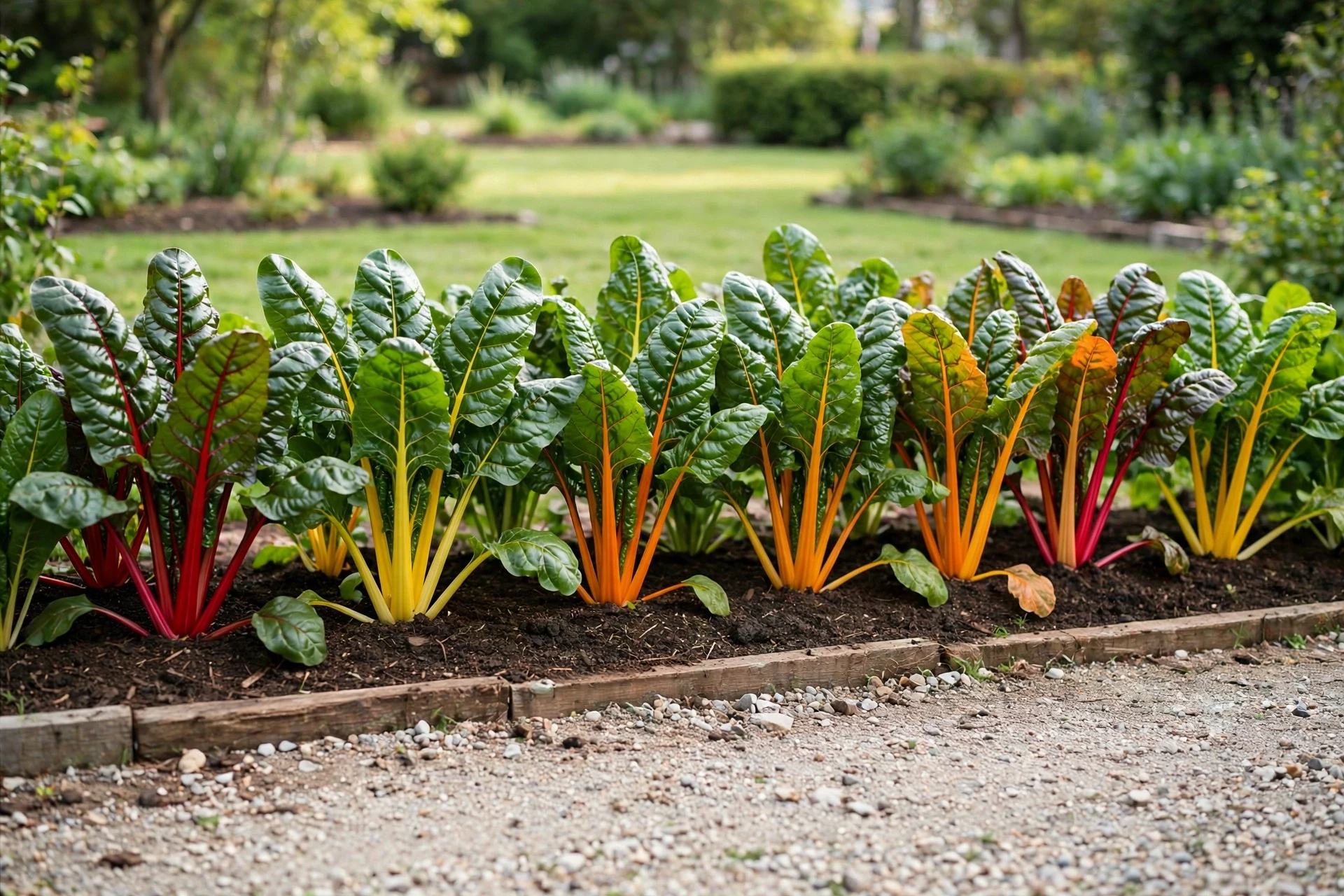
Rainbow chard is the prettiest vegetable you can grow, and it works perfectly as a living border. Its stems come in red, yellow, pink, and orange, its leaves are deep green and glossy, and a row of it along the front of a bed looks like a flower border that you can also eat. Plant it in a straight line, about a foot apart, and it will hold its shape from spring to the first frost.
Chard is also one of the easiest vegetables to grow. It tolerates heat, cold, and a little neglect, and it keeps producing new leaves for months if you pick the outer ones first. A border of chard gives your front yard colour all season, and it never looks tired the way lettuce does in July.
Try this: Pick the outer leaves often and the plant will keep pushing new growth from the centre. A row you harvest weekly stays fuller than a row you leave alone.
You may also like: Raised Bed Vegetable Garden Ideas
5. Herbs by the Front Door
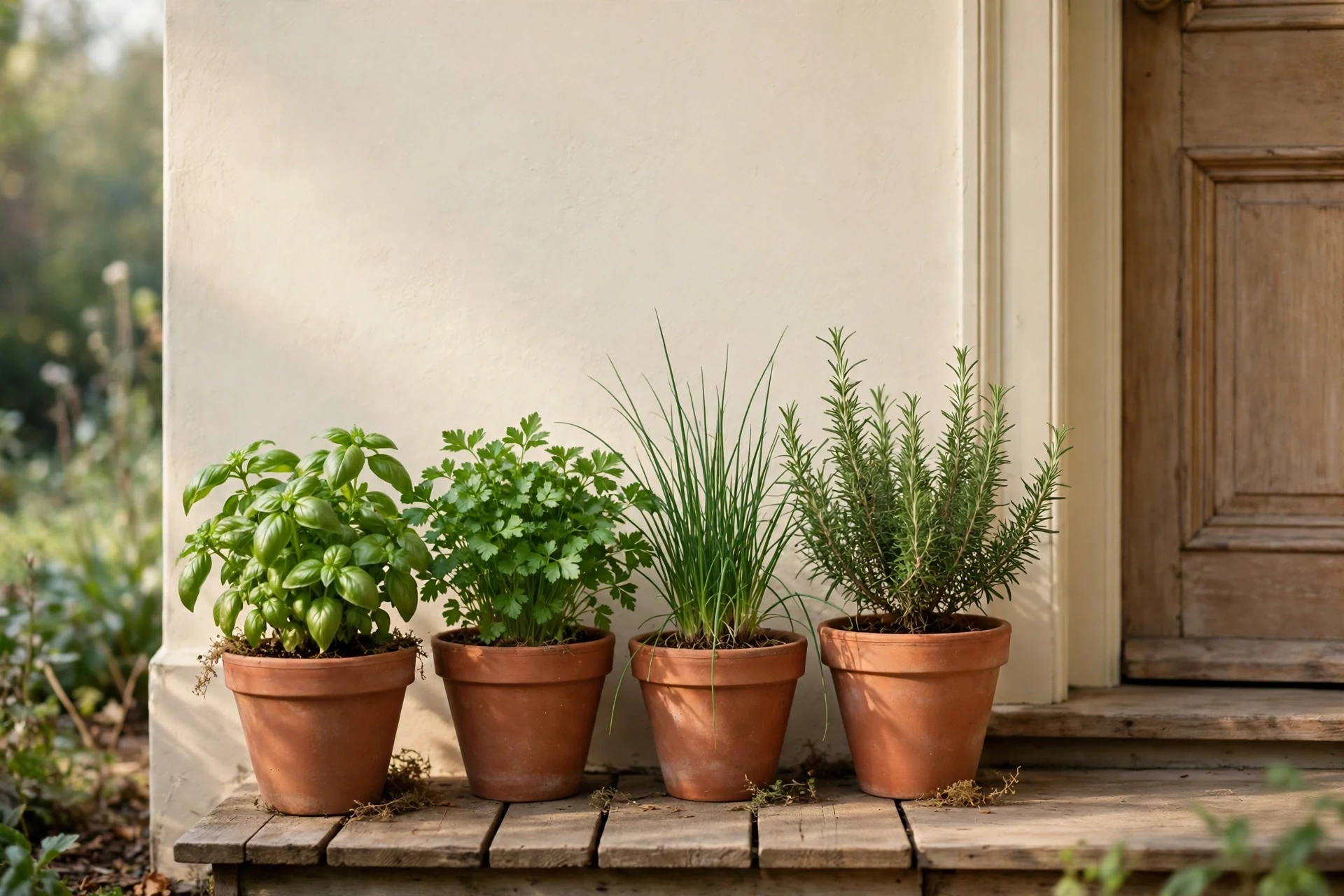
The strip of soil by the front door is the most useful real estate in your yard. Plant it with herbs and you will use it every single day. Basil, parsley, chives, and mint in pots or a narrow bed mean dinner seasoning is ten steps away, and the plants look good enough to be ornamental. A rosemary bush by the door doubles as an evergreen shrub, and it smells wonderful when you brush past it.
Keep mint in its own pot, because it will take over any bed you give it. Group the herbs by water needs, with basil and parsley in the sunny, watered spot and rosemary and thyme in the drier corner. A small chalkboard sign or a few plant markers tell visitors the bed is intentional, not a weed patch.
Try this: Snip herbs in the morning, when their oils are strongest. A handful of basil picked at dawn tastes twice as good as one picked at noon.
You may also like: How to Grow Herbs in Small Spaces
6. A Vertical Herb Wall on the Fence
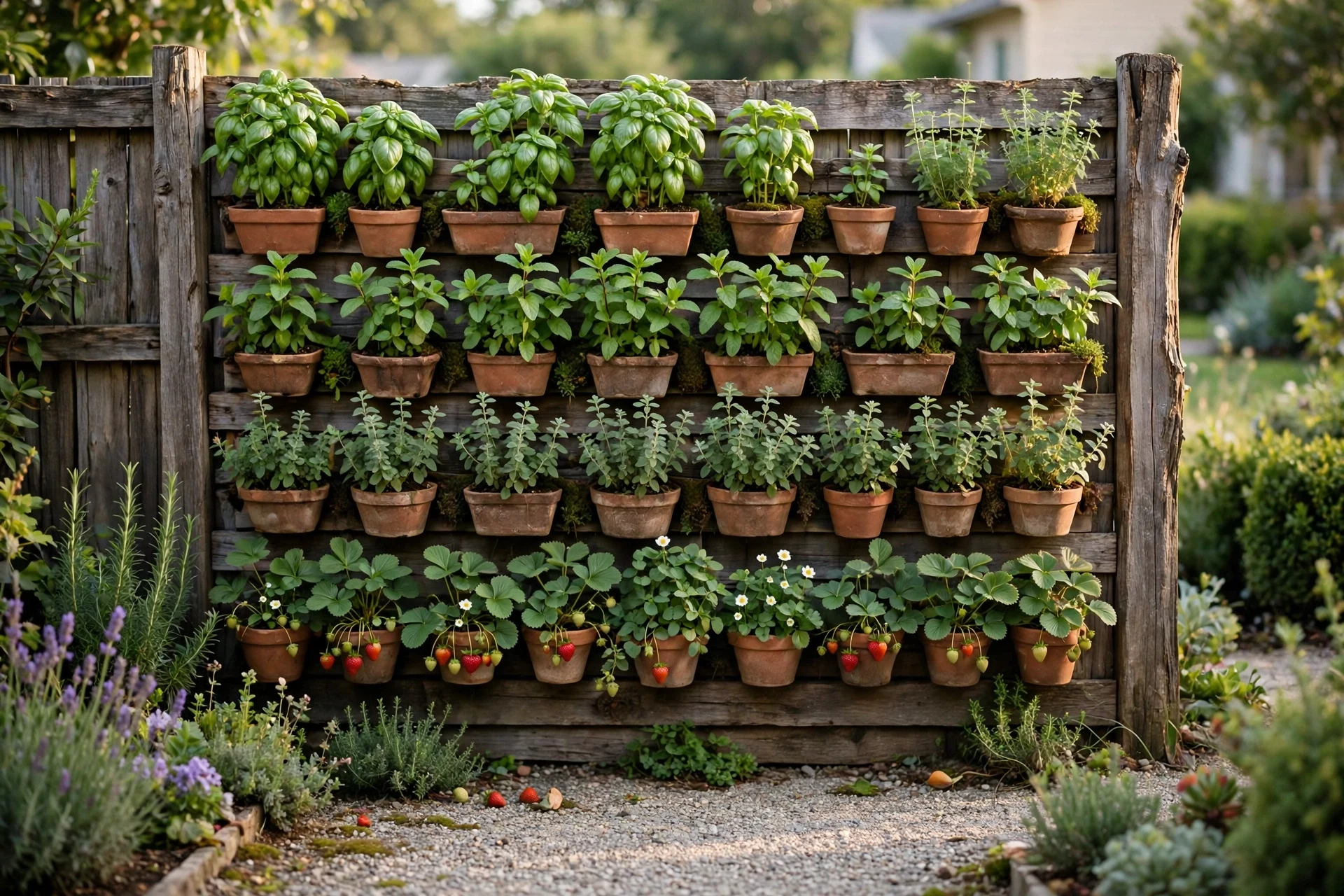
A fence is wasted space until you hang a garden on it. A vertical herb wall, made from a wooden pallet, a row of pockets, or simple mounted planters, turns a plain fence into a living pantry. Basil, mint, oregano, and strawberries all grow well in wall planters, and the wall keeps them off the ground where slugs and dirt can reach them.
Mount the planters at chest height so watering and picking are easy, and make sure the fence gets at least six hours of sun. Drip irrigation or a soaker hose along the top row saves you from watering twenty small pots by hand. The wall looks best when you mix leaf textures, so pair feathery dill with round-leaf nasturtiums and upright rosemary.
Try this: Label each pocket with a small wooden tag. It looks charming, and it stops you from picking mint when you wanted oregano.
You may also like: Vertical Garden Ideas for Small Yards
7. Tomatoes in Decorative Pots on the Porch
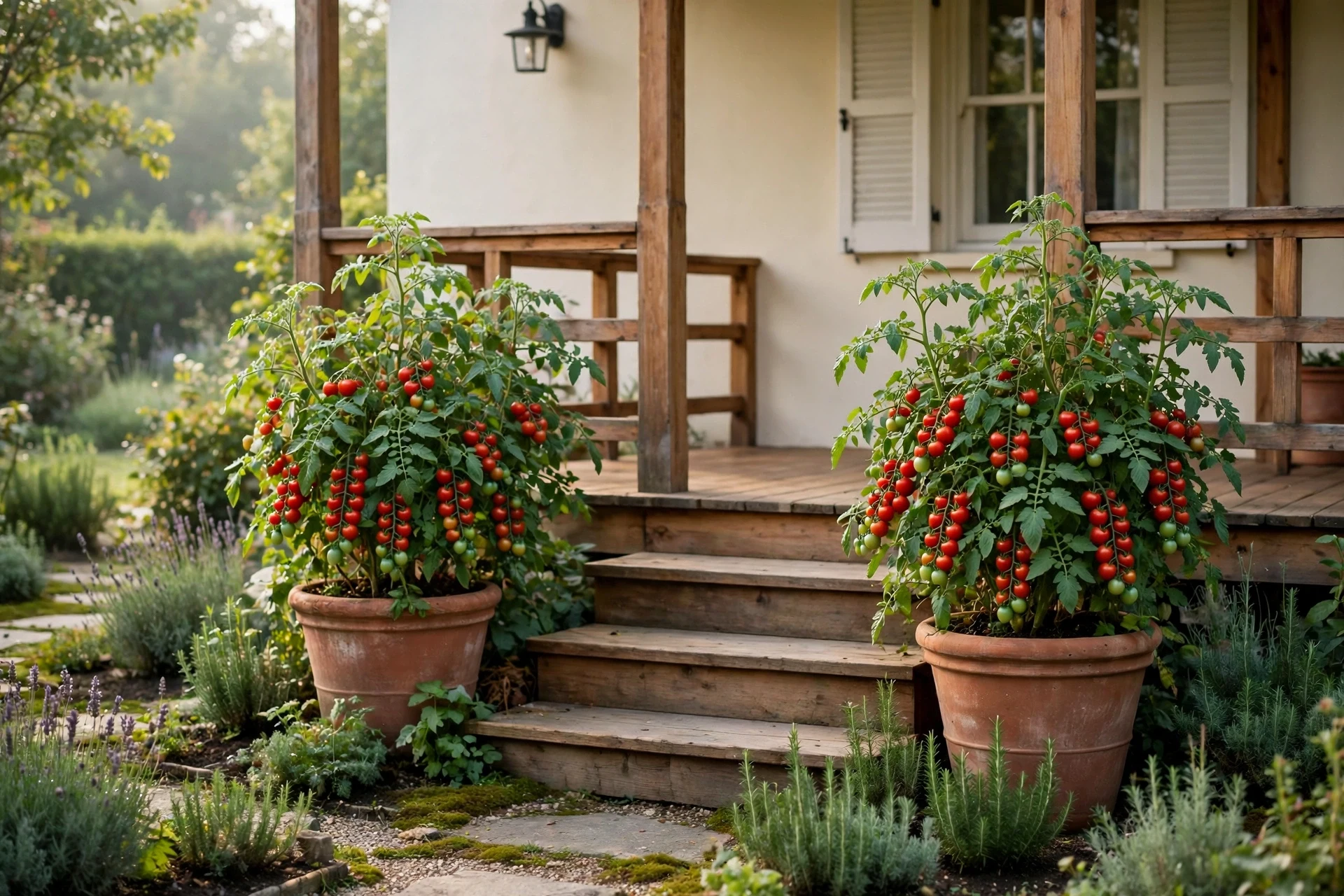
Tomatoes do not need a bed. A big decorative pot on the porch, filled with rich soil and one strong tomato plant, can outproduce a whole row in the ground. Choose a pot at least eighteen inches wide, use a sturdy cage or stake, and pick a determinate variety that stays compact instead of sprawling across the porch. Cherry tomatoes are the easiest win, because they fruit early and keep going until frost.
Pots warm up faster than soil in spring, which gives tomatoes a head start, and you can move them to chase the sun. Water pots daily in summer, because they dry out fast, and feed them every two weeks with a liquid tomato feed. A pair of matching pots flanking the front steps looks like landscaping and tastes like summer.
Try this: Mulch the top of each pot with straw. It keeps the soil moist, stops soil splashing onto the leaves, and makes the pots look finished.
You may also like: Container Vegetable Gardening for Beginners
8. A Salad Lawn of Lettuce and Greens
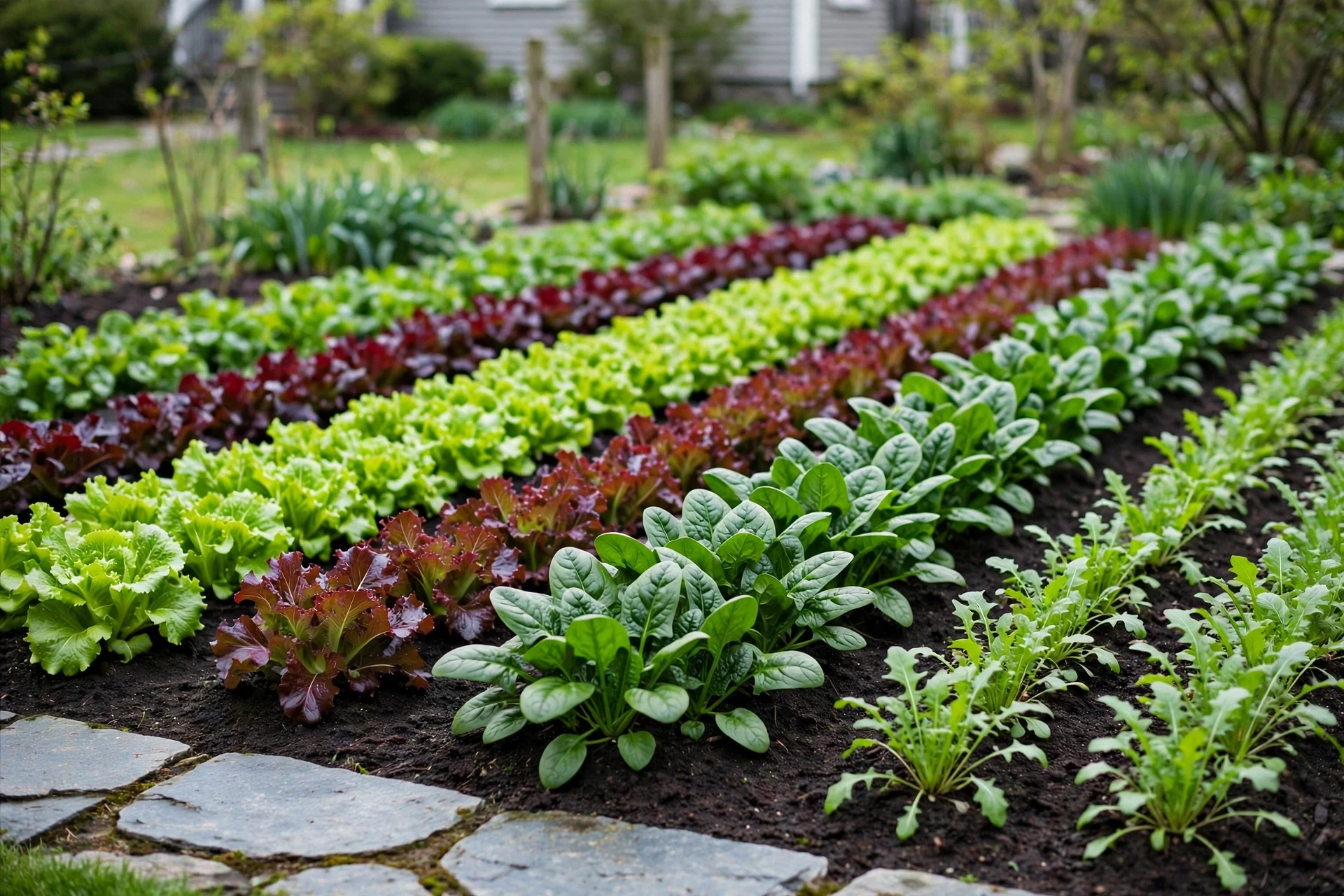
Replace a patch of lawn with a salad bed and you will never miss the grass. A low, wide bed of mixed lettuce, spinach, arugula, and radishes looks like a soft green carpet from the street, and you can harvest it a handful at a time all season. Sow the seeds in rows or scatter them for a wild look, and keep the bed watered so the leaves stay tender.
Succession sowing is the secret here. Sow a new row every two weeks, and when one row is picked clean, the next is ready. In summer, give the bed a little afternoon shade with a low tunnel or a tall plant at the edge, because lettuce bolts fast in hot sun. A salad lawn is the lowest effort, highest reward bed in a front yard garden.
Try this: Pick lettuce leaves from the outside in, one plant at a time. The centre keeps growing, so one sowing can feed you for a month.
You may also like: How to Grow Lettuce All Season
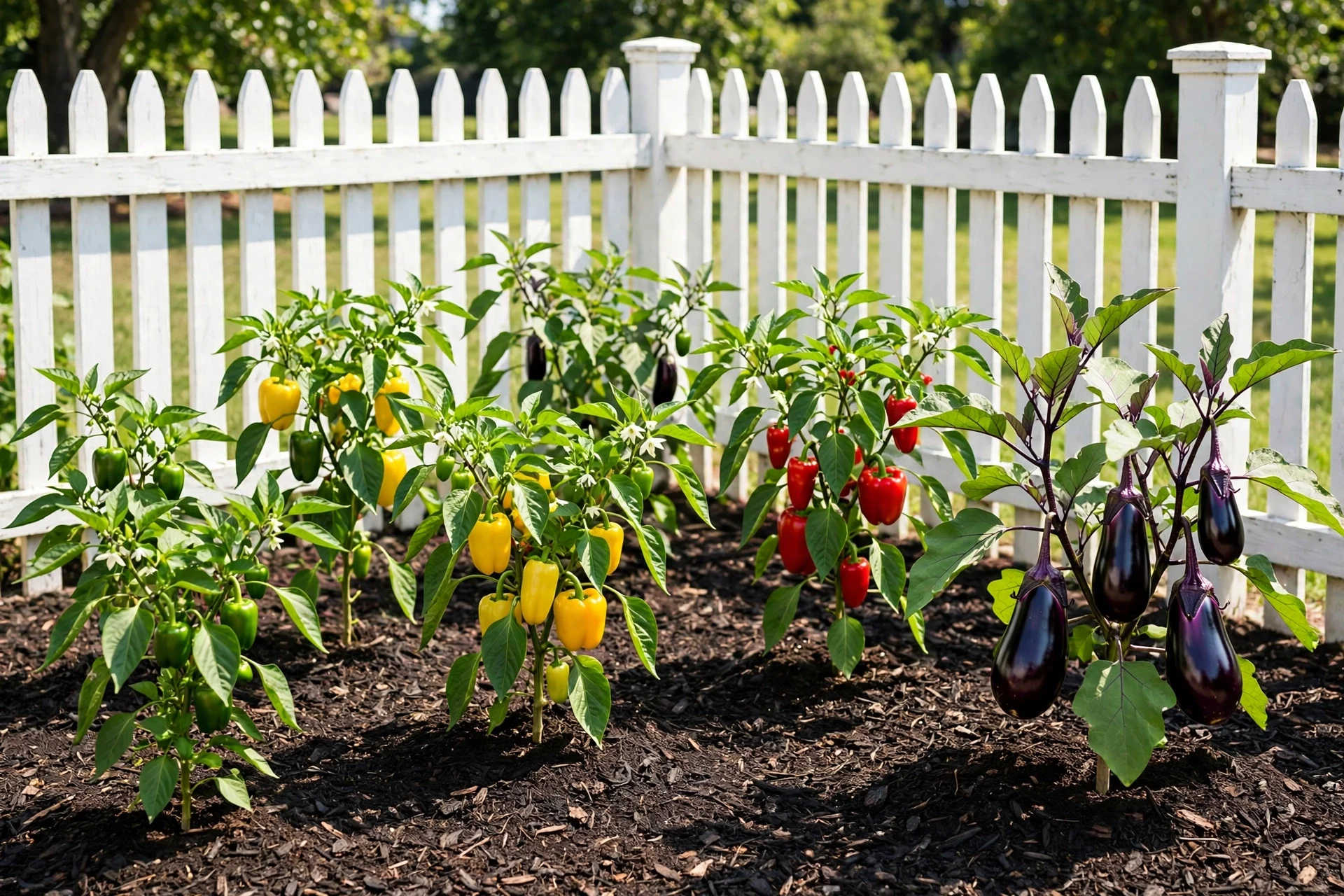
9. Peppers and Eggplants in a Sunny Corner
The sunniest corner of a front yard is wasted on grass. Give it to peppers and eggplants instead. Both love heat, both fruit heavily in a small space, and both look good doing it. Peppers come in green, red, yellow, and purple, and a row of them reads like an ornamental planting. Eggplants have big purple flowers and glossy fruit that look almost too pretty to pick.
Warm the soil first with black plastic or a dark mulch for a week before planting, and do not plant them out until nights stay above 55 degrees. Stake each plant early, because a loaded pepper plant will flop over in the first summer storm. Pick peppers often and the plant will keep setting new fruit until frost.
Try this: Plant a few basil plants between the peppers. They share water and sun needs, and basil is said to improve pepper flavour while confusing pests.
You may also like: How to Grow Peppers in Containers
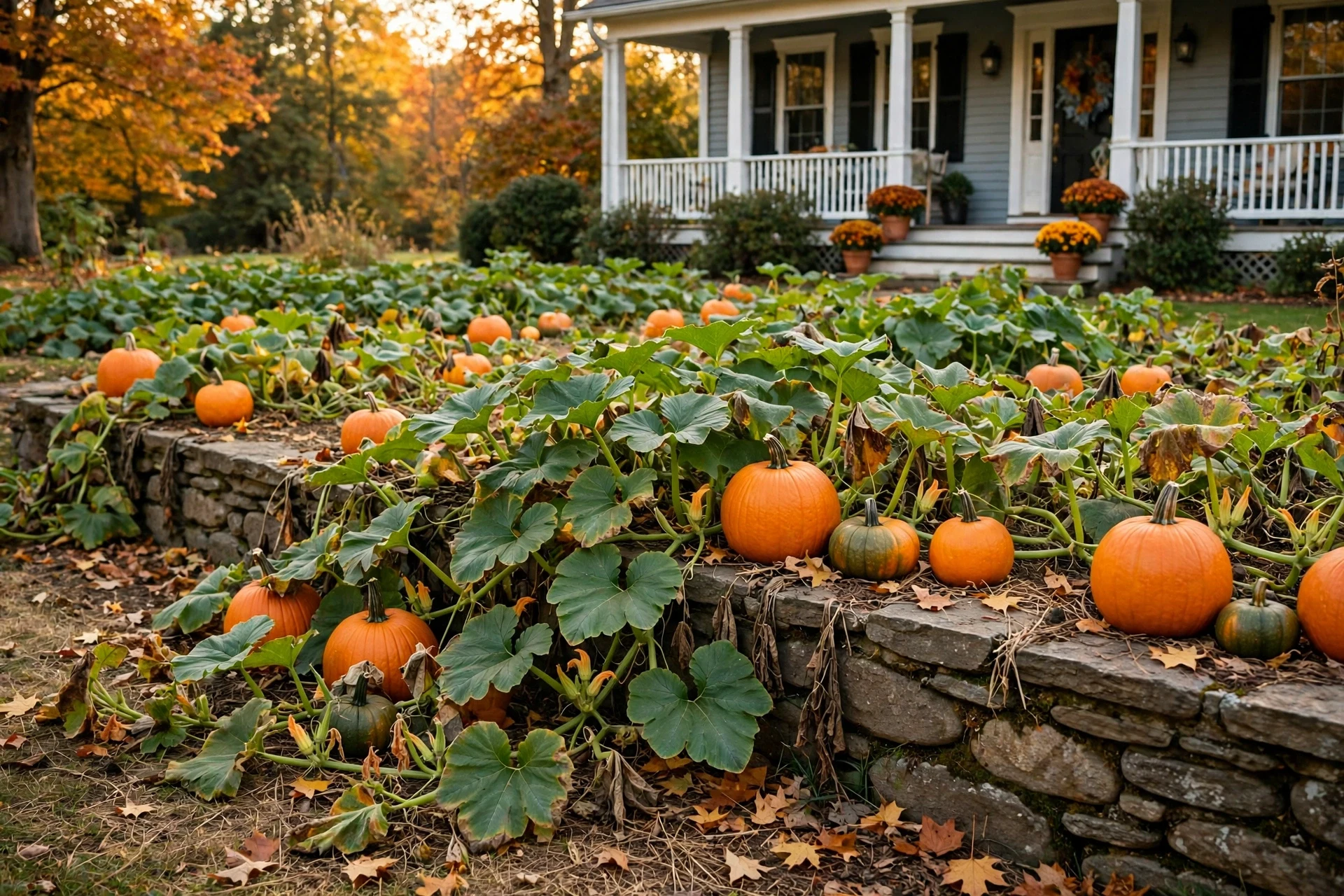
10. A Pumpkin Patch That Doubles as Ground Cover
Pumpkins are the most generous ground cover a front yard can have. One plant can sprawl ten feet, smother weeds with its big leaves, and give you pumpkins for carving, cooking, and decorating the porch in autumn. Plant pumpkins at the edge of the yard where they can run, and let the vines spill over a low wall or along a fence line.
Give each plant a mound of compost-rich soil and plenty of water in the first month. Once the vines take off, they mostly look after themselves. Train the vines away from paths and beds so they do not smother smaller plants, and slip a board under each growing pumpkin so it stays clean and round. A front yard pumpkin patch is a conversation piece by October.
Try this: Save one pumpkin for seeds. Scoop them out, roast them with salt, and you have a snack from the same plant that decorated your porch.
You may also like: Fall Front Porch Decor Ideas
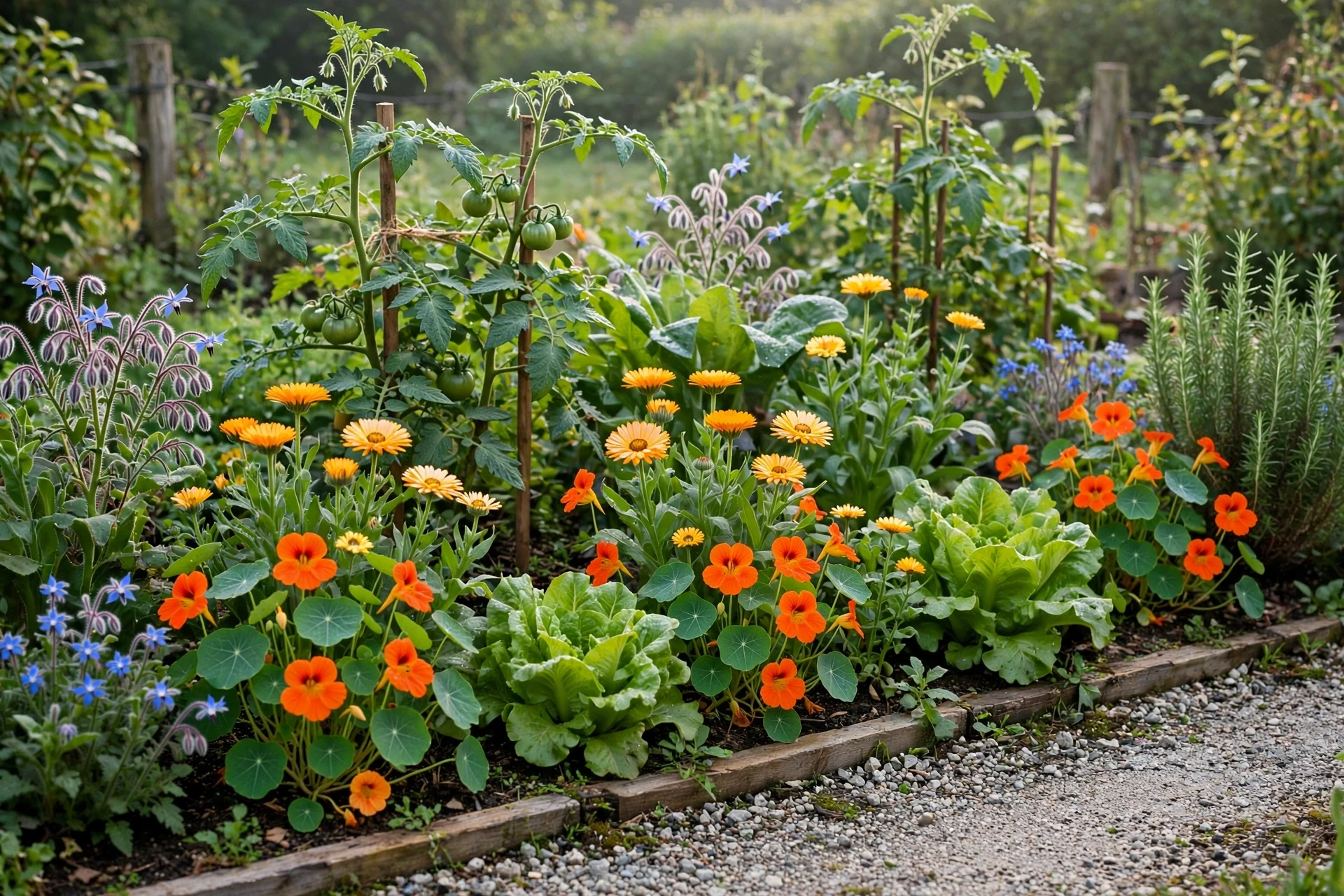
11. Edible Flowers Mixed Into Every Bed
Edible flowers are the bridge between a vegetable garden and a flower garden, and a front yard needs that bridge. Nasturtiums trail over bed edges in orange and red, calendula adds gold, borage brings blue stars that bees love, and violas edge a path like a proper flower border. All of them are edible, all of them pull in pollinators, and none of them look like vegetables.
Scatter the seeds between vegetables, not in a separate flower bed, so the colour runs through the whole garden. Nasturtiums also act as a trap crop, pulling aphids away from your beans and squash. Pick the flowers for salads and garnishes, and the plants will bloom harder for being picked.
Try this: Float nasturtium flowers in a glass of water on the table. They look beautiful, taste peppery, and they cost you nothing.
You may also like: Edible Flowers You Can Grow at Home
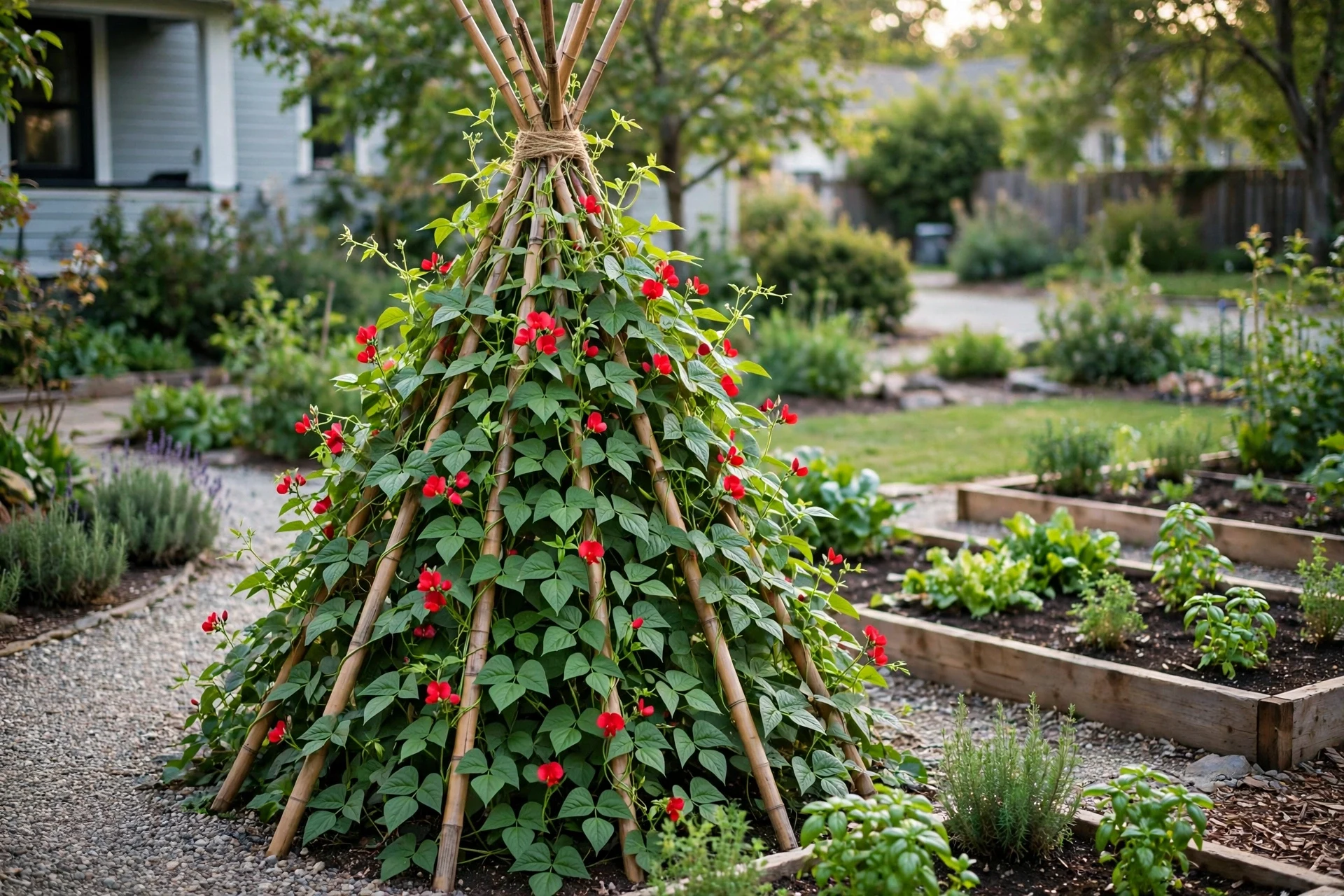
12. A Bean Teepee That Kids Love
A bean teepee is a garden, a playhouse, and a harvest all in one. Lean six long bamboo poles together, tie them at the top, and plant climbing beans at the base of each pole. By midsummer the poles are covered in leaves and flowers, and the inside is a shady green tent that kids will claim as their own. The beans hang inside where small hands can reach them.
Place the teepee where it will not shade other beds, because it gets tall and casts a long shadow. Leave a clear opening on the sunny side so kids can crawl in, and plant a few nasturtiums at the base for colour. A bean teepee is the fastest way to get a child excited about vegetables, because they grew the hiding place themselves.
Try this: Plant scarlet runner beans for the teepee. Their red flowers are beautiful, the beans are big and easy for kids to pick, and the flowers pull in hummingbirds.
You may also like: Garden Ideas Kids Will Love
13. Gravel Paths That Keep It Tidy
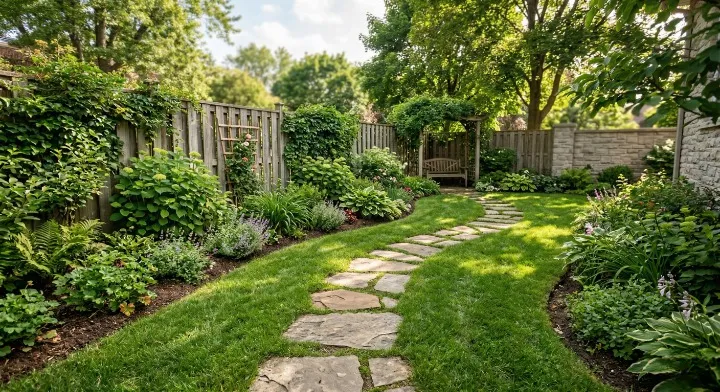
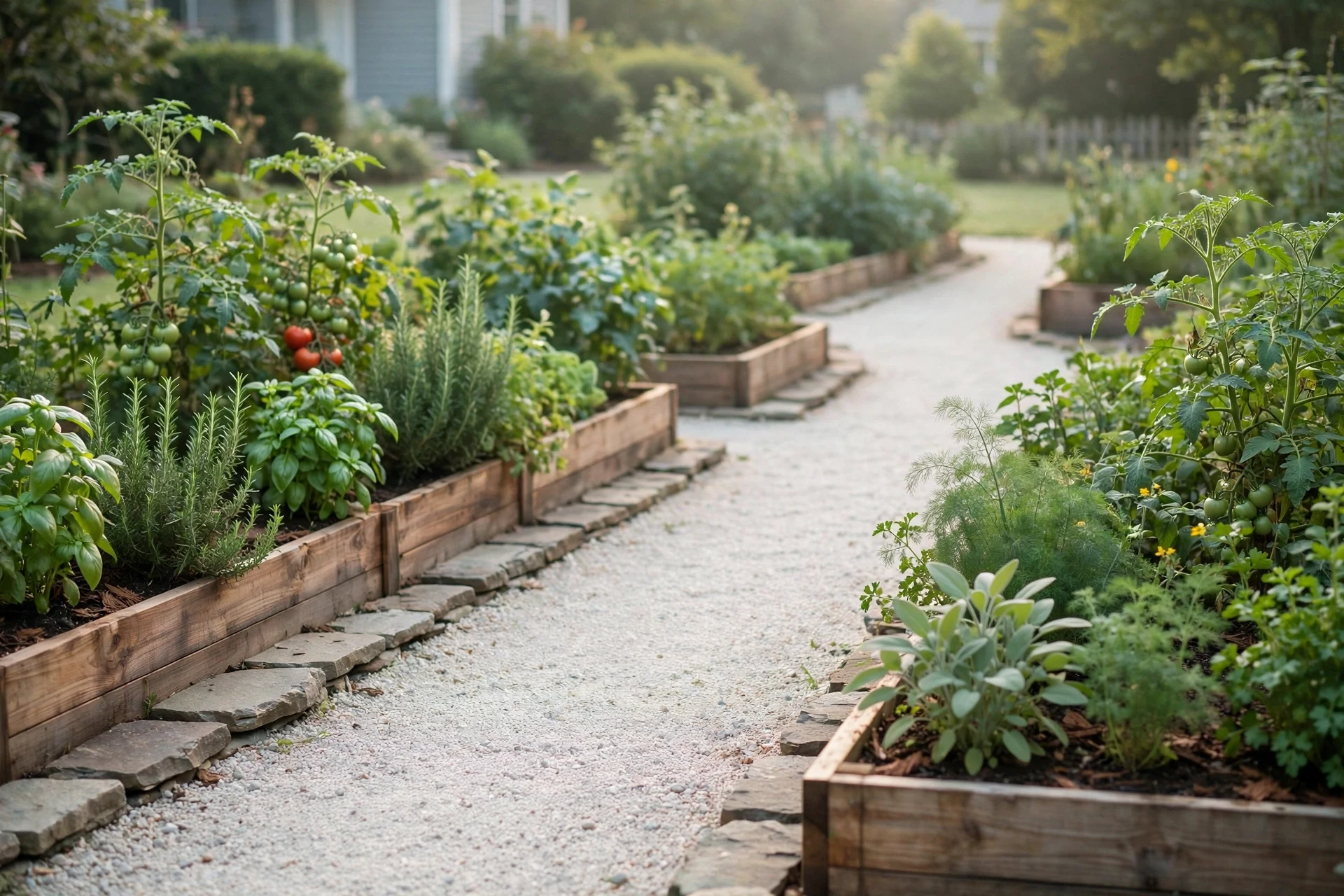
A front yard vegetable garden lives or dies by its paths. Gravel paths are the cheapest way to make the whole garden look finished. They drain well, they keep shoes clean, they stop weeds, and their pale colour makes the green beds pop. Lay landscape fabric underneath, edge the path with stone or steel, and spread the gravel two inches deep so it stays put.
Make the main path at least three feet wide so a wheelbarrow fits, and keep the smaller paths between beds at two feet. A path that is too narrow gets overgrown by July and turns the garden into a jungle. Rake the gravel once a month and pull any weeds that sneak through, and the garden will look tended even on a busy week.
Try this: Use a slightly larger gravel size, about half an inch, so it does not stick to shoes and track into the house.
You may also like: Garden Path Ideas on a Budget
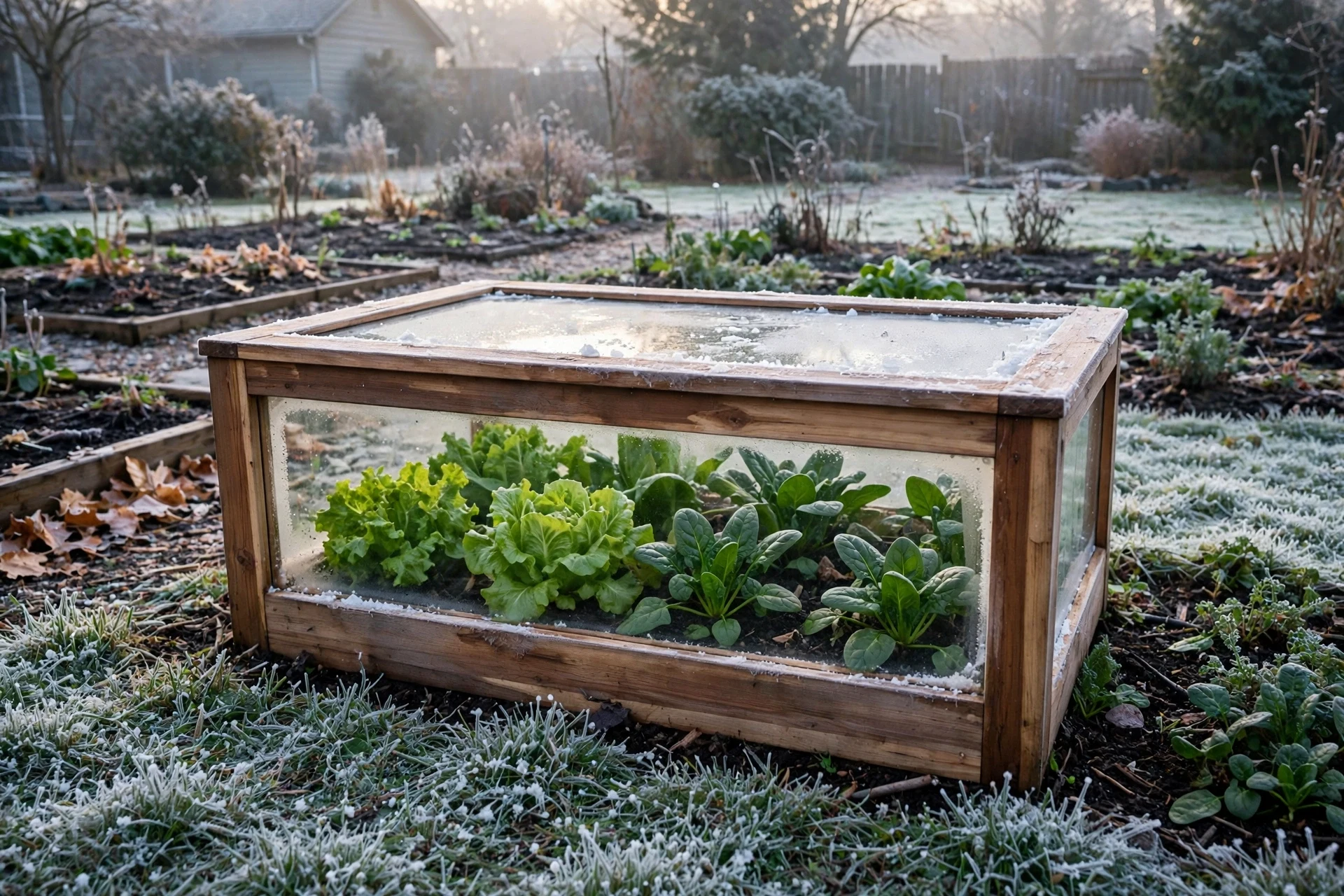
14. A Cold Frame for Four Season Harvests
A cold frame is a low glass box that turns one bed into a four season garden. It traps heat, blocks wind, and lets you grow lettuce, spinach, and radishes weeks before the last frost and weeks after the first one. In a front yard, a cold frame built from cedar and old windows looks like a charming garden feature, not a greenhouse.
Set the frame on a sunny bed, facing south, and prop the lid open on warm days so the plants do not cook. Water sparingly in winter, because the frame holds moisture, and close the lid before a hard frost. A cold frame is the smallest investment that gives you the longest harvest, and it makes your front yard productive when every lawn on the street is brown.
Try this: Build the cold frame from an old window and scrap wood. It costs almost nothing, and the wavy old glass looks better than new panes.
You may also like: How to Extend Your Growing Season
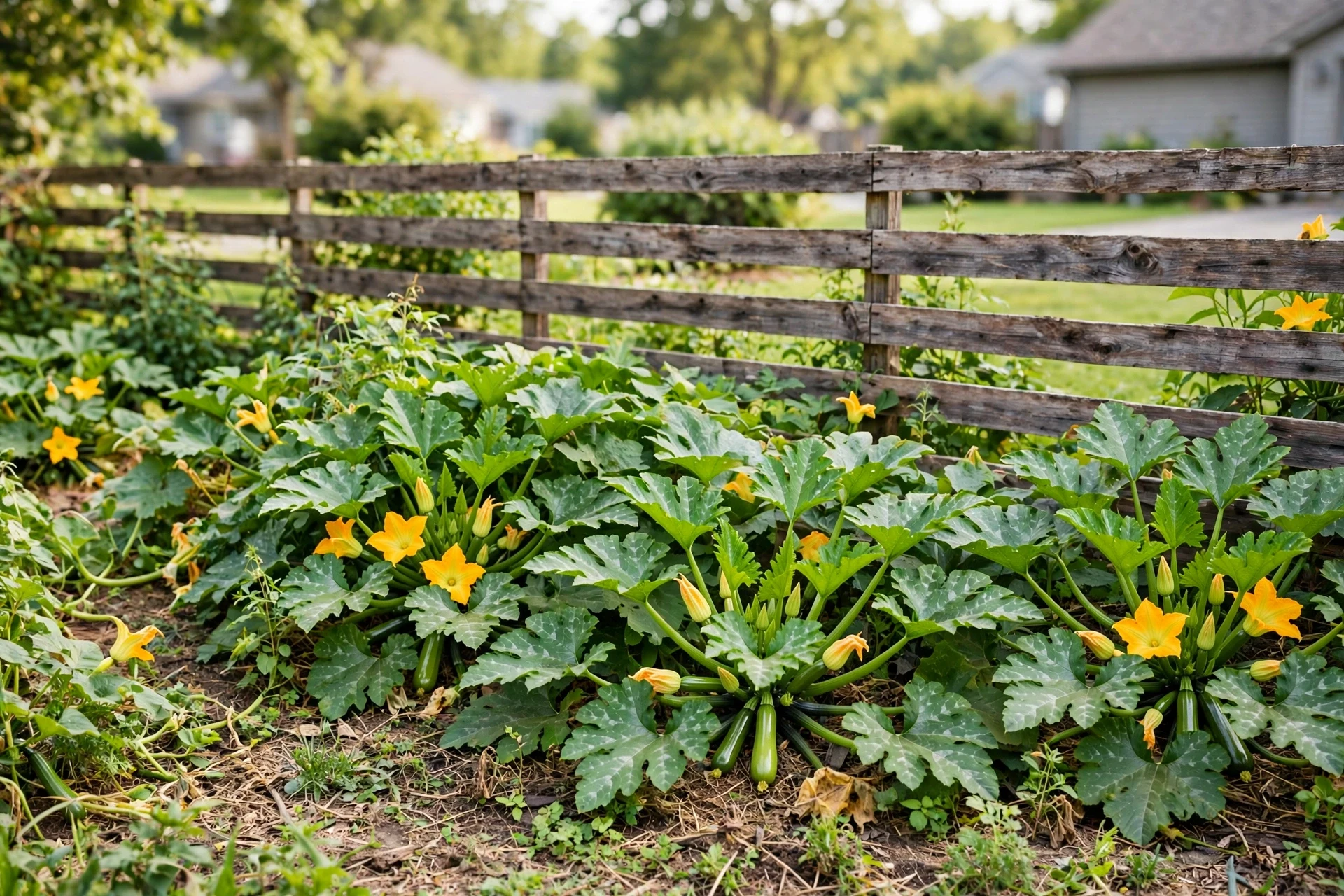
15. Zucchini and Squash Along the Fence Line
Zucchini and squash need room, and a fence line gives it to them. Plant them along the back fence of the front yard, where their big leaves can sprawl without smothering smaller beds, and train the vines up the fence if you want to save even more space. The huge yellow flowers are beautiful, the fruit is obvious and easy to pick, and one plant feeds a family all summer.
Give each plant three feet of space and a mound of compost, and water at the base, not on the leaves, to keep mildew away. Pick zucchini small, about six to eight inches, because they taste better and the plant will keep producing. Leave one to grow huge if you want a laugh, but do not leave many, or the plant will slow down.
Try this: Pick the male flowers in the morning, stuff them with ricotta, and fry them. They are a delicacy, and picking them does not reduce your harvest.
You may also like: How to Grow Zucchini Without the Mildew
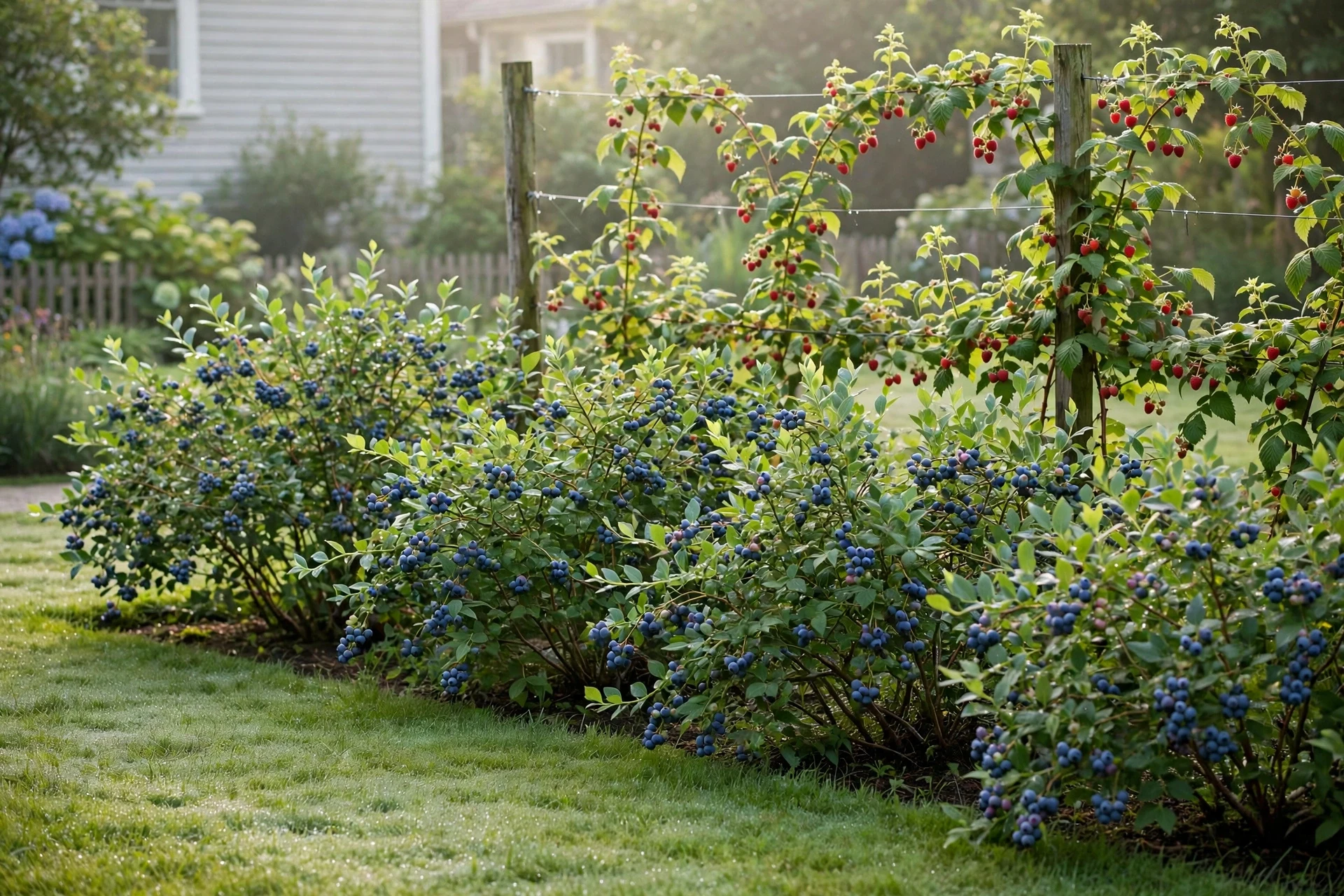
16. A Berry Border That Feeds You for Years
A row of berry bushes along the side of a front yard is a perennial investment that pays for decades. Blueberries, raspberries, and currants need almost no care once they are established, they flower beautifully in spring, and they fruit in summer when the vegetable beds are at their peak. A berry border also marks the edge of the garden the way a hedge would, but it gives you breakfast instead of just a boundary.
Blueberries need acidic soil, so plant them in a bed of their own with pine bark mulch and a little sulphur. Raspberries need a fence or wires to lean on, and they spread, so give them a contained strip. Prune in late winter, mulch in spring, and pick berries every other day in season so birds do not take them all.
Try this: Net the bushes with lightweight bird netting once the berries start to colour. Without it, the birds will harvest your crop before you do.
You may also like: How to Grow Blueberries in Your Yard
17. Carrots and Root Vegetables in a Deep Bed
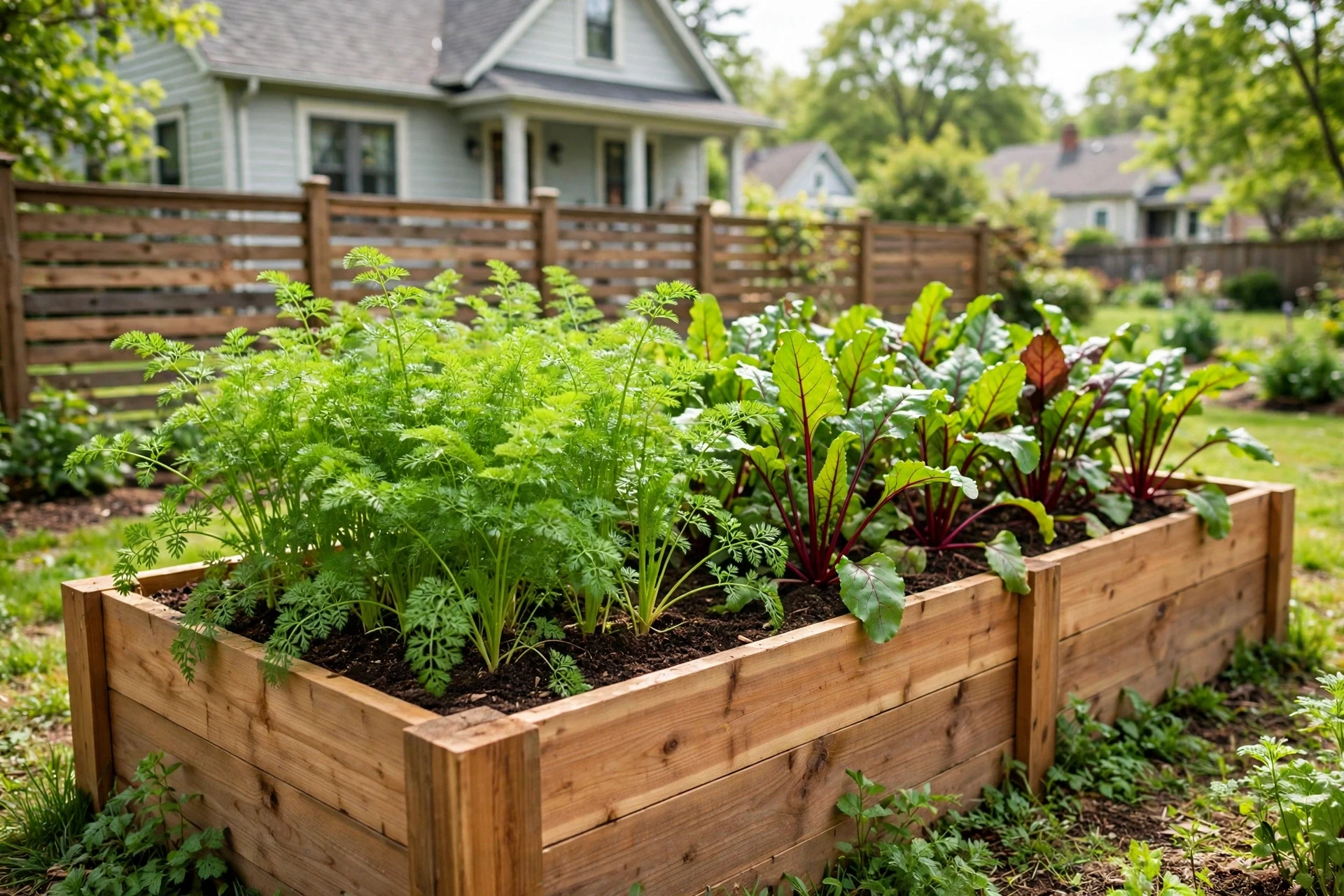
Root vegetables need deep, loose soil, and a tall raised bed is the perfect place to give it to them. Carrots, parsnips, and beets grow straight and sweet in a bed filled with sandy, stone free soil, and their feathery tops look like a soft green border from the street. A deep bed, eighteen inches or more, is the difference between a straight carrot and a forked one.
Sow carrot seed thinly and keep the bed moist until the seeds sprout, which can take two weeks. Thin the seedlings to two inches apart, because crowded carrots stay skinny. Harvest beets when they are the size of a golf ball for the sweetest flavour, and pull carrots after a light frost, because cold sweetens them.
Try this: Mix a little sand into the bed before sowing carrots. It keeps the soil loose, and loose soil is what makes a carrot grow long and straight.
You may also like: How to Grow Carrots in Raised Beds
18. A Small Fruit Tree as the Focal Point
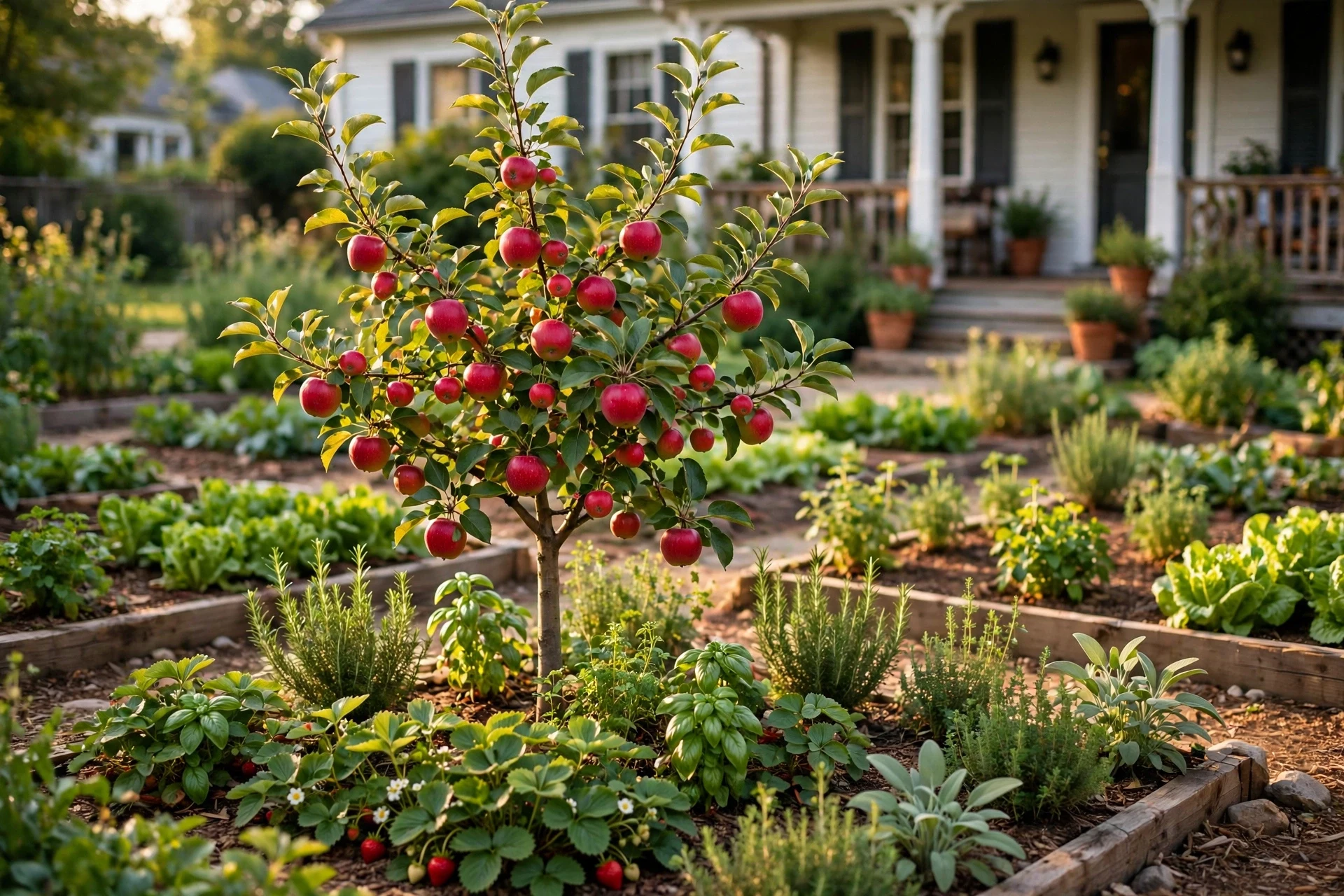
A small fruit tree is the best focal point a front yard vegetable garden can have. A dwarf apple, a fig, or a lemon tree in a sunny spot gives the garden height, shade, and a harvest, all in one plant. Underplant it with herbs and strawberries, and the tree becomes the centre of a layered edible landscape that looks designed from the day it is planted.
Choose a dwarf or semi dwarf variety that tops out at eight to ten feet, so it never overwhelms the house. Prune in late winter to keep the shape open, and water deeply in the first two summers until the roots are established. A fruit tree also gives the garden a reason to exist in winter, when the beds are empty and the tree holds its shape against the sky.
Try this: Hang a few bird scarers or old CDs in the tree when the fruit ripens. The flashing light keeps birds away without any netting.
You may also like: Best Dwarf Fruit Trees for Small Yards
19. Compost Corner Hidden Behind a Trellis
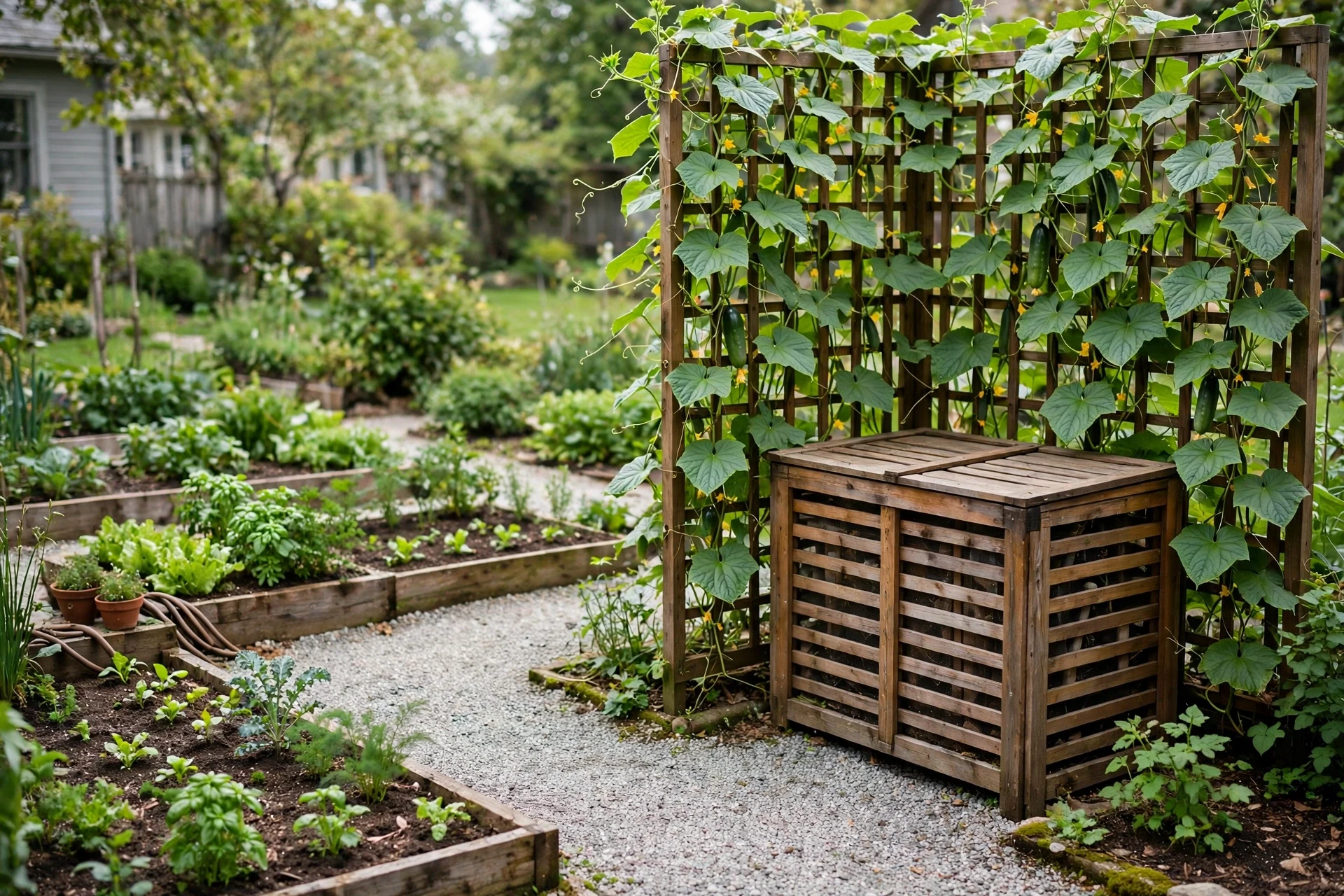
Every vegetable garden needs compost, and a front yard needs it hidden. A compost corner behind a trellis, a lattice screen, or a row of tall sunflowers keeps the working part of the garden out of sight while still close enough to use. Build a simple three bin system from pallets or wire, and screen it with a trellis planted with beans or cucumbers, so the screen itself produces food.
Turn the pile every few weeks, keep it as damp as a wrung out sponge, and mix green kitchen scraps with brown leaves and straw. In three to six months you will have dark, crumbly compost to feed every bed in the yard. A hidden compost corner is what makes a front yard garden sustainable, because the garden feeds itself.
Try this: Keep a small countertop caddy in the kitchen for scraps. When it is full, walk it out to the pile. The habit is what keeps the compost going.
You may also like: How to Start Composting in a Small Yard
20. Sunflowers as a Living Fence
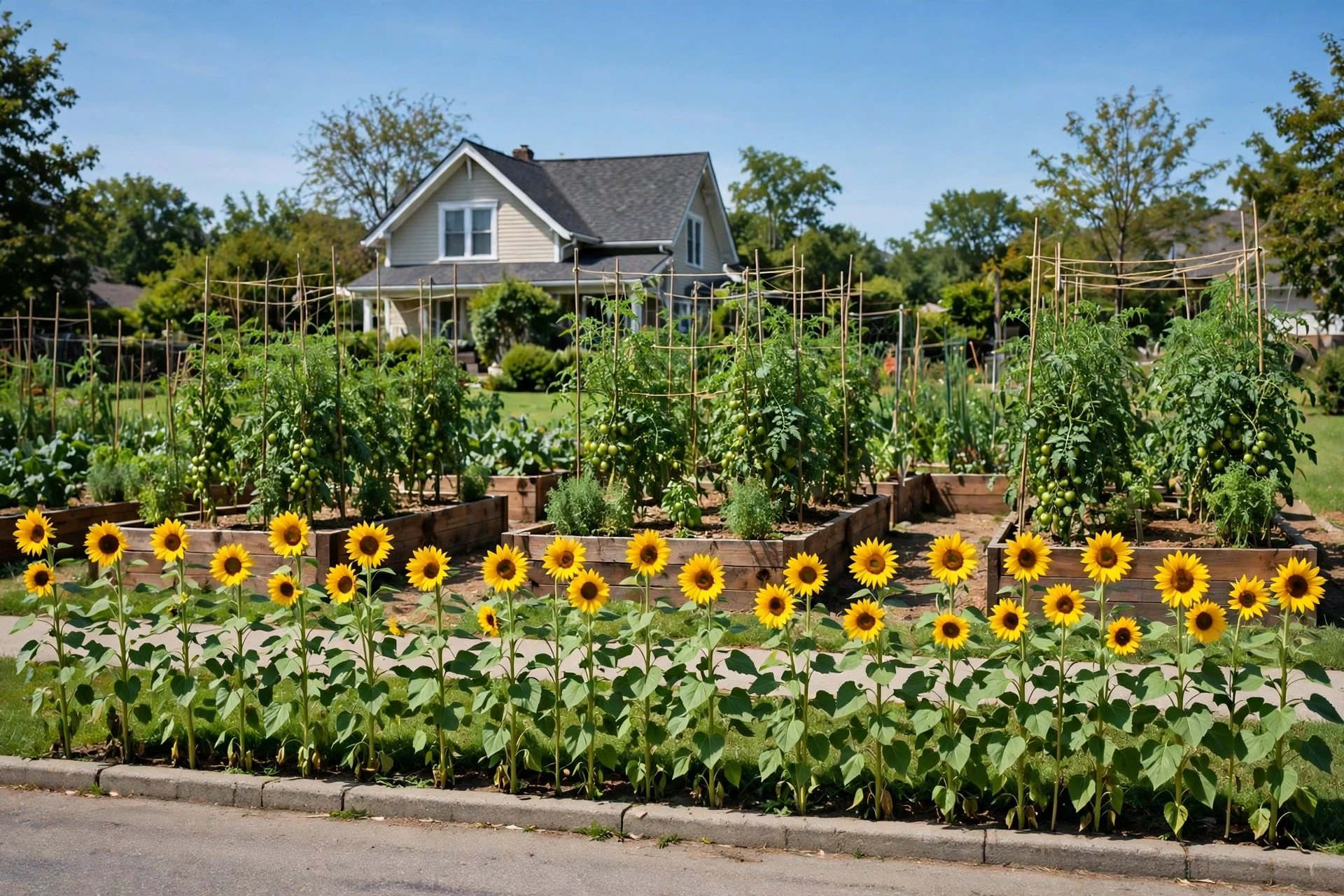
Sunflowers are the tallest, cheapest, sunniest fence a front yard can grow. A row of them along the street edge marks the boundary of your garden, screens the beds from the road, and gives you seeds and cut flowers by late summer. They grow six to ten feet in a single season from a seed that costs pennies, and they turn their faces to follow the sun all day.
Sow them directly in the soil after the last frost, about a foot apart, and water well until they are established. Stake the tallest varieties so wind does not snap them, and leave the heads on the stalks after they fade so birds can eat the seeds. A sunflower fence tells the whole street that this yard is a garden, and it does it with a smile.
Try this: Plant a short variety, like a dwarf sunflower, along the walkway too. They bloom at knee height and kids can pick them without a ladder.
You may also like: How to Grow Sunflowers for Seeds
21. A Harvest Table by the Front Gate
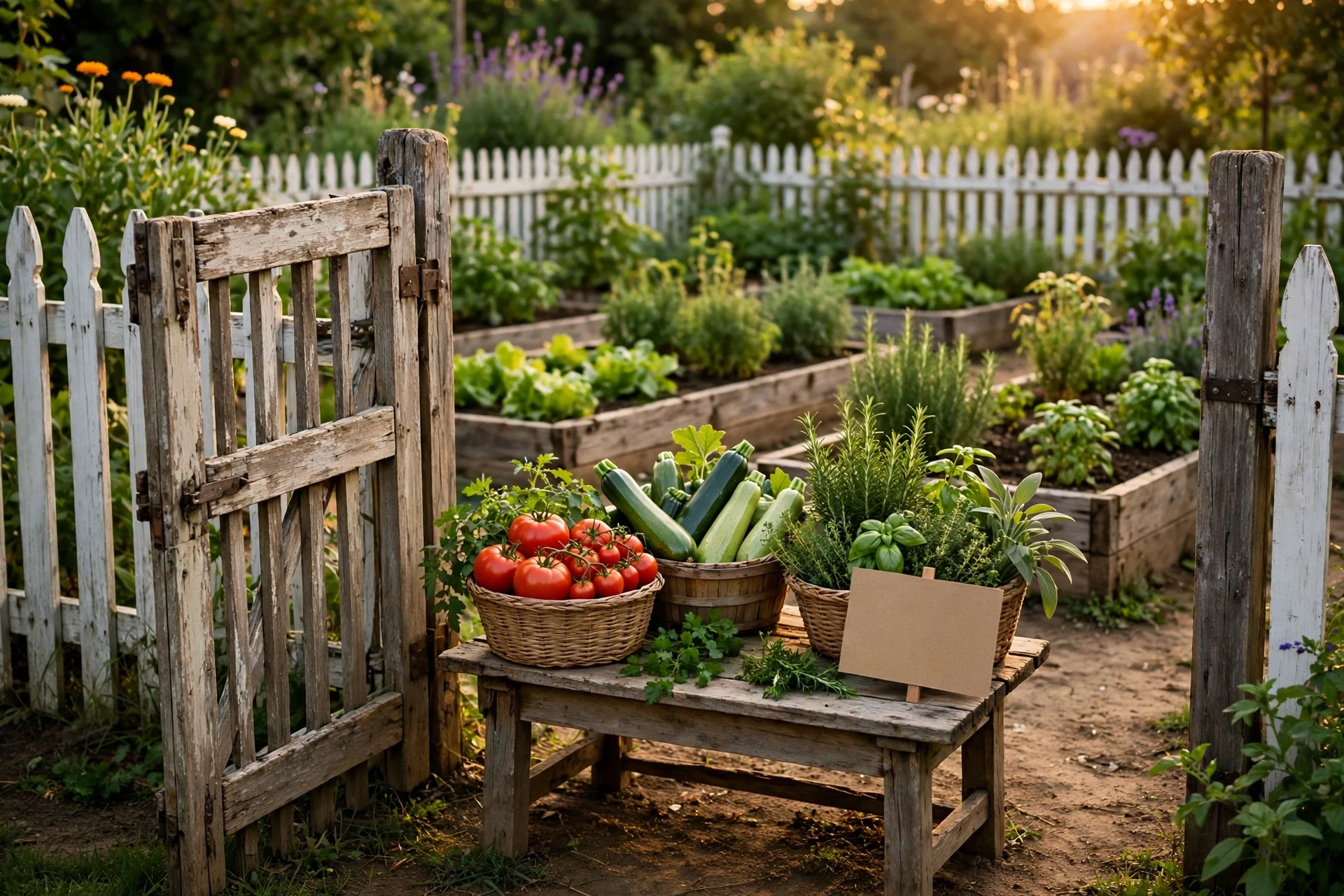
A small harvest table by the front gate is the friendliest idea in this whole list. Set out a wooden crate or a small table with extra zucchini, tomatoes, herbs, and a sign that says take one, and your front yard garden becomes a neighbourhood gift. It costs you nothing, because a productive garden always grows more than one family can eat, and it turns strangers into neighbours.
Keep the table simple: a crate, a few paper bags, and a handwritten sign. Restock it in the morning, and take in anything left at dusk so it stays fresh. A harvest table is the proof that a front yard vegetable garden is not just about food. It is about sharing it, and a yard that shares its food is a yard people remember.
Try this: Add a few recipe cards to the table. A tomato with a bruschetta recipe is a gift. A tomato alone is just a tomato.
You may also like: How to Share Your Garden Harvest
The 1-2-3 Front Yard Garden Method
If you remember nothing else, remember these three steps.
1
Pick your sunniest spot and check the rules.
Watch the yard for a week, find the six to eight hour sun patch, and check your HOA or city rules before you build anything. A quick call now saves a forced removal later.
2
Build one bed, plant it well, and keep it tidy.
One cedar raised bed, good soil, a clean path, and a flower edge will teach you more than five messy beds. Add a second bed only when the first one is thriving.
3
Harvest, share, and repeat.
Pick often, because picking makes plants produce more. Share the extra at the gate, save the seeds, and plant the next bed. A front yard garden gets better every year, because the soil improves and you learn what grows best in your patch of sun.
At a Glance
| Idea | Cost | Time | Best for |
|---|---|---|---|
| 1. Cedar Raised Beds With Clean Lines | $80-150 per bed | A weekend | First time front yard gardeners |
| 2. A Stone Edged Kitchen Garden by the Walkway | $40-100 | A day | Small front yards |
| 3. A Trellis Arch Over the Front Path | $60-120 | A day | Making an entrance |
| 4. Rainbow Chard as a Living Border | Under $10 | An hour | Colour all season |
| 5. Herbs by the Front Door | $20-40 | An hour | Daily cooking |
| 6. A Vertical Herb Wall on the Fence | $50-100 | A day | Small or shady yards |
| 7. Tomatoes in Decorative Pots on the Porch | $30-60 per pot | An hour | Renters and small spaces |
| 8. A Salad Lawn of Lettuce and Greens | Under $15 | An hour | Fast first harvests |
| 9. Peppers and Eggplants in a Sunny Corner | $20-30 | An hour | Hot sunny spots |
| 10. A Pumpkin Patch That Doubles as Ground Cover | Under $10 | An hour | Big yards and kids |
| 11. Edible Flowers Mixed Into Every Bed | Under $15 | An hour | Pollinators and colour |
| 12. A Bean Teepee That Kids Love | $20-30 | An hour | Families with kids |
| 13. Gravel Paths That Keep It Tidy | $50-100 | A day | Making the garden look finished |
| 14. A Cold Frame for Four Season Harvests | $40-80 | A day | Year round growing |
| 15. Zucchini and Squash Along the Fence Line | Under $15 | An hour | Big eaters and big spaces |
| 16. A Berry Border That Feeds You for Years | $40-80 | A day | Long term harvests |
| 17. Carrots and Root Vegetables in a Deep Bed | $30-50 | An hour | Sweet root crops |
| 18. A Small Fruit Tree as the Focal Point | $40-80 | A day | Shade and structure |
| 19. Compost Corner Hidden Behind a Trellis | Under $40 | A day | Feeding the soil |
| 20. Sunflowers as a Living Fence | Under $10 | An hour | Privacy and cheer |
| 21. A Harvest Table by the Front Gate | Under $20 | An hour | Sharing with neighbours |
Do This, Not That
| Do This | Not That |
|---|---|
| Design the garden like landscaping, with straight edges and repeated shapes | Scatter random beds in mixed materials and hope it looks fine |
| Check HOA and city rules before you build anything | Build first and risk a forced removal later |
| Map the sun for a week before choosing bed spots | Put beds wherever there is empty grass |
| Mix flowers and herbs into every vegetable bed | Grow vegetables alone in bare rows |
| Keep paths three feet wide and edged | Let paths narrow until beds swallow them |
| Mulch every bed to keep soil dark and moist | Leave bare soil that dries out and grows weeds |
| Water deeply at the base of plants | Sprinkle lightly on leaves every day |
| Harvest often to keep plants producing | Leave ripe vegetables until they rot on the plant |
| Keep mint in its own pot | Plant mint in a bed and watch it take over |
| Share the extra harvest at the front gate | Let surplus vegetables rot while neighbours buy theirs |
Your Front Yard Garden Plan
Here is a simple plan to turn a lawn into a garden in one season, without tearing up the whole yard at once.
Week 1: Watch and check. Track the sun for a week and mark the sunny spots. Call your HOA or city office and ask about front yard garden rules. Order one cedar raised bed kit or the lumber to build one.
Week 2: Build the first bed. Set the bed in the sunniest spot, fill it with topsoil and compost, and lay a gravel path to it from the walkway. Plant lettuce, radishes, and herbs first, because they give you a harvest in weeks.
Week 3: Add the entrance. Put in a trellis arch or a stone edge along the walkway, and plant marigolds and nasturtiums at the bed edges. The garden should start to look like a garden, not a construction site.
Month 2: Plant the summer crops. Tomatoes, peppers, beans, and squash go in once nights stay warm. Add a second bed only if the first one is thriving and you still have sunny space.
Month 3: Harvest and share. Pick salad greens daily, tomatoes weekly, and set up the harvest table by the gate when the surplus starts. Save seeds from the best plants for next year.
Autumn: Plant for next spring. Sow garlic and broad beans in autumn, mulch the beds thick, and plan next year’s layout while this year’s garden is still fresh in your mind.
Take It Further
- Add drip irrigation to your beds so watering takes five minutes instead of thirty.
- Start a compost pile behind a trellis screen and feed your beds with your own compost by next spring.
- Try one new vegetable each season that you have never grown before, like kohlrabi or Romanesco.
- Keep a garden journal with what you planted, where, and how it did, so next year starts smarter.
- Join a local seed swap and trade your saved seeds for varieties you have never tried.
- Plant a pollinator strip of native flowers along the street edge to bring in more bees.
- Build a second raised bed in a different material, like stone or brick, and compare how each one performs.
- Invite a neighbour over for a garden tour and a basket of tomatoes. A shared garden grows a shared street.
Front Yard Vegetable Garden Cheat Sheet
1
Sun: 6 to 8 hours of direct sun for most vegetables
2
Best first bed: cedar raised bed, 3 to 4 feet wide, 12 inches deep
3
Best fast crops: lettuce, radishes, spinach, arugula
4
Best summer crops: tomatoes, peppers, beans, squash, zucchini
5
Best border plant: rainbow chard, for colour and food in one row
6
Best flowers to mix in: marigolds, nasturtiums, calendula, borage
7
Watering: deep at the base, 1 to 2 inches a week
8
Mulch: straw or bark, 2 to 3 inches, on every bed
9
Mint rule: always in its own pot, never in a bed
10
First check: HOA and city rules, before you build anything
Questions People Ask
Can I plant a vegetable garden in my front yard?
Yes, in most places you can, but check your local rules first. Some cities and homeowner associations limit front yard gardens, bed height, or structures like trellises, and a few still require a certain amount of lawn. A quick call to your HOA or city office will tell you what is allowed, and a tidy design with raised beds and clean paths is far more likely to pass than a messy plot. If rules are strict, start with pots and a small herb bed by the door, which almost no rule bans.
How much sun do vegetables need to grow in a front yard?
Most vegetables need six to eight hours of direct sunlight a day to produce well. Leafy greens like lettuce and spinach can manage with four to six hours, but tomatoes, peppers, squash, and eggplants will sulk and stay small in shade. Watch your yard for a week before you build, and put the beds in the sunniest spots. South facing front yards are ideal, and a bed that gets morning sun plus afternoon sun is better than one that only gets one or the other.
What vegetables grow best in a front yard garden?
Fast growers like lettuce, radishes, spinach, and arugula are the best starters, because they give you a harvest in three to six weeks and look like a soft green carpet. Tomatoes, peppers, herbs, and rainbow chard are the best looking crops, because they add height and colour that read as landscaping. Root vegetables like carrots and beets do well in deep raised beds, and climbing beans on a trellis arch give you food and a beautiful entrance in one plant.
How do I keep a front yard vegetable garden looking neat?
Design it like landscaping: straight edges, one bed material repeated, clean gravel paths, and a flower or herb edge on every bed. Mulch the soil so it stays dark and tidy, harvest often so plants do not flop over, and pull weeds weekly before they take hold. A trellis arch or a stone border gives the garden a clear structure, and a mowed strip of lawn or a gravel path around the beds frames the whole thing like a picture.