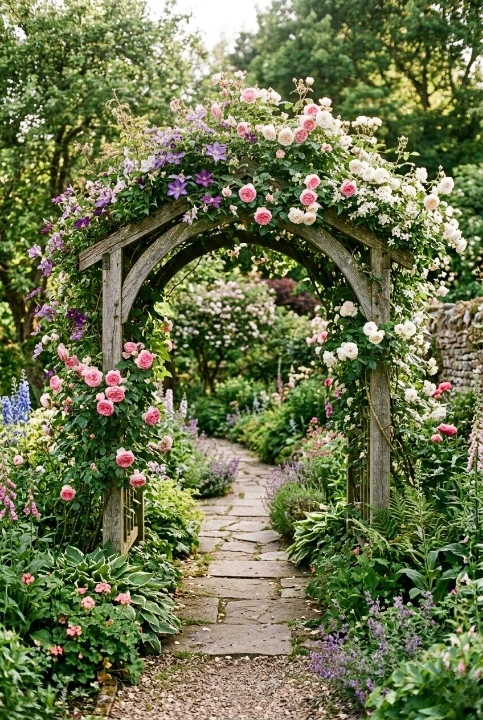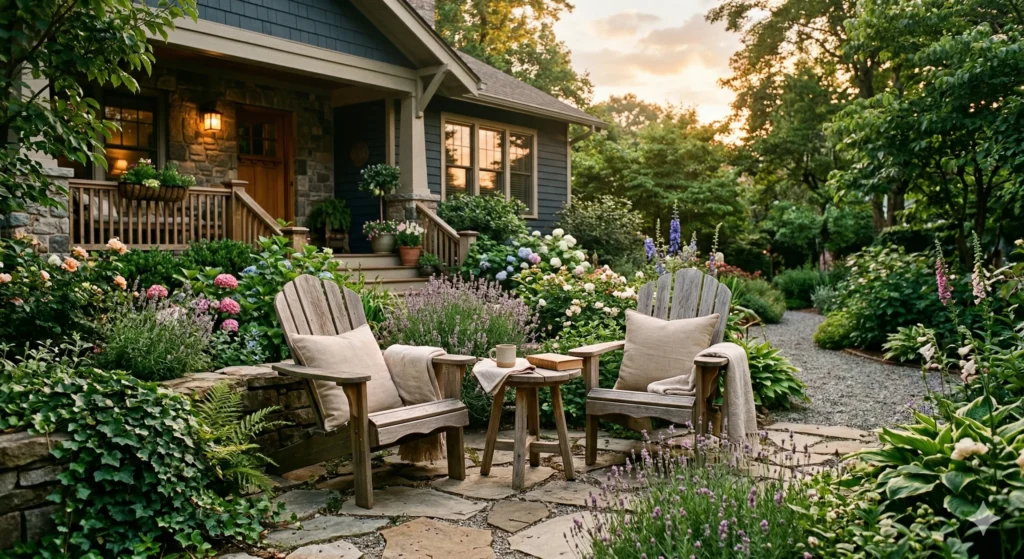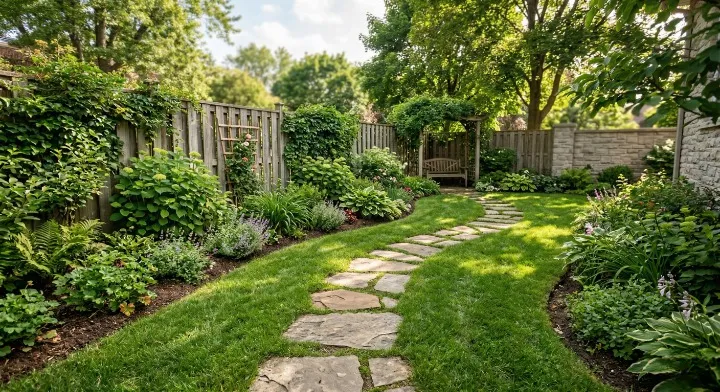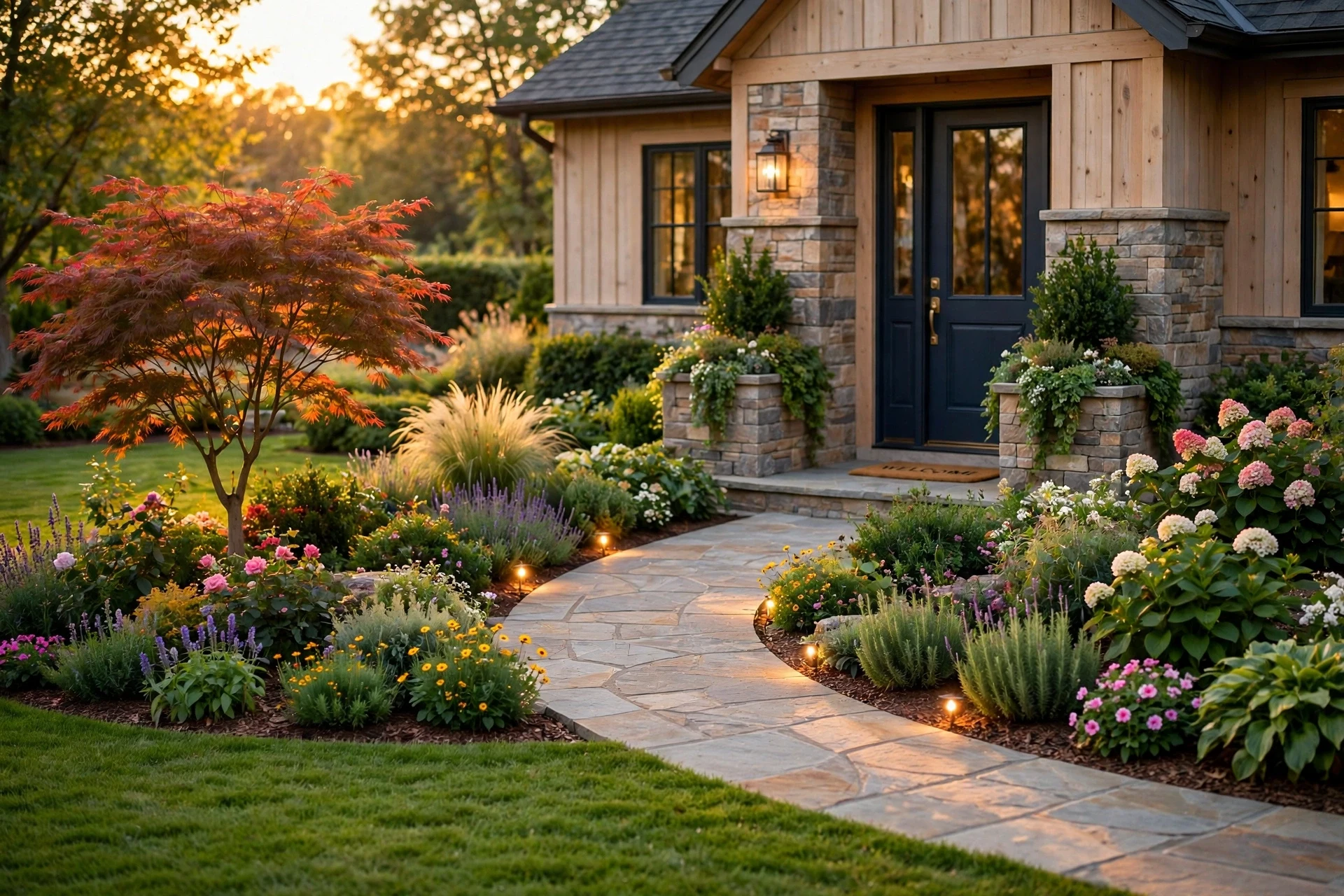
There is a house on my street that I used to walk past without noticing. Same brick, same roof, same lawn as every other house. Then one spring the owners changed the front yard, and suddenly I slowed down every time I passed. Nothing huge had happened. The walkway was wider, the beds were edged, and there were flowers by the door. But the whole house looked different, like it had woken up. That is the quiet power of good front yard landscaping ideas: small changes, a completely different house.
That is what front yard landscaping does. It is the first thing people see, and it decides what they think of the home before they ever step inside. The good news is that you do not need a full renovation or a big budget to get that effect. A few smart changes, made in the right order, can lift a plain front yard into one that makes the whole street look better.
These 21 front yard landscaping ideas work for small yards and big ones, for renters and owners, for people who love gardening and people who just want the yard to look good without much work. Pick one or two to start, and your home will feel different by the weekend.
Too Long; Didn’t Read
Front yard landscaping is about structure first and plants second. Start by clearing clutter, defining the walkway, and edging the beds, then layer in plants: taller shrubs at the back, mid-height perennials in the middle, and low flowers or groundcover at the front. Add mulch, lighting, and a pair of planters by the door for instant polish. Choose plants that suit your sun and soil, repeat groupings for a designer look, and keep it low maintenance with evergreens, perennials, and drip irrigation. Most of these ideas cost little and take a weekend or less.
What's Inside This Guide
ToggleThe House That Sold Itself
A friend of mine was selling her house, and the agent gave her one piece of advice before the first showing: fix the front yard. The house inside was beautiful, but the front was tired. Overgrown shrubs hid the windows, the walkway was cracked, and the lawn had bare patches.
She spent one weekend on it. She cut back the shrubs, edged the beds, spread fresh dark mulch, and put two big planters by the front door with white flowers. She added a few solar path lights along the walkway. The total cost was less than a new sofa.
The first buyers who came to see the house made an offer the same day. The agent told her the front yard did the talking before anyone walked through the door. I have never forgotten that. The front yard is not decoration. It is the first chapter of the story your home tells, and it is the cheapest chapter to rewrite.
The 3 Things That Make Front Yard Landscaping Work
Before you pick an idea, these three things decide almost everything.
1. Structure before plants. A yard with clean edges, a clear walkway, and defined beds looks good even before anything blooms. Clear the clutter, define the lines, and then plant. Plants fill a good structure. They cannot fix a missing one.
2. Layer in threes. Tall at the back, medium in the middle, low at the front. That one rule, repeated in every bed, gives you the depth that makes a yard look designed instead of random. Repeat the same plant groupings in different beds so the yard feels connected.
3. Pick plants for your real life. Sun, soil, water, and how much time you actually have. A plant that needs daily watering in a yard you visit twice a week will die, no matter how pretty it looked at the nursery. Evergreens for structure, perennials for return value, and mulch to hold moisture and stop weeds.
Keep those three in mind and every idea below will make sense.
The 21 Front Yard Landscaping Ideas
1. Clear the Clutter First
Every good front yard starts with subtraction, not addition. Walk out to the street and look at your house the way a stranger would. Overgrown shrubs, dead plants, broken edging, and random decor all compete for attention and make the yard look tired.
Cut back anything blocking a window or the door. Pull out dead plants and mismatched bits. Rake the beds clean. You will be surprised how much better the yard looks before you spend a single dollar. This is the fastest curb appeal win there is, and it costs nothing but an afternoon.
Try this: Take a photo of your house from the street before you start, so you can see the change clearly when you are done.
You may also like: Backyard Landscaping Ideas That Transform Your Outdoor Space
2. Widen the Walkway
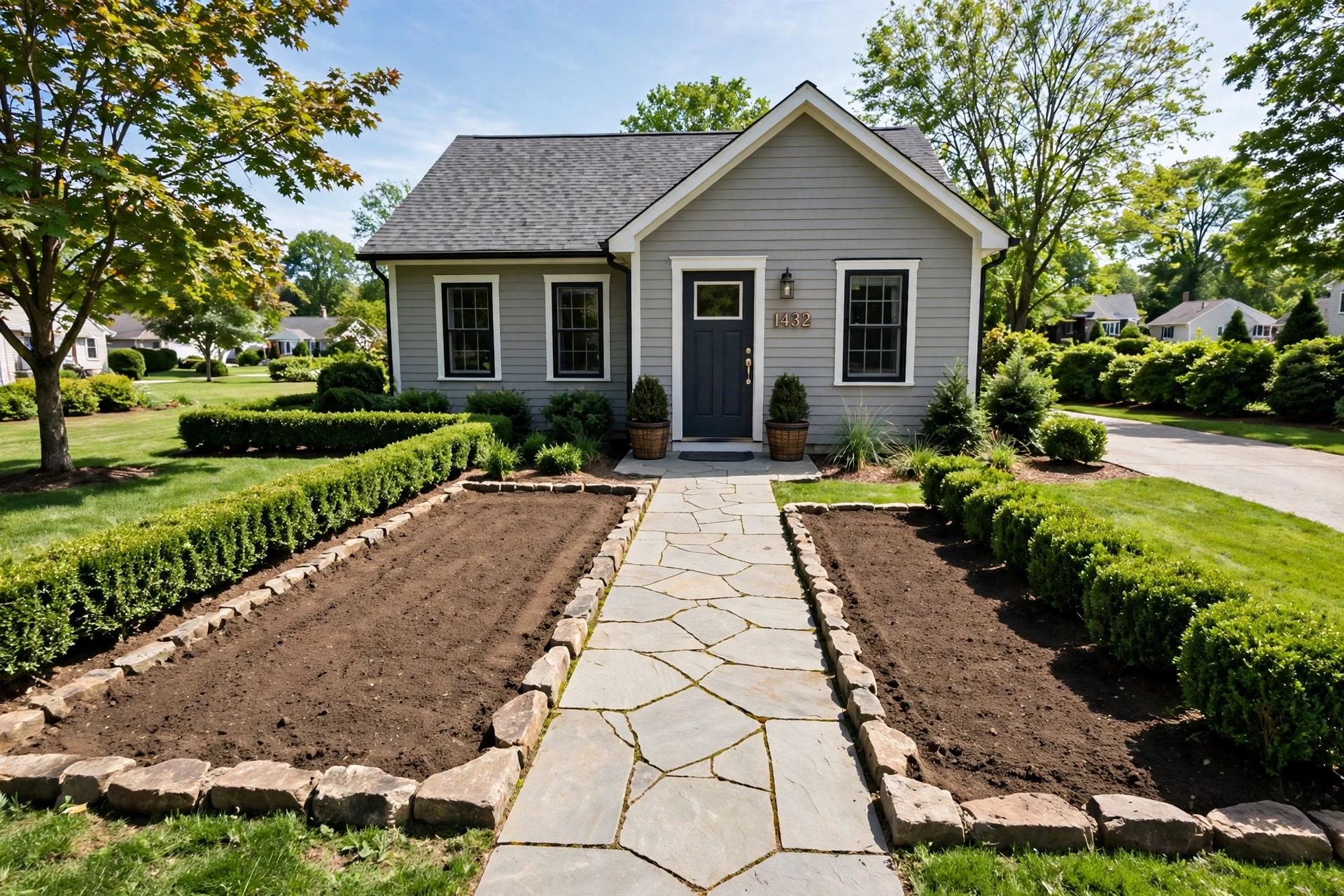
Most front walkways are too narrow. Three feet is common, and it forces visitors to walk single file. Widen it to four or five feet and two people can walk side by side, which instantly makes the entry feel generous.
You do not have to replace the whole path. Add a border of pavers or bricks on each side, or lay a wider paver path over the old one. A gentle curve leads the eye to the door better than a straight line. Keep the surface level and safe, and the whole front of the house will feel more welcoming.
Try this: Lay the new pavers dry first, step back, and check the curve from the street before you set them.
You may also like: Outdoor Patio Trends 2026 for Stylish Spaces
3. Edge the Beds With a Clean Line
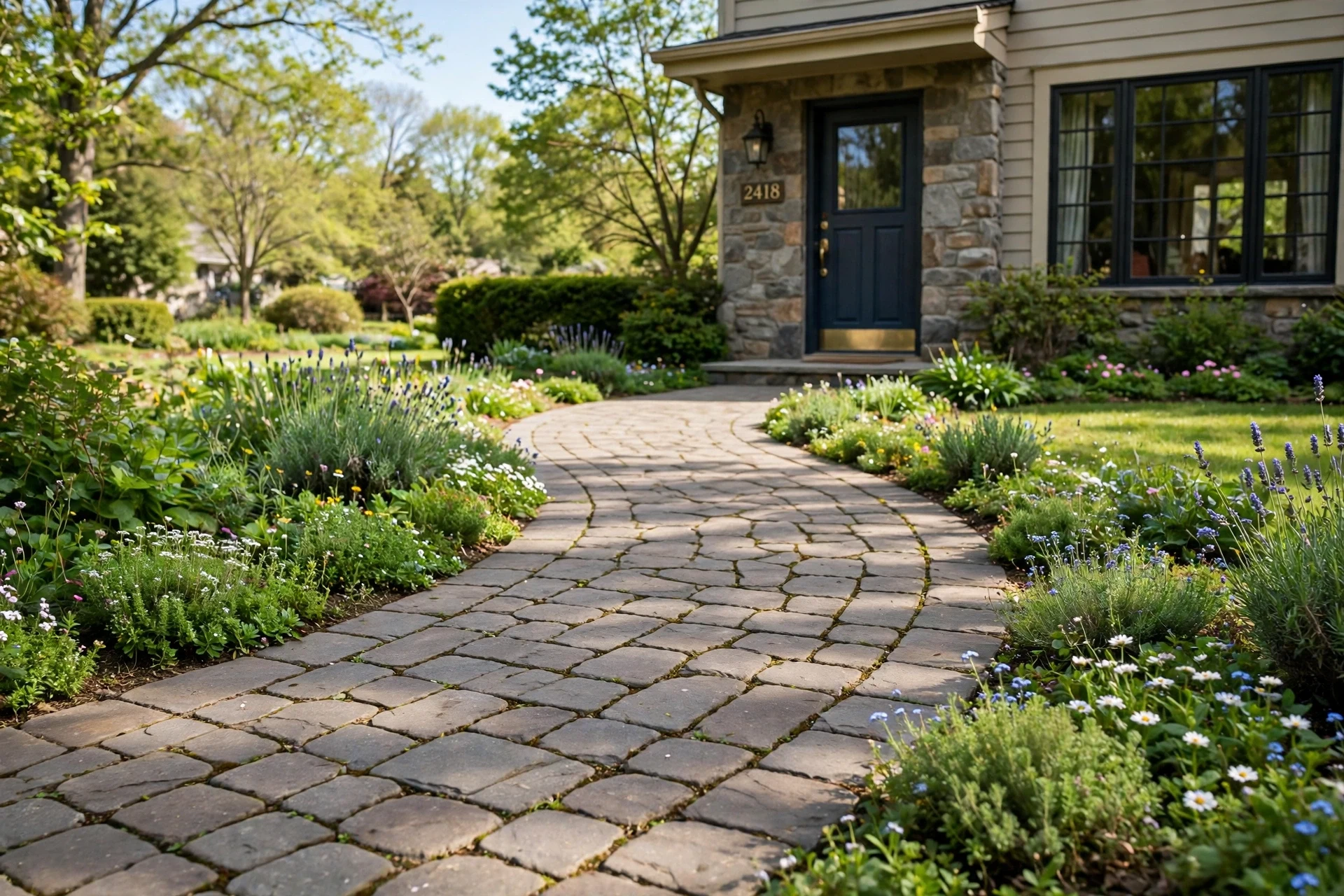
Crisp bed edges are the cheapest professional trick in landscaping. A clean vertical cut between lawn and bed makes the whole yard look cared for, even if the plants inside are simple.
Use a half-moon edger or a sharp spade to cut a straight line, three or four inches deep. Pull the grass back from the edge and keep the line clean through the season. Stone or metal edging holds the line longer, but a cut edge alone already changes the look. Do this one thing and your yard will look like someone who knows what they are doing lives there.
Try this: Edge after rain, when the soil is soft and the spade cuts cleanly.
You may also like: Simple Garden Bed Ideas for Beginners
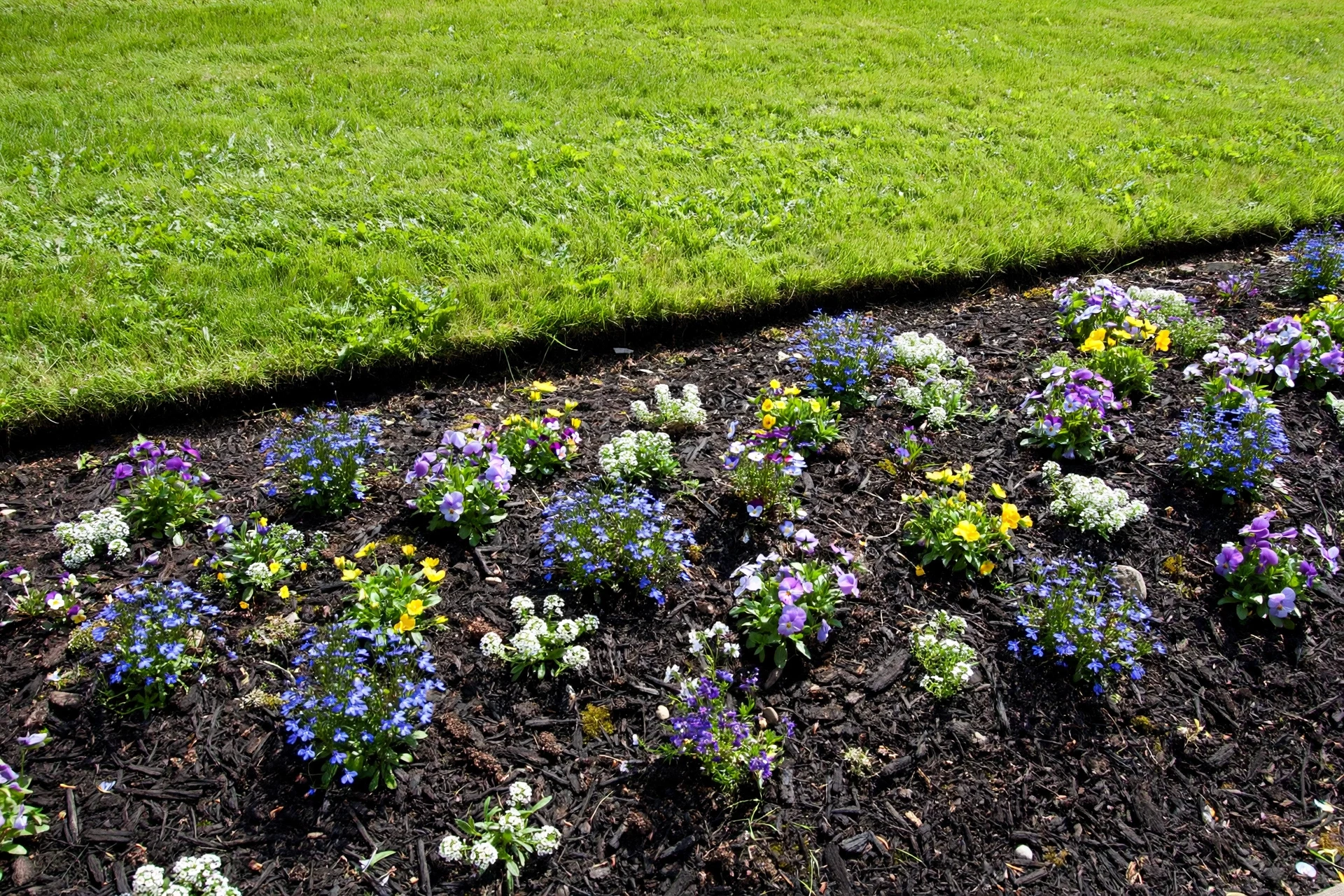
4. Layer Flower Beds Against the House
Flower beds against the house soften its hard lines and anchor it to the yard. This is the single most impactful planting change you can make, and it works on almost any home.
Plant tall shrubs like boxwood or hydrangea closest to the house, mid-height plants like lavender in front of them, and low flowers along the edge. Give each plant room to grow to its full size, because crowded beds turn messy fast. Repeat the same groupings along the house for a calm, designer feel.
Try this: Plant in odd-numbered groups of three or five for a natural look.
You may also like: Flower Bed Ideas for the Front of Your House
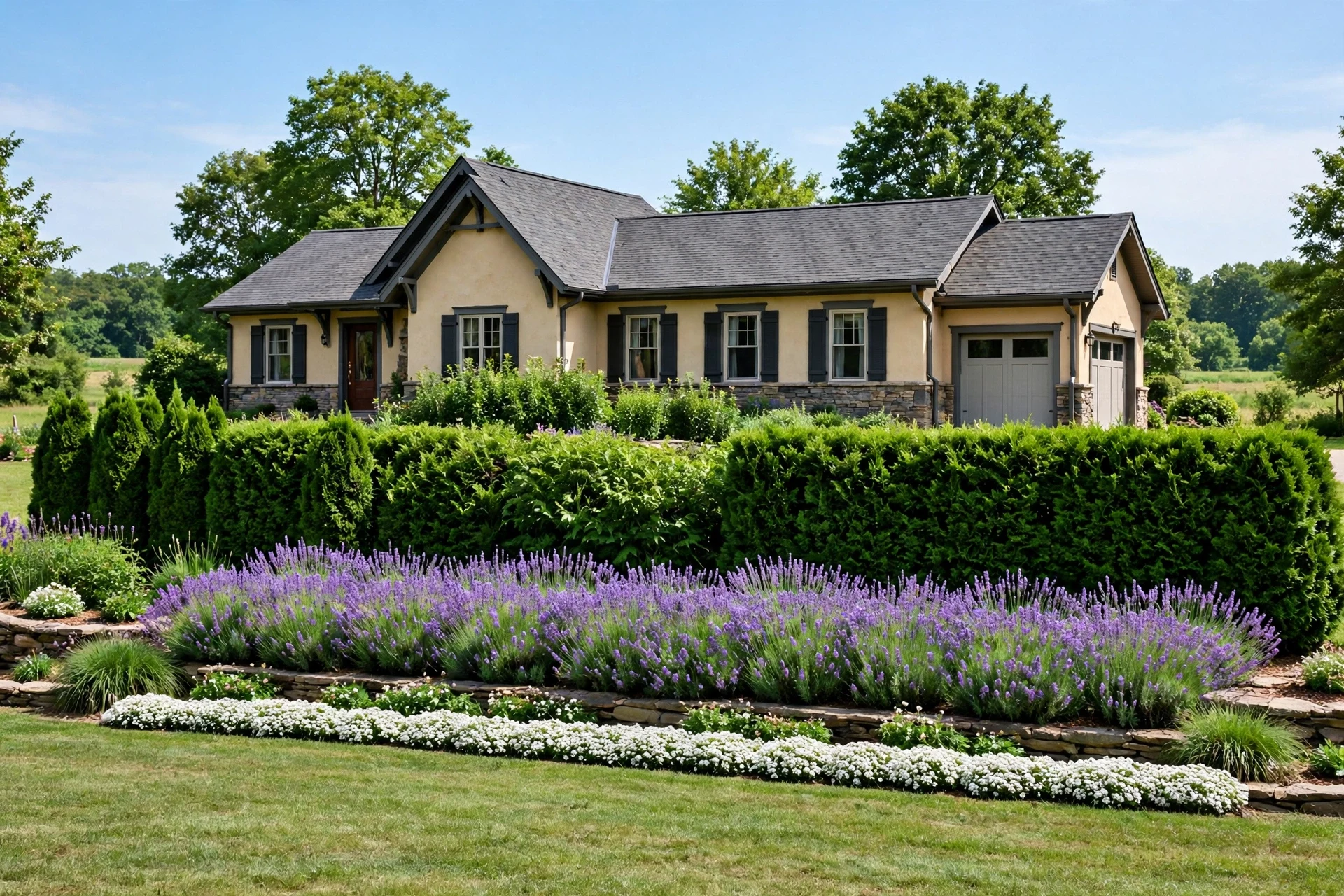
5. Add a Statement Tree
Every good yard has a focal point, and a tree is the strongest one you have. One well-placed ornamental tree gives the yard height, shade, and a reason for the eye to stop.
For small yards, pick a compact tree like a Japanese maple or a dwarf ornamental, and place it slightly off center so it looks natural. For larger yards, use two trees to frame the house. Plant it where it will not block windows when it grows, and give it room. A tree is a long-term investment that gets better every year.
Try this: Stand at the street and check the tree’s position from there, because that is the view that matters most.
You may also like: Best Small Trees for Front Yards
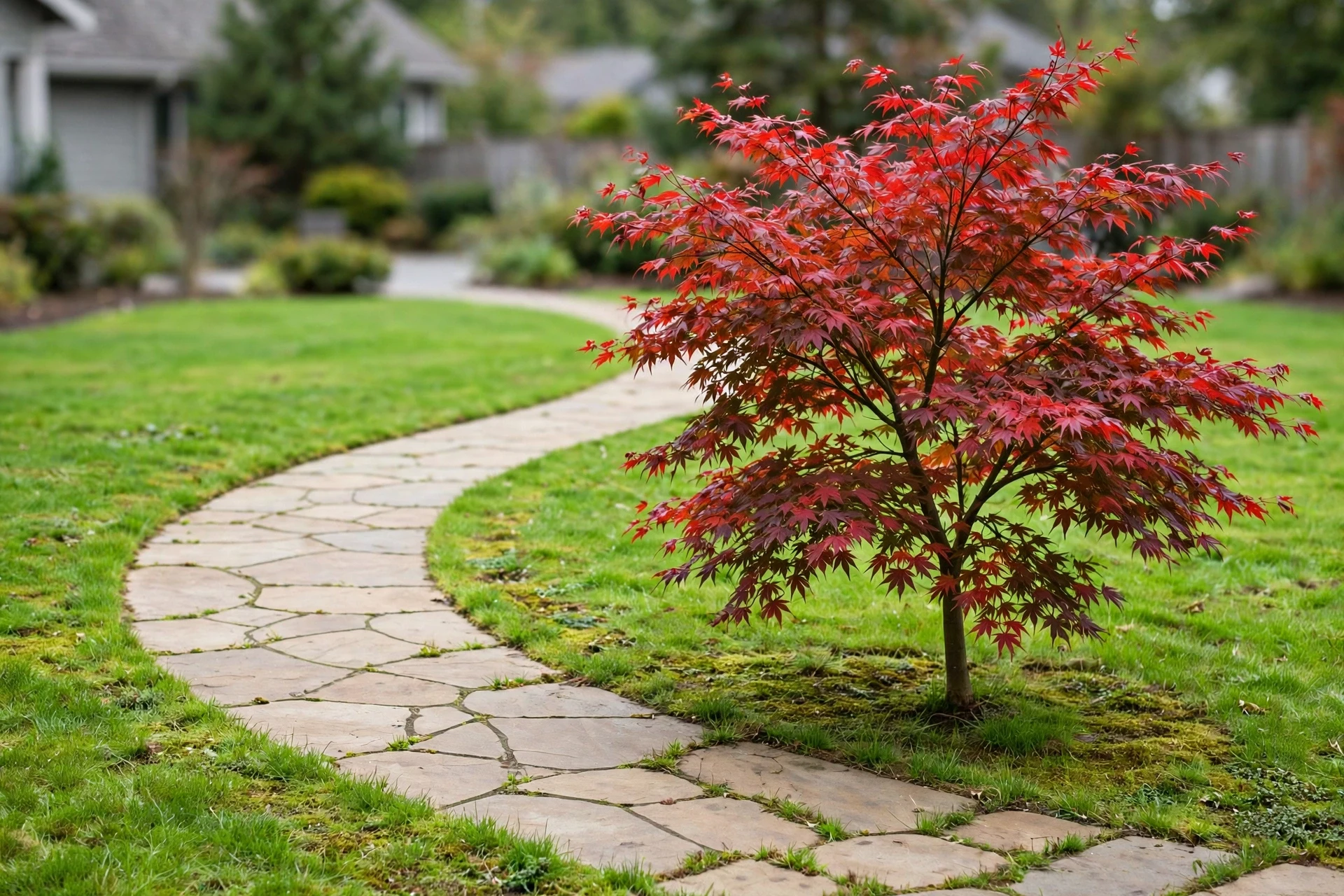
6. Frame the Front Door With Planters
Two matching planters by the front door are the fastest way to make an entry look finished. They frame the door, add color at eye level, and tell visitors they are welcome.
Use tall planters so the plants sit at a good height, and fill them with a mix of something tall, something full, and something trailing. Change the planting with the seasons: ferns in summer, evergreens in winter. Keep the pair symmetrical for a classic look, or use different heights for a relaxed one.
Try this: Use the same plant in both planters so the pair reads as one deliberate choice.
You may also like: Front Porch Ideas That Welcome You Home
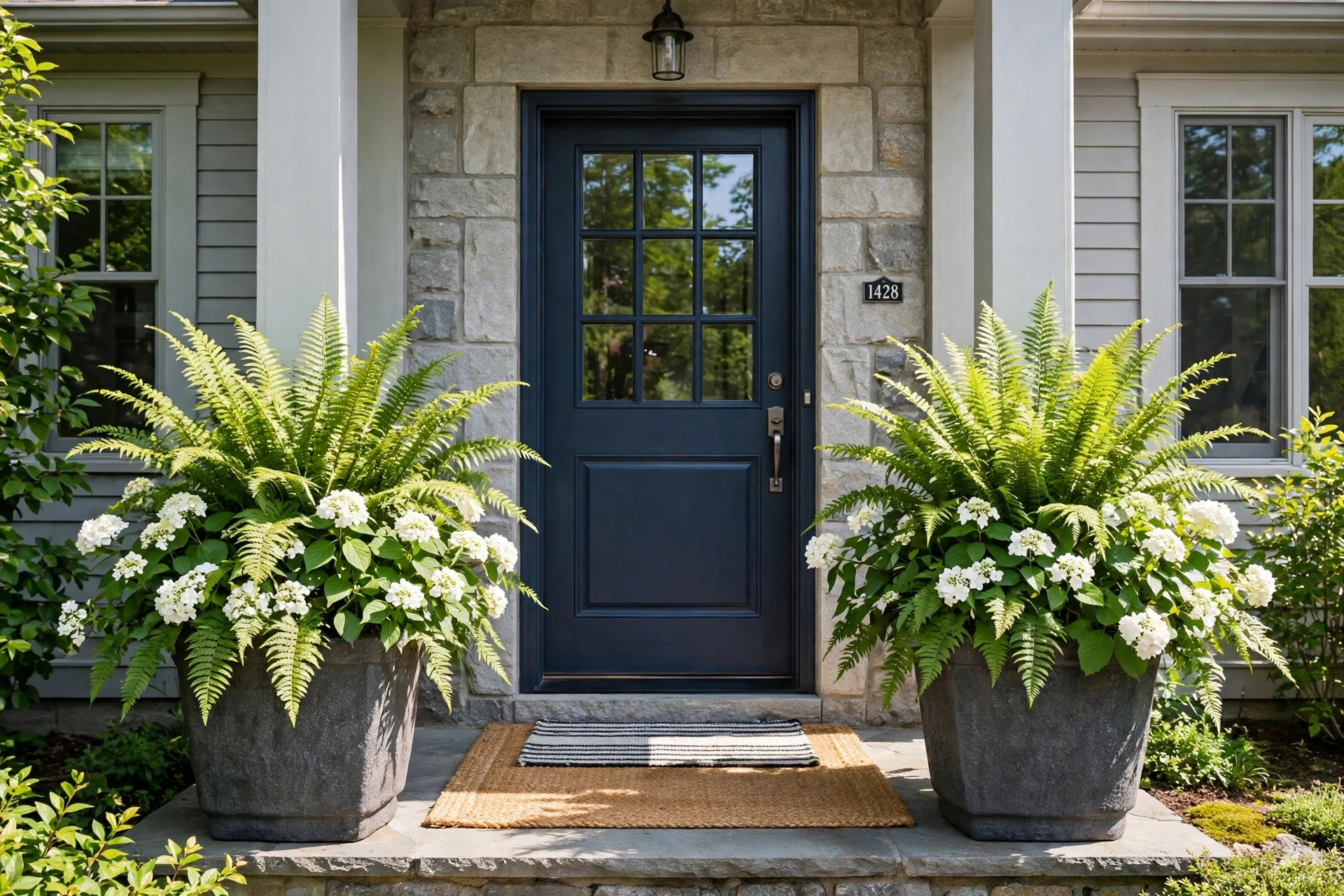
7. Spread Dark Mulch
Dark mulch is a small change with a big visual payoff. It makes green plants pop, hides bare soil, and gives every bed a finished, professional look.
Spread two to three inches of dark hardwood mulch over the beds, keeping it a few inches away from plant stems and the house. It holds moisture in the soil, stops weeds, and breaks down slowly into the ground. Refresh it once a year in spring. A yard with fresh mulch looks cared for from the street, even before anything blooms.
Try this: Water the beds first, then mulch, so the moisture stays locked in the soil.
You may also like: Mulch Ideas for a Tidy Garden
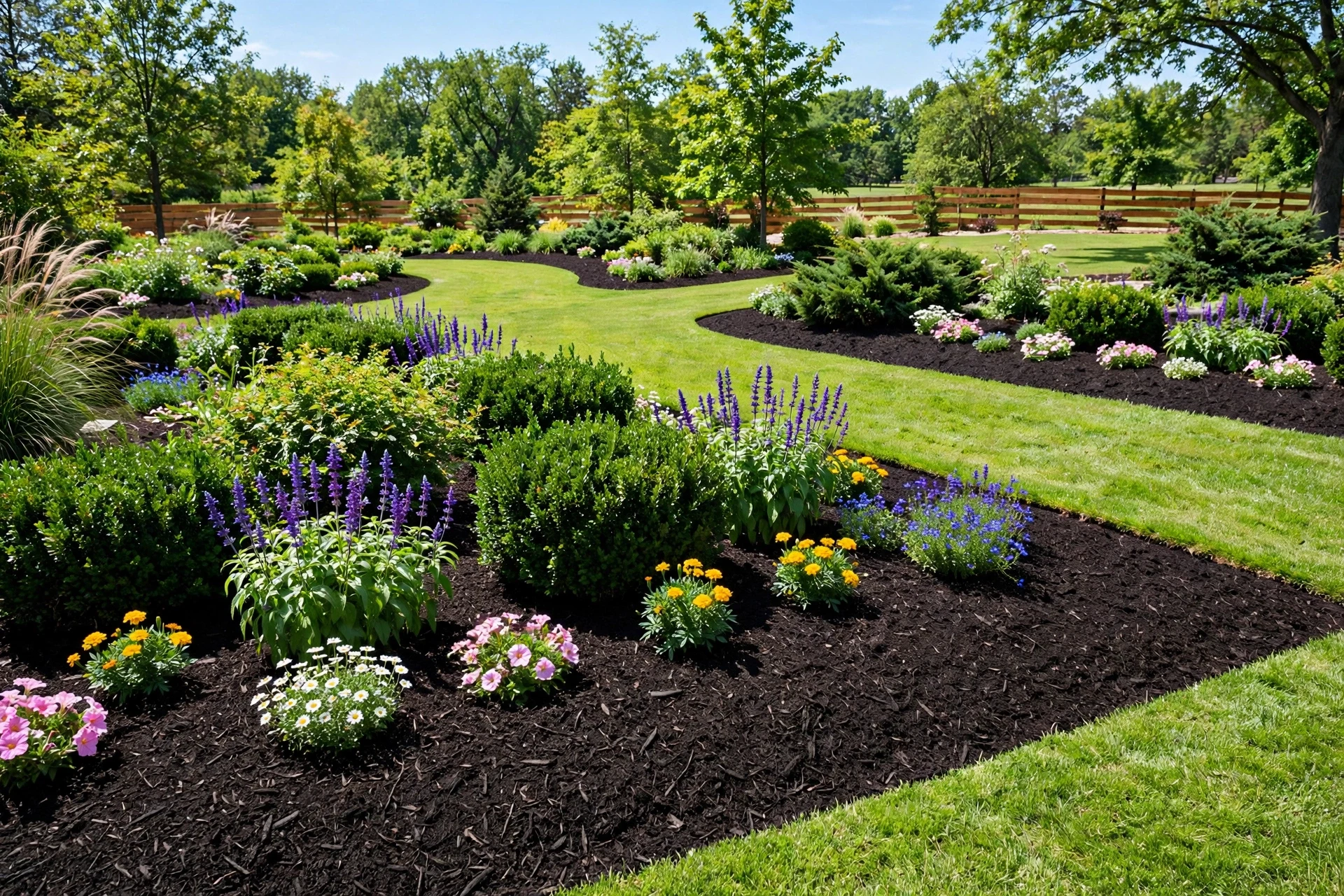
8. Install Low Voltage Path Lights
Lighting doubles your curb appeal, because it gives your home a second look after dark. A few warm path lights along the walkway make the entry safe and beautiful at night.
Use low-voltage LED lights, spaced evenly and staggered on alternating sides so they do not look like a runway. Uplight the tree and the front of the house too. Solar lights work for a quick start, but wired low-voltage lights are brighter and more reliable. The first evening you see them glow, you will wonder why you waited.
Try this: Place lights where they wash the plants, not where they shine into people’s eyes.
You may also like: Outdoor Lighting Ideas for Your Home
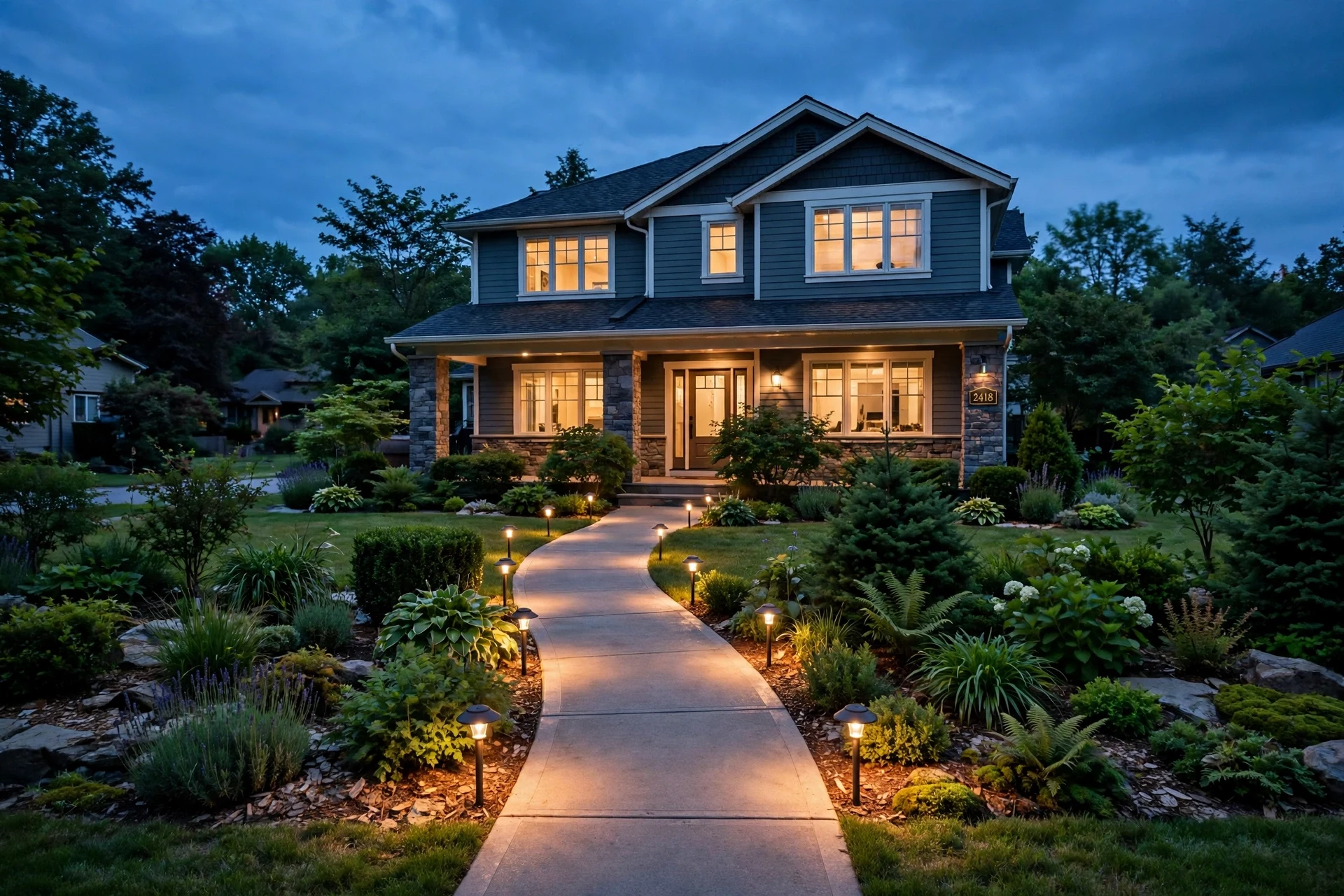
9. Plant Perennials That Come Back
Annuals are pretty, but they need replacing every year. Perennials come back on their own, and that makes them the smartest money in the front yard.
Coneflowers, daylilies, black-eyed Susans, hostas, and lavender are all easy perennials that return year after year with little care. Plant them once, divide them every few years, and your beds fill in for free. Mix them with a few annuals for instant color in the first season, and let the perennials take over the long-term job.
Try this: Plant perennials in spring or fall, when the weather is mild and roots settle fast.
You may also like: Easy Perennial Flowers for Beginners
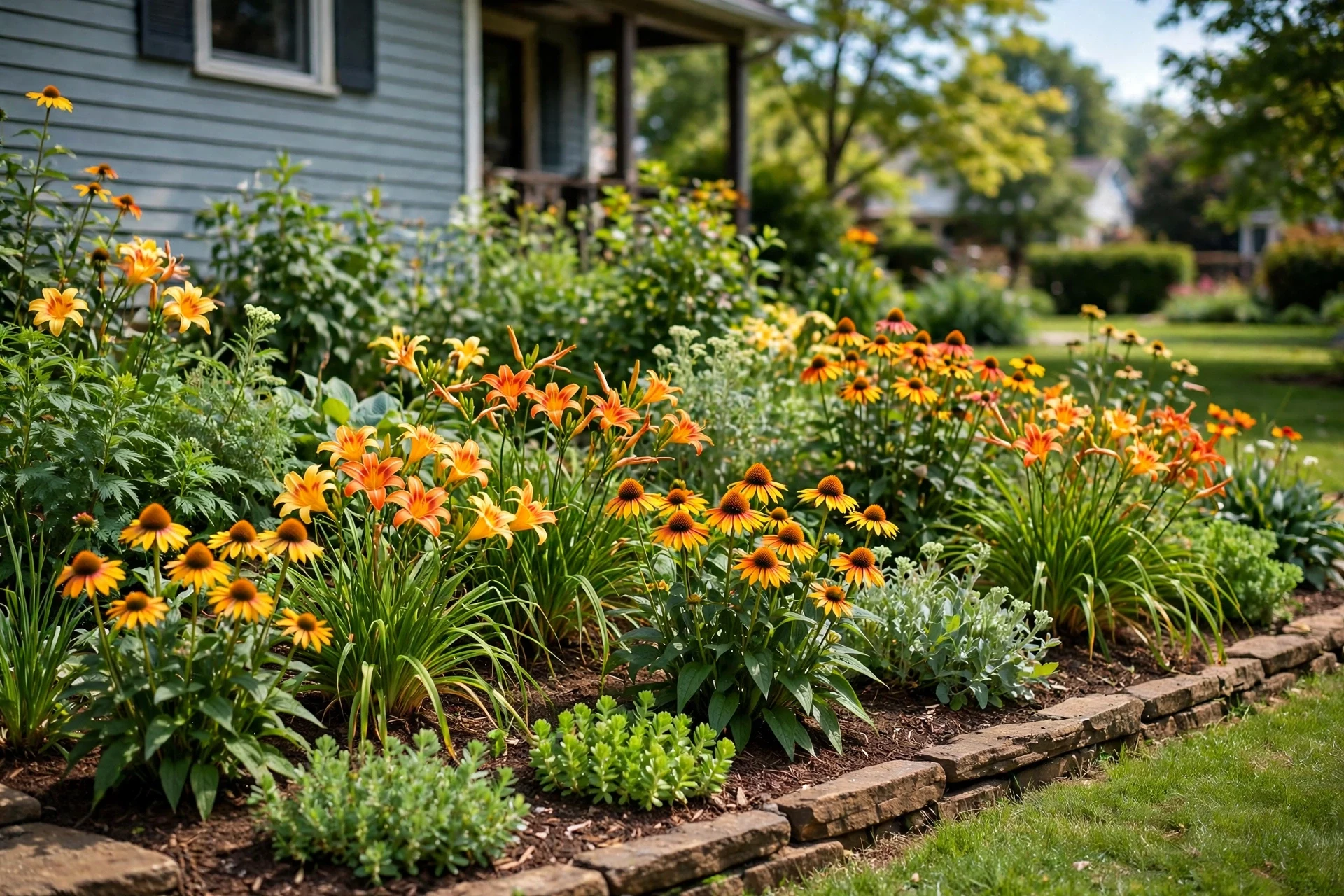
10. Add Window Boxes
Window boxes are a classic for a reason. They add color at eye level, they soften the front of the house, and they are easy to change with the seasons.
Fill them with trailing plants like creeping Jenny or sweet potato vine, plus upright flowers for height. Water them more often than beds, because small boxes dry out fast. Keep the colors simple: one or two flower colors plus green. A house with window boxes looks loved, and that is exactly the impression you want from the street.
Try this: Line the box with plastic and add drainage holes so the wood lasts longer.
You may also like: Window Box Ideas for Every Season
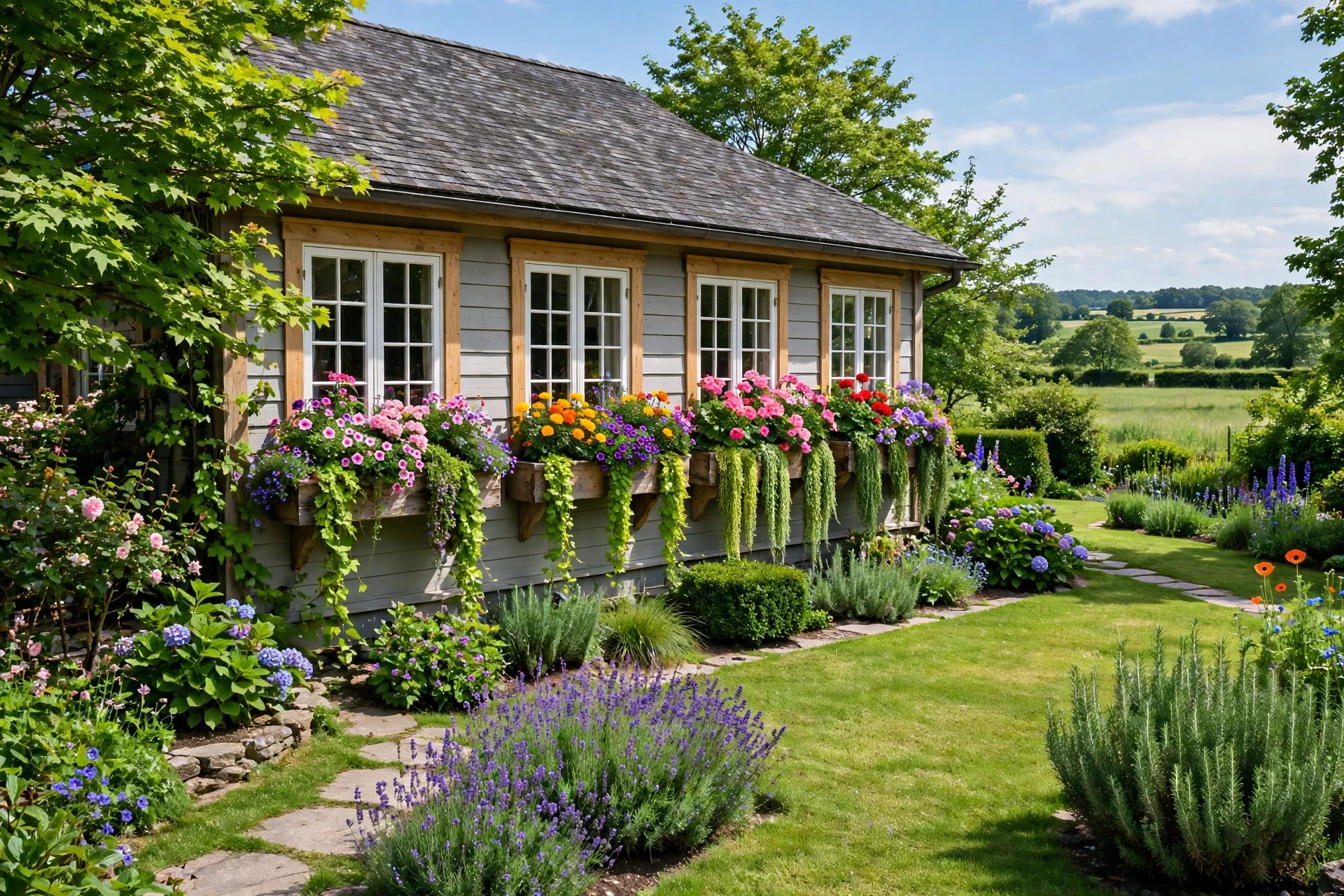
11. Mix Hardscaping With Greenery
Plants alone can look soft and shapeless. Stone, gravel, pavers, and concrete give the yard structure and contrast, and they cut down on maintenance too.
Add a stone walkway, a gravel section under a tree, or a low stone wall along a bed. The hard materials make the green look greener, and the green keeps the stone from looking cold. Use the same stone in two or three places so the yard feels connected. This balance is what separates a garden from a designed landscape.
Try this: Repeat one material, like the same paver, in the walkway and the porch steps.
You may also like: Hardscaping Ideas for Small Yards
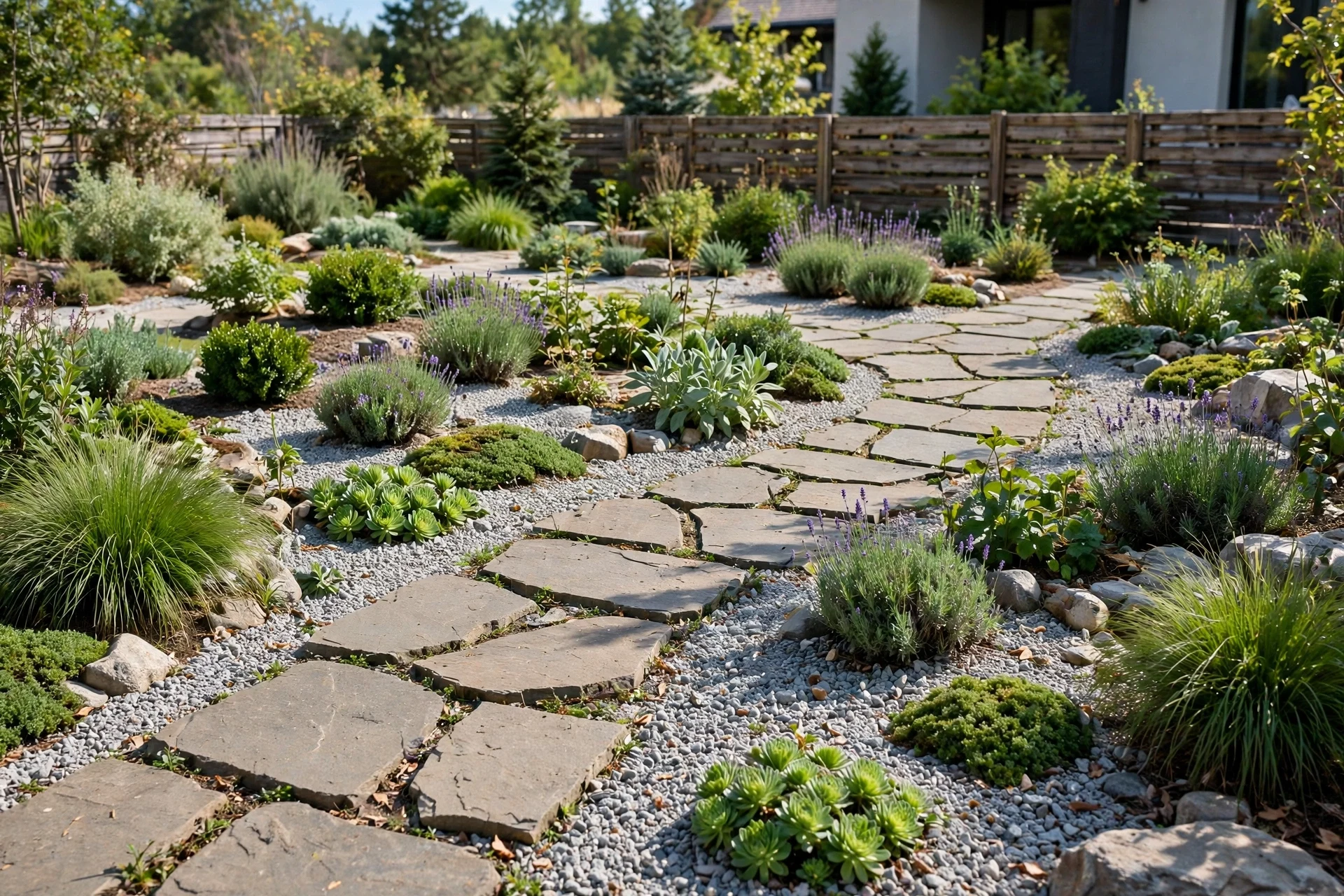
12. Plant Along the Fence
The fence line is the most overlooked part of the front yard, and it is what makes the space feel finished. Bare fence looks flat. Planted fence looks like a garden.
Use tall grasses for movement, evergreen shrubs for year-round green, and flowering vines for vertical interest. Space plants evenly and repeat the pattern so it reads as one design. Mulch or gravel underneath keeps it tidy and low maintenance. The fence stops being a boundary and starts being part of the yard.
Try this: Plant vines on the fence itself for height without taking up ground space.
You may also like: Fence Landscaping Ideas for Privacy
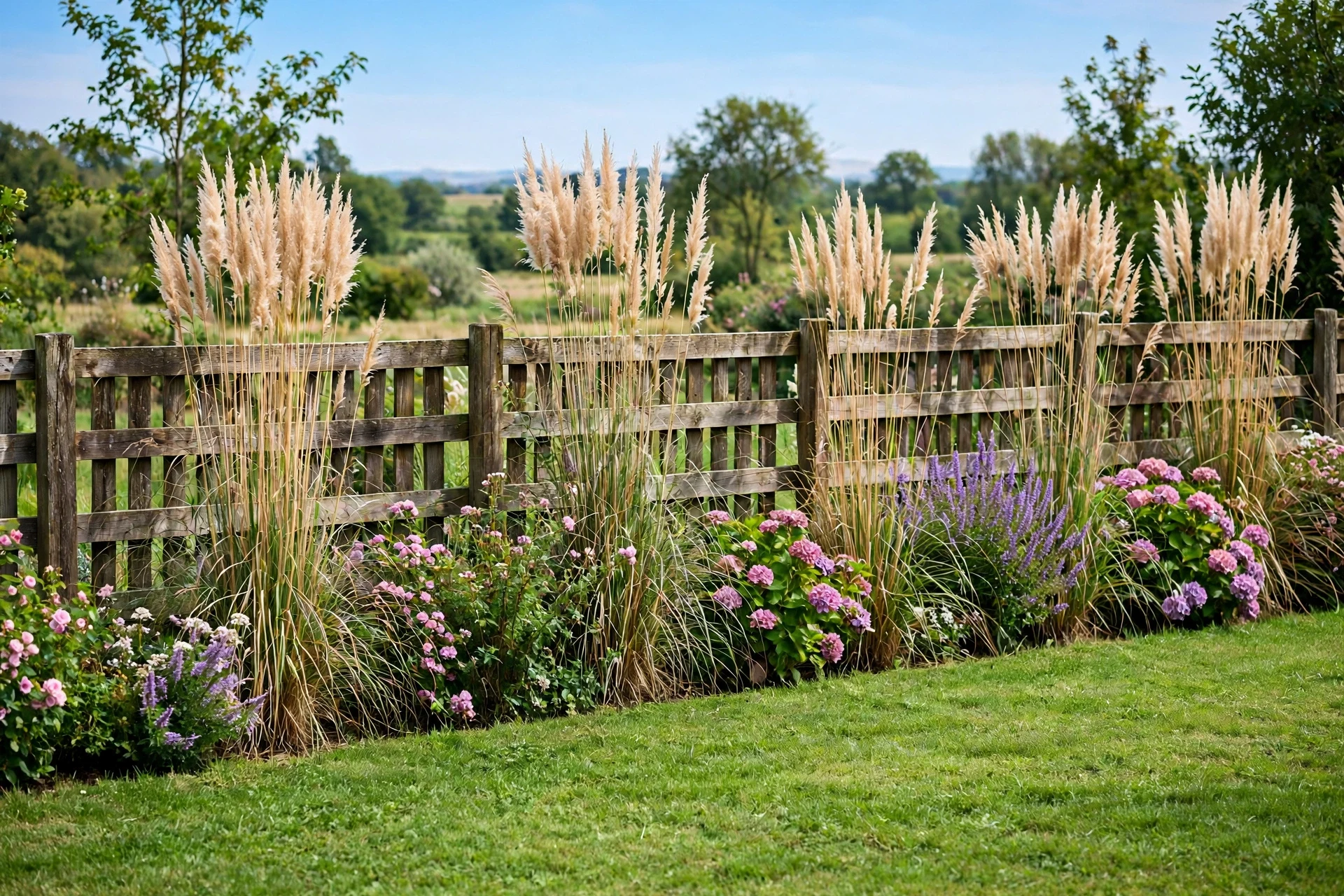
13. Go Low Maintenance on Purpose
A beautiful yard should not need constant work. Low maintenance design is not lazy, it is smart, and it is what keeps a yard looking good all year instead of only in spring.
Choose drought-tolerant plants like lavender and ornamental grasses, install drip irrigation, and use mulch to hold moisture and stop weeds. Pick evergreens for structure so the yard never looks bare. The goal is a yard that mostly takes care of itself, so you can enjoy it instead of working in it every weekend.
Try this: Set the drip irrigation on a timer so watering happens even when you are away.
You may also like: Low Maintenance Garden Ideas for Busy People
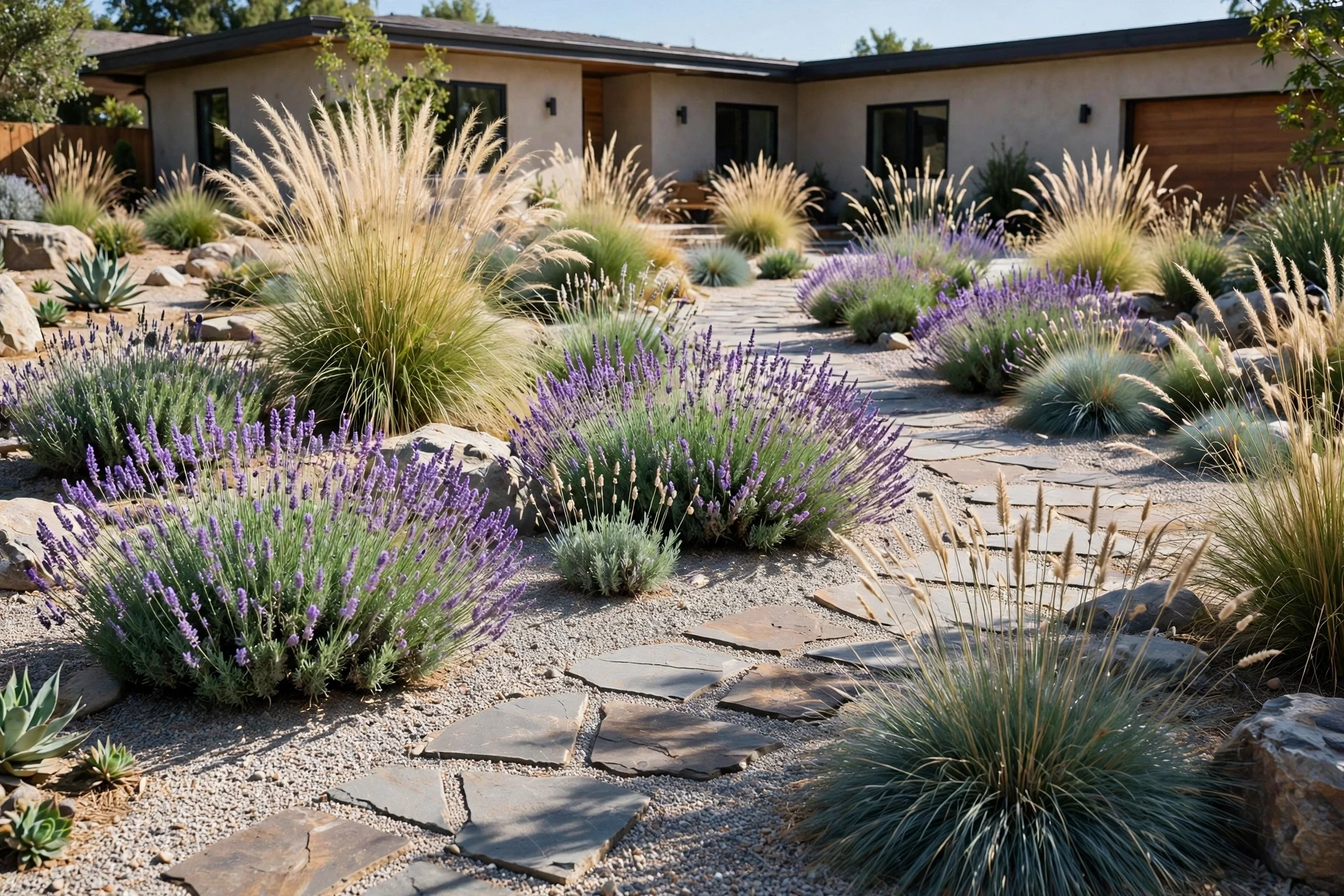
14. Add Ornamental Grasses
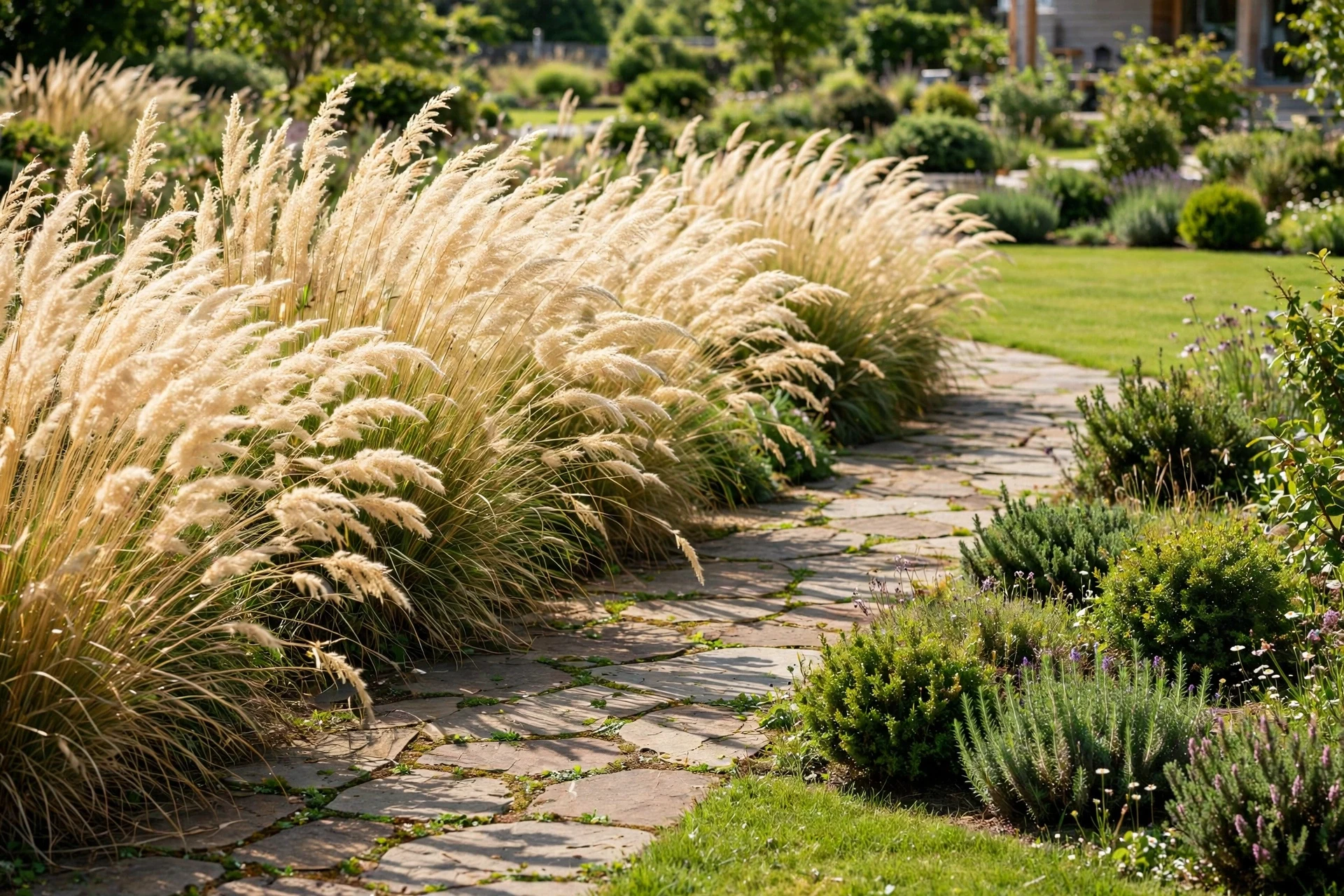
Ornamental grasses bring movement, texture, and a modern feel that flowers alone cannot give. They sway in the wind, they catch the light, and they look good in every season, even winter.
Plant them in groups of three near the walkway or at the corners of beds. Feather reed grass and fountain grass are good starters. They need almost no care once established, and they come back every year. One warning: give them room, because a happy grass grows wider than you expect.
Try this: Cut grasses back in early spring before new growth starts.
You may also like: Ornamental Grass Ideas for Your Garden
15. Create a Small Seating Spot
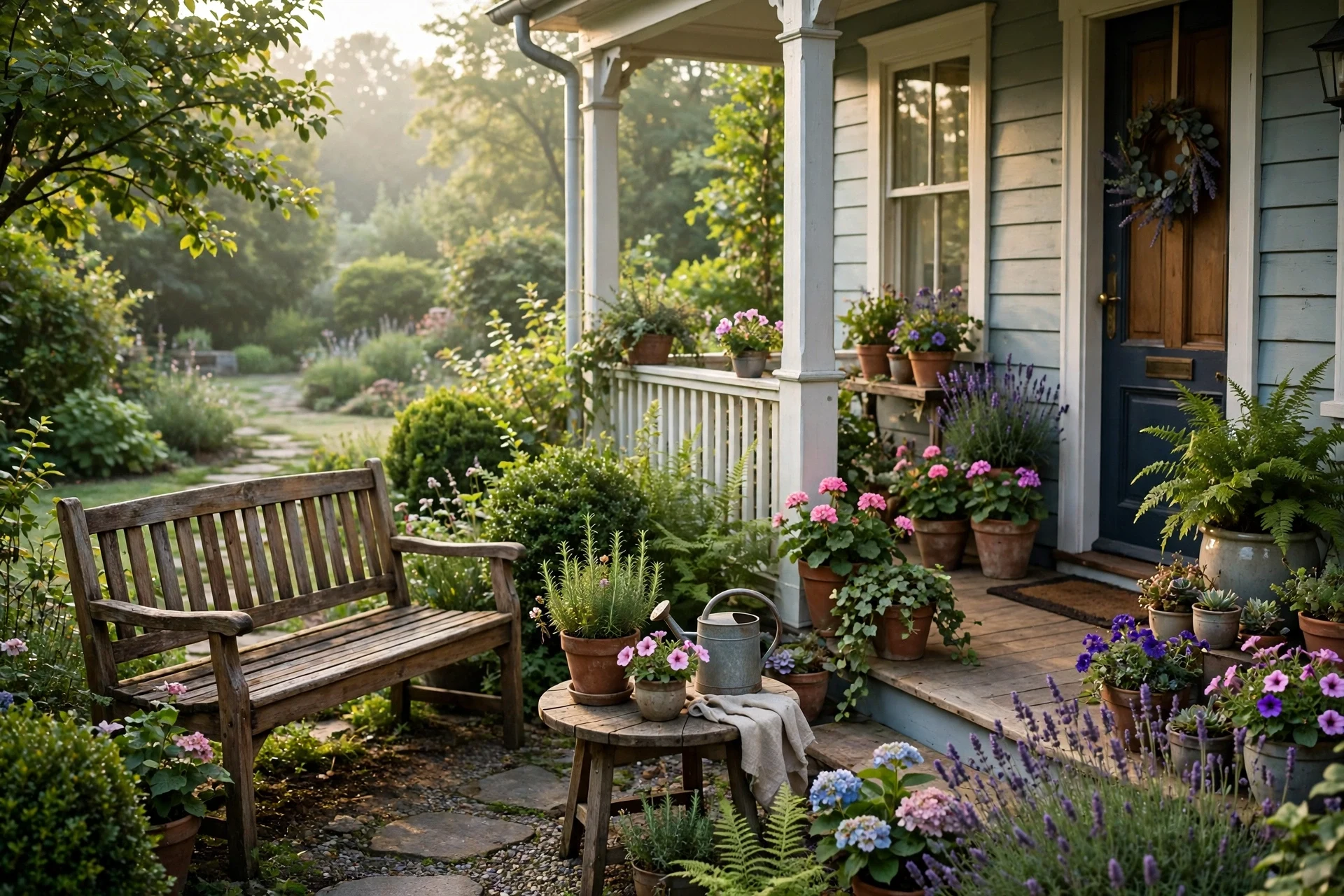
A bench or a pair of chairs near the front door turns the yard into a place, not just a view. It says this home is lived in and welcoming.
Tuck a simple bench under a tree or beside the porch, with a small potted plant nearby. Keep it simple and weatherproof. You do not need a full patio, just a spot to sit with a cup of coffee in the morning. It also gives the front yard a human scale that plants alone cannot provide.
Try this: Face the bench toward the garden, not the street, so sitting there feels private.
You may also like: Small Front Porch Seating Ideas
16. Use Boulders as Anchors
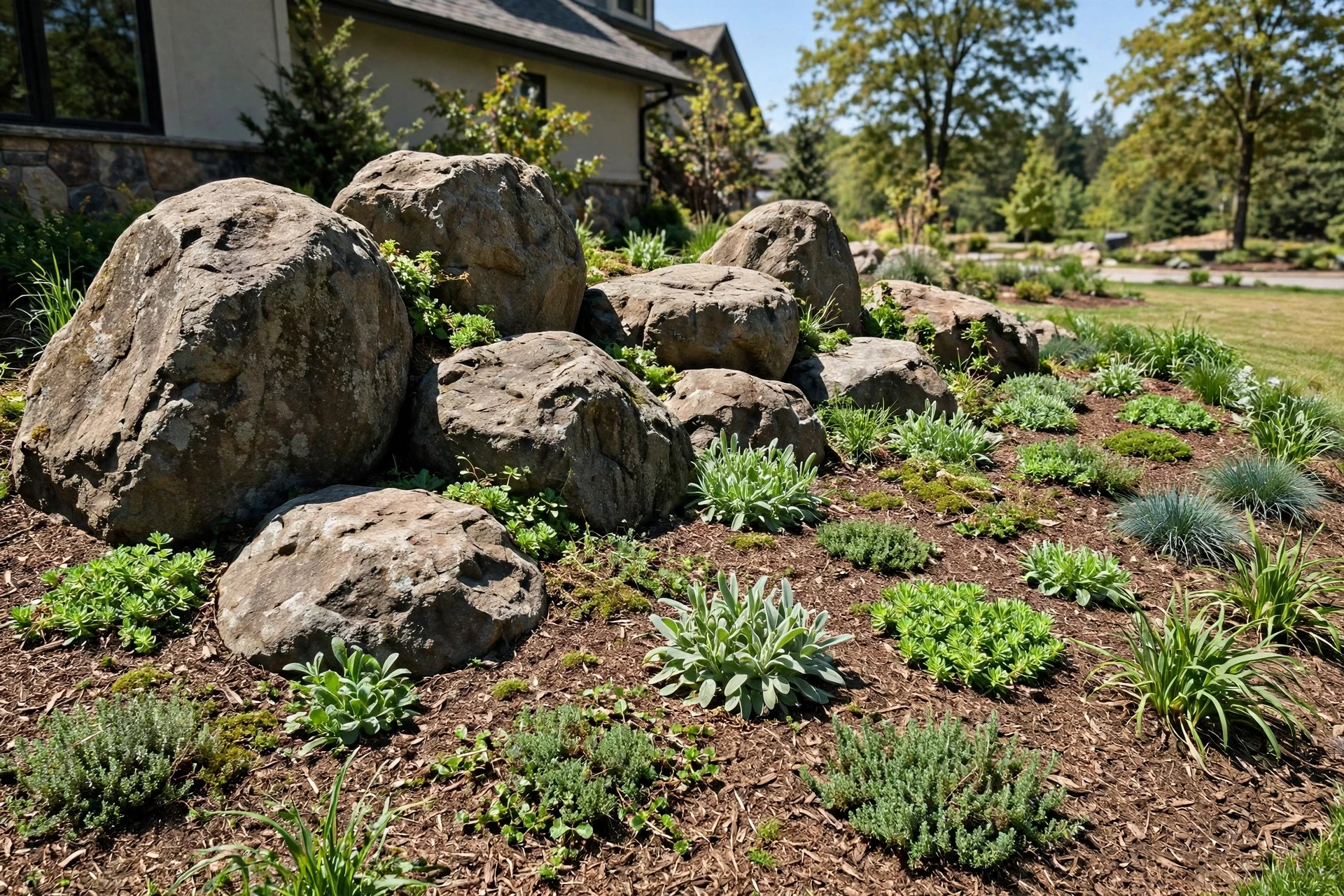
A few well-placed rocks give a yard weight and a natural, established feel. They anchor beds, mark corners, and break up flat lawn in a way plants cannot.
Group boulders in odd numbers, bury the bottom third in the soil so they look like they grew there, and pair them with low plants. Do not scatter small rocks everywhere, because that looks messy. Three good boulders, placed with care, do more than a whole pile of small stones.
Try this: Choose local stone so the boulders match the colors of your area.
You may also like: Rock Garden Ideas for Front Yards
17. Paint the Front Door
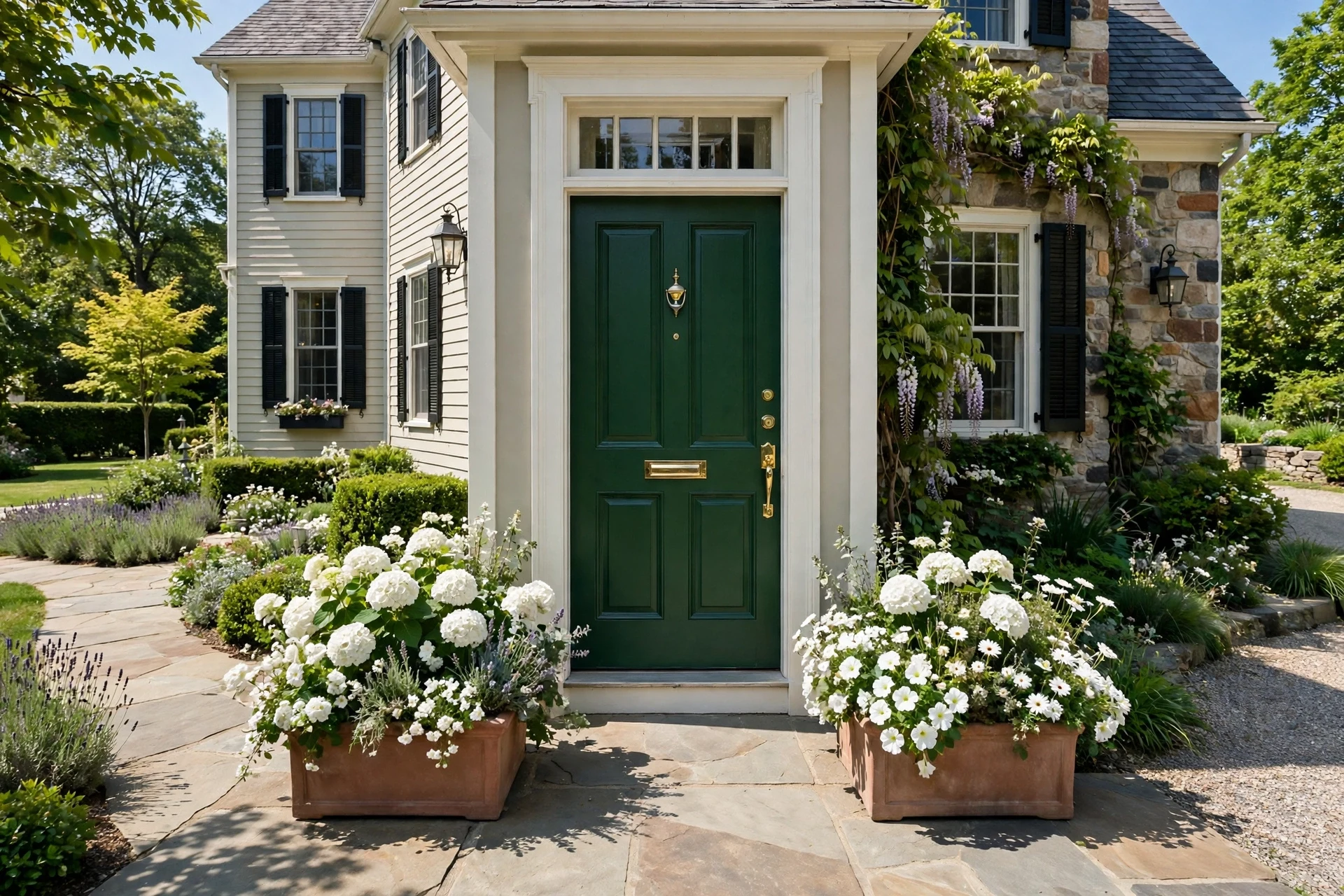
This is not strictly landscaping, but no front yard idea works harder for less money. A freshly painted front door in a bold color makes the whole entry pop, and it makes the landscaping around it look intentional.
Pick a color that suits the house: deep green, navy, black, or a warm red. Clean the door, sand it lightly, and use exterior paint. Add new hardware and a matching planter, and the entry will look brand new. It is a one-afternoon project with a street-level impact.
Try this: Test the color on a small patch first and look at it in morning and evening light.
You may also like: Front Door Colors That Boost Curb Appeal
18. Add a Mailbox Garden
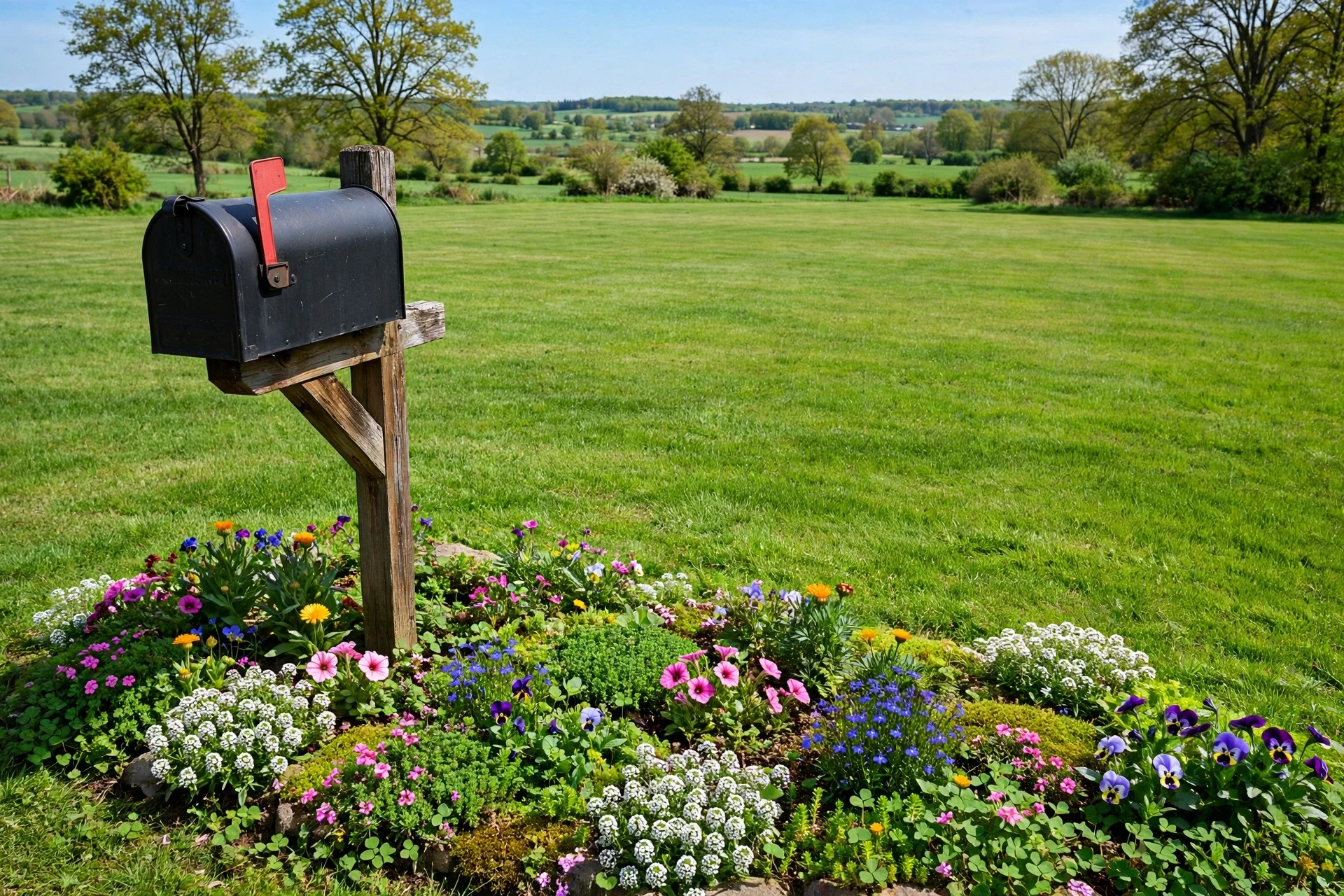
The mailbox is a small spot with a big visual job, because it sits right at the street where everyone sees it. A little planting around its base turns a plain post into a garden feature.
Plant low flowers or groundcover around the base, and keep them short so the mail carrier can reach the box easily. A stone or brick mailbox pillar looks even better, and it survives weather far longer than a wooden post. Match the planting to the rest of the yard so it feels like part of the design, not an afterthought.
Try this: Use the same flowers as the front beds so the mailbox ties into the yard.
You may also like: Mailbox Landscaping Ideas for Curb Appeal
19. Plan for All Four Seasons
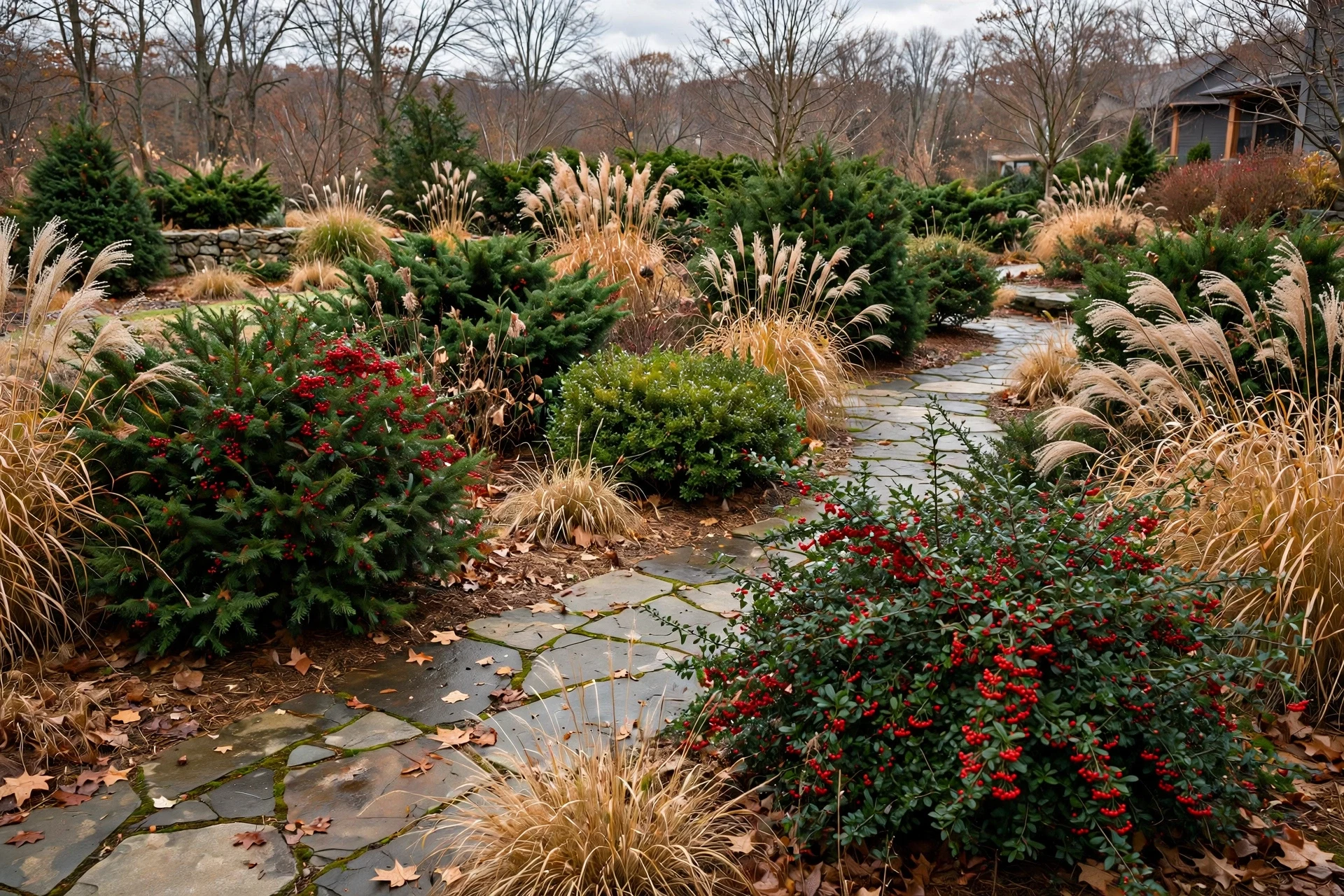
A yard that only looks good in spring is a yard that disappoints for nine months. Plan for winter too, because the front yard is visible all year.
Use evergreens for structure, ornamental grasses that stand through winter, and shrubs with colorful bark or berries. Add spring bulbs for early color and fall plants for late interest. When you plan the beds, ask what each plant looks like in January, not just in May. A yard with winter structure looks cared for even under snow.
Try this: Photograph your yard in winter to see which spots look bare, then plant evergreens there.
You may also like: Four Season Garden Ideas for Year Round Color
20. Repeat Plants for a Designer Look
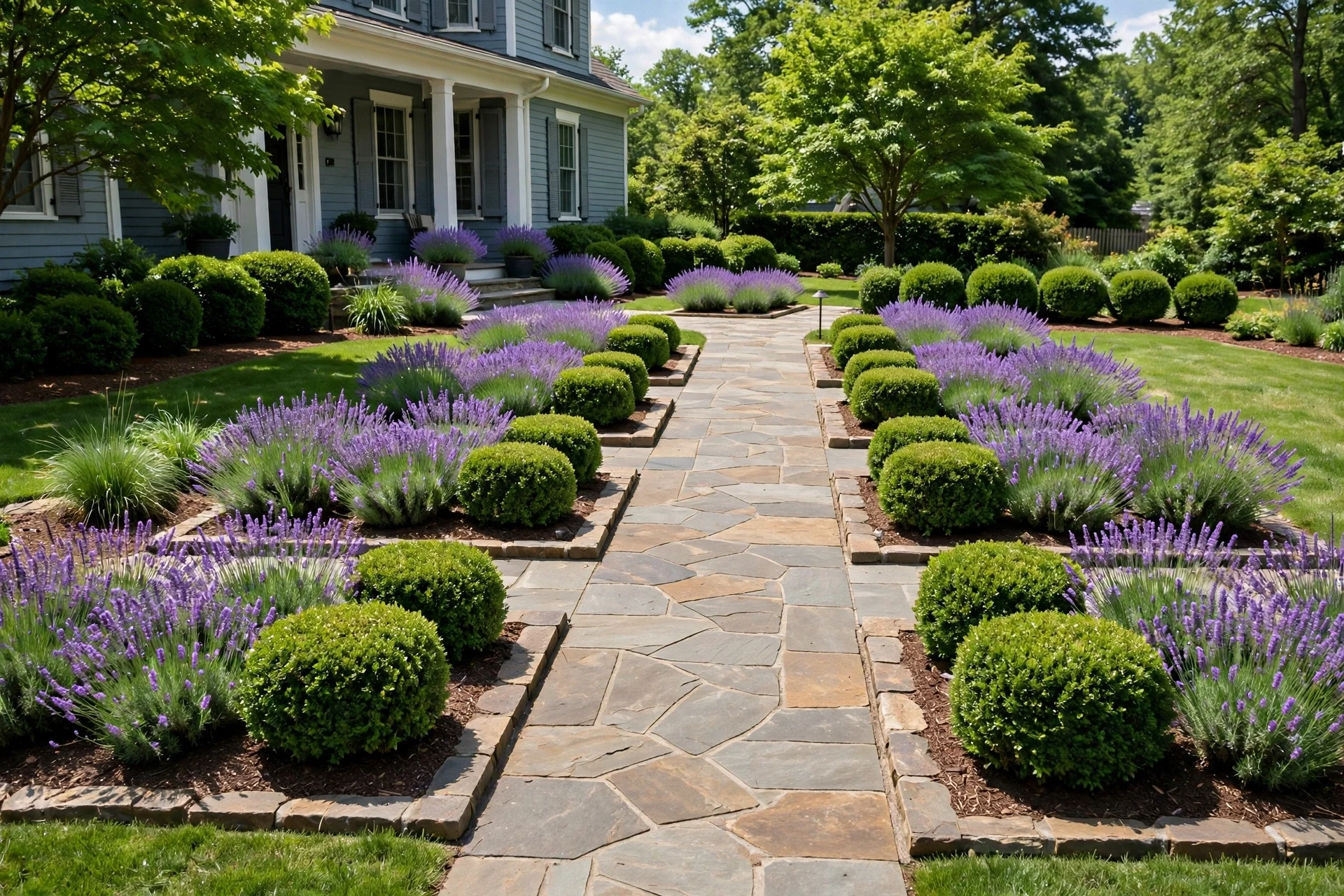
The difference between a garden and a landscape is repetition. The same plant, used in three different beds, ties the whole yard together and makes it look designed.
Pick three or four reliable plants and repeat them: the same boxwood by the door and along the fence, the same lavender in two beds, the same daylily along the walk. Do not use twenty different plants in a small yard, because it will look busy. Restraint is what makes a yard look expensive.
Try this: Choose your three repeat plants first, then fill the gaps with seasonal color.
You may also like: Garden Design Ideas for a Cohesive Look
21. Keep the Lawn Healthy
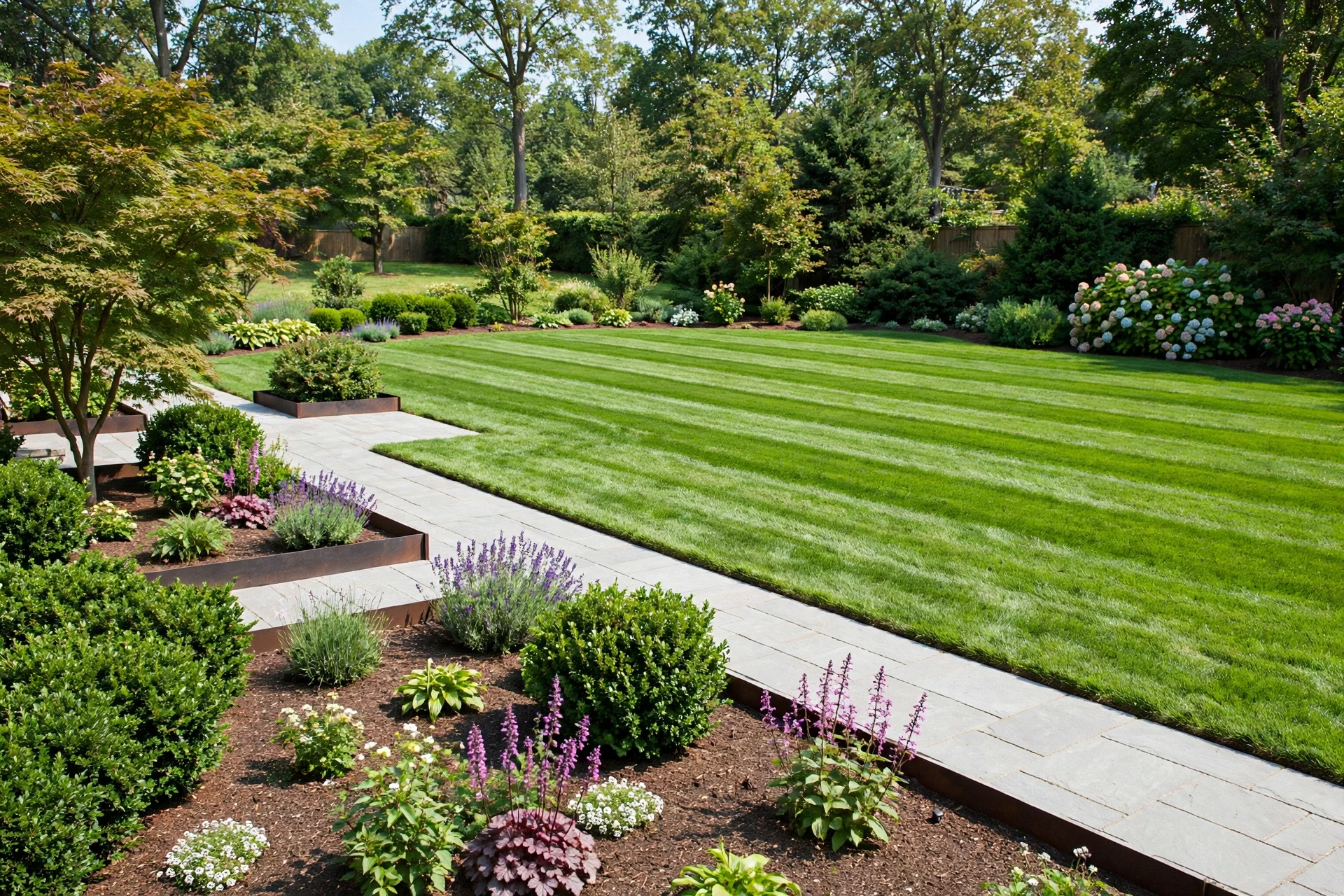
The lawn is the green carpet that holds the whole yard together. A healthy lawn makes everything else look better, and a patchy one drags the whole front down.
Mow regularly, water deeply but less often, and feed it in spring and fall. Overseed bare patches in fall, and keep the edges clean. If the lawn is too big to maintain, replace part of it with beds, gravel, or groundcover, because a smaller healthy lawn beats a big struggling one. A green, even lawn is the quiet background that lets the landscaping shine.
Try this: Mow at a higher setting in summer so the grass shades its own roots and stays green longer.
You may also like: Lawn Care Tips for a Greener Yard
The 1-2-3 Front Yard Landscaping Method
If you remember nothing else from this guide, remember these three steps.
1
Clean and define.
Clear clutter, cut back overgrowth, edge the beds, and define the walkway. Do this before you buy a single plant.
2
Layer the plants.
Tall shrubs at the back, mid-height perennials in the middle, low flowers or groundcover at the front. Repeat the groupings so the yard feels connected.
3
Finish with mulch and light.
Spread dark mulch, add path lights, and put planters by the door. These three finishes make the yard look complete from the street, day and night.
At a Glance
Do This, Not That
| Do This | Not That |
|---|---|
| Clear clutter and define beds before planting | Buy plants before the structure is ready |
| Plant tall at the back, low at the front | Plant tall flowers in front of short shrubs |
| Give each plant room to grow to full size | Crowd plants for instant fullness |
| Repeat the same plants in different beds | Use twenty different plants in a small yard |
| Choose plants for your sun, soil, and time | Buy the prettiest plant at the nursery without checking its needs |
| Spread dark mulch 2 to 3 inches deep | Pile mulch against stems and the house wall |
| Stagger path lights on alternating sides | Line lights up in a straight row like a runway |
| Water deeply and less often | Water a little every day |
| Plan for winter structure with evergreens | Design only for spring blooms |
| Edge the beds regularly through the season | Edge once and let the grass creep back |
Your Front Yard Landscaping Plan
Here is a simple weekend plan that actually works.
Saturday morning: Walk to the street, take a photo, and clear the clutter. Cut back overgrowth, pull weeds, and edge the beds. This is the unglamorous work that makes everything else look good.
Saturday afternoon: Spread fresh mulch, widen the walkway if you planned to, and set the planters by the door. Buy the plants now, and check each one for your sun and soil before you pay.
Sunday morning: Plant in layers, tall at the back and low at the front, and water everything deeply. Install the path lights while the soil is still soft from watering.
Sunday afternoon: Step back to the street and take the after photo. Sit on the new bench or by the door, and enjoy the yard. Then write down what still needs doing, so the next weekend has a list.
Ongoing: Edge the beds every few weeks, refresh the mulch in spring, and cut the grasses back in early spring. A little regular care keeps a weekend of work looking good all year.
Take It Further
- Keep a photo of your yard from the street on your phone, and update it every season so you can see what is working.
- Plant one evergreen this fall, so the yard has structure next winter.
- Add a rain barrel behind the house, so watering the front beds costs nothing.
- Swap one patch of struggling lawn for a flower bed or gravel, and watch the maintenance drop.
- Grow herbs in the window boxes in summer, so they are useful as well as pretty.
- Visit a local nursery and ask which three plants do best on your street, because local knowledge beats a generic list.
- Put a small bench by the door, even if you never sit on it, because it makes the entry feel welcoming.
- Share your before and after photos with a neighbor, because a good front yard lifts the whole street.
Front Yard Landscaping Cheat Sheet
1
First step: clear clutter, then edge the beds
2
Layer rule: tall at the back, medium in the middle, low at the front
3
Best mulch: dark hardwood, 2 to 3 inches deep
4
Best structure plants: boxwood, hydrangea, evergreens
5
Best return plants: coneflower, daylily, hosta, lavender
6
Walkway width: 4 to 5 feet so two people can walk together
7
Lighting: low-voltage LED, staggered on alternating sides
8
Repetition: same 3 or 4 plants in different beds
9
Winter plan: evergreens and grasses for structure
10
Lawn rule: mow high, water deep, feed spring and fall
Questions People Ask
What is the cheapest way to improve curb appeal?
Start with the free work: clear clutter, cut back overgrowth, and edge the beds with a clean line. Then spread fresh dark mulch and put two planters by the front door. Those few steps cost very little and change how the house looks from the street more than any single expensive project. A freshly painted front door is the next best value for the money.
How do I landscape a small front yard?
Keep it simple and repeat a few plants instead of using many different ones. Widen the walkway, use planters by the door, and plant in layers against the house. A small statement tree or a pair of tall planters gives height without taking up ground space. Avoid large shrubs that will outgrow the space, and use gravel or groundcover in spots where lawn struggles.
What are the easiest low maintenance plants for front yard curb appeal?
Hostas, boxwood shrubs, daylilies, and coneflowers are among the easiest choices, because they come back every year and need little care once established. Lavender and ornamental grasses are also low maintenance and add color and movement. Pick plants that suit your sun and soil, mulch the beds to hold moisture and stop weeds, and use drip irrigation on a timer.
How can I make my front yard look good in winter?
Use evergreens for structure, because they stay green all year, and add ornamental grasses that stand through winter. Shrubs with colorful bark or winter berries add interest when flowers are gone. Plan the beds so each one has at least one evergreen, and keep the walkway and edges clean. A yard with winter structure looks cared for even under snow.
If you make one of these 21 front yard landscaping ideas this weekend, start with the free ones. Clear the clutter, edge the beds, and spread fresh mulch. Then stand at the street and look at your house again. You will see what I saw on my street that spring: the same house, suddenly awake.