Too Long; Didn’t Read
A European patio is not about size or money. It is about stone underfoot, something green climbing a wall, a table that invites people to sit too long, and light that turns gold in the evening. Below are 21 European patio ideas inspired by Italy and France, from a Tuscan terrace and a Parisian bistro corner to gravel paths, lavender borders, and a fountain that covers the sound of the street. Pick the ones that fit your space, start with the floor and the plants, and let the rest grow around them.
What's Inside This Guide
ToggleThe Evening in the Village Square
Years ago, on a warm evening in a small Italian village, I sat at a metal table in a square that was barely bigger than a living room. The stone was old and uneven. A vine climbed the wall behind me. Someone had put a pot of rosemary by the door, and the whole square smelled like it. Dinner was bread, tomatoes, and wine, and nobody hurried. The chairs were mismatched, the light was gold, and I remember thinking that this small square felt more like home than most houses I had ever been in.
That evening is the whole idea behind this guide. A European patio does not need a villa or a big budget. It needs the right materials, the right plants, and a layout that makes people want to stay. The patios of Italy and France share a simple secret: they are built for long evenings, not for show. Stone, wood, iron, and green things, arranged so that dinner runs long and the conversation runs longer.
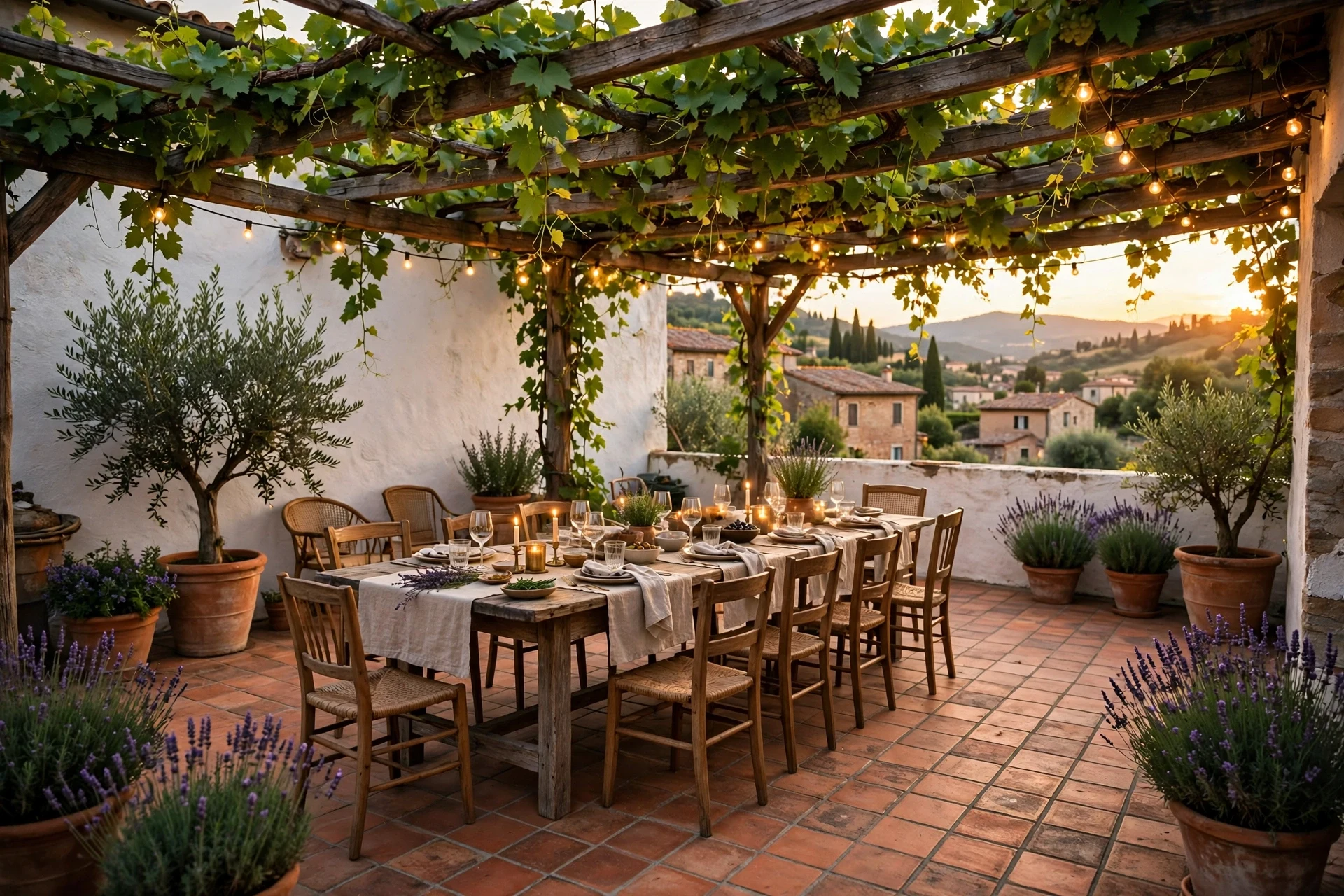
That is what this guide is about. 21 European patio ideas, from the ground up, that bring the charm of Italy and France into an ordinary backyard. Some cost almost nothing, like a gravel path and a pot of lavender. Some are bigger projects, like a pergola or a fountain. If you are searching for European patio ideas, Italian patio ideas, or French courtyard ideas, you will find all three here. Start with the floor, add the green, and the rest will follow.
What’s Inside This Guide
- The 3 Things That Make a Patio Feel European
- Group 1: The Ground and the Walls (Ideas 1 to 5)
- Group 2: Shade, Structure and the Pergola (Ideas 6 to 9)
- Group 3: Dining and Lingering (Ideas 10 to 14)
- Group 4: Plants, Pots and Scent (Ideas 15 to 18)
- Group 5: Light, Water and the Finishing Touch (Ideas 19 to 21)
- The 1-2-3 European Patio Method
- At a Glance
- Do This, Not That
- Your European Patio Plan
- Take It Further
- Patio Cheat Sheet
- Questions People Ask
The 3 Things That Make a Patio Feel European
Before you buy anything, these three things decide almost everything.
1. Natural materials that age well. Stone, terracotta, aged wood, and wrought iron are the backbone of every European patio. These materials develop a patina over time, which is exactly the point. A patio that looks a little weathered looks like it has always been there, and that is the charm. Avoid shiny plastic and bright new concrete, which fight the look you are building.
2. Green that climbs and spills. European patios are never bare. Vines climb walls, pots spill over their edges, and herbs grow along the paths. The green softens the stone and makes the space feel alive. One climbing plant on a wall does more for the feeling of a patio than a dozen decorations.
3. A table that invites long sitting. The heart of a European patio is a place to sit and stay. A long farmhouse table, a small round bistro set, or a pair of chairs in a shady corner, it does not matter which, as long as it is comfortable enough that nobody wants to leave. The patio is built around the sitting, not the other way around.
Keep those three in mind and every idea below will make sense.
One more thing worth saying plainly. A European patio is not finished in a weekend. It grows. Start with the floor and one good seating spot, then add plants and light over time. The patios that feel most European are the ones that were built slowly, one piece at a time.
Group 1: The Ground and the Walls
Everything starts at your feet and at the edges. Get these right and the rest is easy.
1. Terracotta Tile Flooring
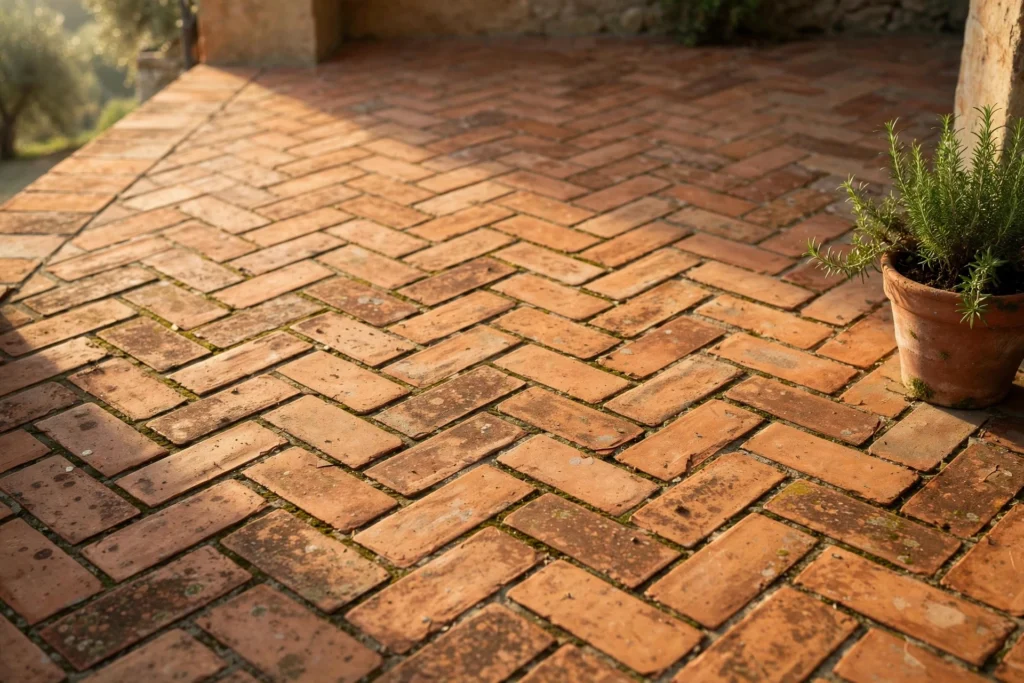
Terracotta tiles are the warm heart of a Tuscan terrace. Their orange brown color glows in the evening light, and they feel cool underfoot on a hot day. Lay them in a simple grid or a herringbone pattern, and leave the grout lines a little wide for an old world feel. Sealed terracotta handles weather well, and it only looks better as it ages. If full tiling is too much, use terracotta as a border around a stone floor.
You may also like: Idea 4, Gravel and Crushed Stone Paths, if you want a softer, cheaper ground that still feels French.
2. Limestone and Travertine Pavers
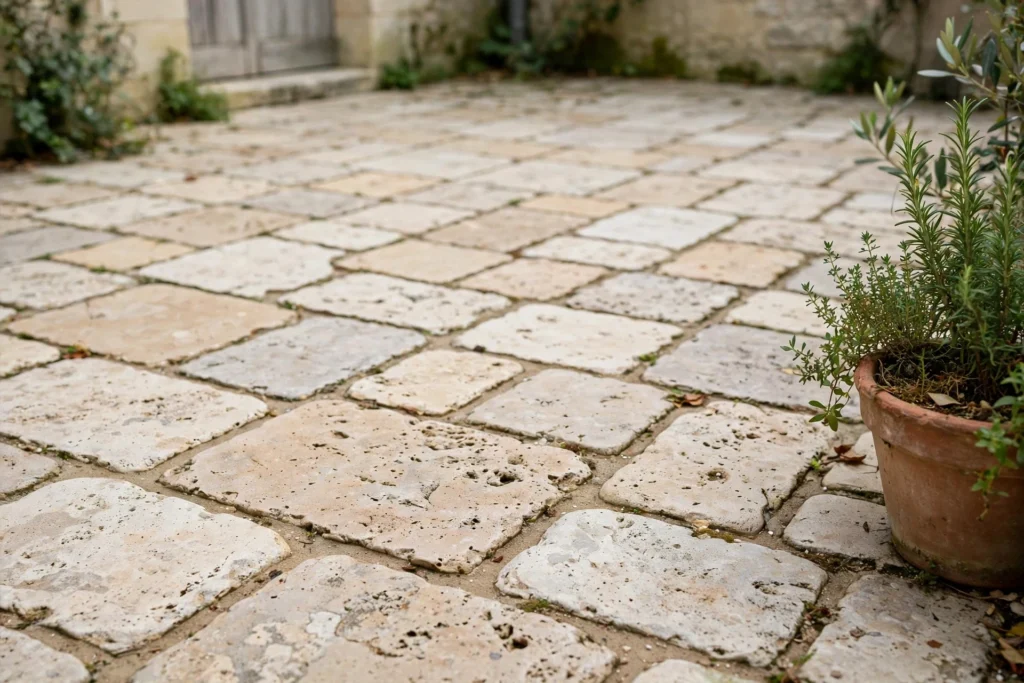
Pale limestone and travertine pavers give a patio the cool, calm feeling of a French courtyard. Their soft beige tones stay light in the sun and look beautiful next to green plants and dark iron furniture. Tumbled pavers, with their slightly rounded edges, look older and more authentic than sharp cut stone. Lay them with narrow gaps and fill the joints with sand or low ground cover, so the floor feels like it grew there instead of being installed.
You may also like: Idea 3, Cobblestone and Reclaimed Brick, if you want a floor with more texture and a rougher, older character.
3. Cobblestone and Reclaimed Brick
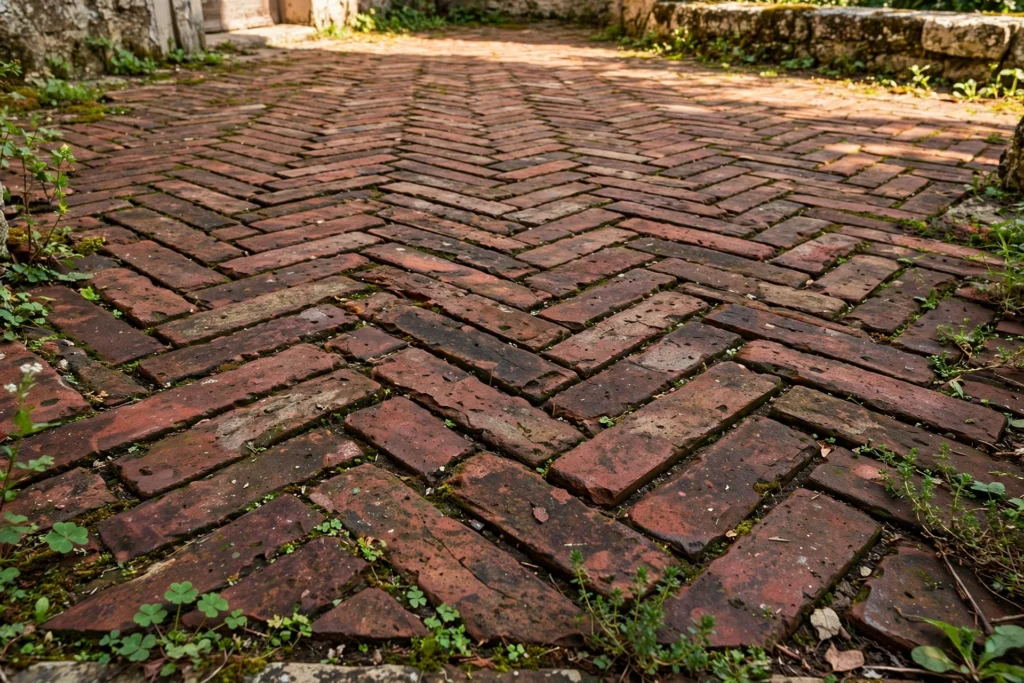
Reclaimed brick laid in a herringbone pattern, or old cobblestones with soft rounded tops, instantly make a patio feel historic. The uneven surface slows people down, which is part of the charm. Brick warms up beautifully in the sun and turns a deep red brown by evening. Use it for the whole patio floor, or just for a path leading to the seating area. Second hand brick is often cheaper than new stone, and it already has the patina you want.
You may also like: Idea 2, Limestone and Travertine Pavers, if you want a smoother, paler floor instead of rough brick.
4. Gravel and Crushed Stone Paths
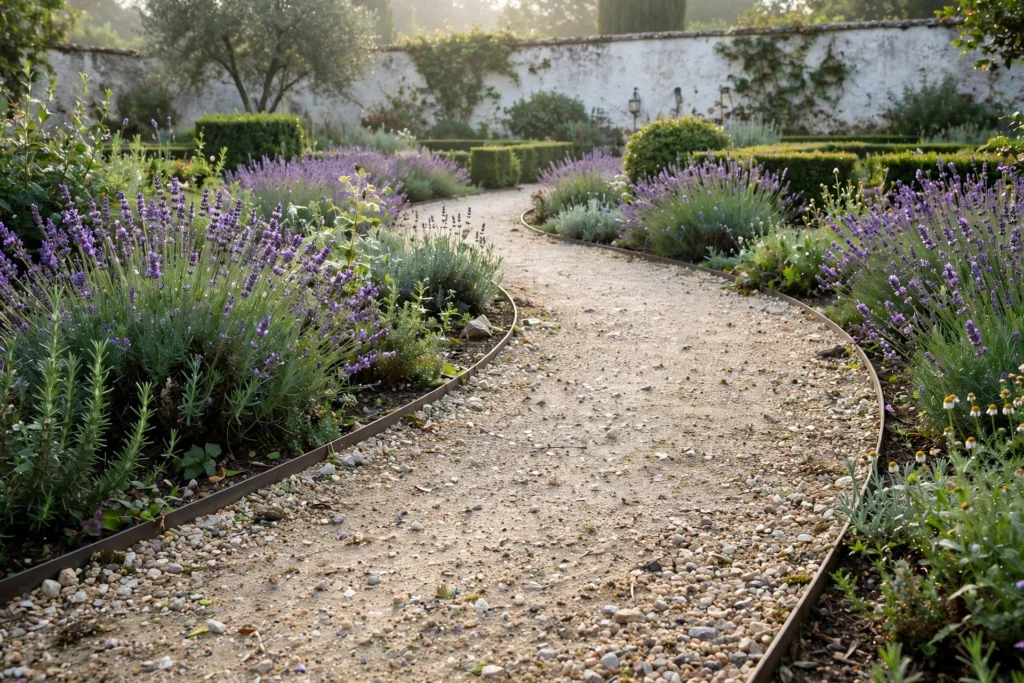
Gravel is the fastest way to make a patio feel French. Decomposed granite or simple pea gravel crunches underfoot, drains well, and costs far less than stone paving. Use flexible steel edging to keep it contained and create crisp lines around planting beds. A gravel path winding from the door to the seating area gives the whole garden a relaxed, countryside rhythm. It also makes a small space feel bigger, because the eye follows the path instead of stopping at a wall.
You may also like: Idea 18, Lavender Borders Along the Paths, which turns a plain gravel walk into something that smells wonderful.
5. Whitewashed Walls and Plaster
A whitewashed wall is the perfect backdrop for a European patio. The soft white reflects light into shady corners, makes small spaces feel larger, and shows off green plants beautifully. Limewash, which is the traditional finish, lets the wall breathe and weathers into a soft, uneven tone that looks far better than flat paint. One whitewashed wall, with a vine climbing it and a terracotta pot at its base, can change the whole feeling of a backyard.
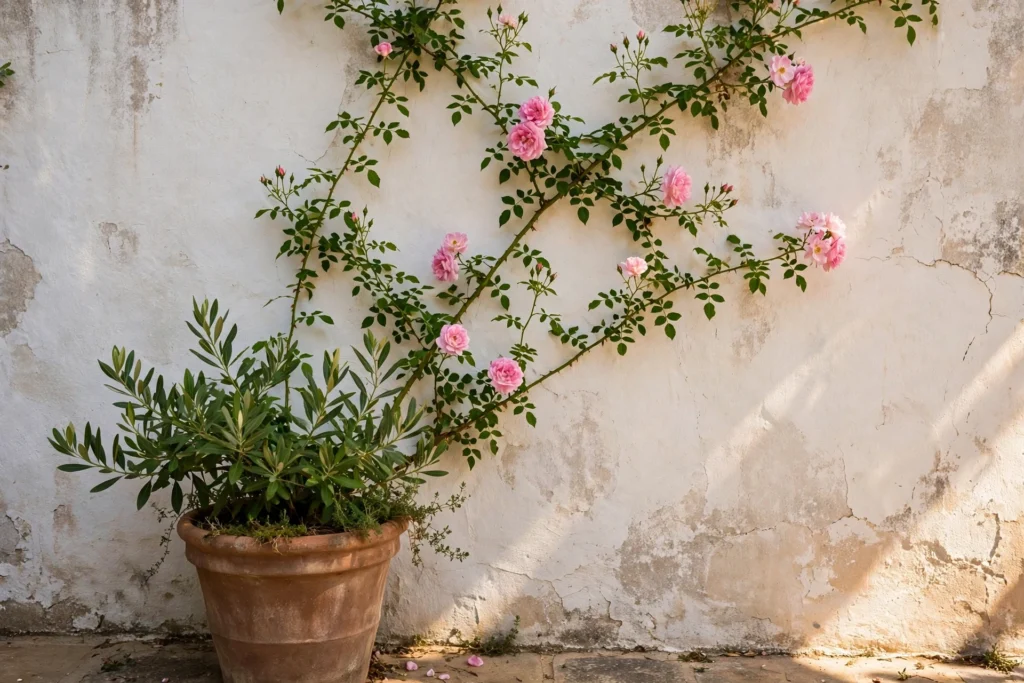
You may also like: Idea 15, Climbing Roses and Wisteria, which is what you plant against that whitewashed wall.
Group 2: Shade, Structure and the Pergola
A European patio needs shade that feels like part of the garden, not an umbrella from a store.
6. A Vine Covered Pergola
A wooden pergola covered in climbing vines is the signature of a Mediterranean patio. Wisteria in spring, grapevines in summer, and jasmine in the evening give you shade, scent, and dappled light all at once. Build the pergola from aged wood or cedar, and let the vines do the decorating. Put the dining table underneath it, and you have a room without walls. This is the biggest single project on this list, and it is worth every bit of effort.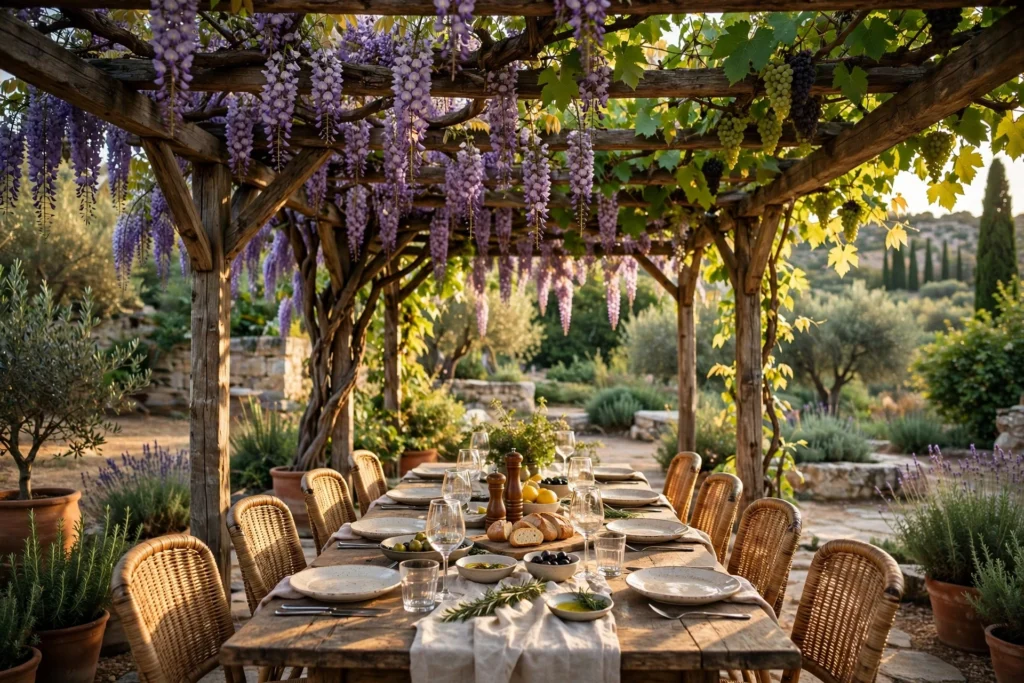
You may also like: Idea 7, A Retractable Linen Canopy, if you want shade now while the vines are still growing in.
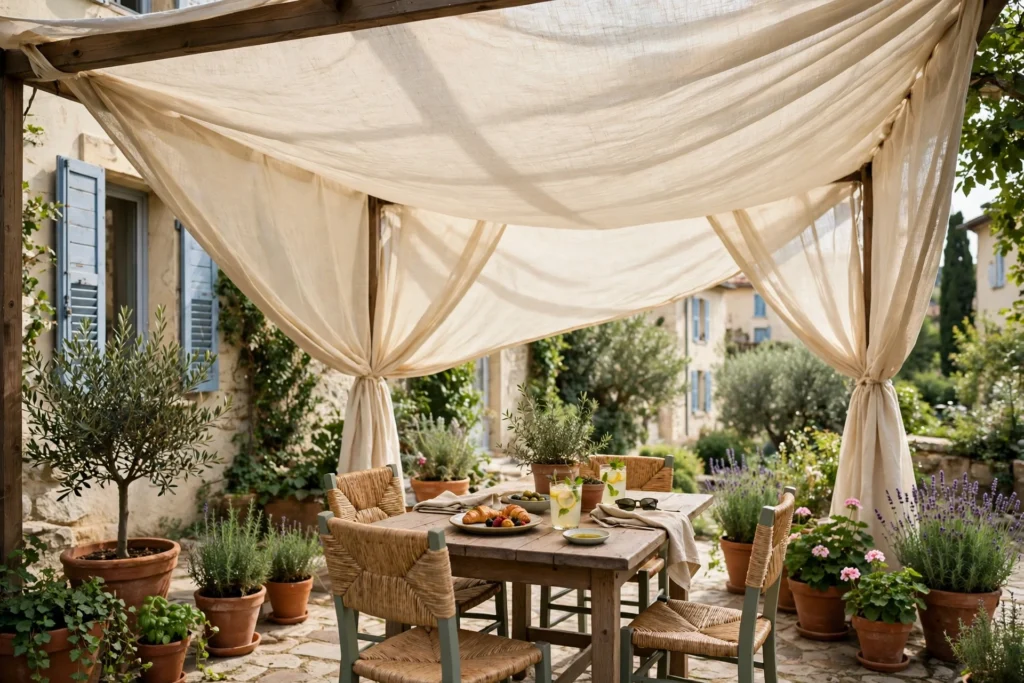
7. A Retractable Linen Canopy
A simple linen canopy, stretched over the seating area and pulled back on cool evenings, gives you shade in minutes instead of years. Cream or natural linen looks right with stone and wood, and it softens the light in a way that hard roofing never does. Mount it on a simple wooden frame or between two walls, and roll it back when you want the sky. It is the practical answer while a pergola vine is still young.
You may also like: Idea 6, A Vine Covered Pergola, which is the permanent version of this same idea.
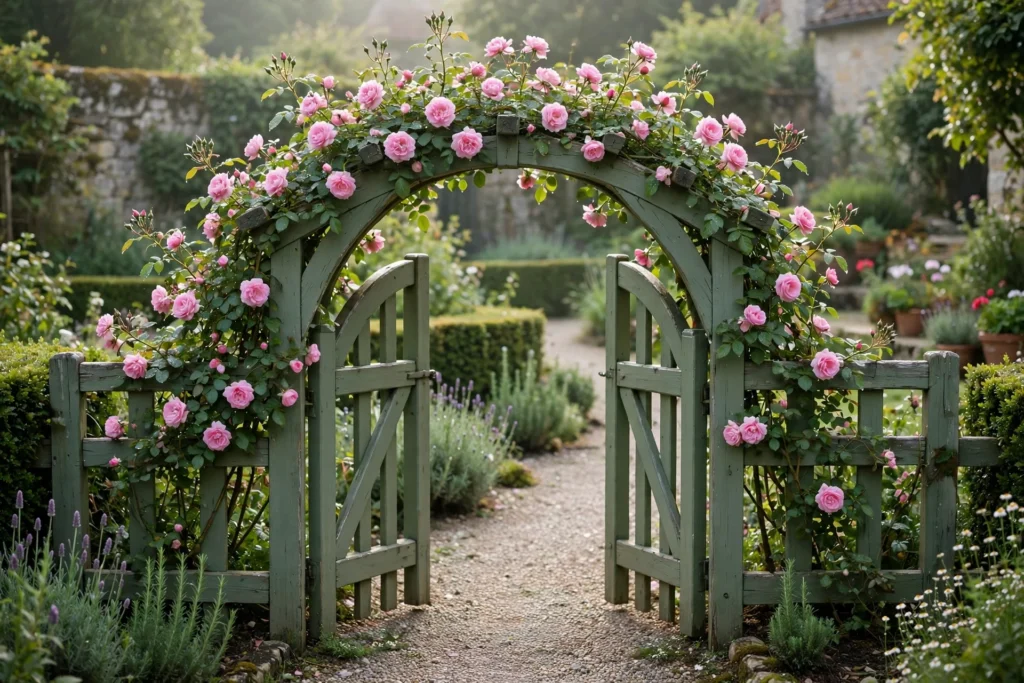
8. An Arched Entryway or Vine Covered Gate
European gardens love an arched doorway. A simple wooden arch, or a gate covered in climbing roses, marks the moment you step into the patio and the ordinary world falls away. It does not need to be tall or grand. A low arch over a gravel path is enough to create that feeling of arrival. Paint it a soft sage green or leave the wood to weather, and plant something fragrant to climb it.
You may also like: Idea 5, Whitewashed Walls and Plaster, which pairs beautifully with an arched opening in the wall.
9. A Stone Fireplace or Fire Pit
A free standing stone fireplace, or a simple round stone fire pit, turns a patio into a place for cool evenings. The stone matches the floor, the fire gives light and warmth, and people gather around it the way they gather around a table. Keep the design simple, a low stone circle with a flat top edge for setting down cups. This is the feature that stretches your patio season by months, from the first warm evening of spring to the last cold night of fall.
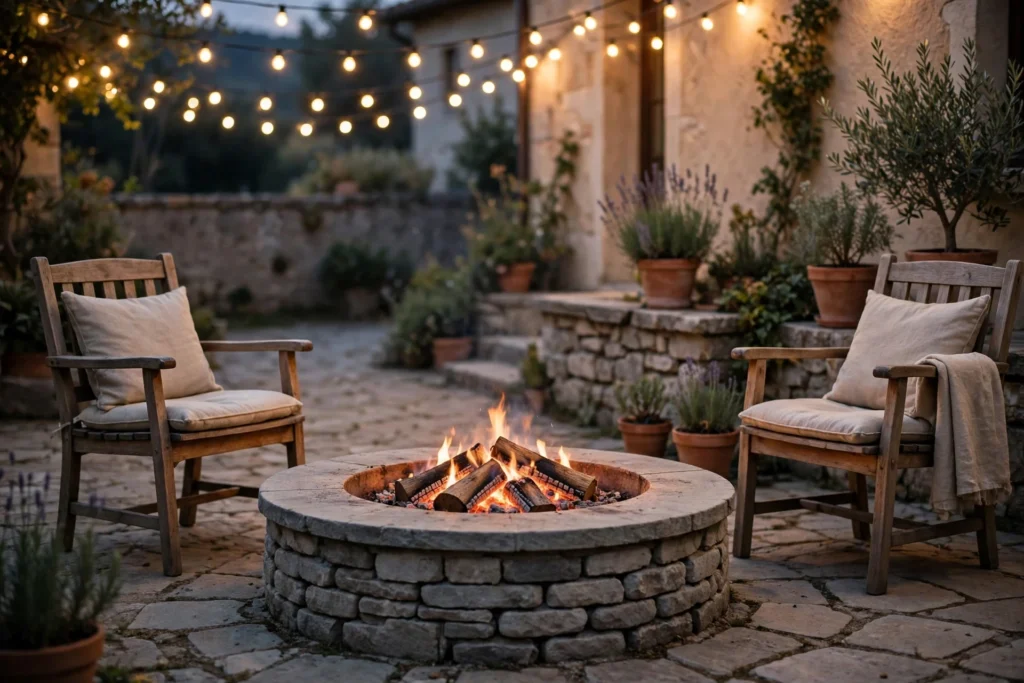
You may also like: Idea 19, String Lights and Lanterns, which pairs with firelight to make evenings feel magical.
Group 3: Dining and Lingering
The table is the heart of the patio. These five ideas make it a place people stay.
10. A Long Farmhouse Table for Slow Dinners
A long wooden farmhouse table, with mismatched chairs pulled up around it, is the classic European dining setup. The table should be big enough for a crowd and plain enough that nobody worries about it. Aged wood, a little worn, is better than new and shiny. Set it under the pergola or a tree, and keep the table setting simple: a linen cloth, a few candles, and a jug of water. The table is not for show. It is for dinners that run long.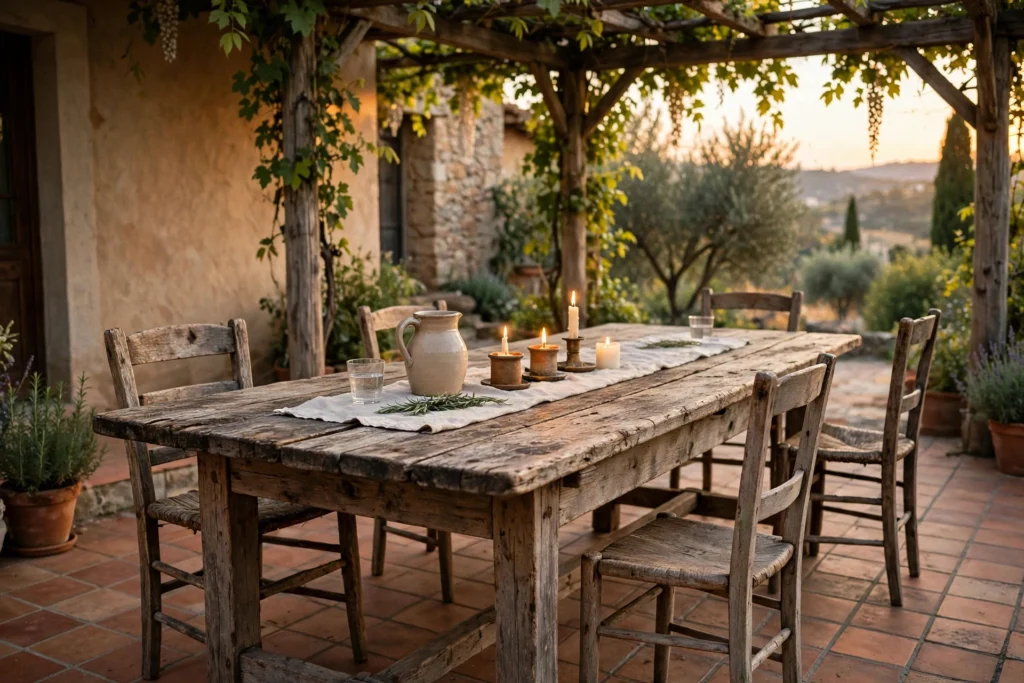
You may also like: Idea 11, A Parisian Bistro Corner, if your space is small and a long table will not fit.
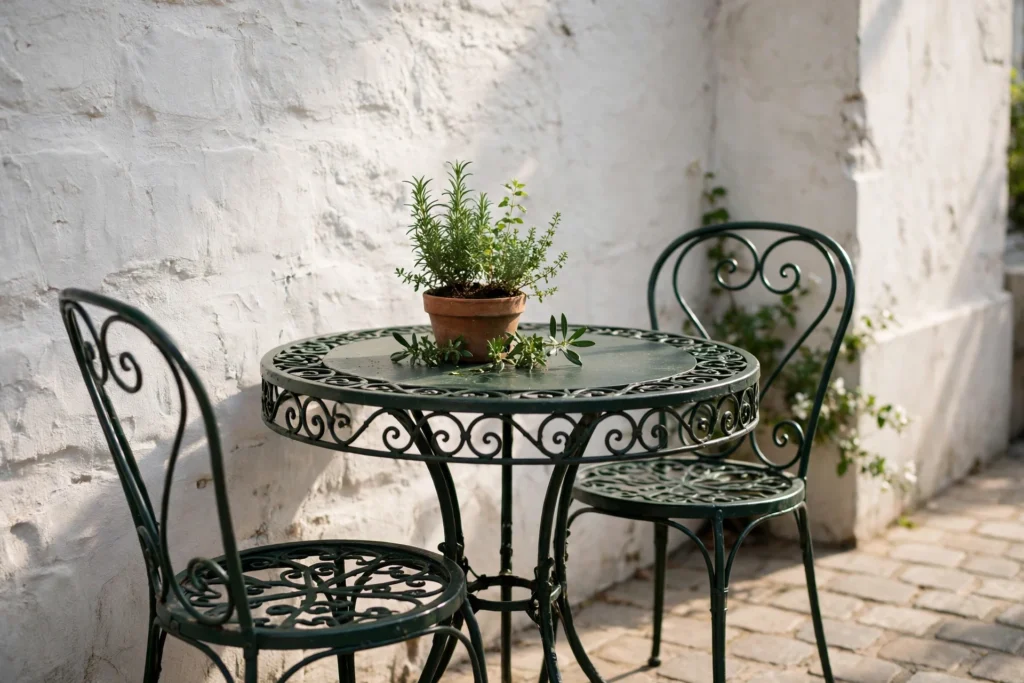
11. A Parisian Bistro Corner
A small round metal table and two chairs, tucked into a sunny corner, is all you need for morning coffee or afternoon tea. This is the Parisian cafe brought home, and it works in the smallest spaces, even a balcony. Choose a classic French bistro set in dark green or black wrought iron, and add a small pot of herbs on the table. It is the smallest idea on this list, and one of the most used, because it turns an ordinary morning into a small pleasure.
You may also like: Idea 10, A Long Farmhouse Table, if you have the space and want to feed a crowd instead.
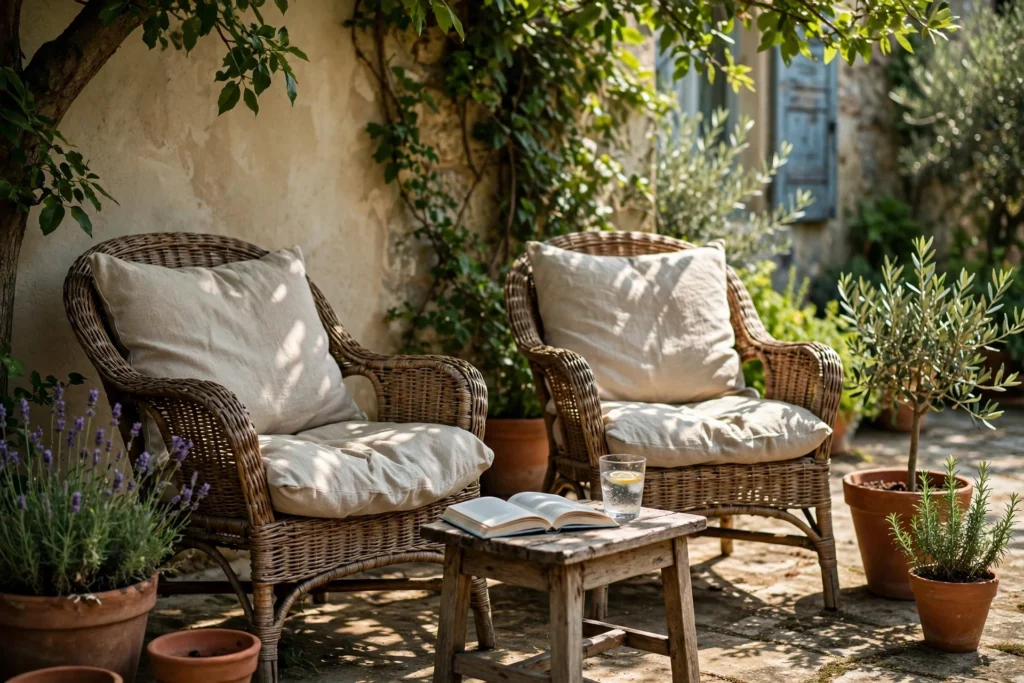
12. A Shaded Lounging Area with Low Seating
Not every patio moment is a meal. A low lounging area, with deep cushions on a wooden platform or a pair of old wicker chairs, gives you a place to read, nap, and watch the light change. Keep the cushions in natural linen or soft sage, and add a small side table for a book and a glass. Put it in the shadiest corner, where the afternoon sun never reaches. This is the corner that makes a patio feel like a holiday, not just a backyard.
You may also like: Idea 13, A Hammock Between Two Trees, which is the laziest version of this same idea.
13. A Hammock Between Two Trees
A simple canvas hammock, strung between two trees or two sturdy posts, is the most relaxed seat a patio can have. It needs no furniture, no cushions, and no effort, and it turns a shady spot into the best seat in the house. Choose a natural cotton hammock in cream or stripes, and hang it low enough to climb into easily. It is the idea that costs the least and gets used the most on a hot afternoon.
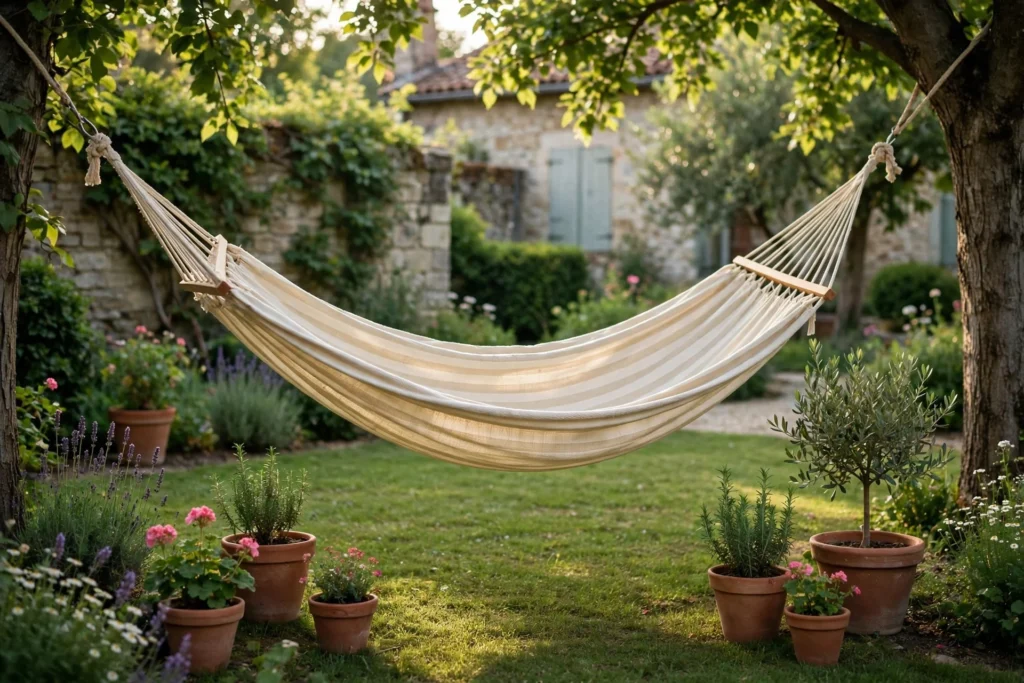
You may also like: Idea 12, A Shaded Lounging Area, if you want a more permanent seat that does not swing.
14. An Outdoor Kitchen with a Wood Fired Oven
For the cooks, an outdoor kitchen with a wood fired pizza oven is the dream. Stone countertops, open shelving for herbs and olive oil, and a small oven that makes pizza in ninety seconds. This is the biggest project on the list, and it turns the patio into the kitchen for the whole summer. Start small if you need to, with a counter and a grill, and add the oven later. The smell of wood smoke and baking bread will do the rest.
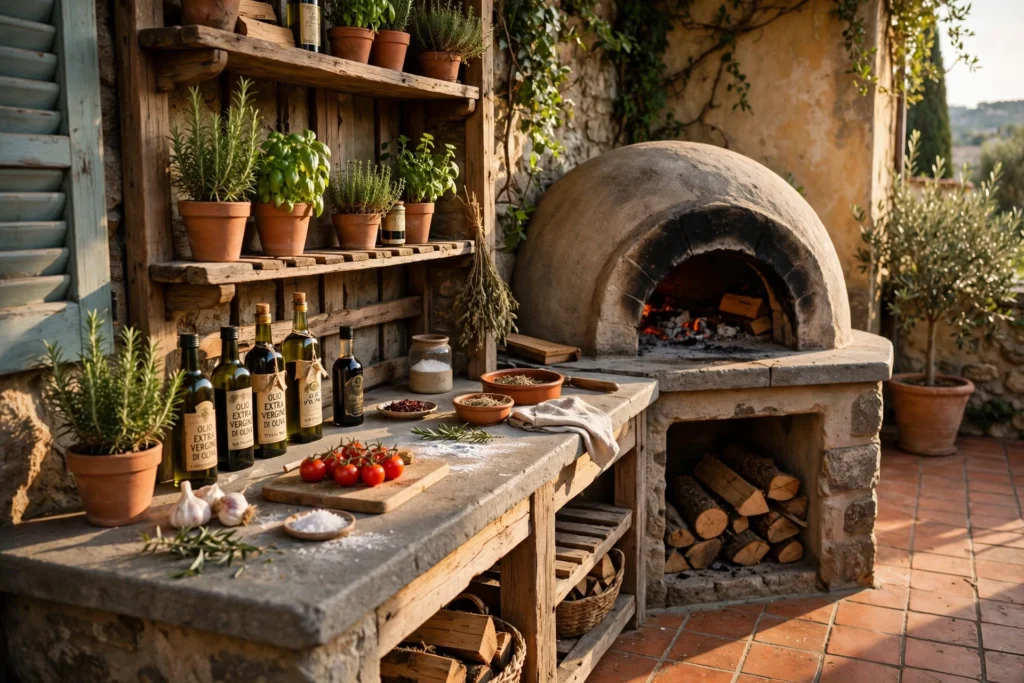
You may also like: Idea 10, A Long Farmhouse Table, which is where everyone sits to eat what comes out of that oven.
Group 4: Plants, Pots and Scent
The green is what makes a patio European. These four ideas cover it.
15. Climbing Roses and Wisteria
Train climbing roses and wisteria up walls, pergolas, and trellises, and the patio will feel enclosed and private within a season or two. Roses give color and scent in summer, wisteria gives purple flowers in spring, and both soften hard stone in a way nothing else can. Plant them in the ground, not in pots, so their roots can grow deep. Prune once a year in winter, and otherwise let them climb where they want.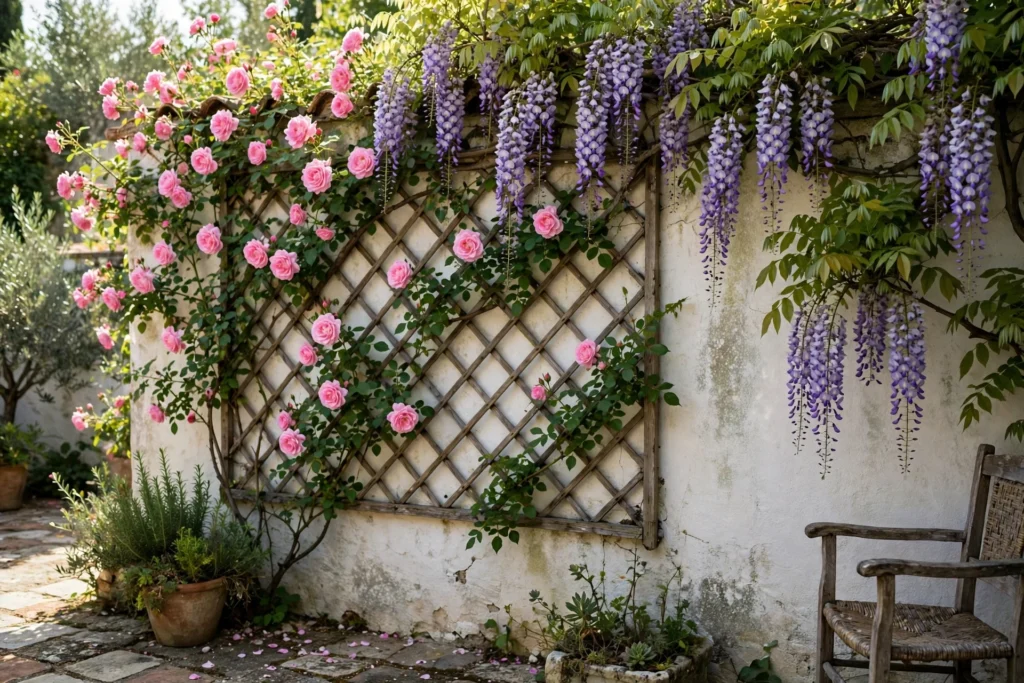
You may also like: Idea 16, Potted Olive and Citrus Trees, which gives you green at a lower level to balance the climbers above.
16. Potted Olive and Citrus Trees
A dwarf olive tree or a Meyer lemon in a large terracotta pot is the classic European patio plant. The silvery olive leaves look beautiful against a whitewashed wall, and the citrus gives you fruit and scent. Use heavy pots so the trees do not blow over, and move them to a sheltered spot in the coldest weeks. One tree by the door and one by the table is enough. They give the patio structure all year, even in winter.
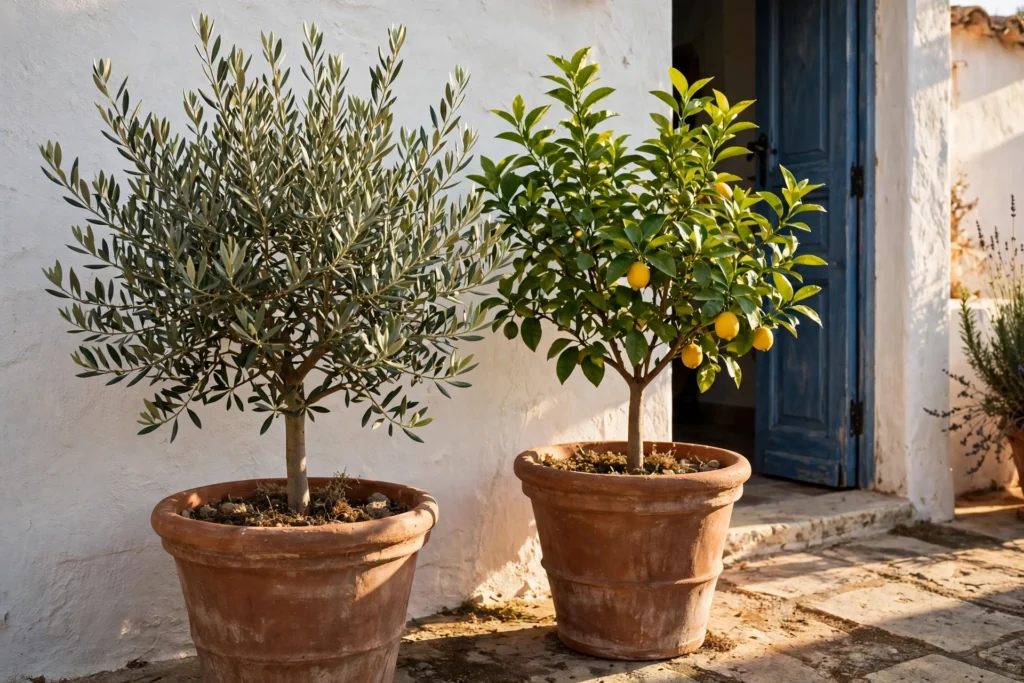
You may also like: Idea 17, Terracotta Pots of Every Size, which is how you build a whole collection around those trees.
17. Terracotta Pots of Every Size
Terracotta pots, in every size from tiny to huge, are the signature container of a European patio. Group them in threes, mix tall and short, and fill them with herbs, geraniums, and small shrubs. The warm orange of the clay looks right against stone and green, and the pots age beautifully as they weather. Buy them second hand when you can, because an old pot with a little moss on it looks better than a new one.
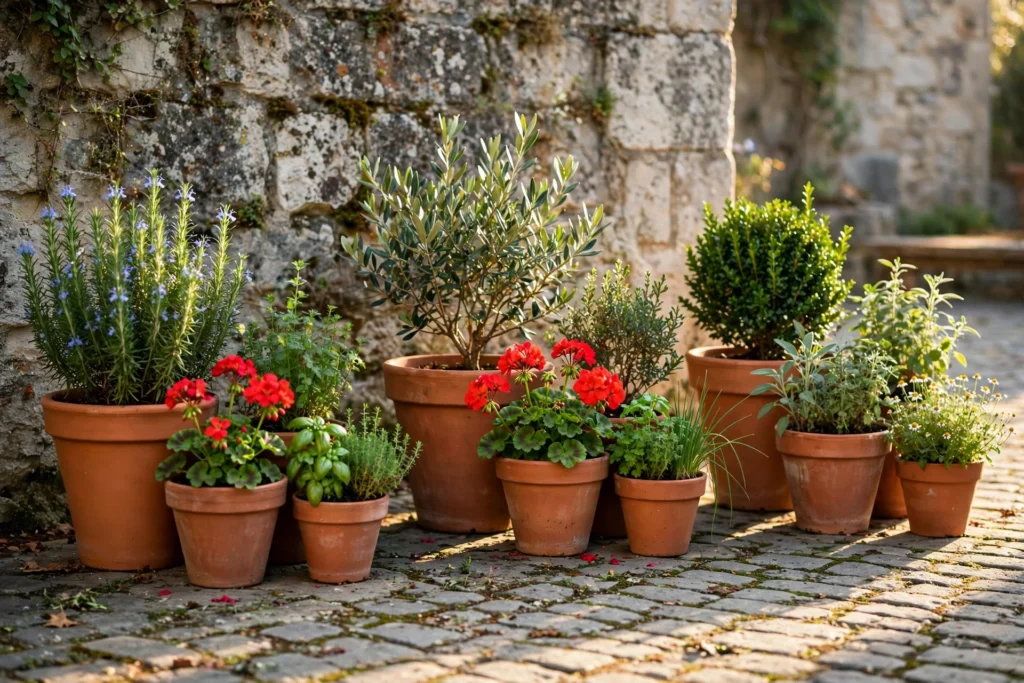
You may also like: Idea 18, Lavender Borders Along the Paths, which uses the same warm color in the planting beds.
18. Lavender Borders Along the Paths
Line the paths and the edges of the patio with lavender, and the whole garden will smell wonderful from June to September. Lavender loves sun and poor soil, which makes it easy to grow, and its purple flowers look beautiful against stone and gravel. Bees love it too, which brings life to the patio. Cut it back hard after flowering, and it will come back stronger every year. A lavender border is the cheapest luxury on this list.
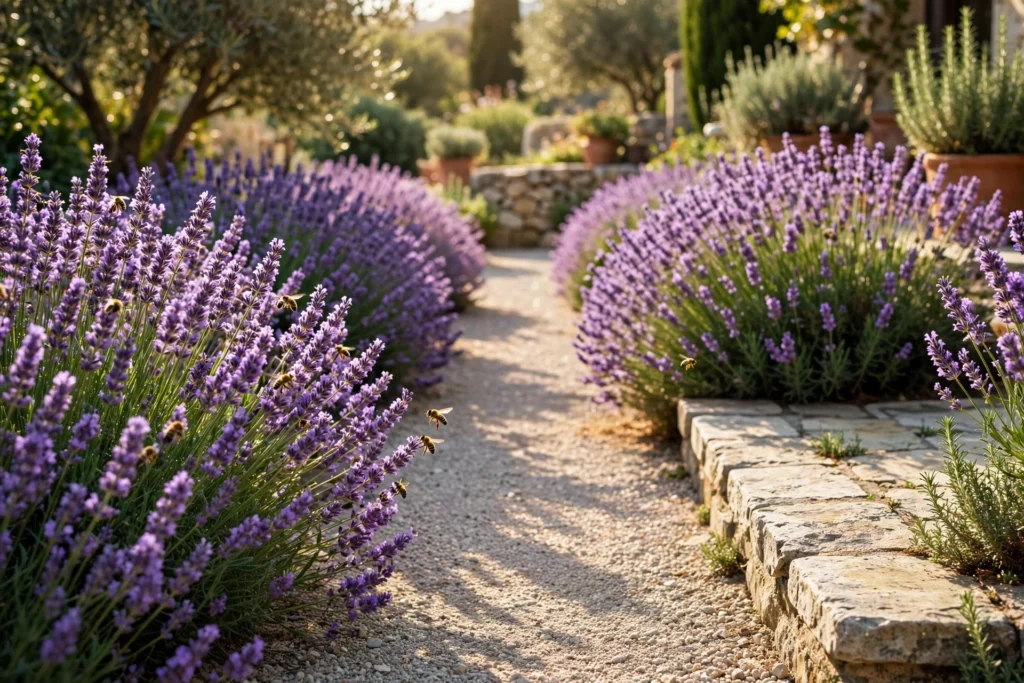
You may also like: Idea 4, Gravel and Crushed Stone Paths, which is the path the lavender should line.
Group 5: Light, Water and the Finishing Touch
The last three are small, and they make the biggest difference after dark.
19. String Lights and Lanterns
String lights, hung in a loose swag above the table, and lanterns with real candles on the walls, turn an ordinary evening into a celebration. The warm light makes stone glow and faces look kind. Use warm white bulbs, never cool white, and hang the strings loosely so they dip a little in the middle. A few lanterns on the ground along the path guide people in after dark. This is the single cheapest way to make a patio feel magical.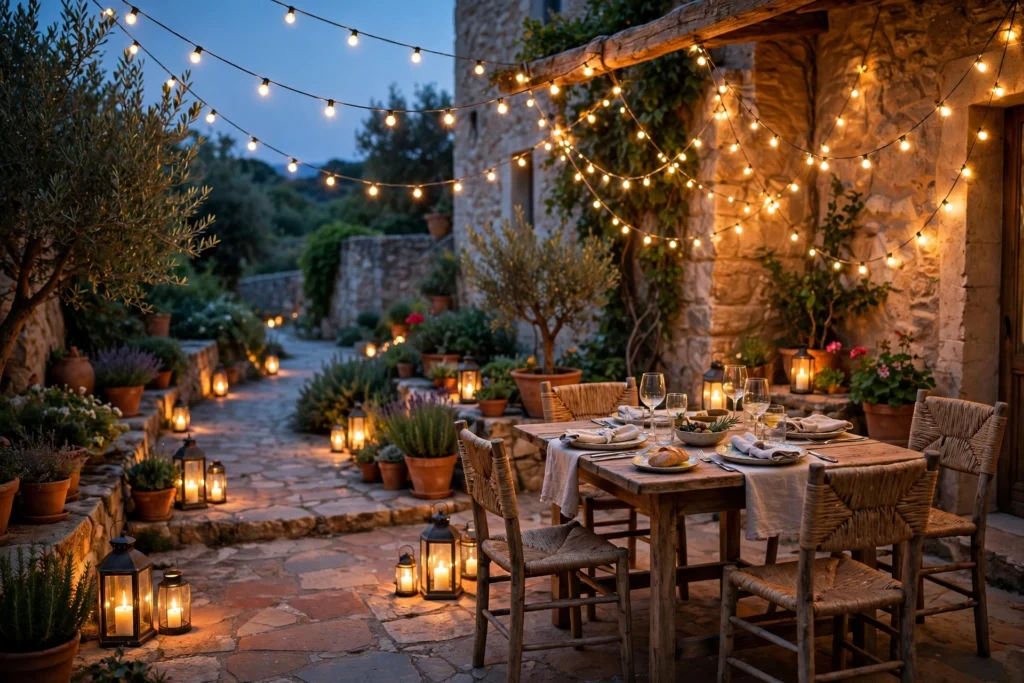
You may also like: Idea 20, A Central Fountain, which looks its best in the evening with a light on the water.
20. A Central Fountain or Wall Spout
A small tiered fountain in the center of the patio, or a simple wall spout that drips into a stone basin, brings the sound of water into the garden. The sound covers traffic noise, cools the air, and gives the patio a focal point. A lion head wall fountain is a classic choice for a small space, because it needs no floor area at all. Keep the design simple and the stone matching the patio floor, so it feels like it has always been there.
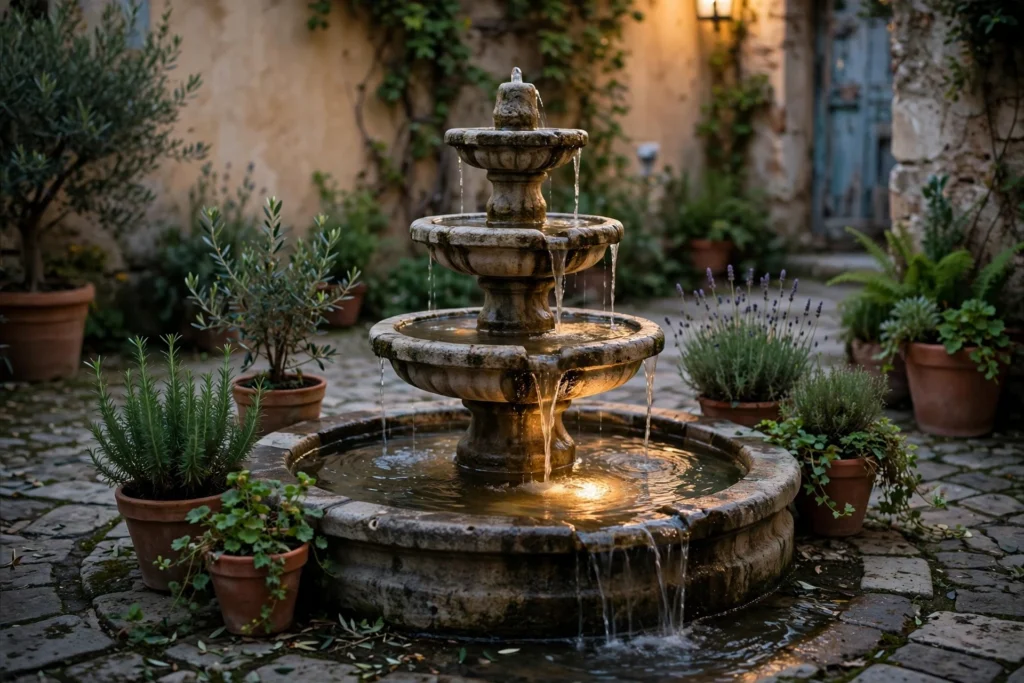
You may also like: Idea 9, A Stone Fireplace or Fire Pit, which is the other classic focal point, for warmth instead of water.
21. Vintage Urns, Statues and Old Iron
A pair of old stone urns by the door, a small statue in a corner, or a piece of old ironwork leaning against a wall gives a patio the feeling of age. These are the details that make a new patio look like it has a history. Buy them second hand, let them weather, and do not polish them. One or two pieces are enough. The goal is a hint of the old world, not a museum.
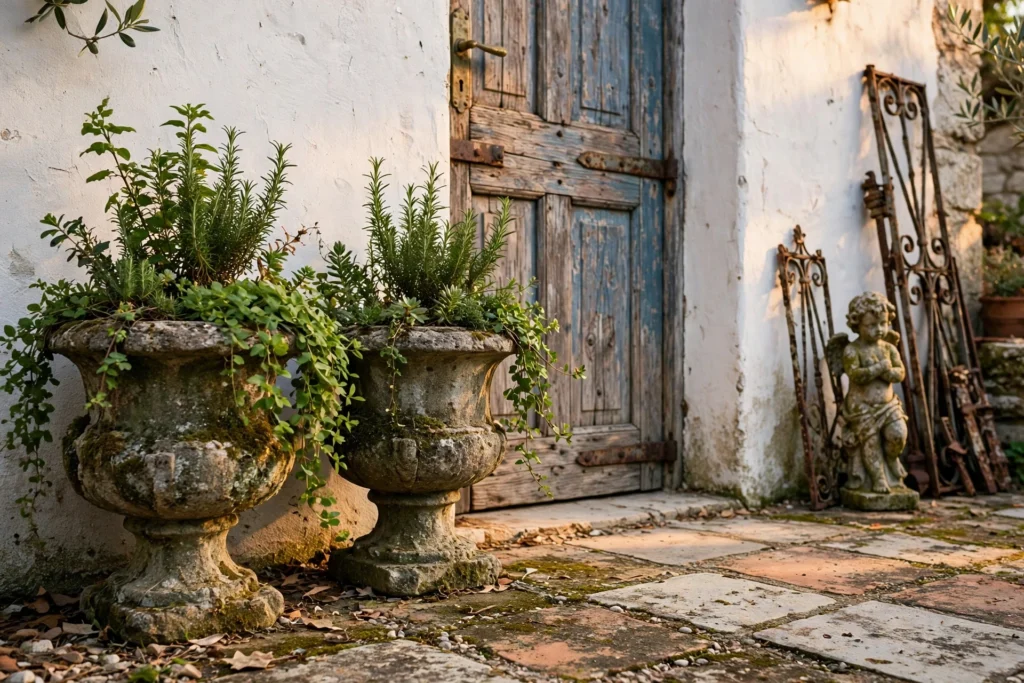
You may also like: Idea 5, Whitewashed Walls and Plaster, which is the backdrop that shows these old pieces at their best.
The 1-2-3 European Patio Method
1. Start with the floor. Choose one ground material, stone, terracotta, brick, or gravel, and lay it well. The floor sets the tone for everything else, and it is the hardest thing to change later. Keep the rest simple until the floor is done.
2. Add shade and a table. Put up a pergola or a canopy, and set the table underneath it. This is the moment the patio becomes a room. Sit at the table at different times of day and check where the sun falls before you fix anything in place.
3. Layer green and light last. Add the climbing plants, the pots, and the lavender, then hang the string lights and set out the lanterns. These are the layers that make the patio feel finished, and they are the easiest to change if you get them wrong. A patio built in this order grows into itself instead of fighting itself.
At a Glance
| Idea | What it is | Cost | Best for |
|---|---|---|---|
| 1. Terracotta Tile Flooring | Warm clay tiles | Medium | Tuscan feel |
| 2. Limestone Pavers | Pale stone floor | Medium | French calm |
| 3. Cobblestone Brick | Old brick or stone | Medium | Historic feel |
| 4. Gravel Paths | Crushed stone walks | Low | Quick change |
| 5. Whitewashed Walls | Limewash plaster | Low | Small spaces |
| 6. Vine Pergola | Wood frame, vines | High | Dining shade |
| 7. Linen Canopy | Retractable cloth | Low | Fast shade |
| 8. Arched Entryway | Arch or vine gate | Low | Arrival feeling |
| 9. Stone Fireplace | Stone fire feature | High | Cool evenings |
| 10. Farmhouse Table | Long wood table | Medium | Slow dinners |
| 11. Bistro Corner | Small metal set | Low | Tiny spaces |
| 12. Lounging Area | Low cushions | Medium | Reading, resting |
| 13. Hammock | Canvas, two trees | Low | Lazy afternoons |
| 14. Outdoor Kitchen | Stone, wood oven | High | Cooks |
| 15. Climbing Roses | Roses, wisteria | Low | Walls, privacy |
| 16. Olive Citrus Trees | Potted trees | Medium | Year round green |
| 17. Terracotta Pots | Pots of all sizes | Low | Instant charm |
| 18. Lavender Borders | Lavender edging | Low | Scent, bees |
| 19. String Lights | Lights, lanterns | Low | Evening magic |
| 20. Central Fountain | Fountain or spout | Medium | Sound, focus |
| 21. Vintage Urns | Old stone, iron | Low | Sense of age |
Do This, Not That
| Do this | Not that |
|---|---|
| Start with the floor and the table | Buy decorations before the basics |
| Use stone, wood, iron, terracotta | Use shiny plastic and bright concrete |
| Let vines climb and pots spill | Keep the patio bare and tidy |
| Choose warm white string lights | Use cool white bulbs that feel harsh |
| Plant lavender and herbs for scent | Rely on candles alone for smell |
| Build shade before you buy furniture | Buy chairs that bake in full sun |
| Keep the table setting simple | Overdress the table and never use it |
| Let materials age and weather | Polish everything to look new |
| Add one focal point, fountain or fire | Add three focal points that compete |
| Grow the patio slowly over time | Try to finish it all in one weekend |
Your European Patio Plan
Start with the floor, because that is the foundation. Then add shade and the table, because that is where you will live. Then add the plants, starting with one climber and a few pots. Then add light, because that is what makes evenings work. Then, only then, add the fountain or the fireplace, the urns, and the finishing touches. If you follow this order, every step makes the patio better, and you never have to undo anything.
Take It Further
Once the patio works, think about the garden around it. A gravel path that leads to the patio, a hedge that frames it, a small herb garden by the kitchen door, all of these make the patio feel like part of a bigger place. Visit a real European village square if you can, and notice how little it takes: stone, a table, a vine, and light. That is the whole recipe.
Patio Cheat Sheet
- Floor first: stone, terracotta, brick, or gravel, laid well.
- Materials: natural stone, aged wood, wrought iron, terracotta.
- Plants: climbing roses, wisteria, olive, citrus, lavender, rosemary.
- Pots: terracotta, grouped in threes, mixed sizes.
- Shade: pergola with vines, or a linen canopy while vines grow.
- Light: warm white string lights, lanterns with real candles.
- Water: small tiered fountain or a wall spout into a stone basin.
- Table: long farmhouse table for crowds, small bistro set for corners.
- Budget start: gravel path, lavender border, bistro set, string lights.
Questions People Ask
Natural stone such as limestone and travertine, terracotta tiles, aged wood, and wrought iron are the classic choices for a European outdoor patio. These materials age gracefully and develop a beautiful patina over time, which is exactly what gives the patio its old world charm. Avoid shiny plastic and bright new concrete, which fight the look you are building.
Focus on natural materials, abundant climbing vines, terracotta pots, soft lighting, and comfortable seating. Adding a water feature or a pergola also enhances the European feel, because both give the patio a focal point and a reason to linger. Start with the floor and the table, then layer the plants and the light, and the feeling will follow.
Olive trees, lavender, rosemary, citrus trees, wisteria, jasmine, and boxwood are perfect for European outdoor patios. They provide fragrance, structure, and Mediterranean character, and most of them are easy to grow in sun and poor soil. Climbing plants on the walls and potted trees by the door give the patio green at every level.
No, even small patios can capture European charm. Focus on quality materials, vertical planting, and intimate seating arrangements to create an authentic feel. A small bistro set, a pot of lavender, and a vine on the wall can make a tiny balcony feel like a Parisian cafe, because the feeling comes from the details, not the size.
Neuman
That is the whole idea, and it is a simple one. Stone underfoot, green on the walls, a table that invites long sitting, and light that turns gold in the evening. Pick the floor, plant one vine, and set out a table. The rest will grow around it, one slow evening at a time.
By Neuman A.