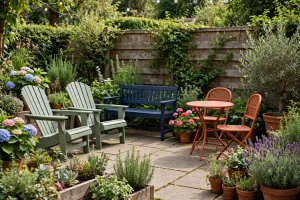
A backyard should feel like your own quiet corner, but too many of them feel like a stage. You sit down with a coffee, you glance up, and there is a neighbour’s upstairs window looking straight at your chair. You stop relaxing and start sitting up straighter, and the garden you worked so hard on becomes a place you hurry through instead of a place you linger in.
The fix is not a taller wall all the way around. The fix is one well placed screen in the right spot, at the right height, made from a material that suits your garden. Every idea below works that way, so you block the sightline without blocking the light, the breeze, or the feeling that you are outside. Pick one idea, try it this weekend, and your backyard starts feeling like yours again.
Too Long; Didn’t Read
Garden privacy screen ideas work best when they block one sightline instead of walling off the whole yard. Start by sitting in your usual chair and finding where the view comes from, then pick a screen about 5 to 6 feet tall for a seated area, in wood, plants, metal, or fabric. Slatted panels, living hedges, bamboo, trellis with climbers, and planter screens all give real privacy while keeping light and air moving, and most of them cost far less than a new fence. If you are searching for garden privacy screen ideas, backyard privacy ideas, or cheap garden screening ideas, these 22 ideas cover fences, plants, freestanding panels, and renter friendly options for patios, decks, and balconies.
What's Inside This Guide
ToggleThe Afternoon I Gave Up on the Patio
Two summers ago I bought a pair of secondhand lounge chairs, a small table, and a string of outdoor lights, and I set them up in the sunniest corner of the backyard. I had pictured slow mornings out there, coffee in hand, a book open, nobody watching. On the first morning, the neighbours came out to water their plants, their upstairs window was open, and I could hear every word of a phone call from the house behind us. I went back inside before the coffee was finished.
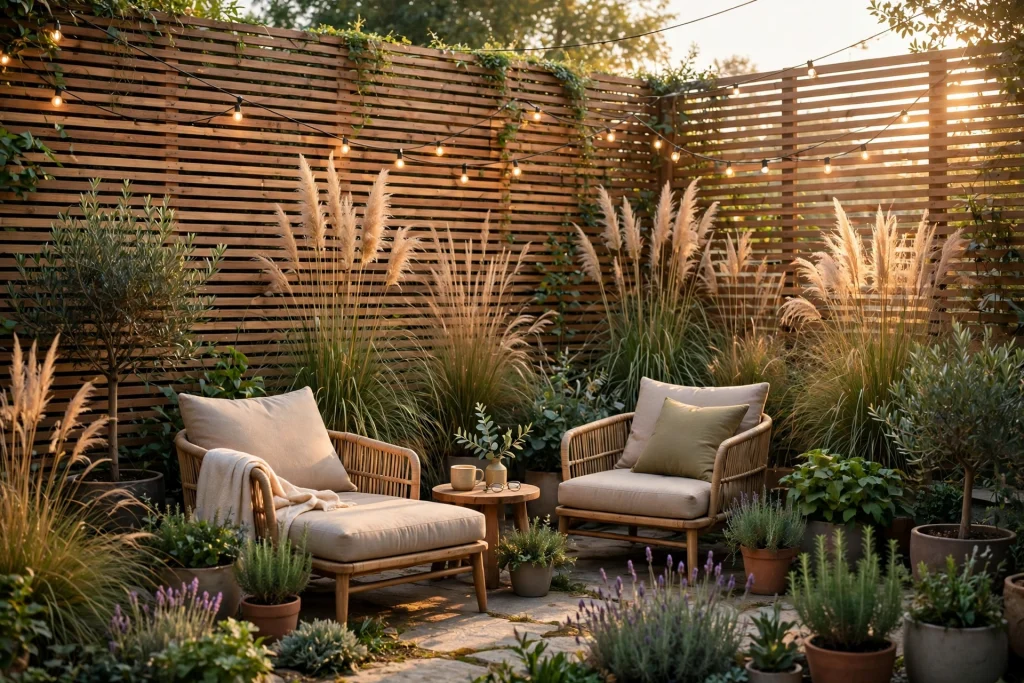
The next weekend I did something small instead of something drastic. I stood two wooden slat panels behind the chairs, put a big pot of tall grass beside them, and hung the lights from the top rail. Nothing about the garden changed except that one corner, but it changed everything about how the space felt. I stayed out there until sunset. That is the lesson this list is built on: you do not need to hide the whole garden, you only need to screen the spot where you sit.
What’s Inside This Guide
Start at the top and work down, or jump to the part your garden needs most.
The 3 Things That Make Garden Privacy Screens Work
Before you buy or build anything, these three things decide almost everything.
1. Screen the sightline, not the whole yard. Sit in your usual chair and look for where the view comes from. A neighbour’s upstairs window, a path, a road. One panel in that exact spot does more than a fence around the whole garden, and it leaves the rest of the space open and bright.
2. Match the material to the weather. Bamboo is lovely on a sheltered balcony and a mess on a windy patio. Thin plastic lattice fades and cracks in full sun, and a heavy metal panel overwhelms a tiny deck. Pick for wind, sun, and rain first, and for looks second, and the screen will still be standing in three years.
3. Leave room for light and air. A solid wall makes a garden feel boxed in and gloomy. Gaps between slats, a lattice top, or plants that move in the breeze all block the view while letting light through, so the garden stays a garden and not a courtyard with a roof missing.
Keep those three in mind and every idea below will make sense.
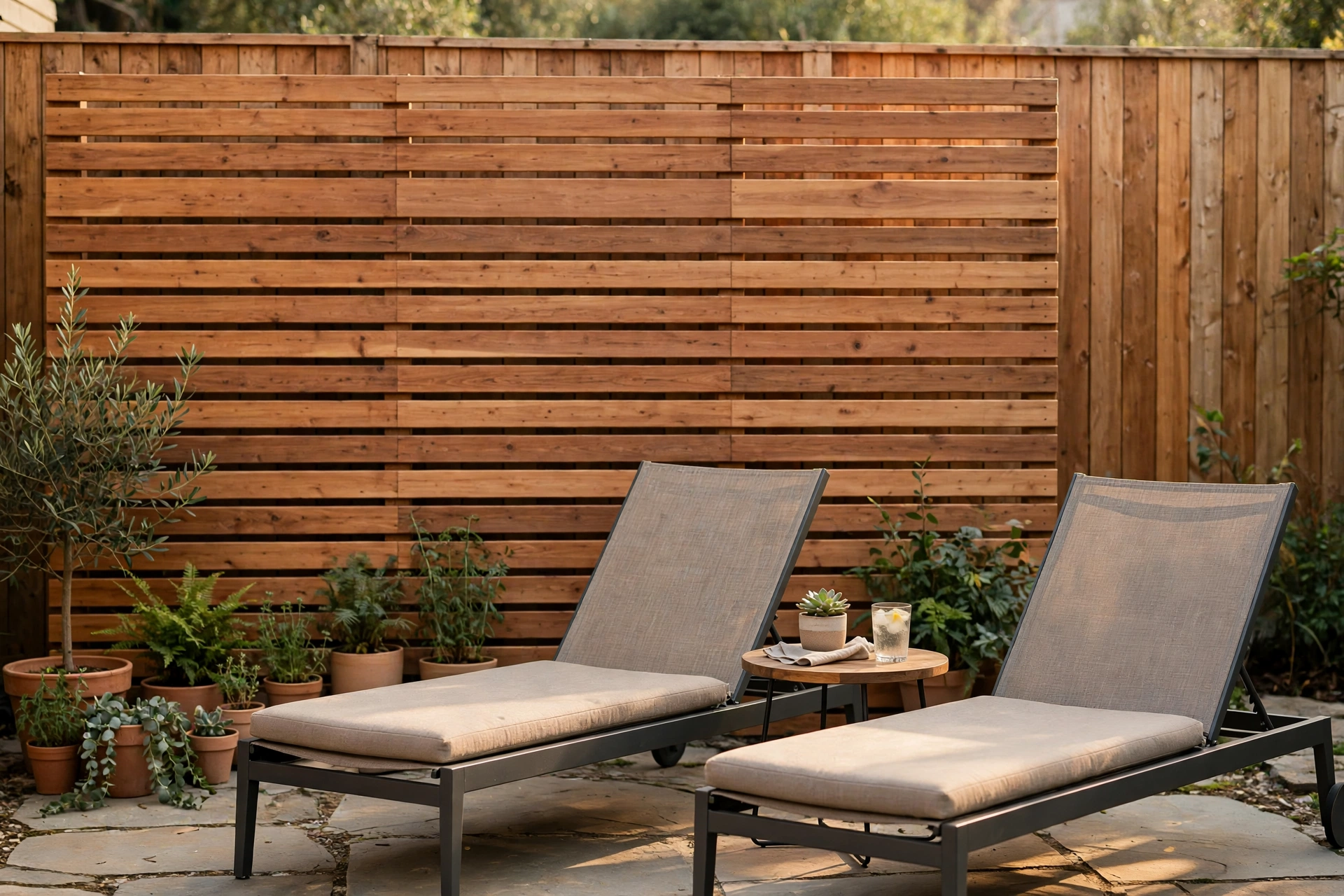
1. Horizontal Wooden Slat Panels
Horizontal wood slats are the classic privacy screen for a reason. They look clean and modern, they let light through the gaps, and they can be built from basic lumber for around a hundred dollars or less, depending on the size and the wood you choose. Stain them to match the deck or the patio furniture and the screen looks planned, not added on as an afterthought.
Leave a gap of about half an inch to an inch between slats for light and airflow, and use exterior screws so they do not rust and streak the wood. Set the posts in concrete or bolt them to a heavy planter base, because a tall slatted panel catches a surprising amount of wind. A screen that wobbles on the first breezy day is worse than no screen at all.
You may also like: 21 Backyard Landscaping Ideas That Change Your Outdoor Space
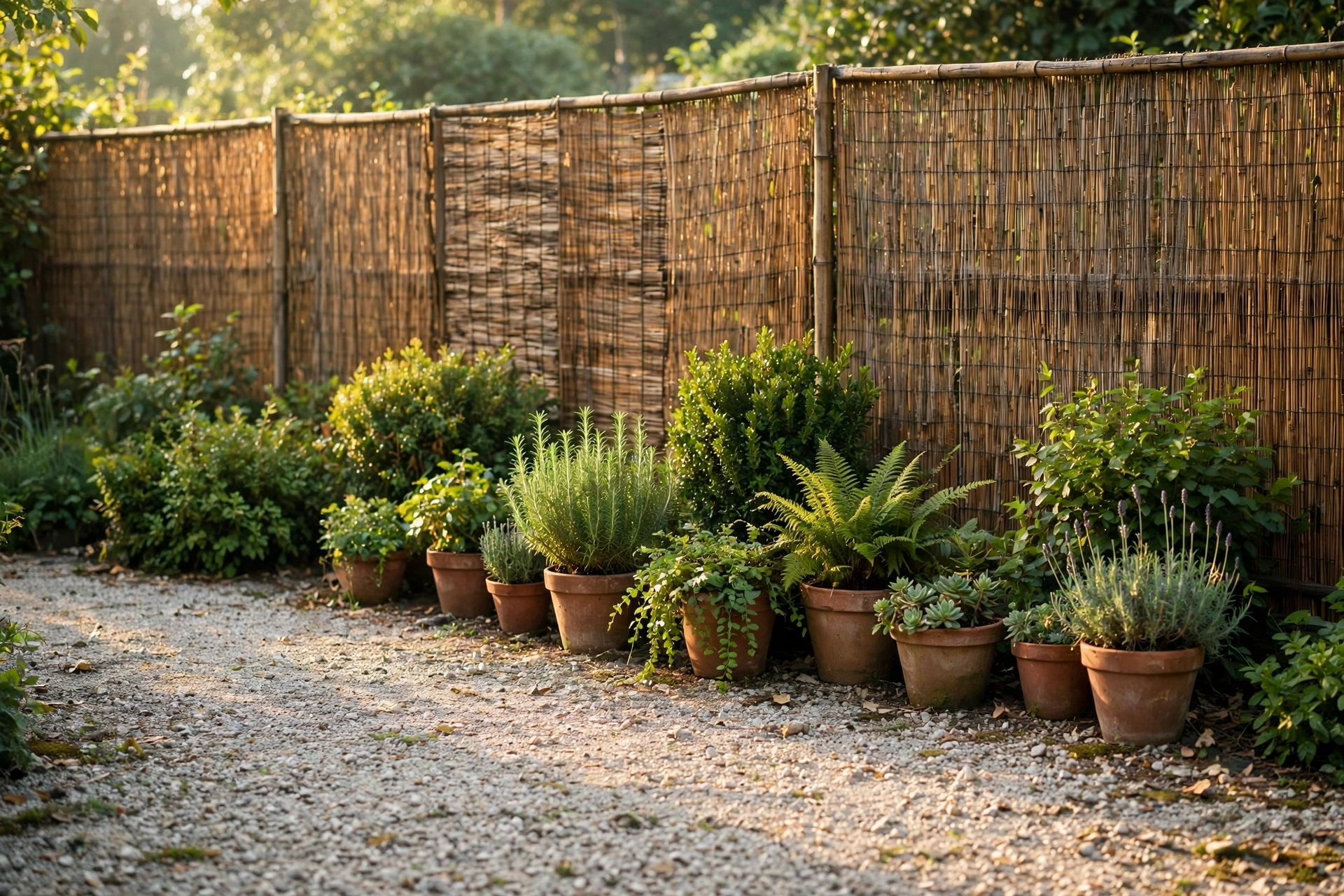
2. Bamboo Screening on an Old Fence
A tired old fence does not always need replacing. A roll of bamboo screening wired over the top of it hides cracked boards and grey wood in an afternoon, and it adds a warm, natural texture that plain timber never has. It is one of the cheapest ways to make an existing fence look cared for again.
Seal the bamboo before you hang it, because unsealed bamboo splits and greys fast in sun and rain. Fix it at the top, middle, and bottom with galvanised wire or zip ties so it does not flap in the wind, and trim the top edge straight so the fence line looks neat from the neighbour’s side too.
You may also like: 21 Front Yard Landscaping Ideas for Instant Curb Appeal
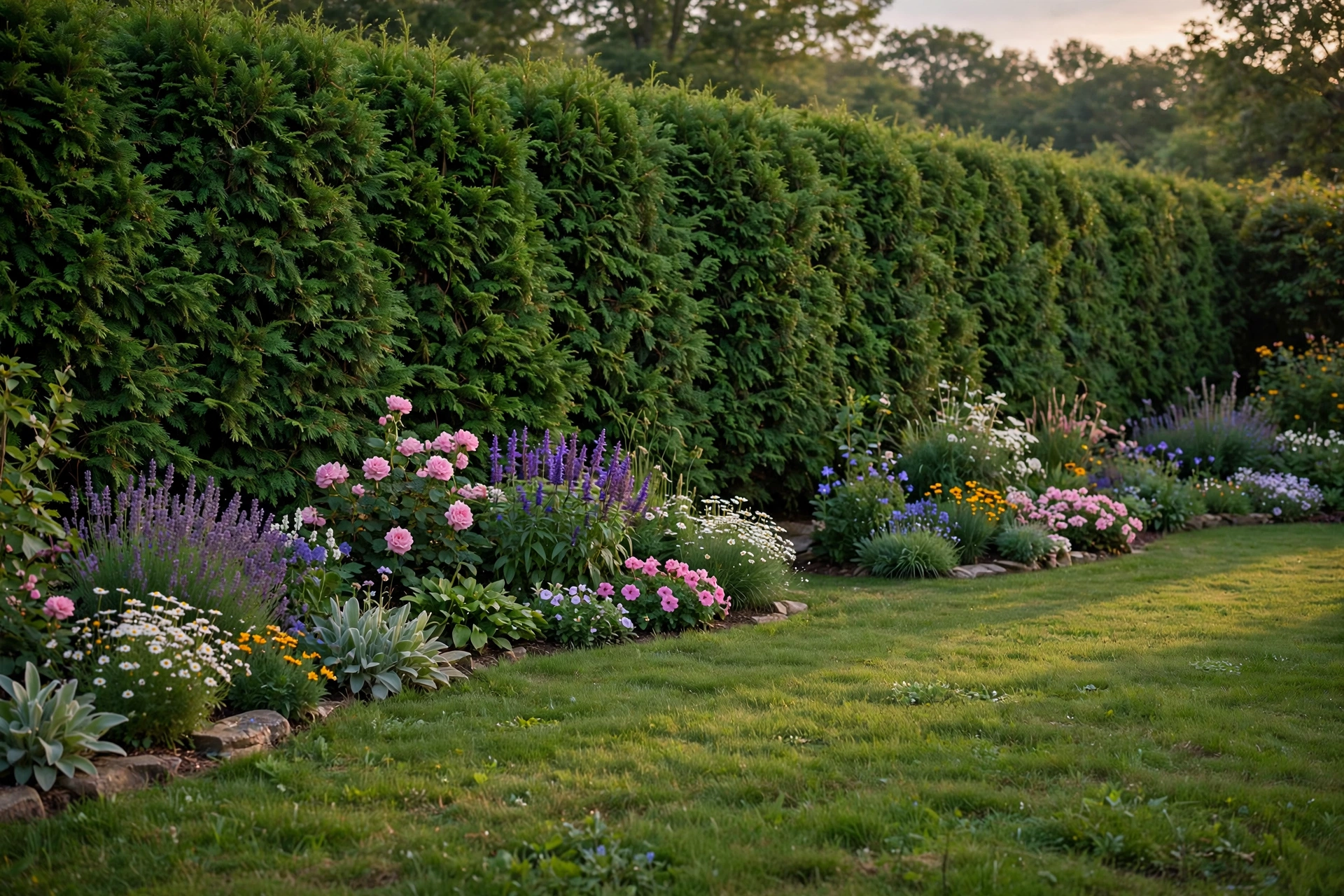
3. A Living Hedge of Evergreen Shrubs
A hedge is the slowest screen on this list and the one that ages best. Dense evergreen shrubs such as arborvitae, laurel, or boxwood give year round cover, soften the edges of the garden, and make the boundary feel like planting instead of a barrier. Once established, a hedge needs little more than a trim once or twice a year.
Plant in a staggered double row if you have the room, because it fills in faster and looks fuller from both sides. Water deeply while the shrubs establish, and mulch the base so the soil stays damp through the first summer. Expect a season or two before the screen is solid, and plant something quicker in front if you need cover now.
You may also like: 21 Front Yard Vegetable Gardens That Beat a Boring Lawn
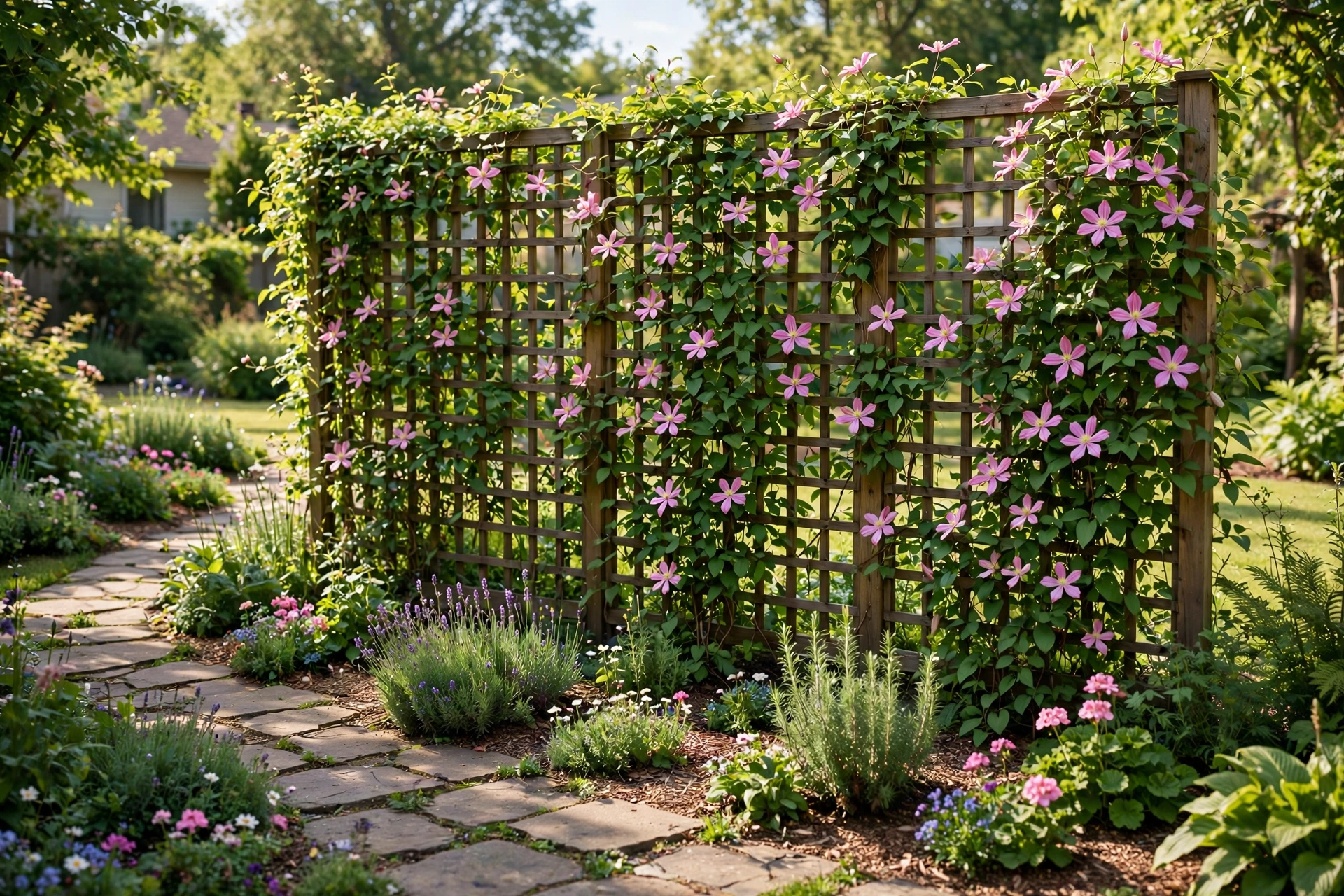
4. Climbing Plants on a Wooden Trellis
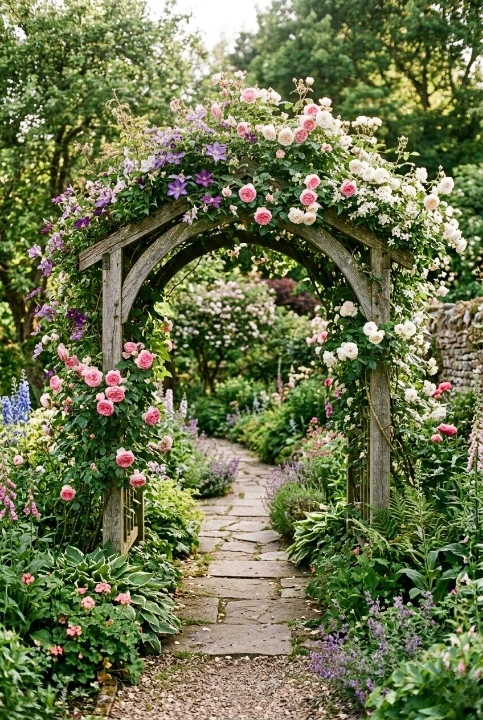
A wooden trellis with climbers trained over it gives you structure on day one and lushness later. The frame blocks part of the view right away, and as the plants fill in, the screen gets greener and denser every year. Clematis, jasmine, and climbing roses all work well, and they add scent and flowers that a solid panel never will.
Choose evergreen climbers if you want cover through winter, and mix in a flowering one for summer colour. Tie new shoots loosely to the frame with soft twine as they grow, and water well while they establish, because a dry first summer is what kills most young climbers. A trellis that is only half covered still looks good, so do not rush it.
You may also like: 22 Outdoor Patio Trends 2026 for Resort Style Living at Home
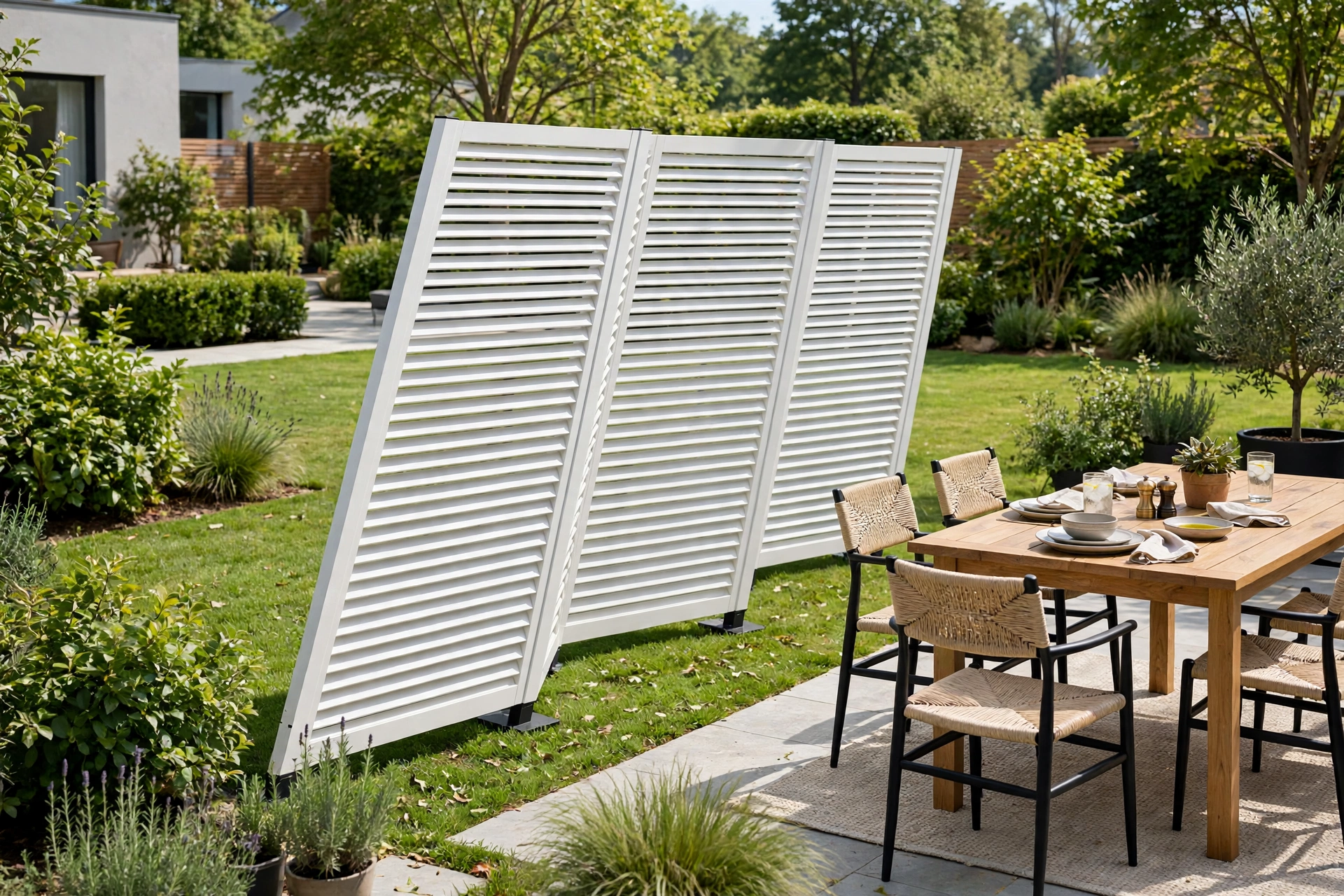
5. Freestanding Louvered Panels
Louvered panels are the cleverest screen for an upstairs window. The angled slats block a view from above while letting light and breeze through at ground level, so you get privacy without the boxed in feeling of a solid board. They look sharp and modern, and they work just as well on a patio as they do on a deck.
Anchor them properly, because a tall freestanding panel acts like a sail in the wind. Posts set in concrete are the sturdy option, and on a patio where you cannot dig, bolt the frame to heavy planters filled with soil. Check your local rules first, since many areas limit screen height, often to around six feet in back yards.
You may also like: 21 European Patio Ideas That Feel Like Italy and France
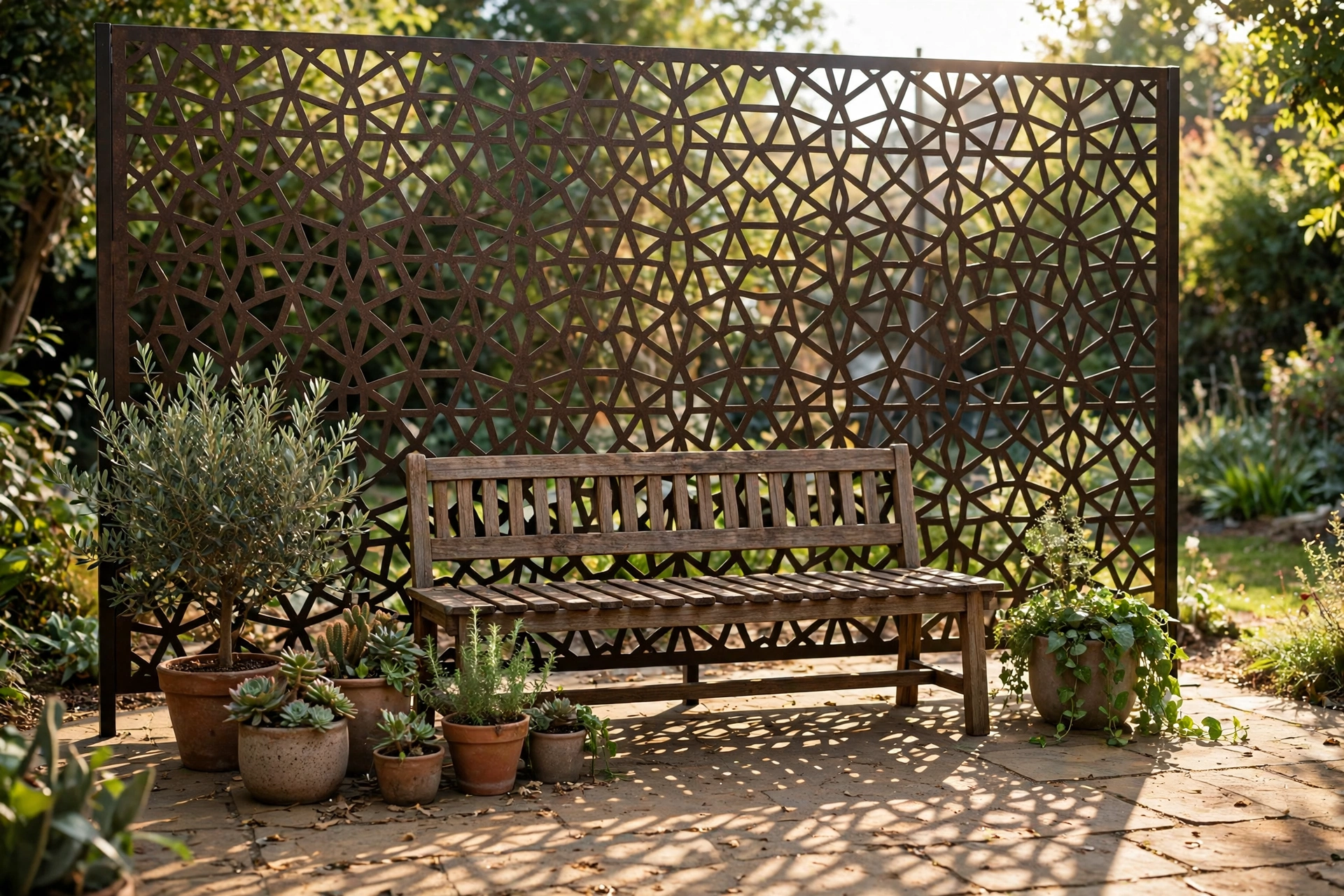
6. Decorative Laser-Cut Metal Screens
A laser cut metal screen is privacy that doubles as outdoor art. Geometric or floral patterns block the sightline from a few steps away while still letting light through, and the pattern throws lovely shadows across the patio in the afternoon. Powder coated steel or weathering steel holds up well outdoors and needs little more than an occasional rinse.
These panels cost more than a DIY wood screen, but they last for many years and never need restaining. Fix them into a simple timber or metal frame so they stay rigid, and set them where the pattern can catch the sun. In a small garden, one panel behind a bench is often enough to change the whole corner.
You may also like: 22 Resort Style Decor Ideas That Make Home Feel Five-Star
7. Planter Boxes with Tall Grasses
A planter box with a screen rising from it is three things in one: a planter, a privacy screen, and a finished looking piece of furniture. Build it from rot resistant wood such as cedar, fill the base with ornamental grasses, herbs, or trailing plants, and the screen looks alive from the first day. It is also one of the best options for renters, because it moves when you do.
Drill drainage holes so the roots do not sit in water, and line the inside with heavy plastic, leaving the bottom open, so the wood lasts longer. Tall grasses such as miscanthus reach four to six feet by late summer and move nicely in the wind, though they are cut back in late winter and leave a gap until they regrow.
You may also like: 21 Backyard Landscaping Ideas That Change Your Outdoor Space

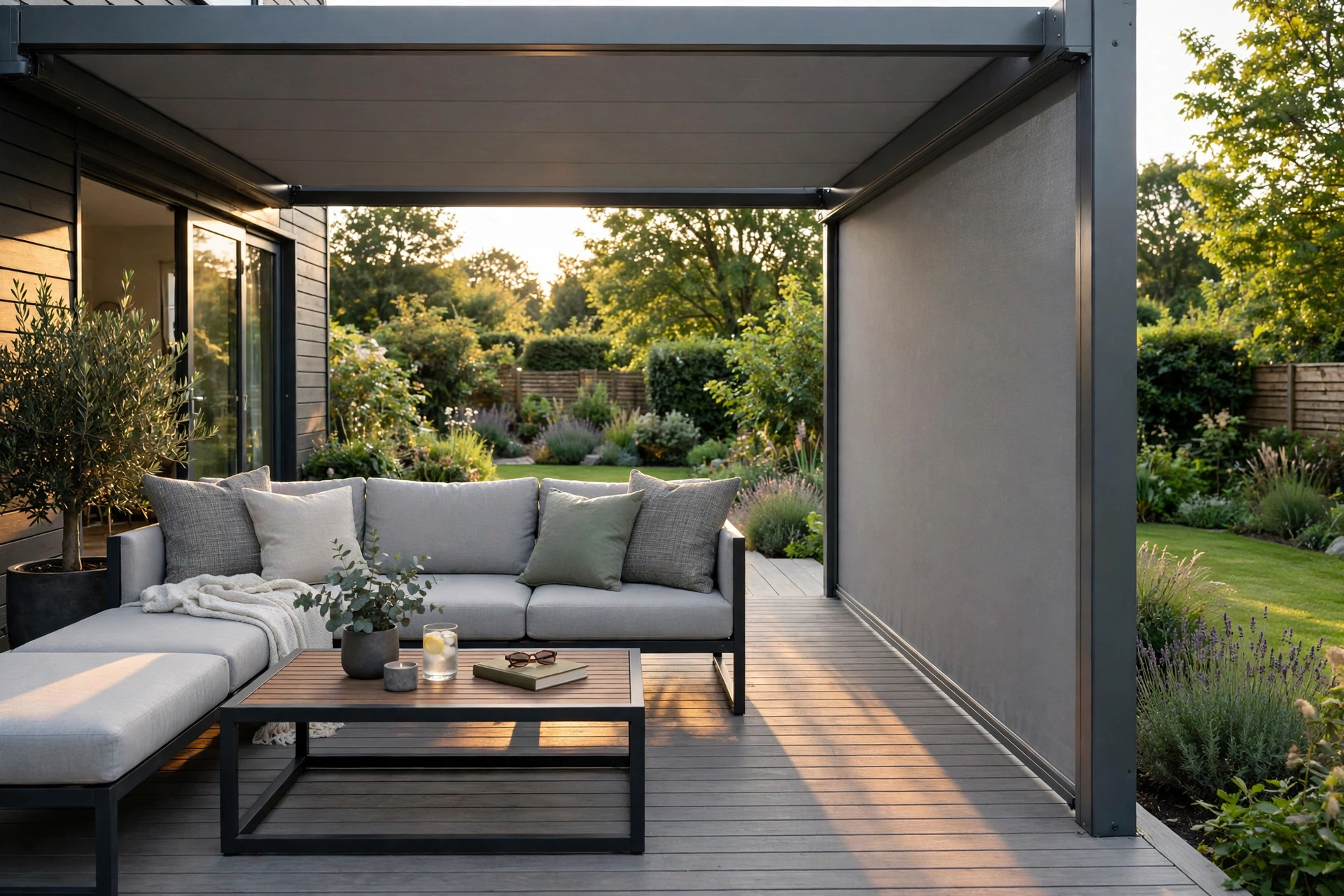
8. A Retractable Side Awning
A retractable side awning is privacy you can roll out and roll away. Pull it out when the neighbours come home or the sun drops low, roll it back in when you want the open view again. It works beautifully on a deck or a patio, and it is one of the few screens that handles a low sun angle well, when most fences are useless.
Mount it to a solid post or a wall, not to a flimsy rail, because the fabric pulls tight and puts real force on the fixings. Choose a weather resistant fabric that dries fast, and roll it away in strong wind, because a fully extended awning is a sail. Keep the cassette clean and the mechanism will last for years.
You may also like: 22 Outdoor Patio Trends 2026 for Resort Style Living at Home
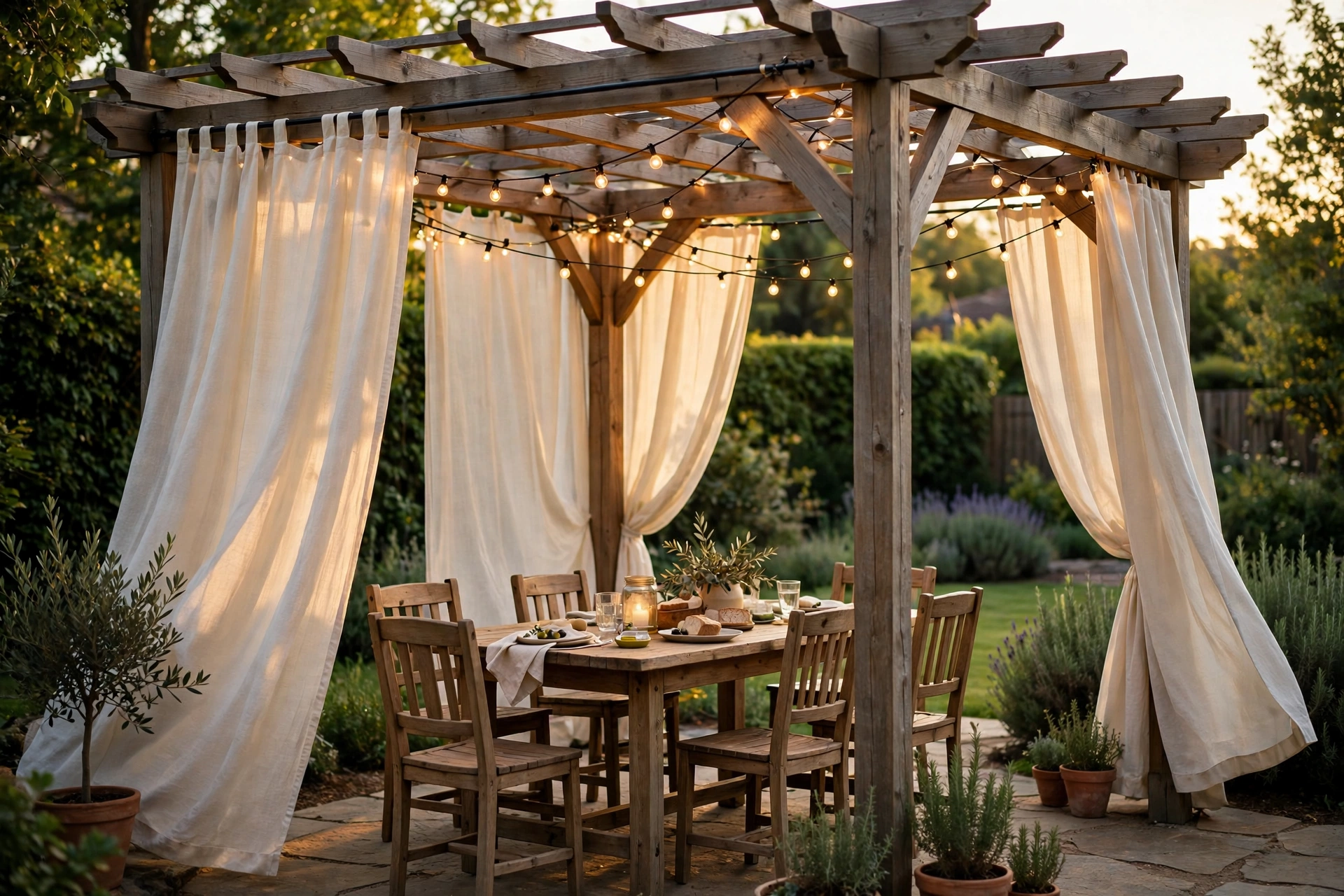
9. Outdoor Curtains on a Pergola
Outdoor curtains are the softest screen on this list, and the easiest to change your mind about. Hang weather resistant panels from a pergola, a simple frame, or a tension rod, and you get instant privacy you can open and close in seconds. They are renter friendly, because nothing gets drilled in permanently, and they move with you if you move house.
Choose solution dyed acrylic or polyester made for outdoor use, because it resists fading and mildew far better than indoor cotton, which turns grey and spotty after one damp season. Tie backs or weighted hems keep the panels from blowing around on windy days, and take them down for winter so they last longer.
You may also like: 21 European Patio Ideas That Feel Like Italy and France
10. Lattice Panels with Climbing Roses
Lattice is cheap, quick to install, and looks finished on day one. On its own it is see through up close, but once climbing roses fill it in, it becomes a flowering wall that smells wonderful in summer and blocks the view properly. That combination of instant structure and living cover is why lattice with climbers ages better than almost any other screen.
Pick a sturdy timber lattice, not the thin plastic kind, which fades and cracks in full sun. Plant the roses at the base, train the canes sideways along the frame so they flower all the way up, and prune lightly after flowering. A lattice top on an existing fence is also a gentle way to add a foot of height without rebuilding the fence.
You may also like: 21 Fall Front Porch Ideas With Wreaths That Welcome You Home

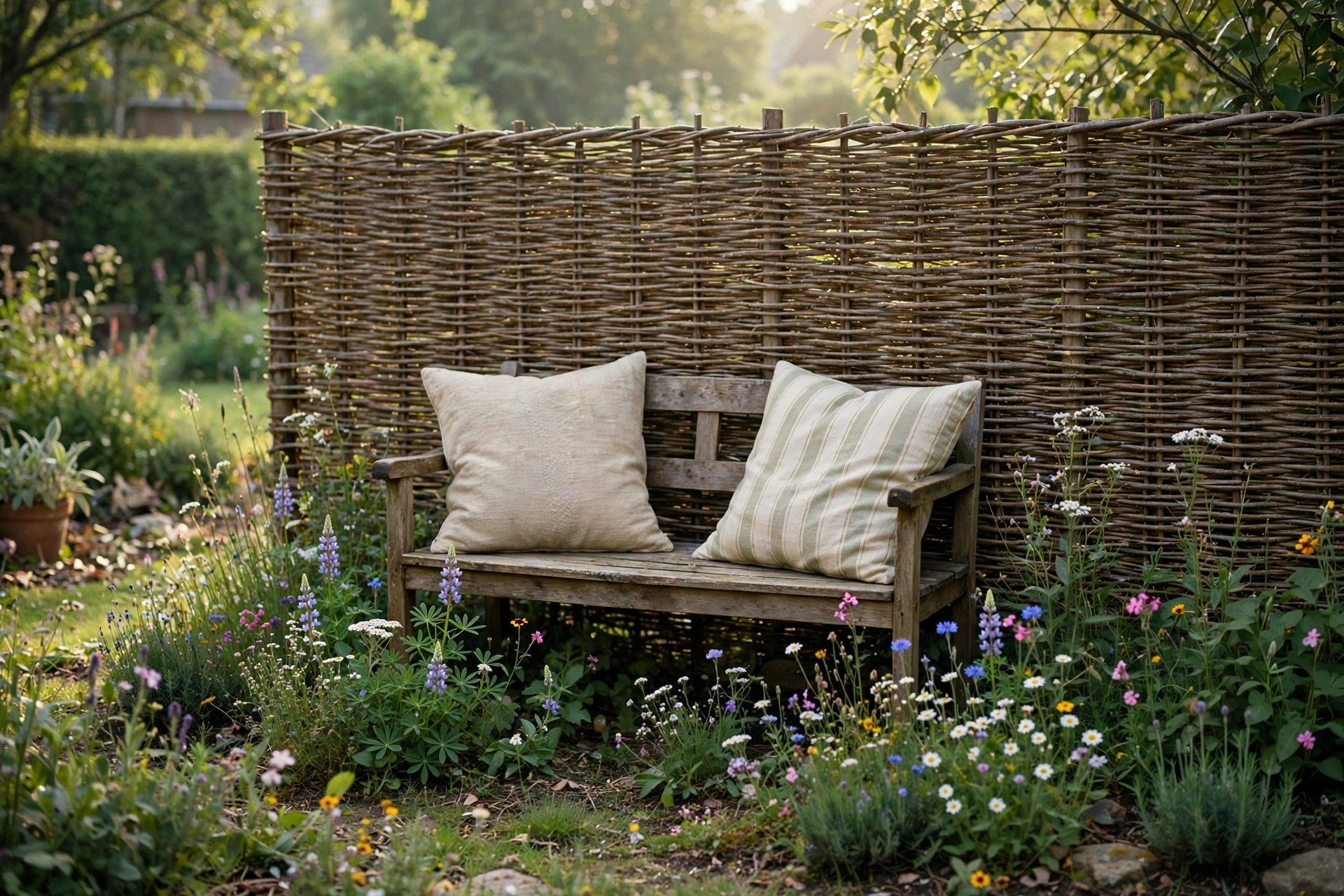
11. Reed and Willow Fencing Rolls
Reed and willow rolls are the budget screen that still looks warm and natural. They cost little, they go up in an hour with wire and a helper, and their woven texture adds a softness that flat boards never have. Willow also makes a lovely support for climbers, so the screen gets greener as it ages.
Expect to replace reed panels every few years, because they weather faster than wood or metal, and seal them if you want to stretch their life. Fix the roll at the top, middle, and bottom so it stays taut, and keep the bottom edge a few inches off the soil so it does not rot from damp. In a small garden, a willow roll behind a bench is often all you need.
You may also like: 21 Front Yard Landscaping Ideas for Instant Curb Appeal
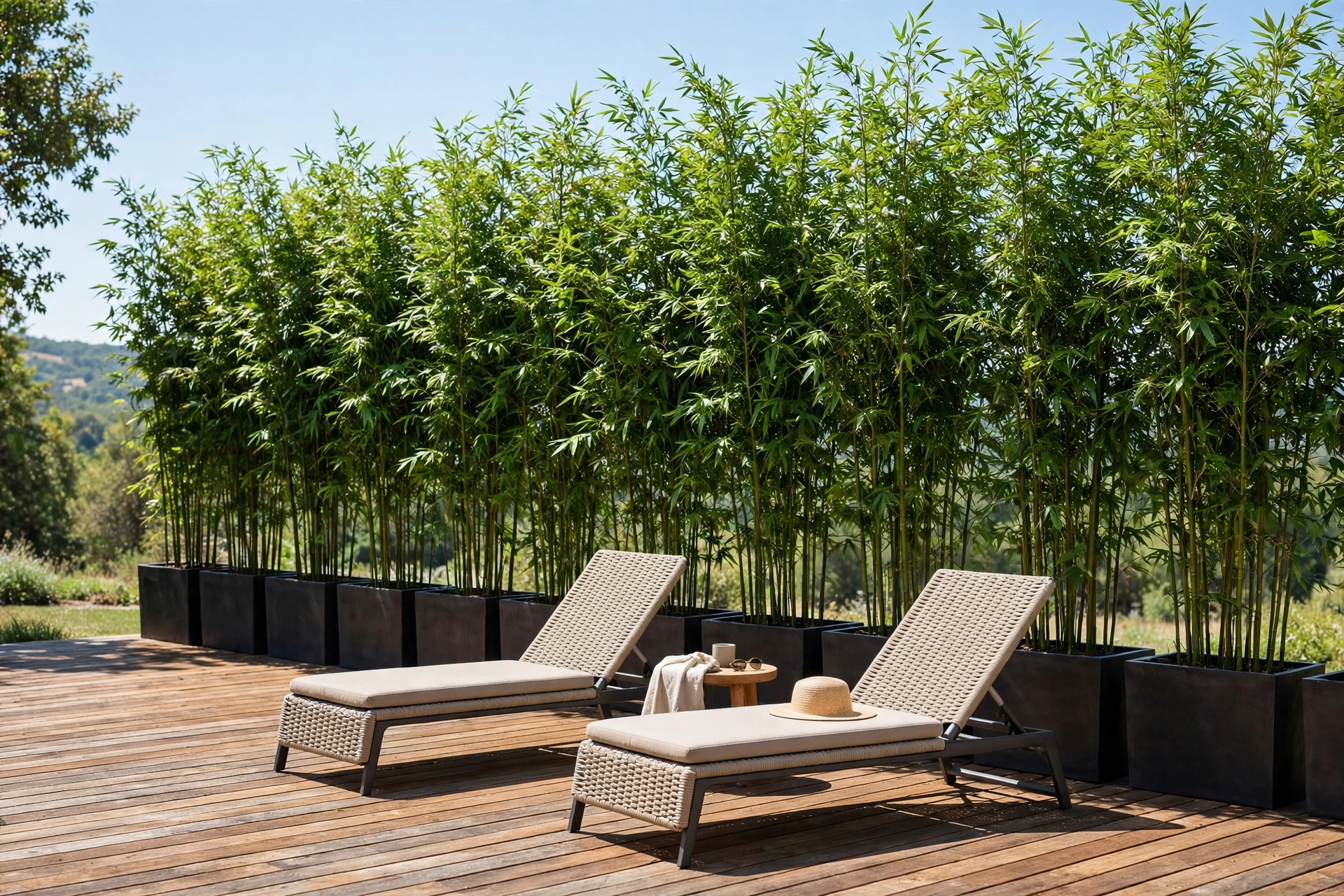
12. Potted Bamboo in a Row
Clumping bamboo in large pots grows tall quickly and gives you a living screen without the spreading problem of running bamboo, which can invade the whole yard and the neighbours too if planted straight in the ground. A row of big pots along a deck edge or a patio boundary reads as a green wall within one season, and you can move the pots if the layout changes.
Use the biggest pots you can manage, because bamboo in a small pot dries out fast and stops growing. Water often in hot weather, feed in spring, and thin out old canes each year so light reaches the new growth. Choose a clumping variety and check with your local nursery that it suits your climate before you buy.
You may also like: 21 Front Yard Vegetable Gardens That Beat a Boring Lawn
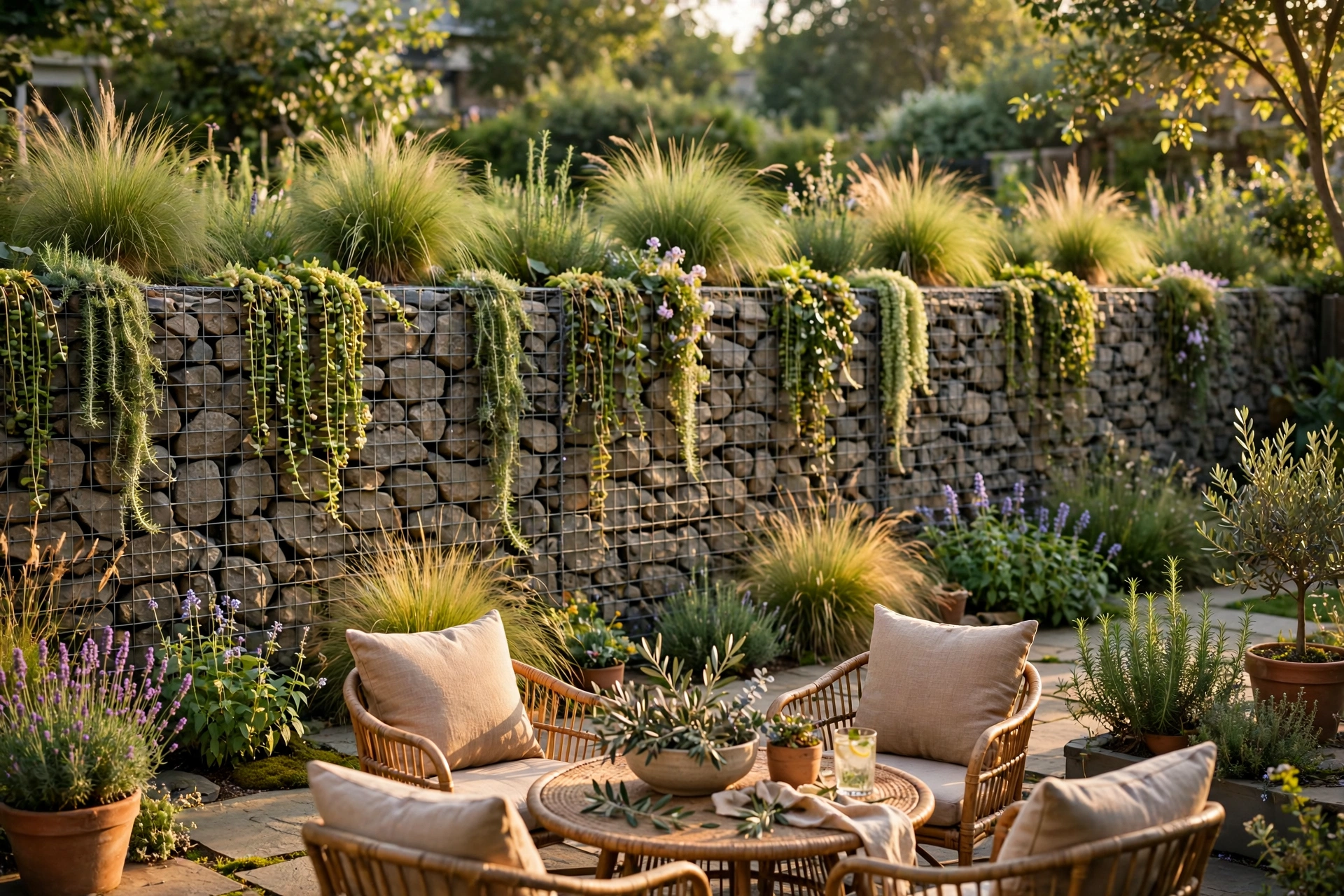
13. A Low Gabion Wall with Plants
A gabion wall is a wire cage filled with stone, and it makes a privacy screen that looks solid and sculptural at the same time. A low wall of about three to four feet topped with tall grasses or shrubs gives seated privacy without towering over the garden, and the stone holds heat in the evening, which plants nearby seem to love.
Build it on a firm, level base and fill the cage tightly so the stones do not settle and bulge. Tuck trailing plants into the top layer as you fill it, and they will spill over the edge and soften the hard lines. It is heavy work to build, so get help with the stone, but once it is in, it needs almost no care at all.
You may also like: 22 Cute Outdoor Halloween Decor Ideas for a Boo-tiful Porch
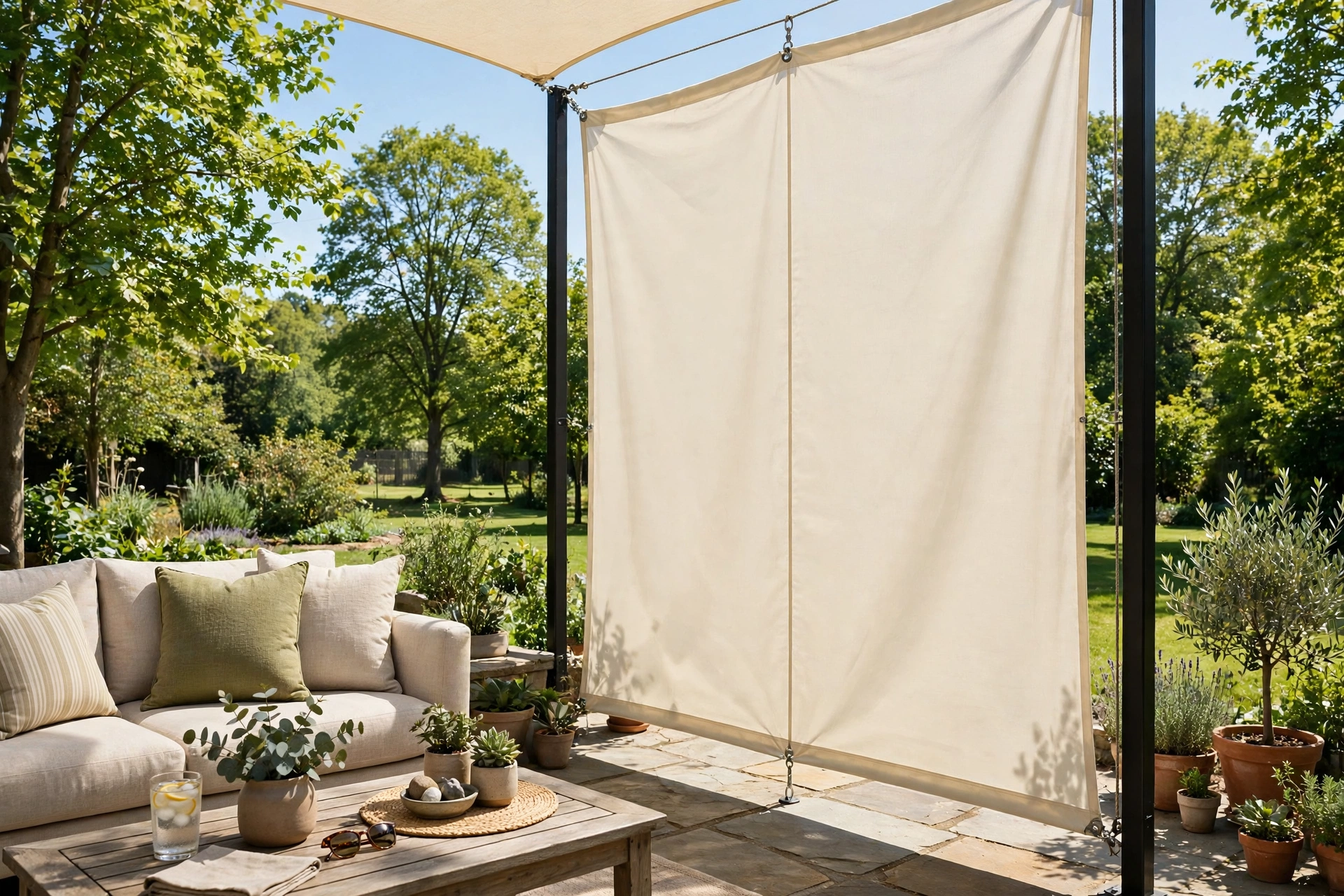
14. A Shade Sail Hung for Privacy
A shade sail is usually sold for sun, but hung vertically it becomes a fast, modern privacy screen. A triangle of shade cloth fixed between two posts or a wall blocks the view from the side, lets the breeze through, and costs far less than a built panel. It is a good answer for a rental, because it comes down with four clips.
Pull the fabric taut, because a sagging sail flaps and looks tired within a week. Fix it to solid posts or wall brackets, not to a fence panel, and take it down in strong wind or winter storms. Choose a breathable shade cloth rather than a solid tarp, so the wind passes through instead of pushing against it.
You may also like: 22 Outdoor Patio Trends 2026 for Resort Style Living at Home
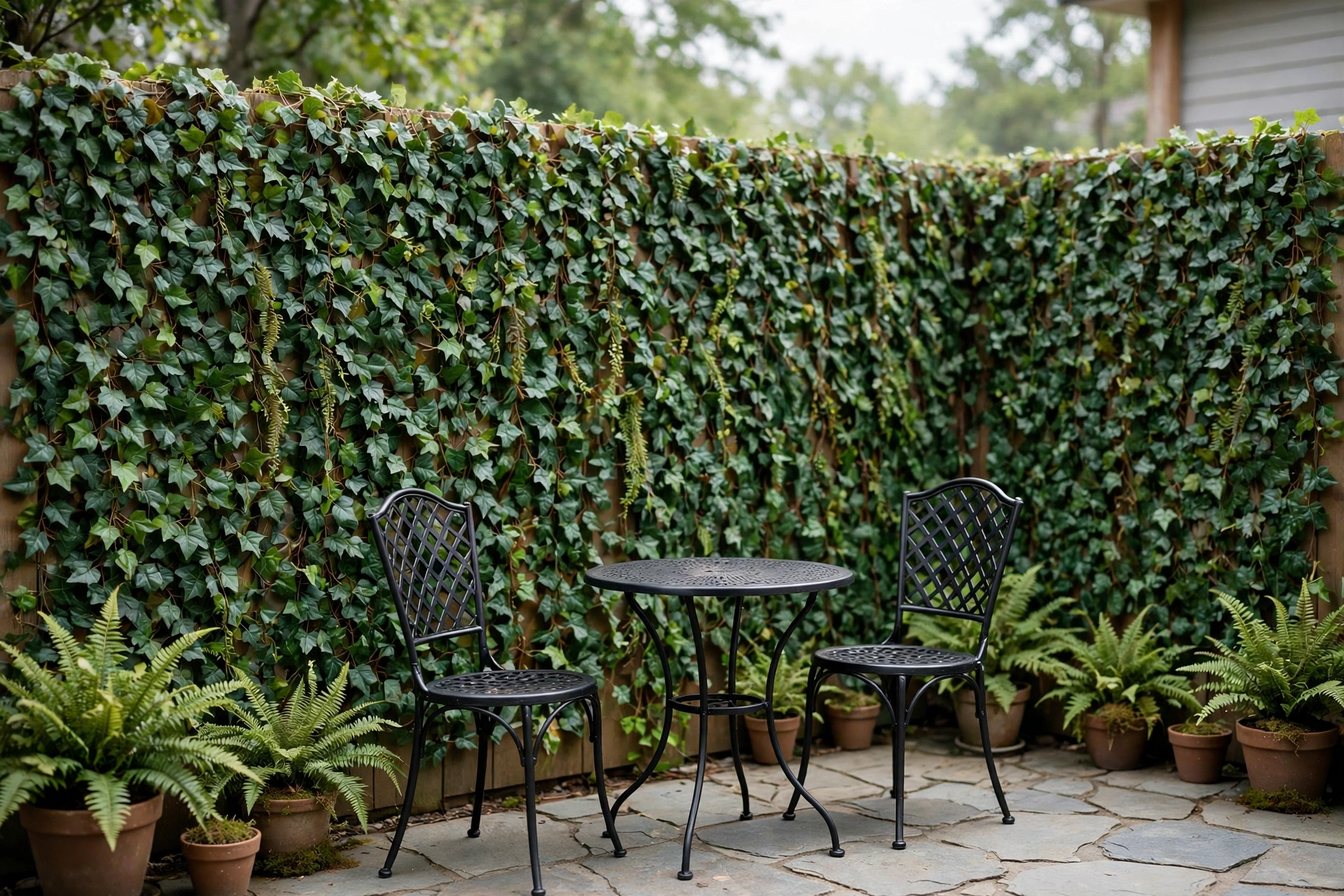
15. Faux Ivy Panels on a Plain Fence
Faux ivy panels are the instant green screen for a fence you hate looking at. Clip the panels to the fence, and a grey, cracked, or concrete wall turns into a leafy backdrop in an afternoon, with no watering and no waiting for plants to grow. They work well in shady corners where real climbers struggle, and they stay green through winter.
Buy UV resistant panels, because cheap ones fade to a blue green within one summer and look worse than the fence they cover. Overlap the edges so the fence does not show through the gaps, and mix in a few real trailing plants at the base so the bottom edge looks alive. Hose them down once in a while to keep dust from dulling the leaves.
You may also like: 21 Backyard Landscaping Ideas That Change Your Outdoor Space
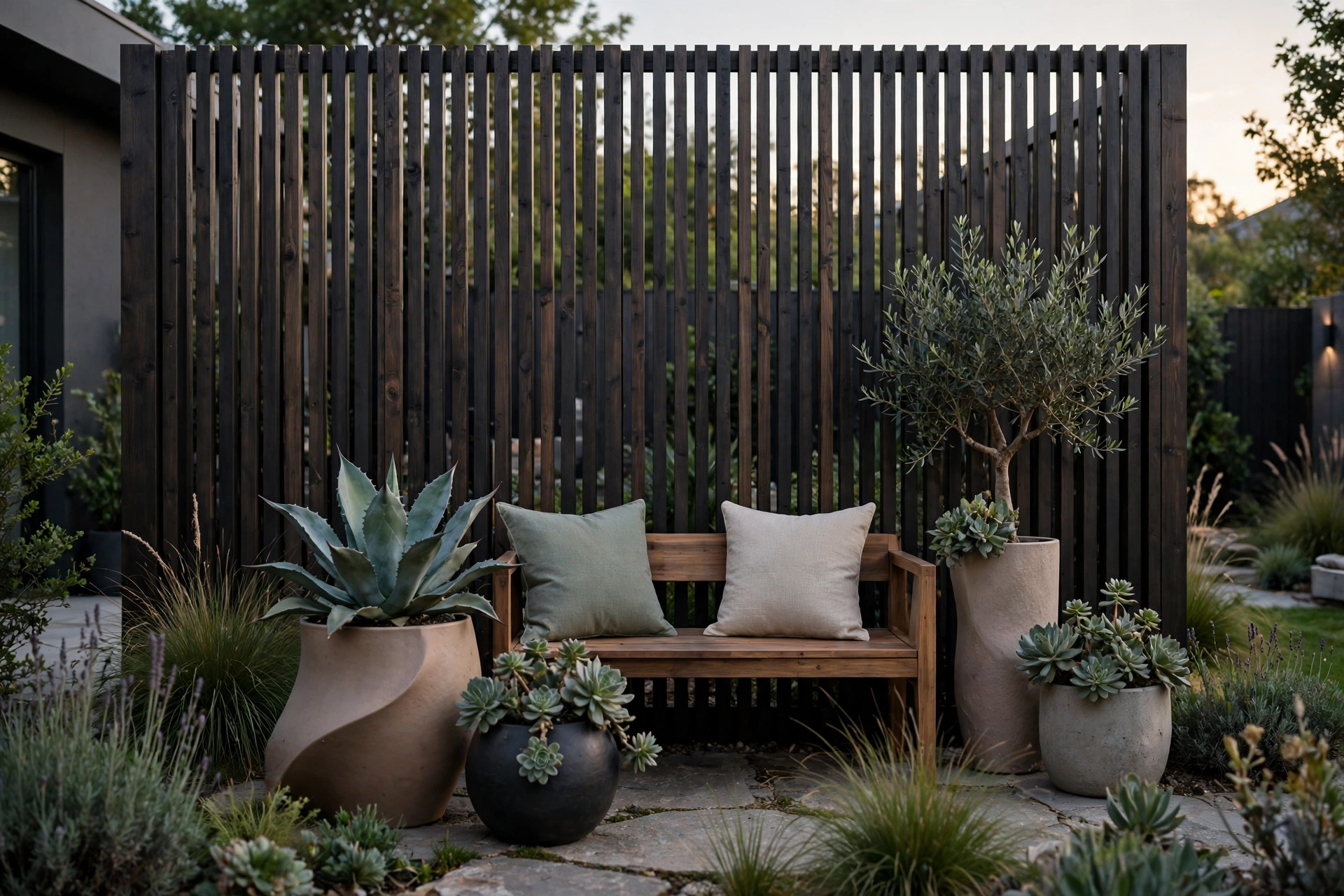
16. Vertical Timber Battens
Vertical timber battens are the tidy, architectural cousin of the horizontal slat screen. Slim upright boards with narrow gaps between them block the view from straight on while letting light through at an angle, and they make a small garden feel taller. They suit modern houses especially well, and they look good painted as well as stained.
Space the battens evenly with a simple spacer block as you fix them, because uneven gaps are the first thing the eye catches. Use the same timber and finish on the posts so the whole screen reads as one piece, and seal the end grain so water does not soak in and split the boards. A batten screen behind a water feature or a bench becomes a backdrop, not just a barrier.
You may also like: 21 European Patio Ideas That Feel Like Italy and France
17. Hinged Folding Garden Screens
A hinged folding screen is privacy you can move around the garden like furniture. Three or four panels joined with hinges stand on their own, fold flat for storage, and can screen the seating area today and the hot tub tomorrow. It is the most flexible screen on this list, and it suits small gardens where a fixed screen would feel permanent and heavy.
Make the panels from light timber and slats rather than solid boards, because a solid folding screen catches the wind and falls over. Add small feet or planter bases at the ends for stability, and fold it away in winter so it lasts longer. Paint it a colour you love, because you will see it up close every time you sit outside.
You may also like: 22 Fall Porch Decor Ideas for a Warm Autumn Welcome Home

18. A Border of Tall Ornamental Grasses
Tall ornamental grasses are the easiest living screen to grow. Miscanthus, switchgrass, and pampas grass reach four to six feet by late summer, move beautifully in the wind, and need almost no care beyond a cut back in late winter. Planted in a deep border, they make a soft, rustling wall that changes with the seasons.
Give them room, because most tall grasses spread wider than people expect, and keep them away from narrow paths where they will flop over the edge. Cut them back in late winter before the new shoots appear, and they regrow fast in spring. They leave a gap in early spring, so pair them with an evergreen shrub or two if you need cover all year.
You may also like: 21 Front Yard Landscaping Ideas for Instant Curb Appeal

19. Mesh Fence Fabric in a Soft Colour
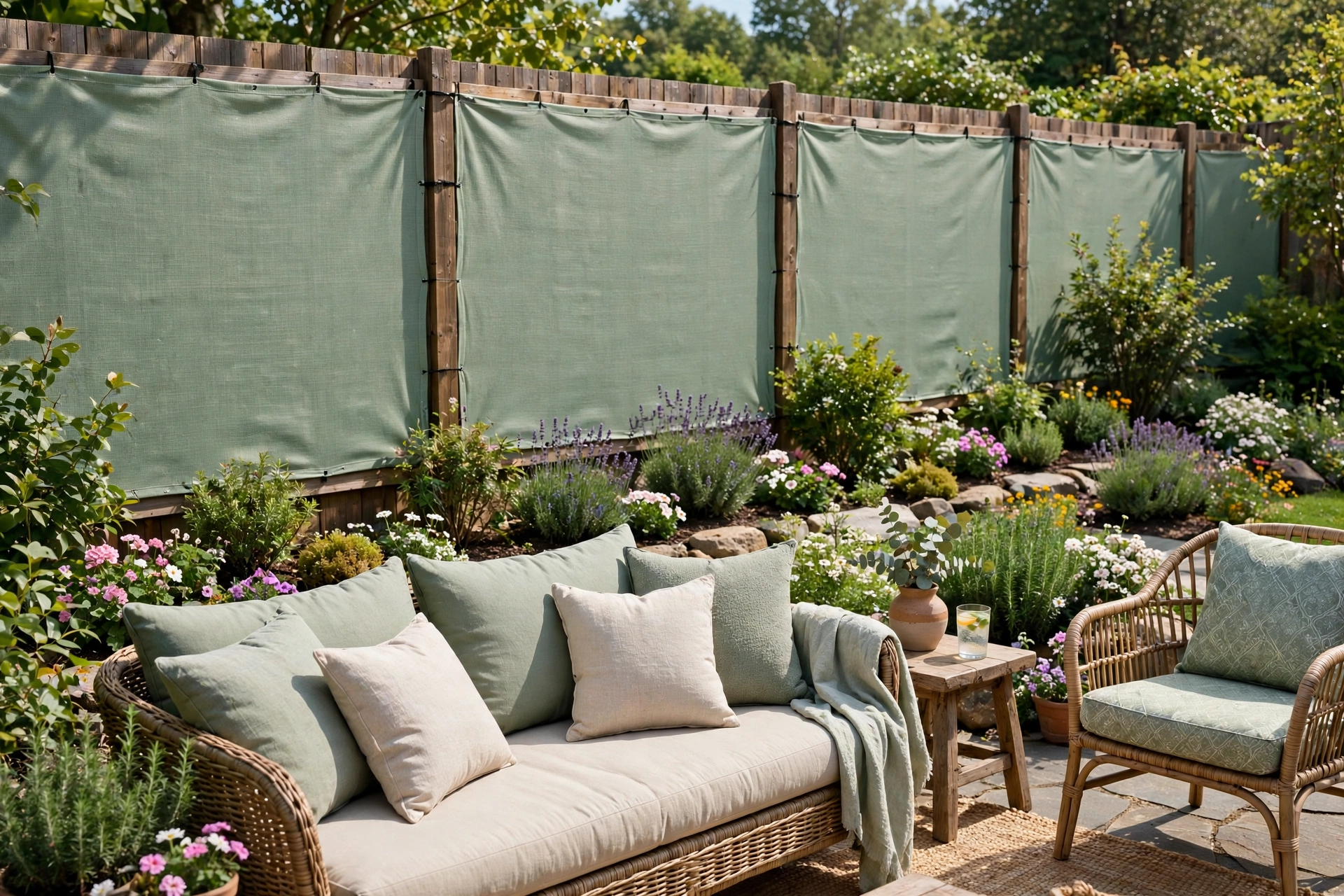
Mesh fence fabric is the quickest privacy fix there is. A roll of shade cloth or privacy mesh zip tied to an existing fence or railing cuts the view and the wind in under an hour, and it costs very little. The trick is the colour: a soft green, sand, or grey blends with the garden, while a bright or black mesh draws the eye straight to the fence.
Choose a fabric with at least 80 percent block out if you want real privacy, and fix it taut with ties every foot or so, because loose mesh sags and flaps. Trim the edges neatly and fold the top over the rail so the fixings do not show. It is not the prettiest screen on this list, but it is the fastest, and it buys you time while plants grow.
You may also like: 22 Christmas Front Porch Ideas So Cozy Neighbors Slow Down
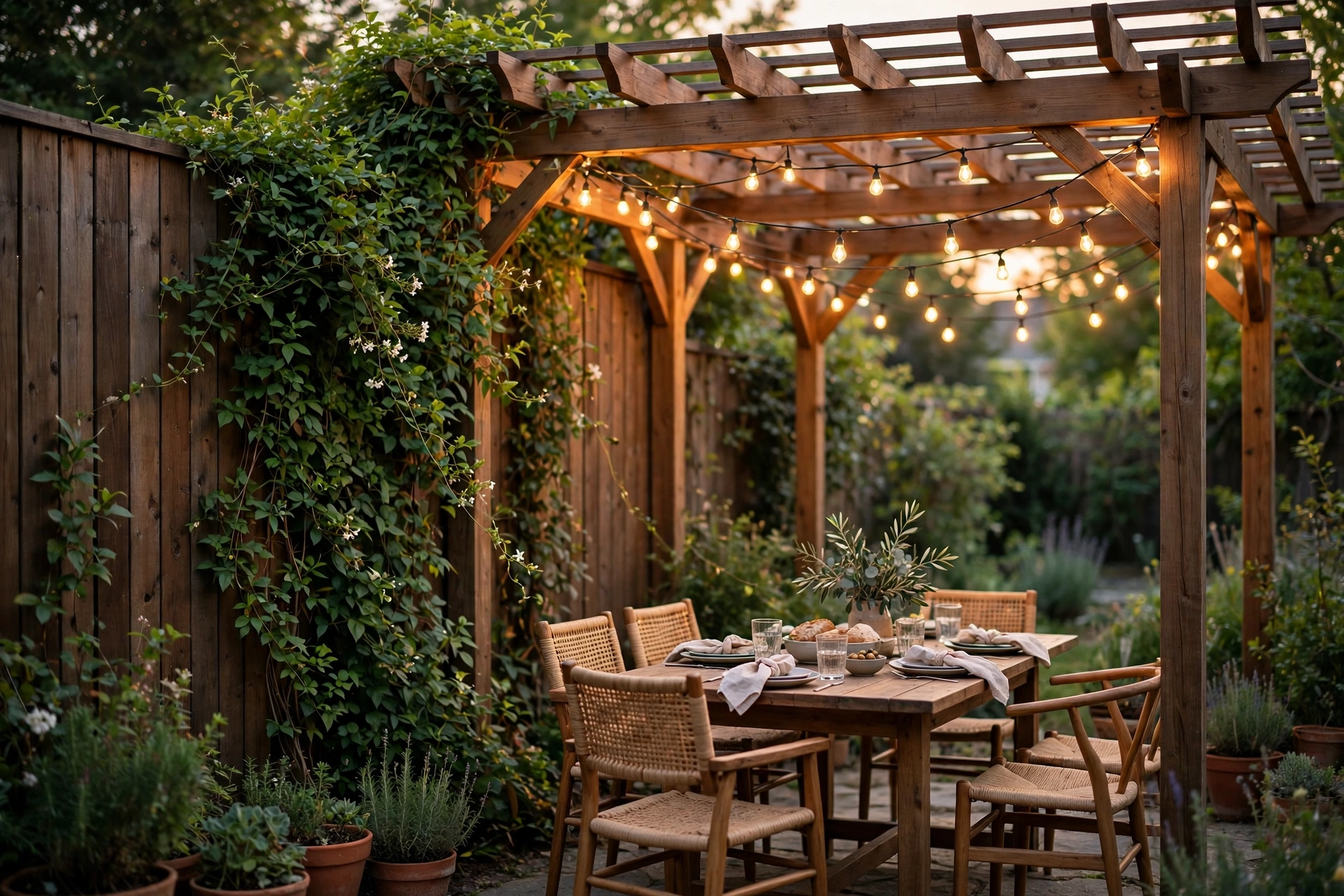
20. A Pergola with a Solid Privacy Wall
A pergola with one solid wall is a garden room without a roof that closes you in. The open sides keep the light and the breeze, the wall blocks the one view you do not want, and the roof beams give you somewhere to hang lights, curtains, or a climbing plant. It turns a plain patio into the place everyone wants to sit.
Build the wall on the side the neighbours see most, and leave the other sides open or slatted so the space never feels boxed in. Cladding the wall in the same timber as the pergola makes it read as one structure, and a climbing rose or jasmine on the outside softens it within a season. Check the height rules in your area before you build, since pergolas often have their own limits.
You may also like: 21 Backyard Landscaping Ideas That Change Your Outdoor Space
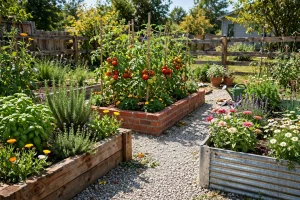
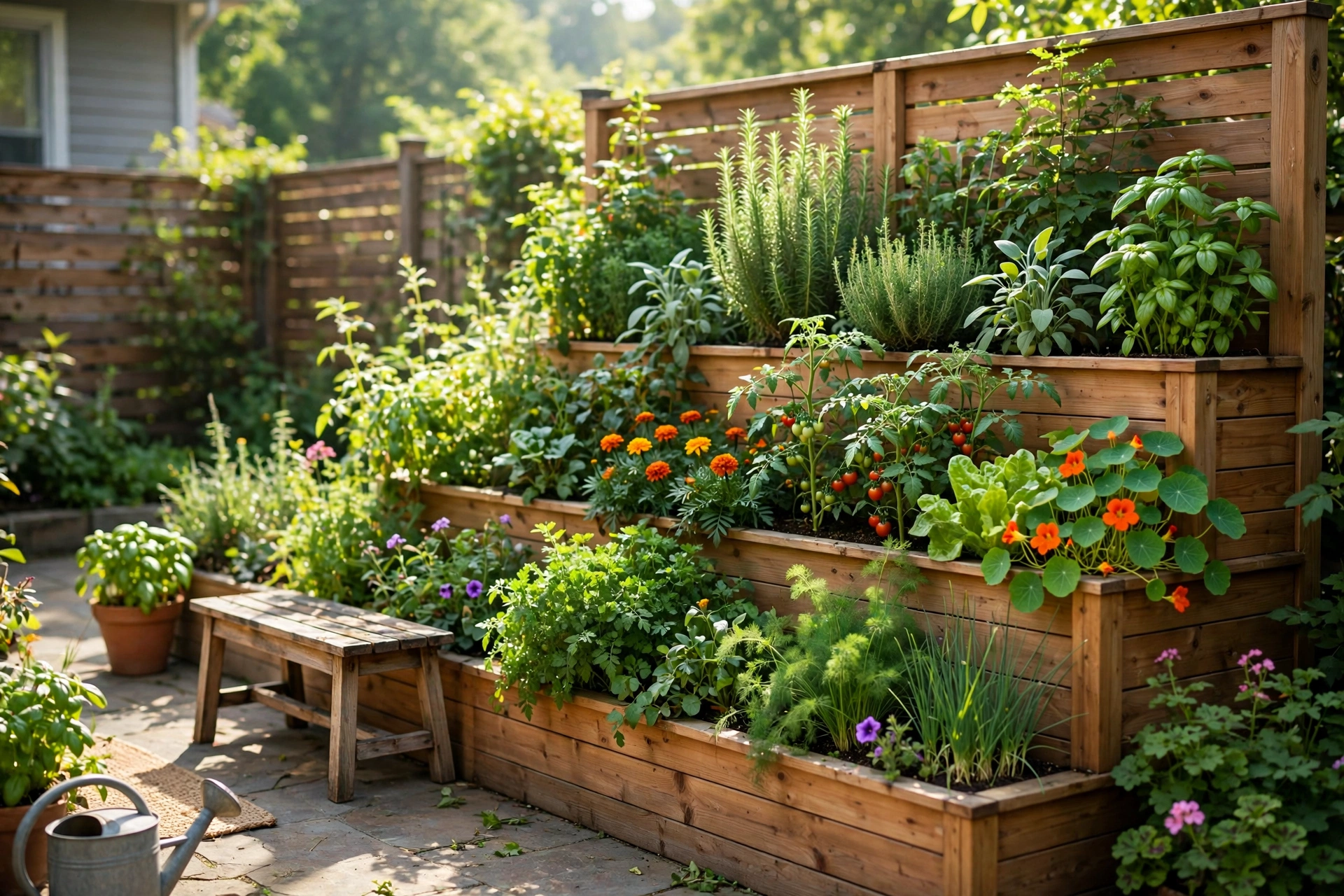
21. Tiered Raised Planters as a Screen
Tiered raised planters stack planting at three heights, so they block the view like a screen while giving you room for herbs, salads, and flowers at the same time. A row of them along a deck edge or a patio boundary works as a green wall you can eat from, and they are far easier on the back than beds at ground level.
Build them from rot resistant timber and line the inside, leaving the bottom open for drainage. Plant tall things at the back, such as tomatoes or sunflowers, and trailing things at the front, such as thyme or strawberries, so the tiers stay full all summer. Water the top tier a little more, because it dries out first.
You may also like: 21 Front Yard Vegetable Gardens That Beat a Boring Lawn
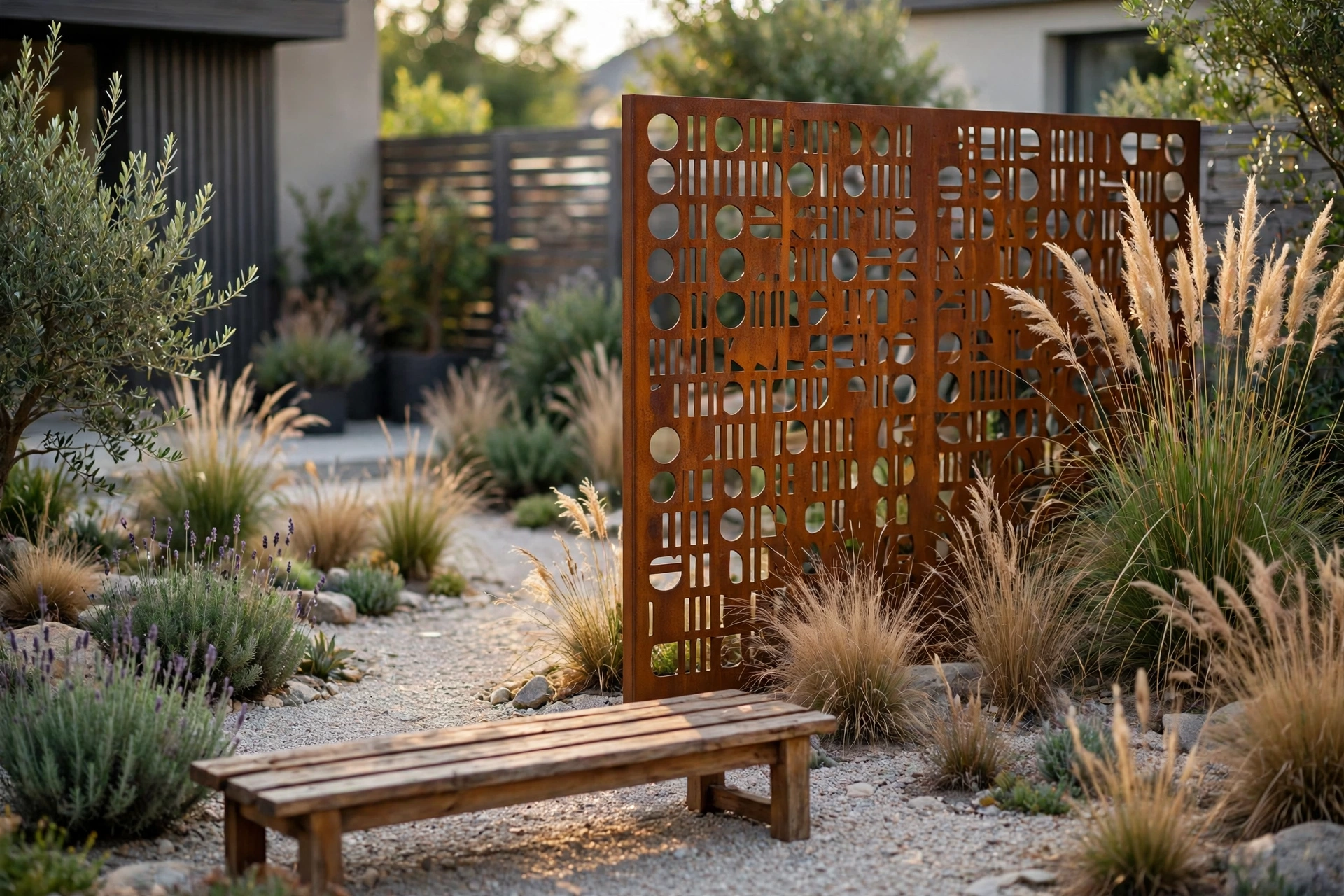
22. Corten Steel Screens with a Rust Finish
Corten steel starts out looking like plain metal and weathers into a rich rust orange that looks made for a garden. A corten screen is a sculptural piece as much as a privacy panel, and it needs no paint, no stain, and no care once the finish has settled. It pairs beautifully with gravel, grasses, and modern planting.
Let the steel weather in place for a few months, and keep it off pale paving at first, because the rust runoff can stain stone while the finish settles. Fix the panels into a sturdy frame with a gap at the bottom for airflow, and set one panel as a focal point rather than fencing the whole yard in steel, which would feel heavy and cold.
You may also like: 22 Resort Style Decor Ideas That Make Home Feel Five-Star
The 1-2-3 Garden Privacy Method
If you remember nothing else from this guide, remember these three steps.
1
Find the sightline first.
Sit in your usual chair and look for where the view comes from. Mark that spot with a stake or a chair, and screen there, not everywhere. One panel in the right place beats a fence around the whole garden.
2
Pick the material for your weather.
Choose wood, plants, metal, or fabric based on wind, sun, and rain where you live, and on how much care you want to give it. The right material looks better in year three than the wrong one looks on day one.
3
Layer height and softness.
Pair a structure with a plant, such as a slat panel with tall grasses in front, or a trellis with climbers over it. The structure gives privacy now, the plants soften it, and the combination looks like a garden, not a barrier.
At a Glance
Do This, Not That
| Do This | Not That |
|---|---|
| Sit in your chair and find the sightline first | Fence the whole yard before you know what to block |
| Leave gaps in slats for light and air | Build a solid wall that turns the garden gloomy |
| Anchor tall freestanding screens properly | Leave a tall panel standing on light feet |
| Match the material to wind, sun, and rain | Pick a screen only because it looked good in a photo |
| Check local height rules before you build | Build six feet high and find out it breaks the rules |
| Call 811 before you dig post holes | Dig first and hope there are no utility lines |
| Seal bamboo and stain wood before hanging | Hang raw wood and watch it grey and split |
| Water new plants deeply while they establish | Plant a hedge and forget it in the first dry summer |
| Choose clumping bamboo in pots | Plant running bamboo straight in the ground |
| Take fabric screens down for winter | Leave outdoor curtains up through storms |
Your Garden Privacy Plan
If you want a calmer backyard without a big project, here is the plan that makes it happen.
The weekend before: Sit in your usual chair, find the sightline, and measure the spot. Pick one idea from this list that fits your budget and your weather, and buy the materials in one trip so the job does not stall halfway.
The build day: Put the screen up first, then add the plants and the pots around it. Step back to the chair and check the view from sitting height, not standing height, because that is the view that matters. Adjust the position before you fix anything permanently.
The first week: Water any new plants deeply every day until they settle, and check the screen after the first windy day. Tighten any fixings that loosened, and add a tie back or a weight if fabric moves more than you like.
After the first season: Restain wood if it looks dry, trim the hedge or the climbers lightly, and note what worked. The best screens get better in year two, when the plants fill in and the materials settle into the garden.
Take It Further
- Photograph your seating spot from the neighbour’s side so you can see exactly what the screen needs to block.
- Test the height first with a broom handle held at different heights while you sit in your chair.
- Add one pot of tall grass in front of any new screen, because it softens the bottom edge at once.
- Hang outdoor string lights from the top rail of a slat or trellis screen for evening privacy and light together.
- Try the same screen material on a second spot, such as the bin area, so the garden reads as one design.
- Keep a spare roll of mesh fabric for the weeks when new plants are still filling in.
- Match the screen stain to your deck or fence so the garden feels planned, not patched.
- At the end of the season, note which screen made you sit outside most, and start next year with that one.
Garden Privacy Cheat Sheet
The rule: screen the sightline, not the whole yard
The height: 5 to 6 feet for a seated area, less than you expect
The test: sit in your chair, have someone hold a broom handle at the spot
The light: gaps in slats, lattice tops, and plants keep the garden bright
The cheapest: mesh fabric, reed rolls, and bamboo screening
The quickest: faux ivy panels, mesh fabric, and a shade sail
The longest lasting: metal screens, corten steel, and a gabion wall
The softest: outdoor curtains, tall grasses, and a living hedge
The renter picks: planter screens, folding screens, and curtains
The best combo: a structure for now, plants to soften it later
Questions People Ask
For a seated area, a screen about 5 to 6 feet tall usually hides you from the street or a neighbour’s yard, since a seated adult’s eye level sits around 4 feet. For a view from a neighbour’s upstairs window, height alone rarely works, so add an overhead element such as a pergola with slats, a shade sail, or a small tree between the windows and your seat. Test it first by having someone hold a broom handle at different heights while you sit in your usual chair.
Mesh fence fabric, reed or willow rolls, and bamboo screening are the cheapest options, and all three can be fixed in an afternoon for very little money. A roll of mesh on an existing fence gives instant cover while slower plants grow in, and a willow roll behind a bench can be enough on its own. If you have a little more to spend, horizontal wood slats built from basic lumber are still one of the best value screens you can make.
Yes, and the best renter friendly screens are the ones that need no digging and no drilling. Planter box screens, hinged folding screens, and outdoor curtains on a frame all move with you when you leave, and a shade sail hung with clips comes down in minutes. Potted bamboo in a row is another good choice, because the pots sit on the patio and the plants give real height within one season.
A solid screen does block light, which is why slatted panels, lattice tops, and living plants are usually the better choice. Gaps between slats block direct sightlines while letting plenty of light through, and angled louvers can block a view from an upstairs window while keeping light at ground level. If your garden is already shady, skip solid panels and use slats, translucent panels, or plants so the space stays bright.
For a small balcony, a balcony privacy screen made from mesh fabric or bamboo is light, cheap, and easy to fix to the railing without drilling. On a deck, a deck privacy screen in horizontal slats or a set of deck privacy panels gives a sturdier, more finished look that handles wind better. A patio privacy screen works the same way, and a privacy screen for a fence is the right call when the deck sits beside an existing fence that needs covering.
Start with the cheapest ideas first, because cheap garden screening ideas like mesh fabric and reed rolls can cover the worst sightline for very little money. If you want a more built look, privacy fence ideas cheap enough for a weekend include a DIY slat panel from basic lumber or a bamboo roll over an old fence. For a planted option, inexpensive backyard privacy ideas such as a row of tall grasses or potted bamboo cost little and fill in fast, and a diy outdoor privacy screen built from pallets or reclaimed boards is the cheapest way to get a solid panel, while cheap fence ideas for backyard corners, like a willow roll behind a bench, finish the job without a big spend.
A privacy trellis with climbers gives structure now and lush cover later, and clematis or jasmine fill it in within a season or two. For a solid green wall, a bamboo privacy fence made from clumping bamboo in large pots grows tall quickly without spreading, and privacy hedge ideas built on arborvitae or laurel give year round cover once established. If you need height in a hurry, an evergreen tree for privacy planted in the right spot blocks an upstairs window better than any fence, and a garden privacy trellis with star jasmine adds scent as well as cover.
A freestanding outdoor privacy screen in slatted wood or louvered panels stands on its own and can be moved when the layout changes, so it suits patios where you cannot dig. A retractable privacy screen is the flexible option, since you roll it out when the neighbours are home and away again when you want the open view. For a planted version, outdoor privacy panels in a planter box combine a screen with grasses or herbs, and a lattice privacy screen with climbers gives the same idea a flowering finish, which is why so many garden privacy screen ideas start with one freestanding panel rather than a whole fence.
If you take one thing from this list, let it be the chair test. Sit where you sit, find the sightline, screen that one spot, and let the rest of the garden stay open and bright. Your backyard will feel calmer by the weekend, and cozier every season after, as the plants fill in around the screen you chose.