Too Long; Didn’t Read
Quiet luxury is not about spending more. It is about choosing less, and choosing it well. A quiet luxury home uses warm neutrals, real materials, and furniture that lasts, and it leaves enough empty space for the good pieces to breathe. Below are 21 quiet luxury interior design ideas, grouped so you can start with the room you are standing in, with honest notes on what to spend on, what to skip, and how to get the look on a normal budget. Every one of them works on its own, and together they build a home that feels calm, expensive, and lived in, without shouting about any of it.
What's Inside This Guide
ToggleThe Sofa That Taught Me the Difference
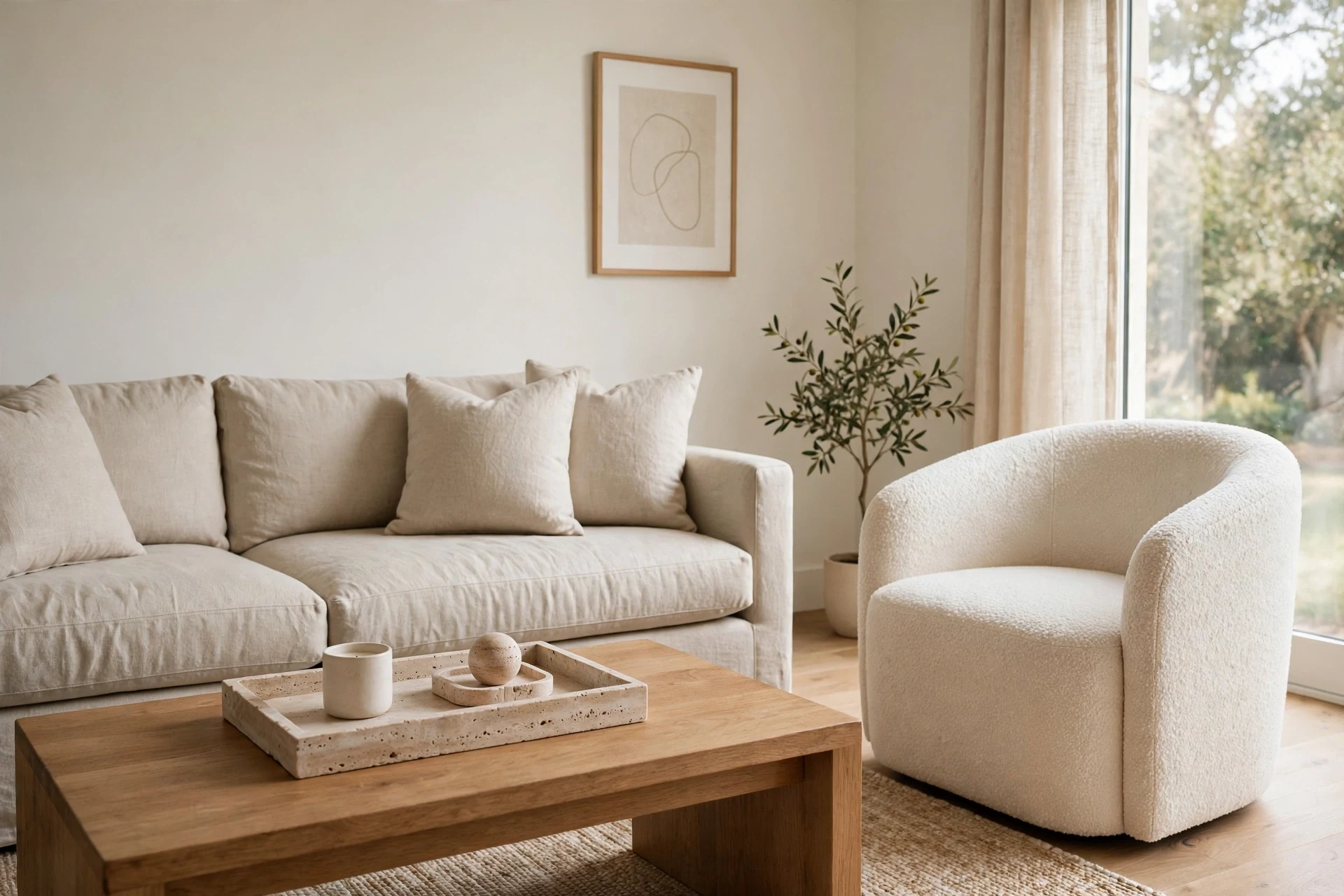
A few years ago I helped a friend move into a new flat, and her living room had one thing in it that stopped me at the door. It was a sofa. Not a big sofa, not a flashy one. It was a low, deep sofa in a warm oatmeal linen, with cushions that looked like they had been sat in by people who liked sitting there. The rest of the room was almost empty: a wooden coffee table, one lamp, a stack of books. And yet the room felt finished in a way that rooms full of furniture rarely do.
I asked her where she had bought it, expecting a brand name I would never afford. She laughed and said she had saved for six months and bought the one good thing instead of ten cheap ones. The rug was from a market. The lamp was secondhand. The books were hers. But the sofa, the thing her body touched every day, was the best she could buy, and it carried the whole room.
That is what this guide is about. Quiet luxury interior design is not a shopping list for rich people. It is a way of choosing: fewer things, better materials, warm colors, and space around everything. If you are searching for quiet luxury interior design ideas, a timeless home, or how to make a home look expensive without logos and trends, you will find all three here. The rule that sofa taught me still holds: buy the thing you touch every day first, and let the rest of the room be quiet.
What’s Inside This Guide
- The 3 Things That Make Quiet Luxury Work
- Group 1: Palette and Walls (Ideas 1 to 4)
- Group 2: Materials That Carry the Room (Ideas 5 to 9)
- Group 3: Furniture Worth Keeping (Ideas 10 to 13)
- Group 4: Light and Detail (Ideas 14 to 17)
- Group 5: Rooms and Living (Ideas 18 to 21)
- The 1-2-3 Quiet Luxury Method
- At a Glance
- Do This Not That
- Your Quiet Luxury Plan
- Take It Further
- Designer’s Cheat Sheet
- Questions People Ask
The 3 Things That Make Quiet Luxury Work
Before you buy anything, these three things decide almost everything.
1. Quality over quantity, every single time. A quiet luxury home has fewer things in it than a normal home, and each thing is better made. That does not mean everything must be expensive. It means you buy one good sofa instead of a sofa and three chairs you do not need, one solid wood table instead of two flat-pack ones, and you leave the rest of the money in your pocket. Fewer, better pieces also make a room easier to keep clean and calm, which is half the look.
2. Warm neutrals, layered in many shades. The palette is almost entirely warm: cream, ivory, oatmeal, sand, mushroom, taupe, camel, and a little deep brown or soft black for depth. The trick is layering five or six shades of the same warm family instead of one flat white. When the colors stay close together, the textures do the talking, and the room feels rich without any single color shouting.
3. Real materials you can feel. Linen, wool, wood, stone, leather, brass, and ceramic. When the palette is quiet, materials carry the whole design, so they need to be honest. Real wood with a grain you can see, stone with a vein in it, linen with a little texture. If the real thing is out of reach, buy it small: a stone tray, a linen cushion cover, a wooden bowl. Small doses of real material beat large doses of plastic that pretends to be something else.
Keep those three in mind and every idea below will make sense.
One more thing worth saying plainly. Quiet luxury is not minimalism with a bigger budget. Minimalism can feel cold and empty. Quiet luxury feels warm and lived in. There are books on the table, a throw on the chair, a plant in the corner. The difference is that every one of those things was chosen, not accumulated.
Group 1: Palette and Walls
Walls and color set the whole mood, and they are the cheapest place to start. Get the palette right and everything you already own looks better. Get it wrong and no amount of furniture will fix the room.
1. Warm White Walls with a Hint of Cream
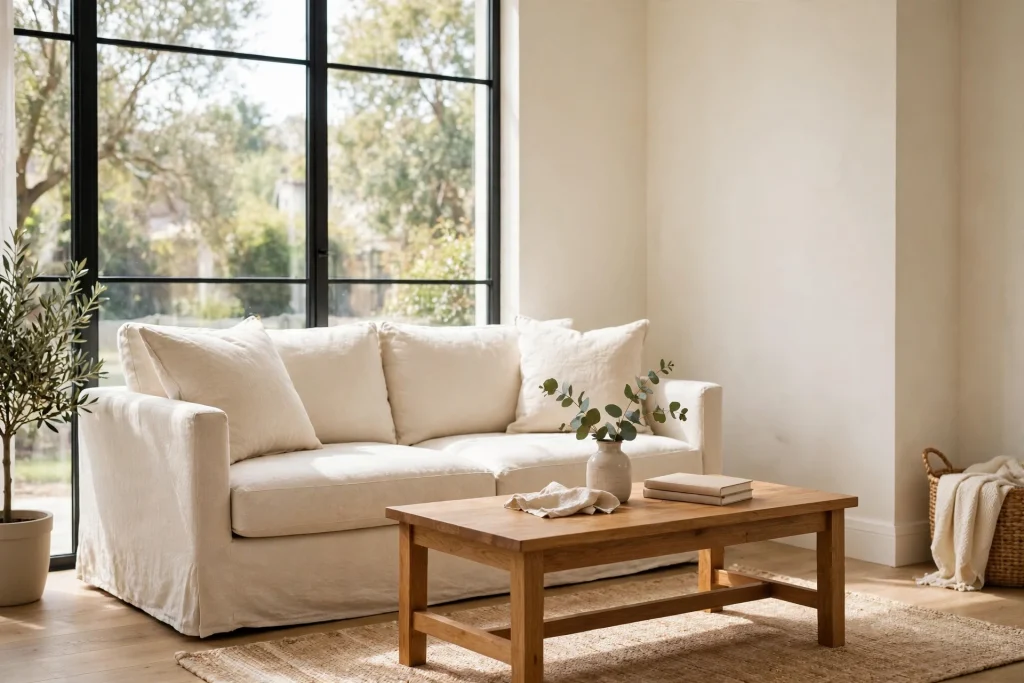
This is the single fastest change you can make. Most homes are painted in a stark, blue-toned white that feels cold under normal light. A warm white, one with a hint of cream or yellow in it, makes the same room feel softer, warmer, and more expensive, and it costs nothing more than a tin of paint.
How to do it: Pick a warm white like ivory, warm white, or soft cream, and test it on the wall first. Paint a large patch, at least a meter wide, and look at it in morning light, evening light, and lamplight before you commit. Paint the walls and the ceiling the same warm white, which makes a small room feel taller and calmer. Keep the woodwork in the same white, just one shade deeper, so the trims do not jump out.
How to do it on a budget: Paint one room at a time, starting with the room you spend the most time in. A single tin covers a normal living room, and the change is so big that people will think you bought new furniture.
Pair it with: Natural wood floors or a warm-toned rug, so the floor and the walls speak the same warm language. Avoid cool grey rugs against warm white walls, since the clash shows up at once.
2. Tonal Layering in One Colour Family
Tonal layering means using five or six shades of the same warm family in one room, from pale cream to deep espresso, instead of one flat color or a mix of unrelated colors. It is the reason quiet luxury rooms look rich even though nothing in them is bright, and it is easy to do once you see it. How to do it: Pick one family, such as warm beige, and gather the shades: pale cream walls, oatmeal sofa, sand cushions, camel throw, mushroom rug, and a deep brown wood table. Keep the shades close together so nothing jumps out. Add one darker note, like a charcoal cushion or a cognac leather chair, for depth. If a piece does not fit the family, move it to another room instead of forcing it in. How to do it on a budget: You do not need new furniture. Start with textiles: a throw, two cushion covers, and a rug in the right shades will pull a mixed room into one family for very little money. Pair it with: One texture change per shade, so the room does not go flat. Cream linen, oatmeal wool, sand cotton, camel leather, and brown wood all read as different even when the colors are close.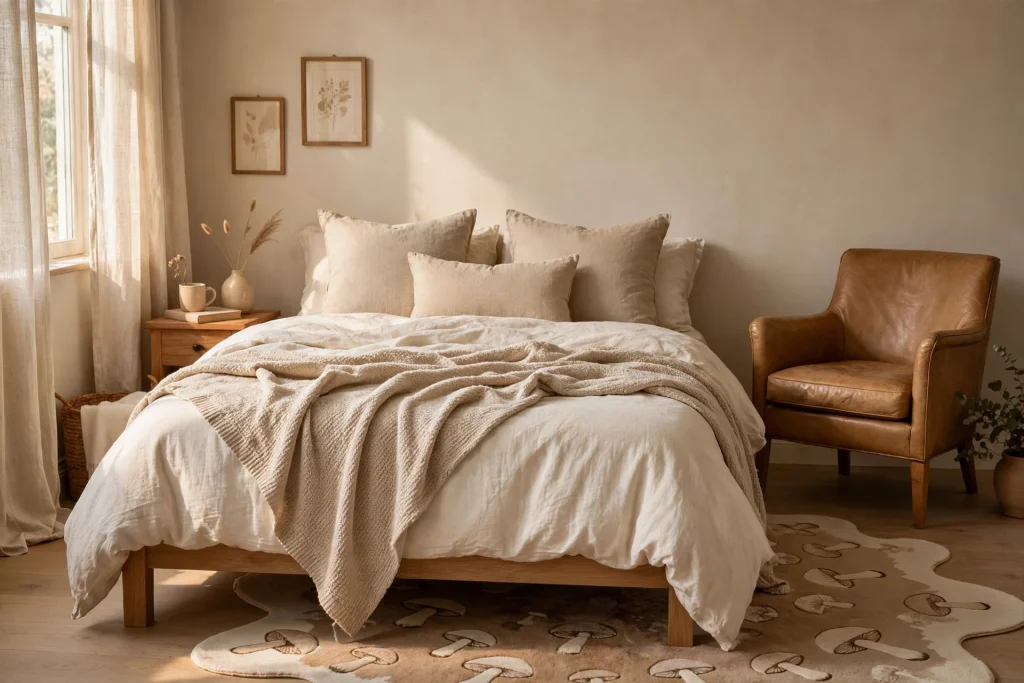
3. Limewash Walls for Soft Movement
Limewash is a paint finish that leaves soft, cloudy movement on the wall instead of a flat color. It looks like plaster, it catches the light differently through the day, and it gives a plain wall the kind of depth that makes people touch it. It is the most old-world idea in this guide, and it suits quiet luxury perfectly because it is handmade, subtle, and never shiny. How to do it: Buy a limewash paint in a warm neutral, such as soft beige or pale mushroom. Apply it with a wide block brush in loose, crossing strokes, two thin coats, and let the natural variation show. Do not try to make it even. The unevenness is the finish. One feature wall is enough in a living room, or do a whole small bedroom for a cocooned feel. How to do it on a budget: Limewash costs more than normal paint, so use it on one wall and paint the rest in a matching warm white. The feature wall carries the room and the cost stays low. Pair it with: Simple furniture with clean lines, so the wall is the texture and the furniture stays quiet. A wooden bench or a linen chair against a limewash wall looks like a photograph.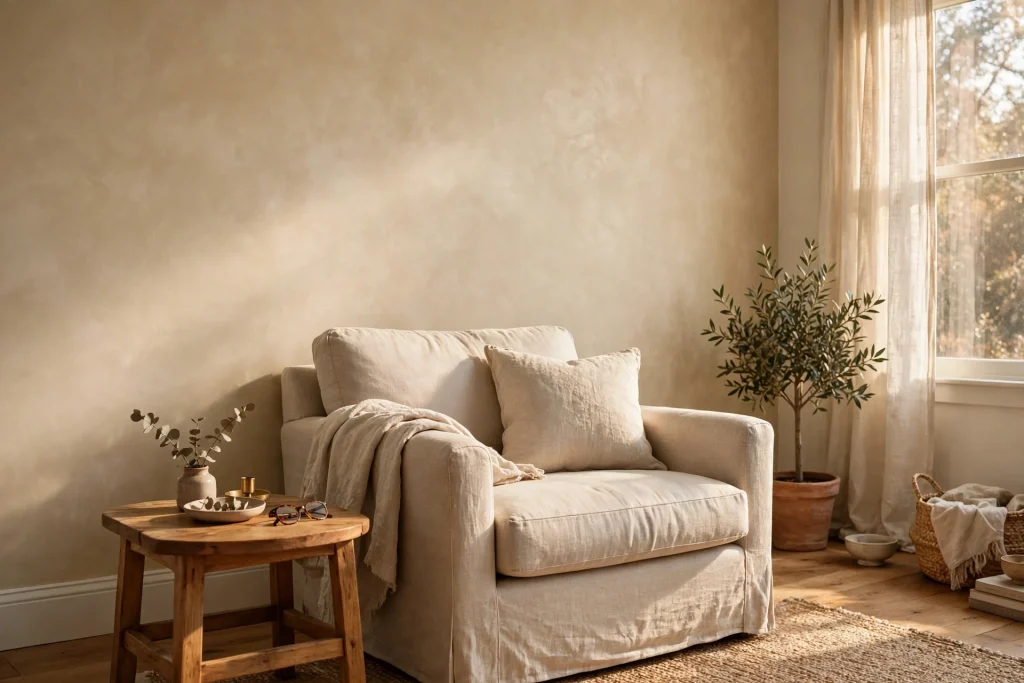
4. Quiet Wallpaper in a Tone-on-Tone Print
Wallpaper can be quiet. A tone-on-tone print, where the pattern is only one or two shades darker than the background, adds pattern without adding noise. Think a soft stripe, a faint botanical, or a small geometric in cream on cream. It suits a bedroom, a dining room, or a hallway, and it makes a room feel finished in a way paint alone rarely does. How to do it: Pick a print you can live with for years, not one that excites you for a week. Tone-on-tone stripes are the safest choice. Paper one wall in a bedroom, behind the bed, or all four walls in a small powder room where the pattern can wrap around you. Keep the rest of the room plain so the wallpaper is the only pattern. How to do it on a budget: Paper one wall only, and choose a paste-the-wall paper you can hang yourself. One roll is often enough for a single feature wall, and the job takes an afternoon. Pair it with: Plain linen bedding or plain upholstery, so the wallpaper and the fabric do not compete. If the wallpaper has a warm undertone, match the wood in the room to it.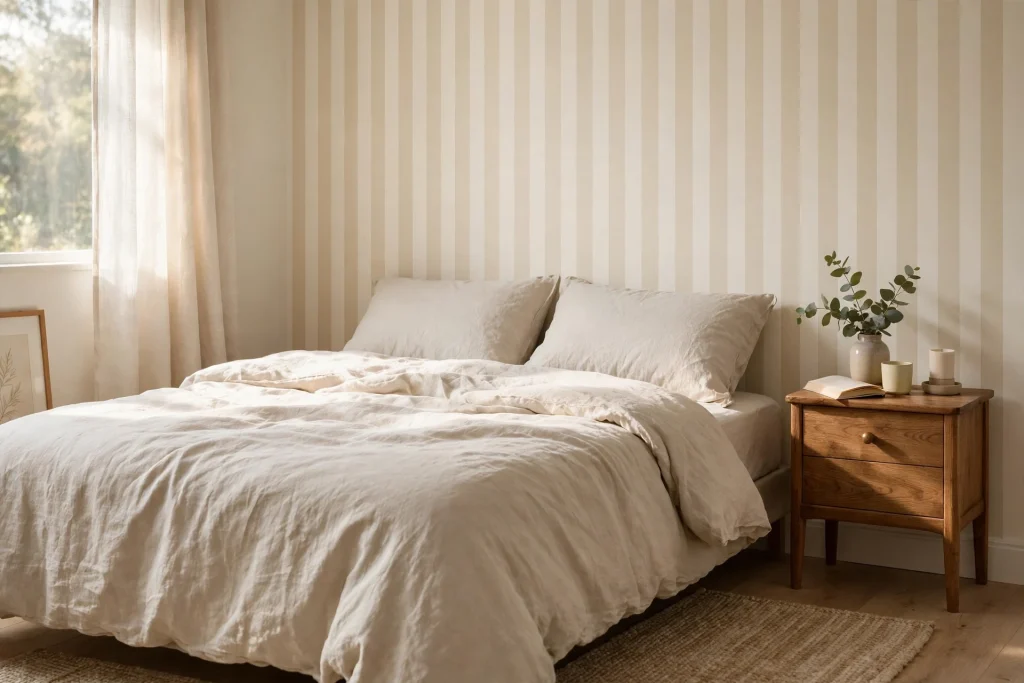
You may also like: Idea 3, Limewash Walls for Soft Movement, if you want a textured wall with no pattern at all.
Group 2: Materials That Carry the Room
When the palette is quiet, materials do the work. This group is about the five materials that define quiet luxury, and how to use each one without spending a fortune.
5. Travertine and Marble in Small Doses
Natural stone is the most luxurious material in this guide, and you do not need a marble kitchen to use it. A travertine tray, a marble side table, or a stone bowl on the dining table brings the same cool, veined beauty into a room for a fraction of the cost, and small pieces are easy to move around until they find their spot. How to do it: Start with one stone piece per room. A travertine tray on the coffee table, a marble board in the kitchen, a stone vase on a shelf. Let the stone be the only pattern in the room, and keep everything around it plain. If you are renovating, spend on a stone vanity top or a fireplace surround, since those are the pieces you touch and see every day. How to do it on a budget: Buy stone accessories, not stone furniture. Travertine coasters, a marble soap dish, or a small stone bowl cost very little and bring the same material into the room. Secondhand stone pieces are common and they age well. Pair it with: Warm wood, which stops stone feeling cold. A marble tray on a wooden table, or a travertine vase on a walnut shelf, is the combination that works every time.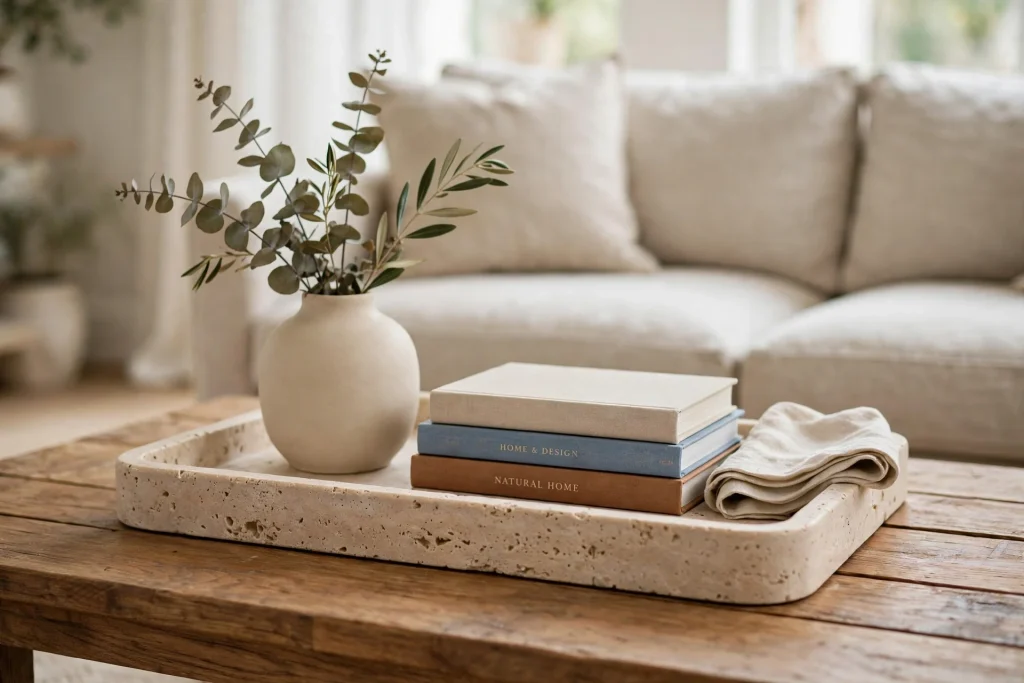
6. White Oak and Walnut Wood
Wood is the warmth in a quiet luxury home. White oak is pale, calm, and modern, while walnut is deep, rich, and traditional. Both work, but they work best when you pick one and stick to it through the house, so the wood tones do not fight each other from room to room. How to do it: Choose your wood family first. White oak suits light, airy rooms and modern furniture. Walnut suits deeper, moodier rooms and classic shapes. Use the same wood for the big pieces, the dining table, the coffee table, the bed frame, and let smaller pieces, like a bowl or a tray, be the same family too. How to do it on a budget: You do not need solid wood everywhere. A solid wood dining table is worth the money because you use it daily, but a veneer side table in the same tone is fine. Buy secondhand wood furniture and have it refinished, which is often cheaper than new and looks better. Pair it with: Linen and stone, which both sit happily next to wood. Avoid matching wood to wood in different tones, since two clashing browns are worse than one.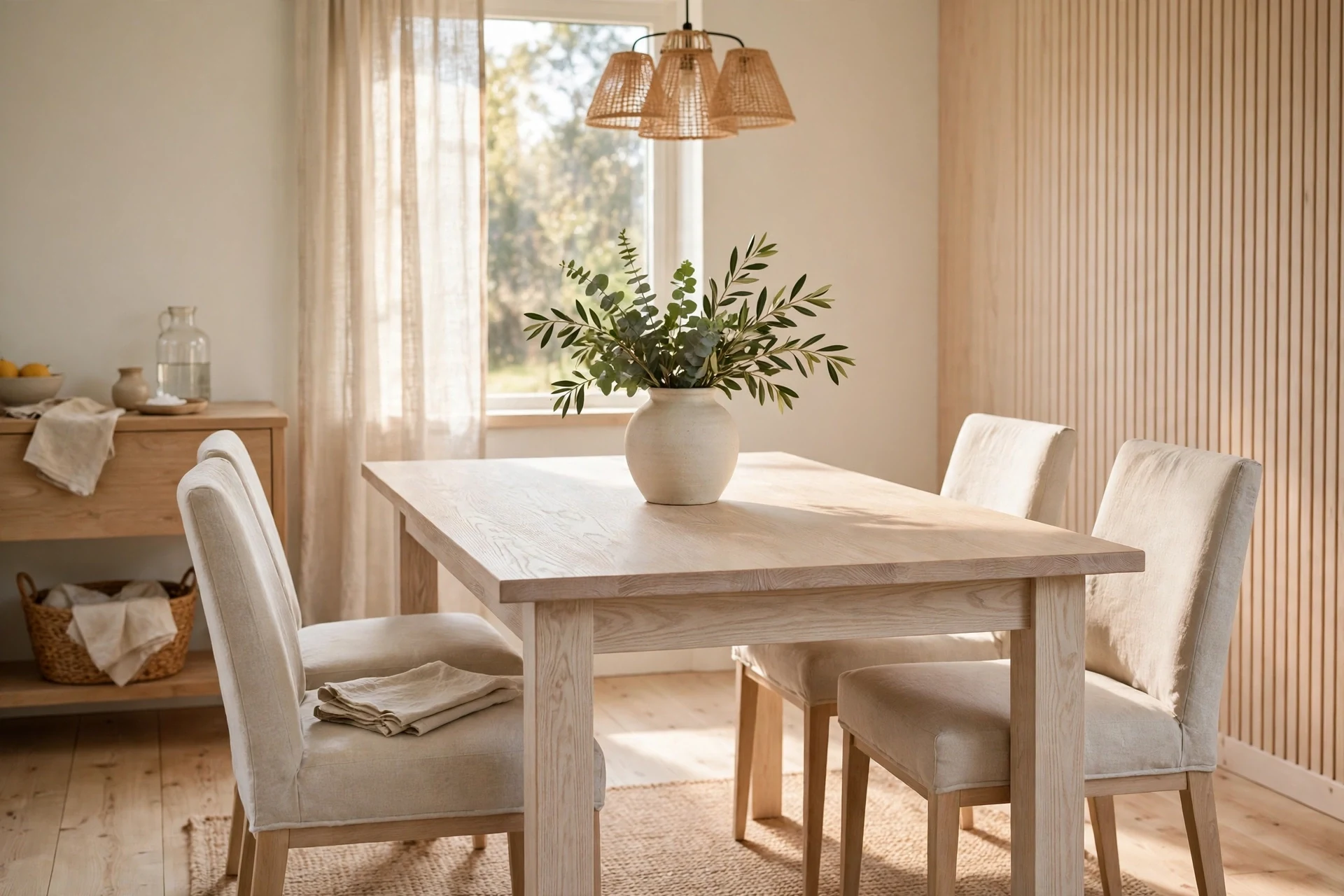
7. Boucle and Wool Textiles
Boucle is the nubby, looped fabric that looks like a cloud and feels like a blanket, and wool is its quieter cousin. Both add instant warmth to a neutral room, because they catch the light and make a plain chair look soft and inviting. One boucle chair or a wool throw can change the feel of a whole room. How to do it: Add boucle or wool in one place per room, not everywhere. A boucle accent chair in the living room, a wool throw on the bed, or wool cushion covers on the sofa. Keep the color in your tonal family, cream, oatmeal, or soft grey, so the texture is the star and the color stays calm. How to do it on a budget: Boucle cushion covers and wool-blend throws cost far less than a boucle chair and give you most of the effect. If you want the chair, look for secondhand ones and have them re-covered in a plain boucle. Pair it with: Smooth materials, like leather, stone, or plain wood, so the nubby texture has something to sit against. Too much texture everywhere makes a room feel busy instead of calm.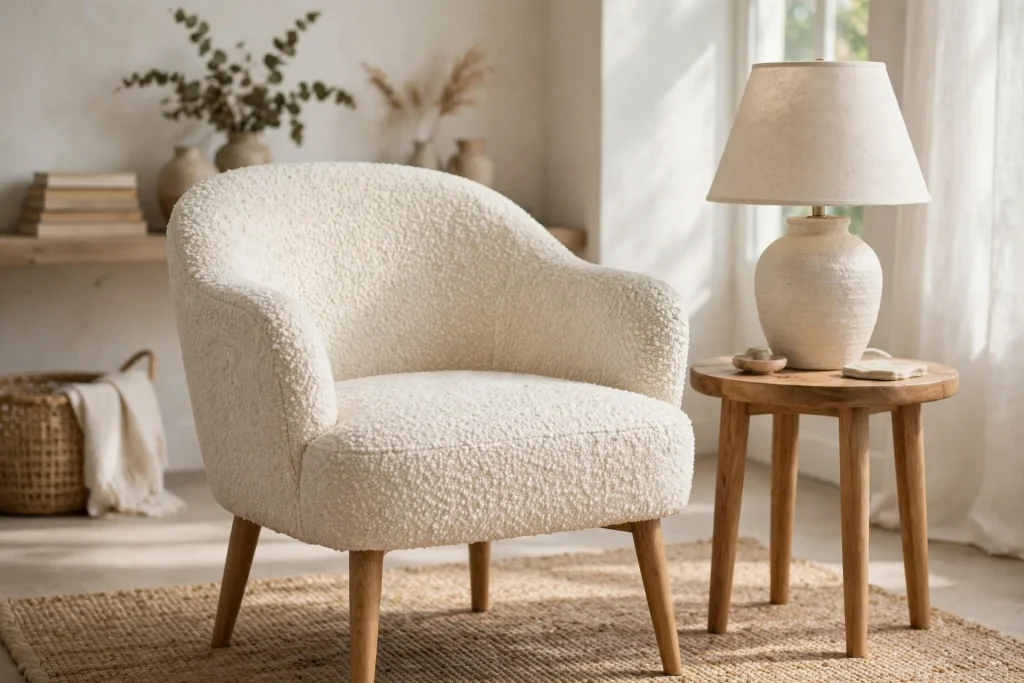
8. Linen, Everywhere It Makes Sense
Linen is the workhorse of quiet luxury. It is crisp but soft, it wrinkles in a way that looks lived in rather than messy, and it works for curtains, bedding, sofa covers, and tablecloths. A linen sofa or linen curtains can carry a whole room, because the fabric itself looks expensive even in a plain color. How to do it: Use linen where your body or the light touches it: curtains, bedding, sofa covers, and cushion covers. Choose washed linen in warm white, oatmeal, or soft grey. Hang linen curtains high and let them pool slightly on the floor for a relaxed, generous feel. On a bed, layer a linen duvet with a linen throw and let the wrinkles be part of the look. How to do it on a budget: Linen-cotton blends look close to pure linen and cost much less. Start with cushion covers and a tablecloth, which are cheap, and save the linen curtains and sofa covers for later. Pair it with: Wool and wood, which warm linen up. Linen alone can feel crisp and cool, so a wool throw on a linen sofa is the combination that makes it feel like home.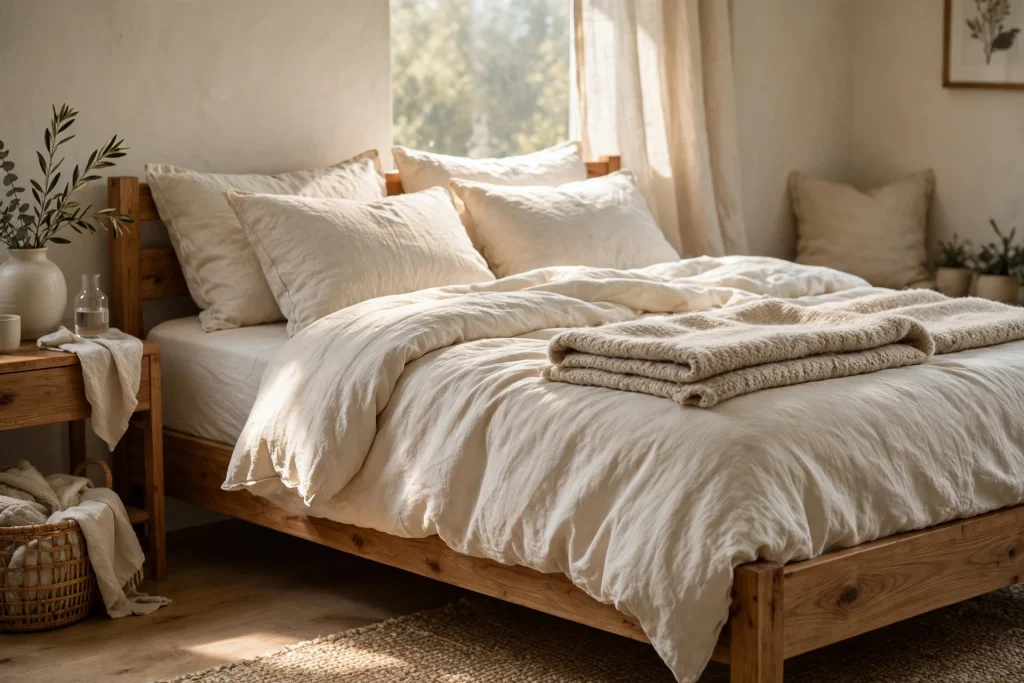
9. Aged Brass and Blackened Bronze
Metals in a quiet luxury home are warm and aged, never shiny and new. Aged brass has a soft, golden glow, and blackened bronze is dark and quiet. Both add a little shine to a matte room, and they age beautifully, which is the whole point: the patina is part of the beauty. How to do it: Pick one metal and use it consistently: brass for warmth, bronze for depth. Use it for the small things first, like lamp bases, tray handles, picture frames, and cabinet pulls. Keep the finish unlacquered so it ages naturally, and do not polish it back to new. One metal per room keeps the look calm. How to do it on a budget: Change the hardware, not the furniture. New brass pulls on old kitchen cabinets, or a brass lamp base from a secondhand shop, will change a room for very little money. Pair it with: Stone and dark wood, which both make brass and bronze look richer. Avoid mixing brass, chrome, and black metal in one room, since three metals always look like an accident.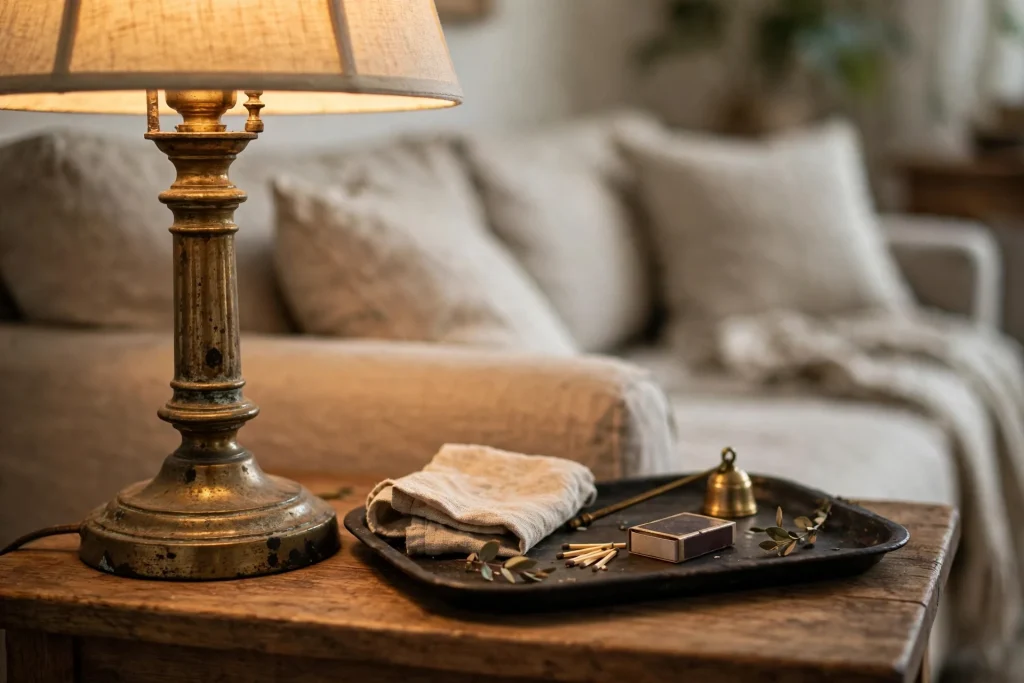
You may also like: Idea 14, Layered Lighting You Barely Notice, if you want the lighting that makes brass and bronze glow in the evening.
Group 3: Furniture Worth Keeping
Furniture is where quiet luxury is won or lost. The rule is simple: fewer pieces, better made, classic shapes. Buy the piece you will keep for twenty years, and skip the three you will replace in two.10. One Good Sofa, Bought Once
The sofa is the most-used piece of furniture in most homes, and it is where quiet luxury starts. A good sofa has a solid frame, a deep seat, and a fabric that ages well, like linen, wool, or a good performance weave. It costs more up front, but it is cheaper than buying three bad sofas in ten years, and it looks better every year you own it. How to do it: Sit on it before you buy it, and sit the way you actually sit at home. The seat depth should be 22 to 25 inches for lounging, the arms should be low and clean, and the back should support you without swallowing you. Pick a neutral fabric in your tonal family, and choose a classic shape, track arms or slightly rounded arms, that will not look dated in five years. How to do it on a budget: Save for the sofa and buy everything else secondhand. A good sofa on a plain rug with a secondhand coffee table looks like quiet luxury. A cheap sofa with expensive accessories looks like a cheap sofa. If the budget is tight, buy a good secondhand sofa frame and have it re-covered in linen. Pair it with: One good rug under it, big enough that the front legs of the sofa sit on the rug. A rug that is too small is the most common mistake in a living room, and it makes even a good sofa look lost.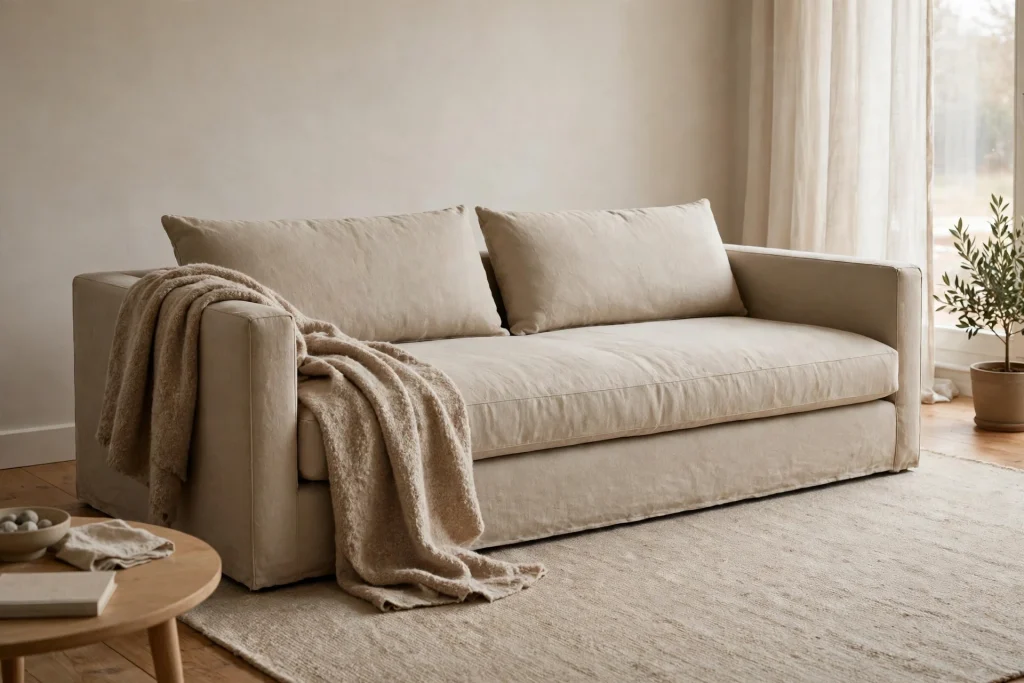
11. A Stone or Solid Wood Coffee Table
The coffee table is the piece you look at and touch every day, so it should be made of something real. A stone top or a solid wood table has weight, grain, and a surface that gets better with use. It also anchors the seating area, which is what makes a living room feel like a room instead of a row of chairs. How to do it: Choose a table with rounded edges, which feels softer and is kinder to shins. The top should be at the same height as the sofa seat, or one inch lower, so it is easy to reach. Keep the top mostly clear: one stack of books, one object, and space for a cup. A table buried under clutter is not a coffee table, it is a shelf. How to do it on a budget: A solid wood slab on simple legs is often cheaper than a designer table and looks just as good. Secondhand stone tables are common, and a scratch on stone or wood is a patina, not damage, so do not be afraid of a used one. Pair it with: A tray on top, in stone or brass, which corrals the small things and keeps the surface calm. The tray is also the easiest way to change the look of the table with the seasons.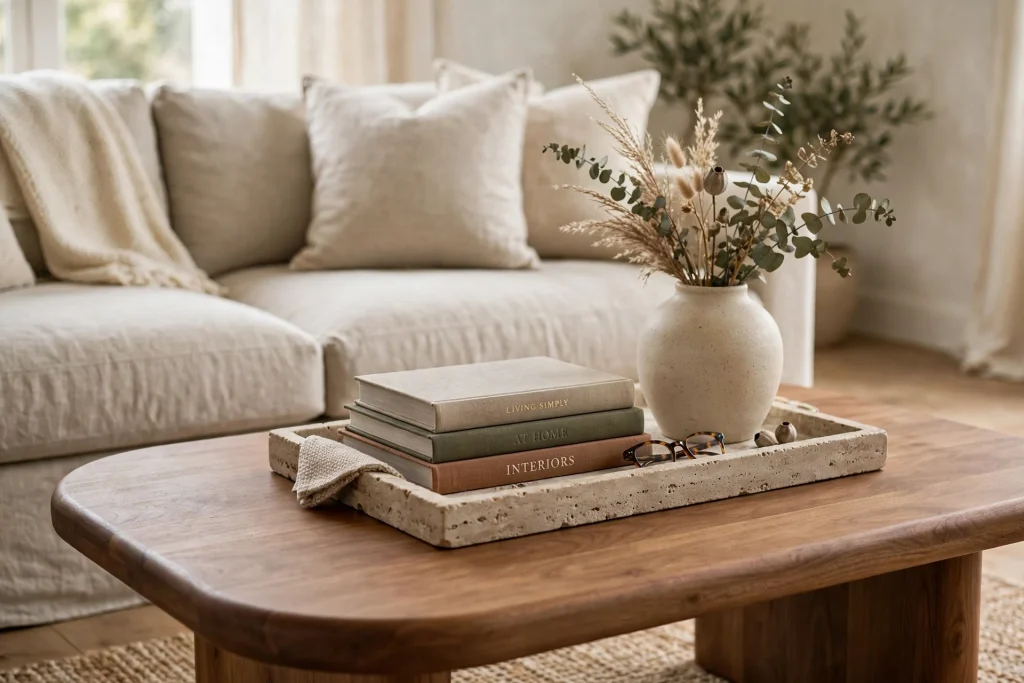
12. Curved Chairs That Soften a Room
Rooms full of straight lines and sharp corners feel hard, even when the colors are warm. A curved chair, with a rounded back or a barrel shape, softens the whole room. It gives the eye somewhere gentle to rest, and it makes a seating area feel welcoming instead of formal. How to do it: Add one curved chair to a living room or bedroom, in a fabric from your tonal family. A barrel chair in boucle, a curved tub chair in linen, or a swivel chair with a rounded back all work. Place it at an angle to the sofa, not in a straight line, so the room feels arranged rather than lined up. How to do it on a budget: One curved chair is enough, and secondhand curved chairs are easy to find because the shape has been popular for decades. Have it re-covered in a plain fabric and it will look new. Pair it with: A small round side table, which repeats the curve and gives the chair a place for a book and a cup. Two curves together feel intentional, while one curve alone can look like an accident.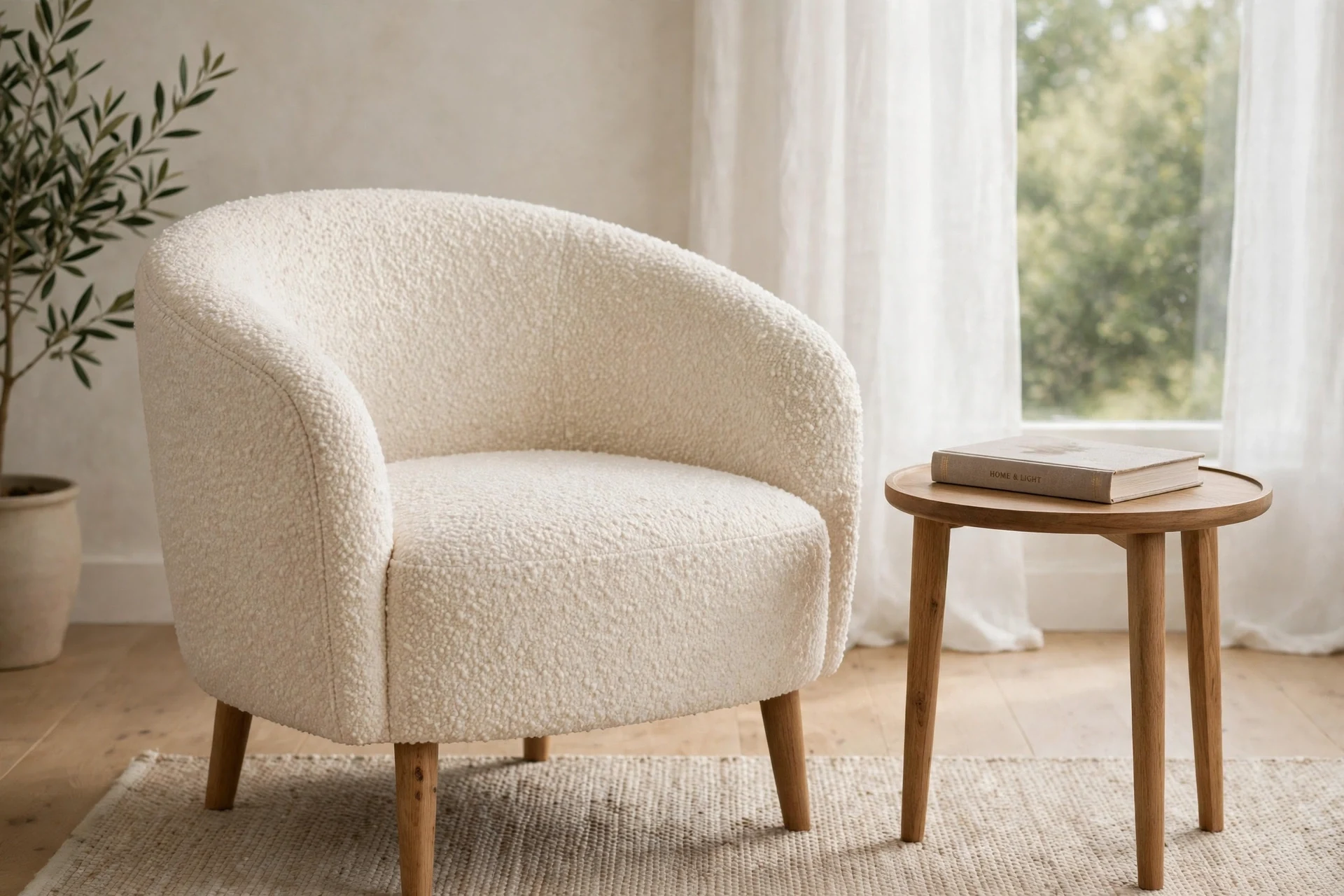
13. Vintage Finds with a Story
A quiet luxury home never looks like it was bought in one day from one shop. One or two vintage pieces, a chair with a history, a reclaimed wood table, a lamp from another decade, give a room a story and a soul. They are also the pieces guests ask about, which is the point: a home should have something to say. How to do it: Buy vintage for the pieces with character: an accent chair, a side table, a mirror, a rug. Look for solid construction and good bones, and ignore a bad finish, since that can be fixed. One vintage piece per room is enough. More than that and the room starts to feel like a shop. How to do it on a budget: Vintage is often cheaper than new for the same quality, especially for solid wood and real leather. Check local antique shops, estate sales, and online marketplaces, and be patient. The right piece at the right price takes time, and the waiting is part of the story. Pair it with: Clean, modern pieces, so the vintage item stands out instead of blending into a room full of old things. A vintage chair next to a plain linen sofa looks collected. A vintage chair next to five other vintage chairs looks crowded.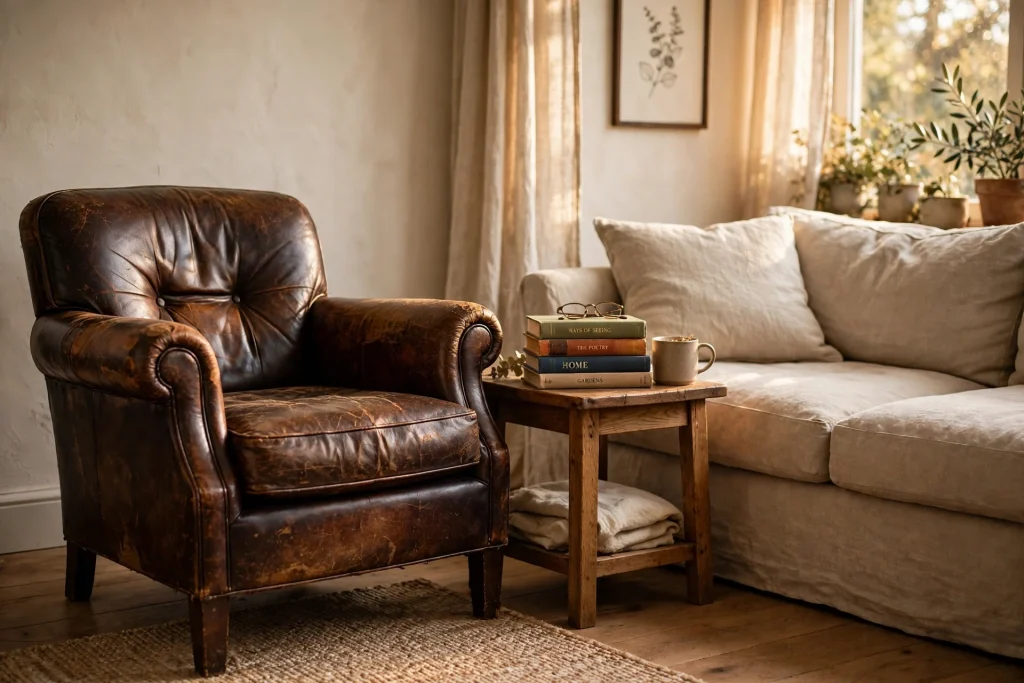
Group 4: Light and Detail
Light and detail are where a room goes from nice to beautiful. Neither costs much, and both are easy to get wrong, so this group is about the small decisions that make the biggest difference.14. Layered Lighting You Barely Notice
The best lighting is the kind you do not notice, because you only notice the glow. Quiet luxury rooms use three layers: soft overhead light, warm lamps at seating height, and a little accent light, like a picture light or a candle. No single bright ceiling light doing all the work, and no bare bulbs anywhere. How to do it: Put dimmers on every overhead light, and use warm bulbs, around 2700K, everywhere. Add a table lamp or a floor lamp next to every seat, so nobody sits in the dark. Add one accent light, such as a small lamp on a shelf or a picture light over art, for depth. In the evening, turn the overhead lights down and let the lamps do the work. How to do it on a budget: Lamps are the cheapest lighting upgrade there is. Two matching table lamps from a secondhand shop, with warm bulbs and linen shades, will change a room for less than the cost of a cushion. Pair it with: Linen or fabric lampshades, which soften the light, and a dimmer switch, which is a ten-minute job for an electrician and the best money you will spend on a room.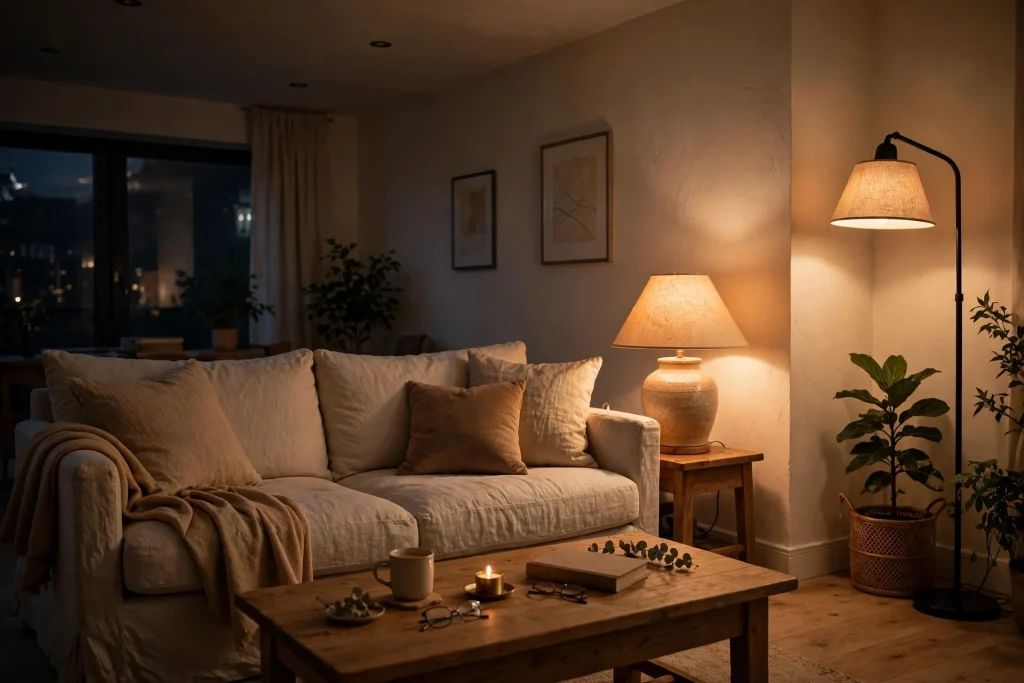
15. Architectural Details: Moulding and Panelling
The most beautiful luxury homes stand out because of their architecture, not their furniture. Crown moulding, wall panelling, built-in shelving, ceiling beams, and arched doorways add depth and a sense of permanence that no sofa can give you. If your home already has these details, keep them. If it does not, adding one is worth more than any new furniture. How to do it: Start with the detail that suits your home. In a plain modern room, add simple picture-frame moulding to one wall, which is a weekend job with a saw and some adhesive. In a hallway, add a chair rail and panelling below it. In a living room, add a beam or two on a high ceiling. Keep the detail simple and painted the same warm white as the walls, so it reads as architecture, not decoration. How to do it on a budget: Picture-frame moulding on one wall costs very little in materials and makes the whole room feel custom. Built-in shelving around a fireplace or a television is a bigger job, but it is still cheaper than filling the wall with furniture. Pair it with: Plain furniture and few accessories, so the architecture is visible. A panelled wall behind a plain sofa looks intentional. A panelled wall behind a cluttered shelf looks busy.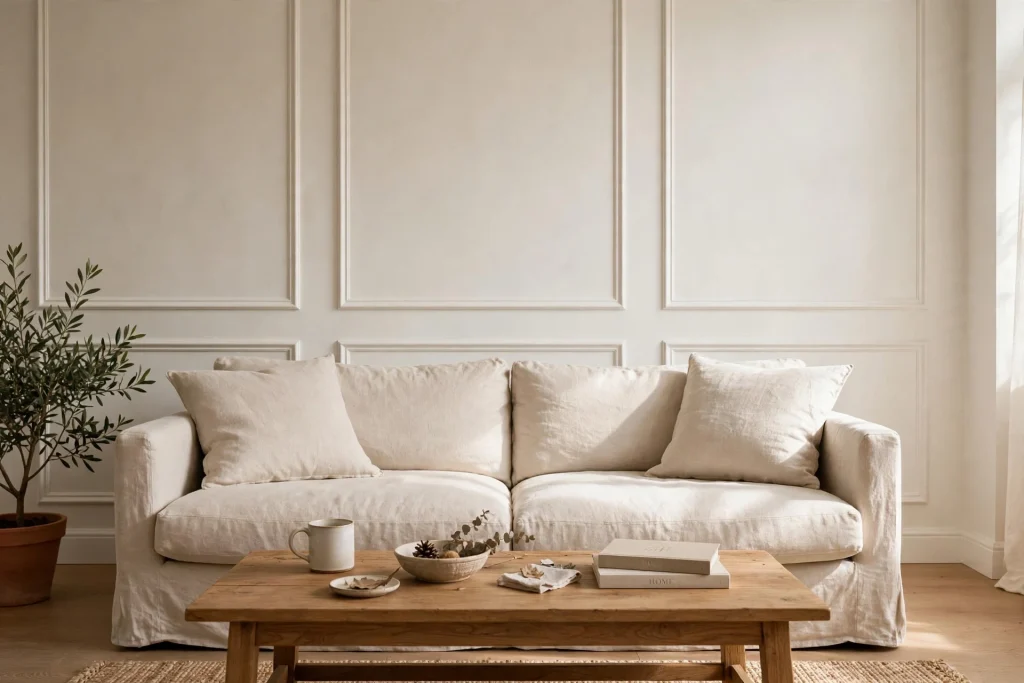
16. Arched Mirrors and Soft Curves
An arched mirror does two jobs at once: it bounces light around a room, and its curved top softens all the straight lines around it. It is the easiest way to add architecture to a plain wall, and it works in a hallway, a bedroom, or above a console table. The arch shape also repeats the curves in your chairs and tables, which ties the room together. How to do it: Hang one large arched mirror where it can catch a window or a lamp, so it reflects light rather than a blank wall. In a hallway, hang it above a console table with a small vase. In a bedroom, lean a full-length arched mirror against the wall in a corner. Keep the frame simple, in wood, brass, or plain black, so the shape is the feature. How to do it on a budget: Arched mirrors are widely available now at every price, and secondhand ones are common. A large mirror from a discount shop in a simple frame looks the same on the wall as an expensive one, because the shape does the work. Pair it with: A curved chair or a round table nearby, so the arch is part of a family of curves rather than a single odd shape in a square room.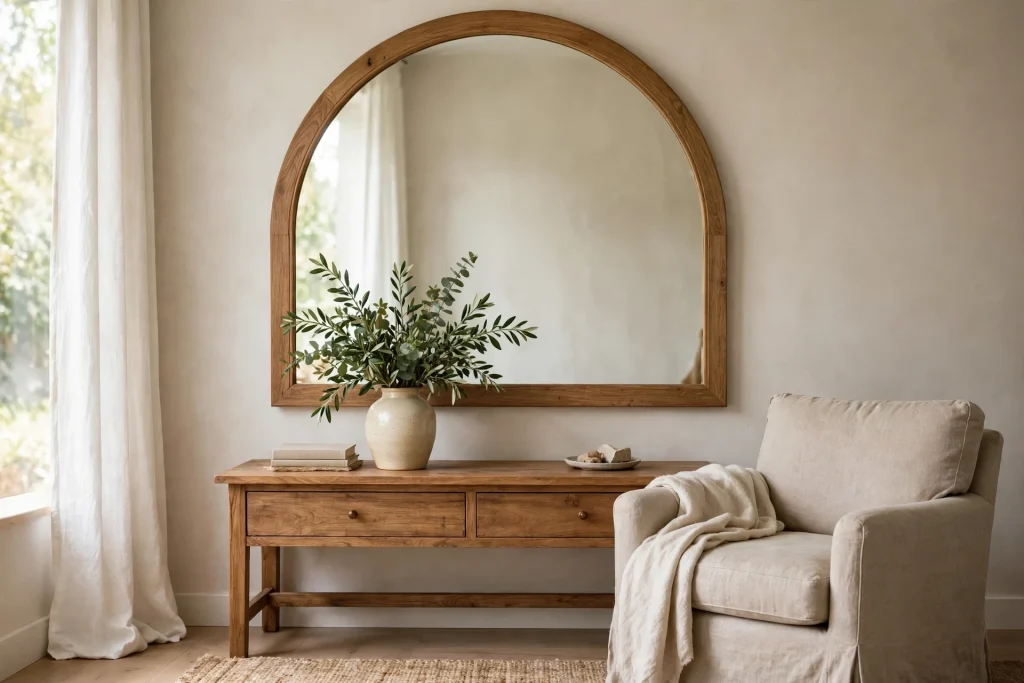
17. One Sculptural Object per Surface
Styling is where quiet luxury is most often lost, because it is tempting to fill every surface. The rule that works is one sculptural object per surface: one vase on the coffee table, one bowl on the dining table, one object on a shelf. The object should be beautiful from every angle, handmade if possible, and given space around it so it can be seen. How to do it: Walk through your home and remove everything from every surface. Then put back one object per surface, the best one you own for that spot. A sculptural ceramic vase, a wooden bowl, a stack of two books with a small object on top. Leave the rest of the surface empty. The empty space is not wasted, it is what makes the object look important. How to do it on a budget: This is the cheapest idea in the guide, because it is about removing things, not buying them. If you want one new object, buy a handmade ceramic vase from a local maker, which costs little and is the kind of piece that makes a room feel personal. Pair it with: Negative space. If a shelf looks empty after you remove things, it is probably right. A shelf with three beautiful objects and space between them looks like a gallery. A shelf with thirty objects looks like a shop.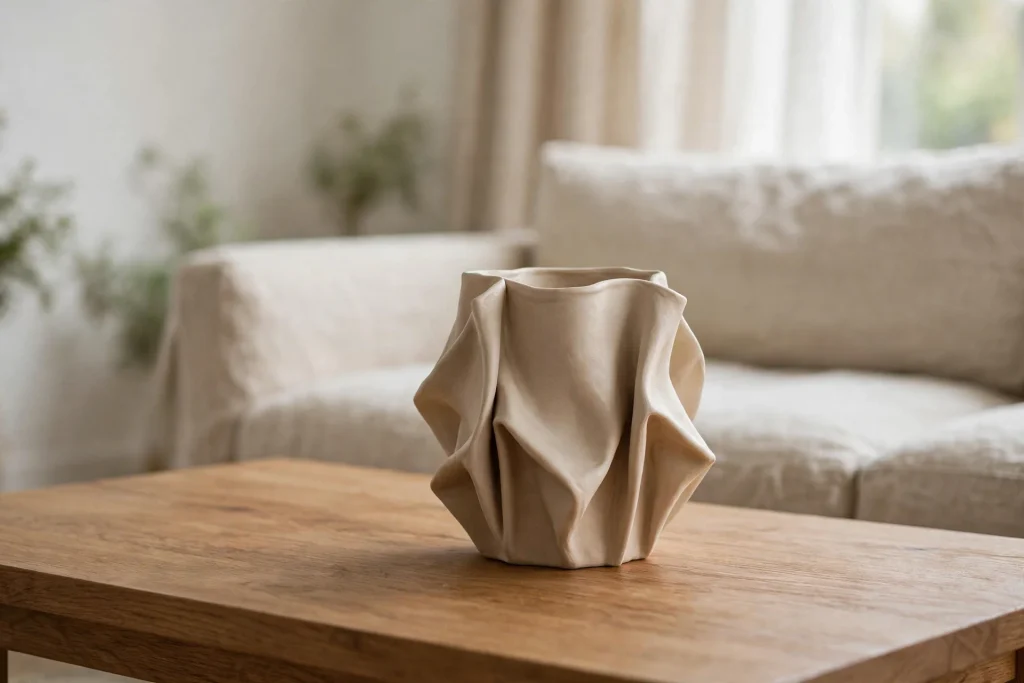
Group 5: Rooms and Living
The ideas so far work anywhere. This group puts them together room by room, so you can see how a bedroom, a kitchen, a bathroom, and an entryway each get the quiet luxury treatment.18. A Bedroom That Feels Like a Boutique Hotel
A quiet luxury bedroom should feel like a boutique hotel and still feel like yours. That means high-quality bedding, soft lighting, and a calm palette, with a few personal things in sight. It is the room where you spend a third of your life, so it deserves the best textiles in the house. How to do it: Spend on the bedding first: crisp cotton sheets, a linen duvet cover, plush pillows, and a layered throw. Add soft bedside lamps or wall sconces instead of a bright overhead light. Keep the palette to ivory, cream, warm beige, and taupe. Add one personal object, a framed photo, a book you love, a vase, and keep the rest of the surfaces clear. How to do it on a budget: Good bedding is the one place to spend, but you can phase it in: linen duvet cover first, then pillows, then a throw. A hotel-style bed with plain, good bedding and two lamps costs far less than a redecorated room and feels better than most hotel rooms. Pair it with: A large rug under the bed, soft underfoot in the morning, and blackout linen curtains that hang to the floor. Both make the room feel finished and help you sleep.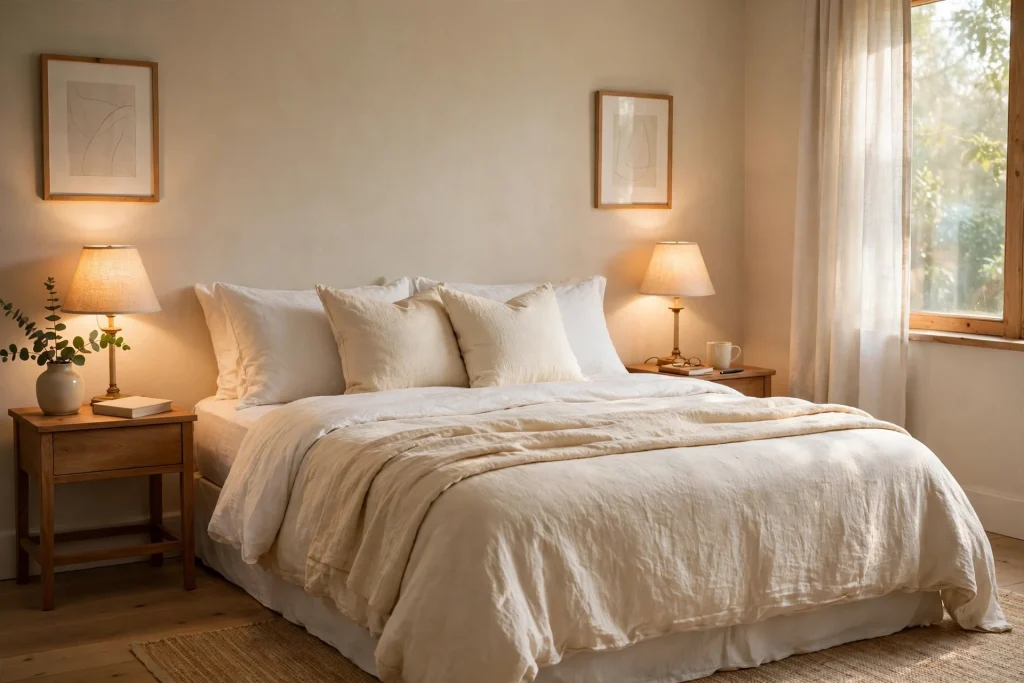
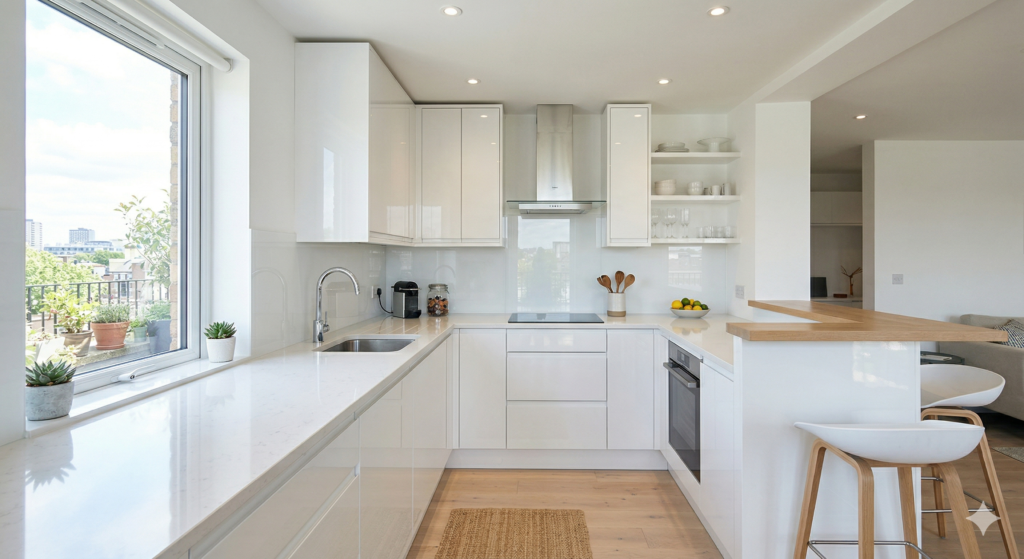
19. A Kitchen That Hides Its Clutter
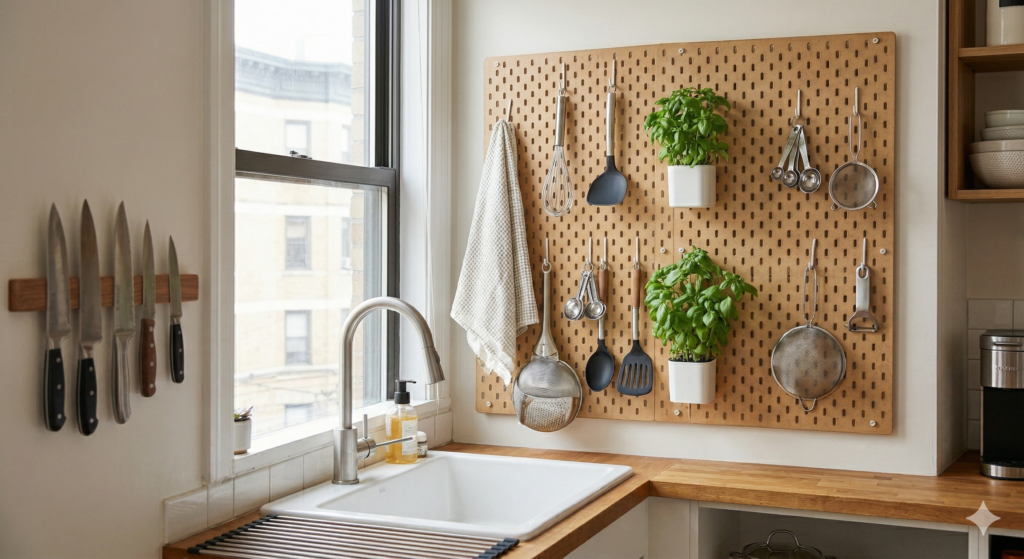
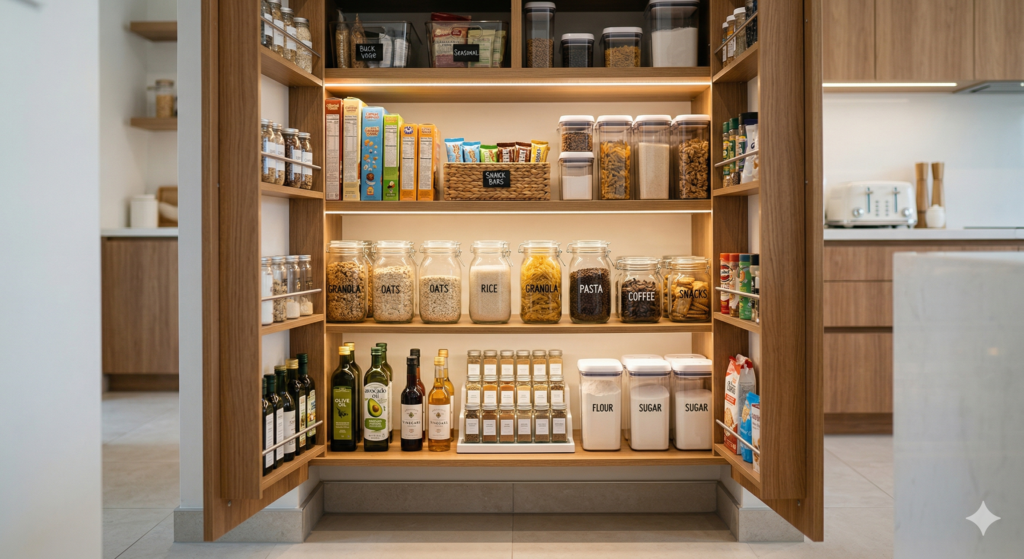
A quiet luxury kitchen looks calm because the clutter is hidden, not because the cook owns nothing. Handleless cabinets, concealed appliances, and one clear stretch of worktop make the kitchen feel like a room, not a workshop, and the few things left out are beautiful enough to display. How to do it: Clear the worktops completely, then put back only the things you use daily and that look good: a wooden board, a ceramic pot for utensils, a bottle of olive oil. Hide the rest behind handleless cabinet doors or in a pantry. If you are renovating, choose flat-front cabinets and panel-ready appliances so the fridge and dishwasher disappear into the cabinetry. How to do it on a budget: You do not need a new kitchen. Decant cleaning products into plain bottles, put small appliances in a cabinet, and keep one clear stretch of worktop. A wooden chopping board left out on purpose looks like styling. A drying rack left out by accident looks like clutter, so give everything a home. Pair it with: Natural stone or wood worktops, which look good empty, and warm lighting under the cabinets, which makes the worktop glow in the evening.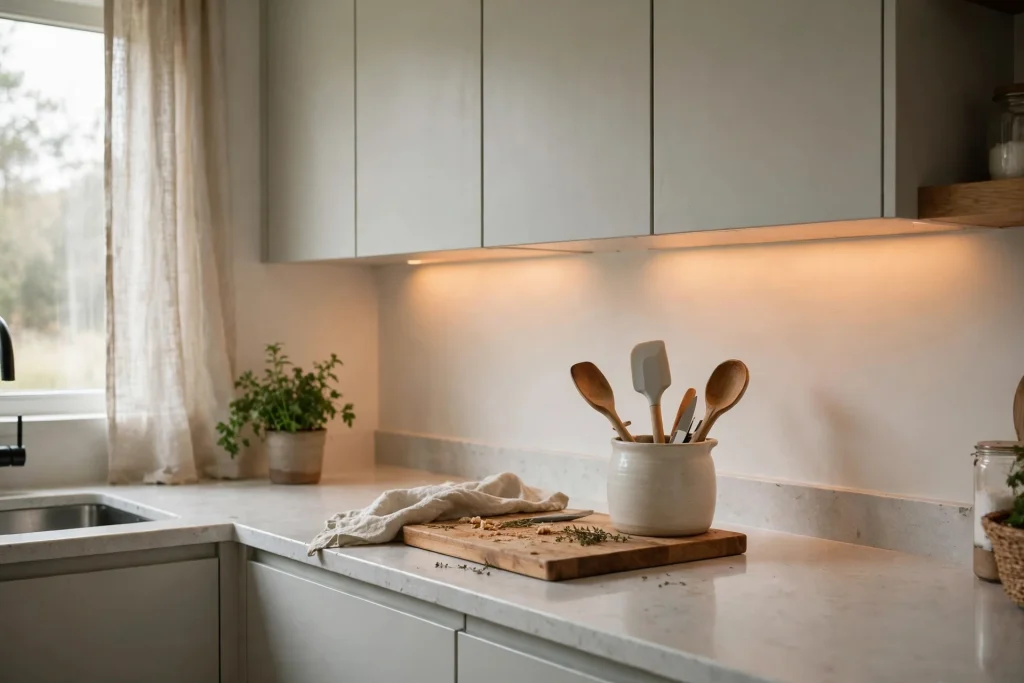
20. A Bathroom in Stone and Soft Light
A bathroom is the smallest room in the house and the easiest to make feel luxurious, because a little stone and a little soft light go a long way. A stone vanity top, a large mirror, and warm sconces instead of a bright ceiling light will make a plain bathroom feel like a spa, and you will notice it every morning. How to do it: If you are renovating, spend on a stone vanity top and a good mirror, and choose warm sconces at face height on either side of the mirror. Keep the palette to warm white, stone, and wood, and hide the bottles and products in a cabinet or a drawer. If you are not renovating, change the lighting and the accessories: a stone tray for the soap, a wooden stool, and a good hand towel in linen. How to do it on a budget: A stone tray, a new mirror, and two small sconces or a warm bulb will change a bathroom for very little. Decant shampoo and soap into matching plain bottles, which costs almost nothing and makes the whole room look considered. Pair it with: A large plant that likes humidity, or a eucalyptus bundle hung from the shower head, which adds a natural scent and a soft green note to a room that is otherwise stone and white.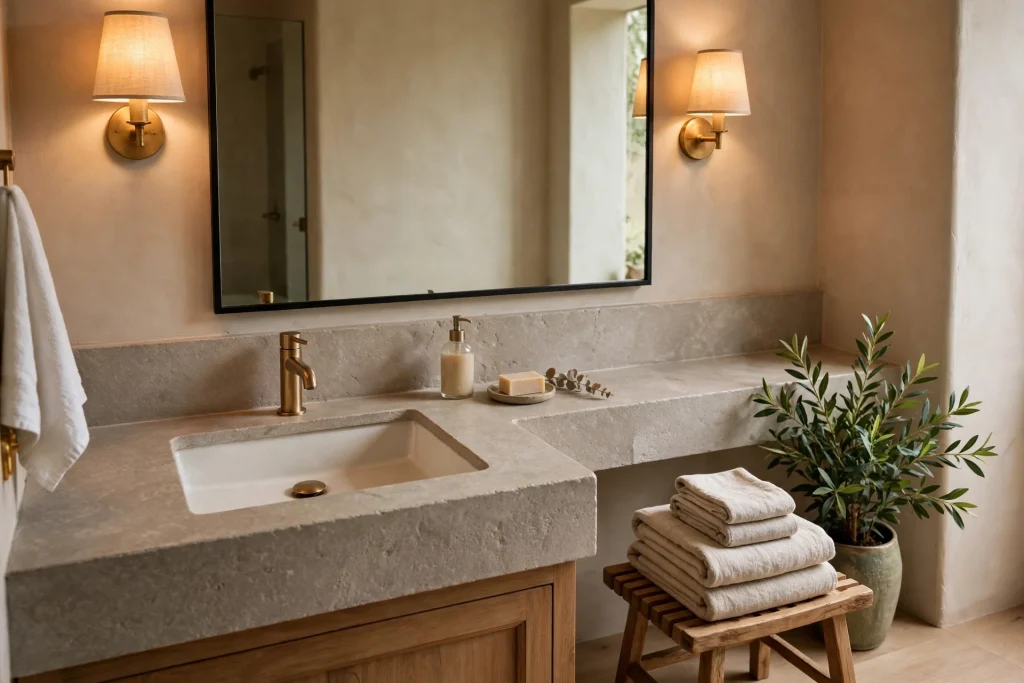
21. The Entryway That Sets the Tone
The entryway is the first thing you see when you come home and the first thing guests see, so it should set the tone for the whole house. A console table, a mirror, one object, and a place for keys is all it needs. It should feel calm, not crowded, and it should make coming home feel good. How to do it: Put a slim console table against the wall, hang an arched mirror above it, and add one object, a vase, a bowl, or a small lamp. Add a tray or a small bowl for keys, and a bench or a stool if there is space. Keep the floor clear except for a rug, and hang one hook per person for coats, so the entryway never becomes a pile. How to do it on a budget: A secondhand console table and a mirror are the whole job, and both are easy to find cheap. A tray for keys costs almost nothing, and it is the detail that stops keys ending up on every surface in the house. Pair it with: Warm lighting, such as a small lamp on the console table, so the entryway glows in the evening when you come home. A lit entryway feels welcoming in a way a dark one never does.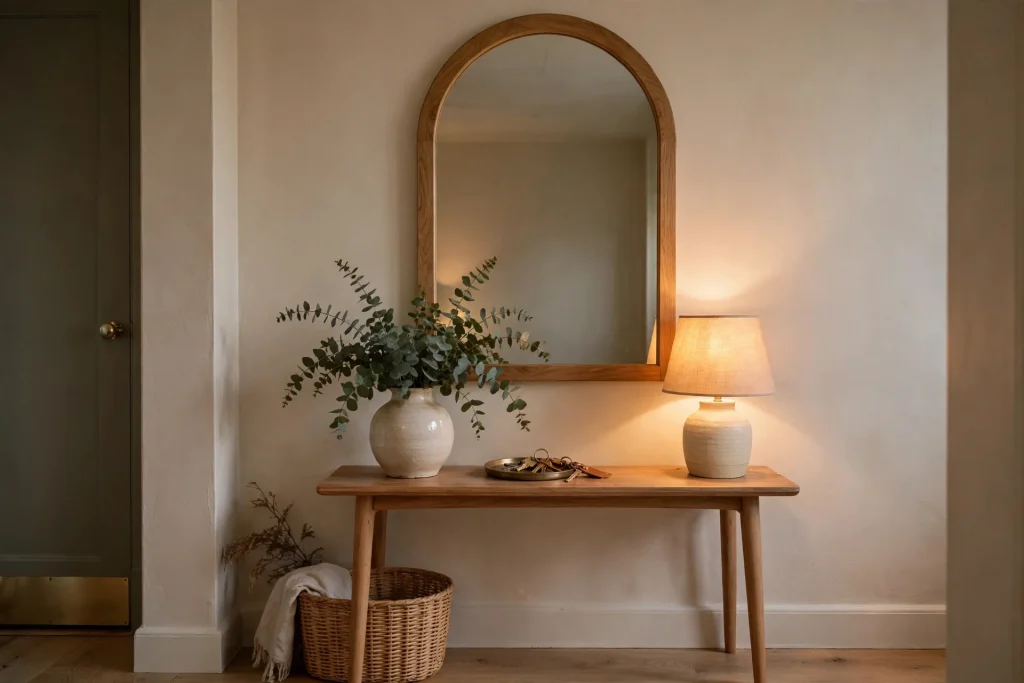
The 1-2-3 Quiet Luxury Method
You do not need to redo your home. You need a method you can repeat, room by room.
1. Start with the walls and the light. Paint the walls a warm white, change the bulbs to warm, and add dimmers. These two changes cost the least and change the most, and every other decision gets easier after them.
2. Buy the thing you touch every day. The sofa, the bed, the dining table, the chair you sit in. Buy the best version of that one thing, and buy everything else secondhand or later. One good piece carries a room. Ten cheap pieces crowd it.
3. Edit, then edit again. Take everything off every surface, put back one beautiful thing per surface, and live with the empty space for a week. If you miss something, put it back. If you do not miss it, it did not belong there. Quiet luxury is mostly editing.
At a Glance
| Idea | Cost | Best room | First step |
|---|---|---|---|
| Warm white walls | Low | Any | Test a large patch |
| Tonal layering | Low | Living, bedroom | Gather shades in one family |
| Limewash walls | Medium | Living, bedroom | One feature wall |
| Tone-on-tone wallpaper | Medium | Bedroom, powder room | One wall behind the bed |
| Travertine and marble | Low to high | Living, kitchen | One stone tray |
| White oak and walnut | Medium | Dining, living | Pick one wood family |
| Boucle and wool | Low to medium | Living, bedroom | One chair or throw |
| Linen everywhere | Low to medium | Bedroom, living | Cushion covers first |
| Aged brass and bronze | Low | Any | Change the hardware |
| One good sofa | High | Living | Sit on it first |
| Stone or wood coffee table | Medium | Living | Rounded edges |
| Curved chairs | Medium | Living, bedroom | One chair, angled |
| Vintage finds | Low to medium | Any | One piece per room |
| Layered lighting | Low | Any | Warm bulbs, dimmers |
| Moulding and panelling | Low to medium | Living, hallway | One panelled wall |
| Arched mirrors | Low to medium | Hallway, bedroom | One large mirror |
| One object per surface | Free | Any | Remove, then replace one |
| Boutique hotel bedroom | Medium | Bedroom | Bedding first |
| Kitchen that hides clutter | Low | Kitchen | Clear the worktops |
| Bathroom in stone | Low to medium | Bathroom | Stone tray, warm light |
| Entryway that sets the tone | Low | Entryway | Console, mirror, tray |
Do This Not That
| Do this | Not that |
|---|---|
| Layer five shades of one warm family | Paint everything one flat white and stop there |
| Buy one good sofa and keep it for years | Buy a cheap sofa and replace it every two years |
| Leave empty space on every surface | Fill every shelf and table, it reads as clutter |
| Use warm bulbs and dimmers everywhere | Use one bright ceiling light and bare bulbs |
| Mix textures in the same color family | Mix bright colors and patterns in one room |
| Let wood, stone, and leather age naturally | Polish brass back to new and hide every scratch |
| Hang curtains high and let them pool | Hang curtains at window height, it shrinks the room |
| Choose a rug big enough for the sofa legs | Buy a small rug that floats in the middle of the floor |
| Add one vintage piece per room | Buy a whole room of furniture in one day from one shop |
| Edit a room, then live with it for a week | Redecorate a room in a weekend and regret it by Monday |
Your Quiet Luxury Plan
This month, try this. Week one: paint the room you use most in a warm white, and change the bulbs to warm with dimmers. Week two: clear every surface in that room, put back one beautiful thing per surface, and live with the space. Week three: buy the textiles, a throw, two cushion covers, and a rug in your tonal family. Week four: buy or find the one good piece the room is missing, whether that is a lamp, a chair, or a stone tray.
Stock the quiet shelf. Warm white paint samples, a linen throw, two cushion covers in your tonal family, a stone tray, a ceramic vase, and a stack of books you actually love. With those on hand, any room in the house can be pulled toward quiet luxury in an afternoon.
Take It Further
- If you liked the calm, layered look here, read our guide to 22 Nancy Meyers Christmas Ideas for a Cozy Movie-Like Home, which uses the same warm, timeless approach for the holidays.
- If you want the same feeling outdoors, our fall porch decor ideas bring warm neutrals and natural materials to the front of the house.
- If you are starting with the bedroom, our 22 Fireplace Mantel Ideas for Fall and Christmas That Work has the same styling rules for the room you gather in most.
Designer’s Cheat Sheet
- Palette: warm white, ivory, oatmeal, sand, mushroom, taupe, camel, deep brown, soft black.
- Materials: linen, wool, boucle, white oak, walnut, travertine, marble, aged brass, ceramic.
- Textures per room: at least five, such as linen, wool, wood, stone, and leather.
- Sofa seat depth: 22 to 25 inches for lounging.
- Rug rule: front legs of the sofa must sit on the rug.
- Lighting: warm bulbs around 2700K, dimmers on every overhead light, a lamp next to every seat.
- Styling rule: one sculptural object per surface, and space around it.
- Metal rule: one metal per room, unlacquered so it ages.
- Curtains: hang high, let them pool slightly on the floor.
- Editing rule: remove everything, put back one thing, live with it for a week.
Questions People Ask
Quiet luxury in interior design is an understated style focused on quality materials, neutral colors, and craftsmanship rather than logos or trends. It uses a soft neutral palette of cream, camel, taupe, and warm grey, rich natural materials like stone, walnut, wool, and linen, tailored shapes, and very few, well-chosen objects. The luxury is in the texture and the quality, not in the branding, which is why a quiet luxury room can look expensive without a single visible logo.
Absolutely. Focus on quality over quantity, opting for fewer but better-made pieces. Look for timeless items at secondhand stores or find affordable brands that do not compromise on quality. Start with paint and lighting, which cost the least and change the most, then add natural materials in small doses, such as travertine coasters, a linen cushion cover, or a wooden bowl. You do not need a big budget, you need a clear palette and the patience to edit.
Personalization is the way to go. Incorporate items that have sentimental value or reflect your style, but prioritize uniqueness over cookie-cutter solutions. A vintage chair with a story, a handmade vase, books you actually read, and a plant you keep alive will warm a room up fast. Quiet luxury is not an empty room, it is a room where everything in it was chosen, and the personal pieces are what stop it feeling like a showroom.
Focus on functional minimalism. Choose multipurpose furniture, maintain a neutral color palette with subtle textures, and invest in quality over quantity. In a small space, one good sofa, one large mirror, and warm lighting will do more than five small pieces of furniture. Keep the palette tonal so the room reads as one calm space instead of a collection of small, competing zones.
Sources for Questions People Ask
- Decorilla, Quiet Luxury Design FAQ: https://www.decorilla.com/online-decorating/quiet-luxury-interior-design
- Beau Home, Quiet Luxury Home Decor FAQ: https://beauhomeinterieurs.com/blogs/guides/quiet-luxury-home-decor
By Neuman A.