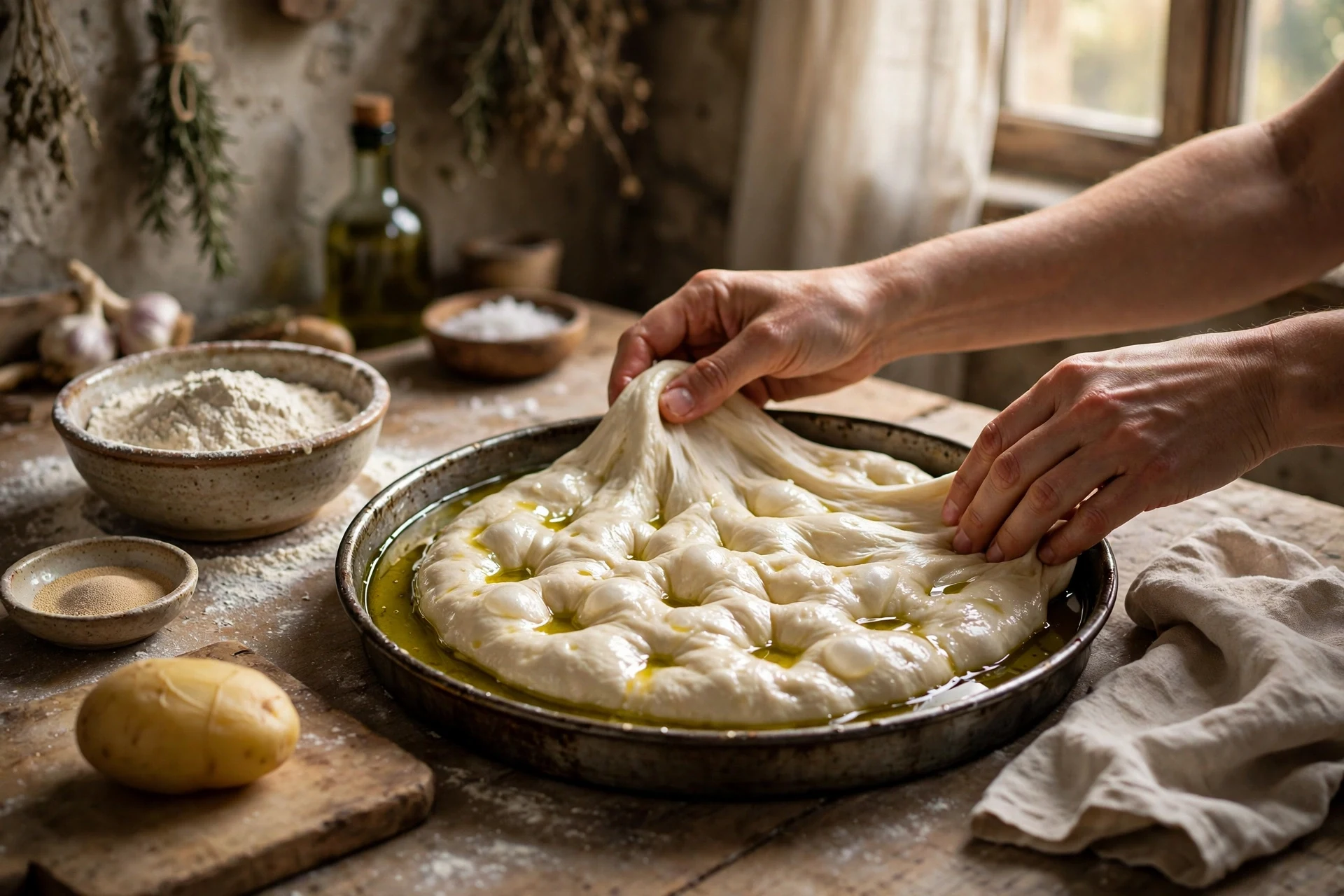
There is a moment in every good focaccia bake when the kitchen smells like olive oil and roasted tomatoes, and everyone in the house starts drifting toward the oven. Focaccia Barese does that better than almost any bread I know. It is soft in the middle, crisp underneath, and the tomatoes bake right into the surface so every bite tastes like Bari.
The secret is the potato in the dough. It keeps the crumb soft for hours after baking, while the semolina gives the bread its structure and the olive oil in the pan fries the bottom into a golden crust. This list takes that one dough and turns it into 22 different focaccias, from the classic tomato and olive to a breakfast version with egg and cheese. Learn the base once, and the rest is just toppings.
Too Long; Didn’t Read
Homemade focaccia Barese is a soft potato-enriched dough made with semolina and type 0 flour, topped with tomatoes, olives, oregano, and olive oil, and baked in a well-oiled round pan at 400F for 25 to 30 minutes. The potato keeps the inside soft, the oil makes the bottom crisp, and the dough needs about two hours to rise plus thirty minutes in the pan. These 22 focaccia Barese ideas all start from the same base dough, so you can change the topping to match the season, the meal, or whatever is in your fridge. Serve it warm, torn into pieces, and do not be shy with the olive oil.
What's Inside This Guide
ToggleThe Bread That Brought Everyone Into the Kitchen
The first time I made focaccia Barese, I followed the recipe exactly and still got it wrong in one small way. I was too shy with the olive oil in the pan. The top looked perfect, golden and bubbling with tomatoes, but the bottom was pale and soft, and the whole thing stuck to the pan in a way that made slicing it a rescue mission. It still tasted good, and it still disappeared in twenty minutes, but I knew it could be better.
The next time, I poured the oil like I meant it. The dough slid into the pan, the oil pooled around the edges, and when it came out of the oven the bottom was deep gold and crisp enough to hear. My family tore into it standing up in the kitchen, which is the real test of any bread. That is the whole lesson of focaccia Barese: the oil is not a garnish, it is the method. Get the oil right, give the dough time, and the bread takes care of the rest.
What’s Inside This Guide
Start at the top and work down, or jump to the part you need most.
The 3 Things That Make Focaccia Barese Work
Before you pick a topping, these three things decide almost everything.
1. The potato makes the crumb soft. A boiled and mashed potato in the dough is what separates focaccia Barese from regular focaccia. It holds moisture, keeps the inside tender for hours, and gives the bread its soft, almost pillowy bite. Skip the potato and you still get good focaccia, but you lose the thing that makes this one special. Mash it smooth, let it cool slightly, and mix it in with the flours.
2. The oil in the pan makes the bottom crisp. Focaccia Barese bakes in a generously oiled round pan, and the oil fries the bottom while the top bakes. This is the contrast the whole bread is built on: soft inside, crisp underneath, golden edges. Do not use a light hand here. Pour in 40 to 50 ml of olive oil, tilt the pan so it coats the base, and stretch the dough with oiled hands instead of adding more flour.
3. The tomatoes go on squashed, not sliced neat. Ripe cherry tomatoes pressed into the dough with your hands release their juice across the surface, and that juice keeps the top soft while the edges crisp. Halved tomatoes pressed cut side down work too. The point is contact: the tomato should sit in the dough, not on top of it. Too many tomatoes make the center heavy, so use 200 to 250 g and leave space between them.
Keep those three in mind and every variation below will make sense.
1. Classic Tomato and Olive
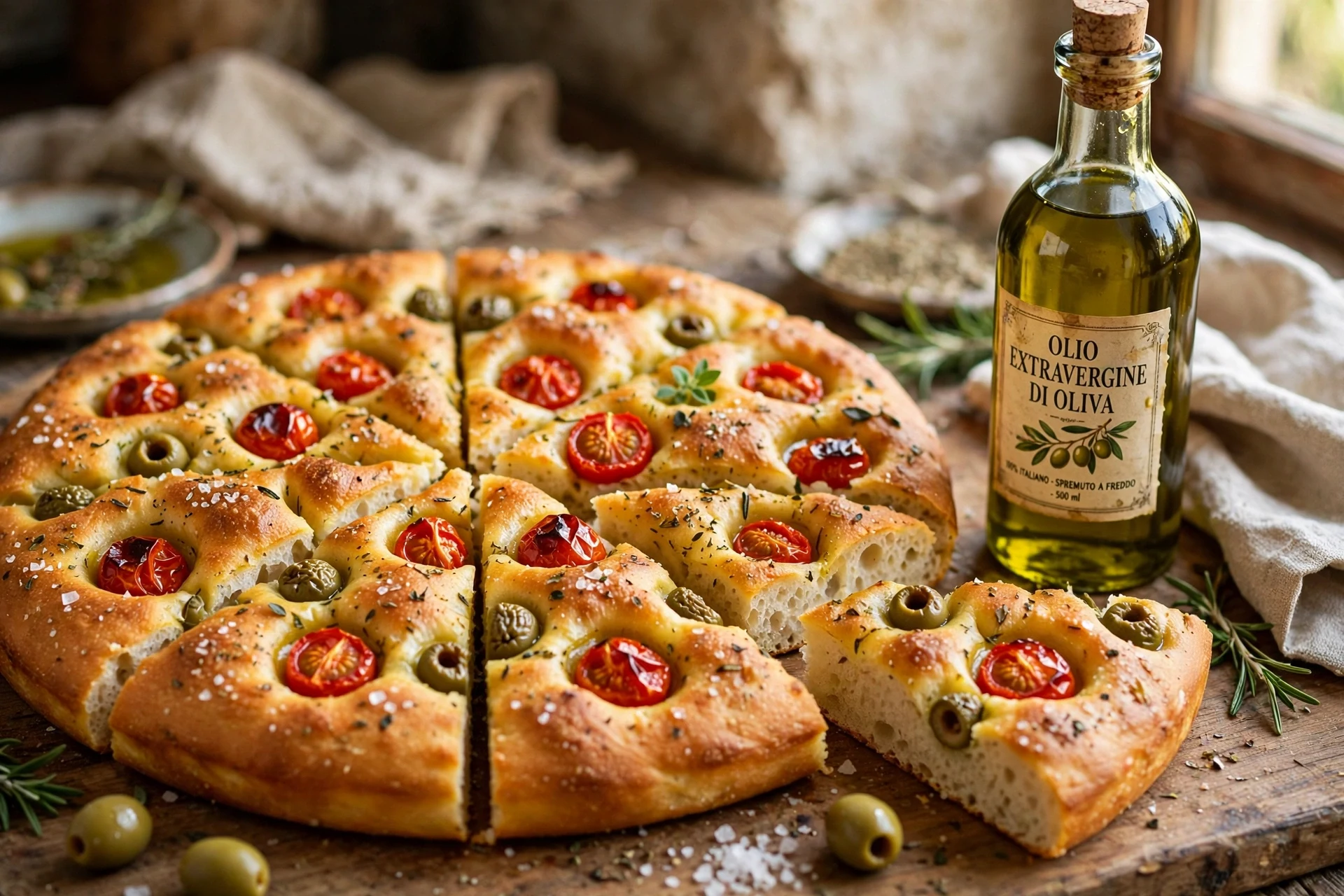
The classic focaccia Barese is tomato, olive, oregano, and olive oil, and it is still the best place to start. The dough is semolina and type 0 flour with mashed potato, yeast, water, salt, and a spoonful of olive oil, kneaded for ten minutes until soft and elastic, then left to rise for about two hours until doubled. Stretch it into a well-oiled round pan, press in cherry tomatoes and green olives, sprinkle oregano and salt, and drizzle with olive oil.
Bake at 400F for 25 to 30 minutes, until the top is golden and the bottom is crisp when you lift an edge with a spatula. Let it cool for five minutes before slicing, because the crumb is still setting, and serve it warm. This is the version to learn first, because every other idea in this list is a change to the topping, not the dough.
Try this: Squash the cherry tomatoes with your hands directly onto the dough so their juice spreads across the surface.
You may also like: 22 Gluten-Free Desserts Nobody Will Guess Are Gluten-Free
2. Cherry Tomato and Oregano
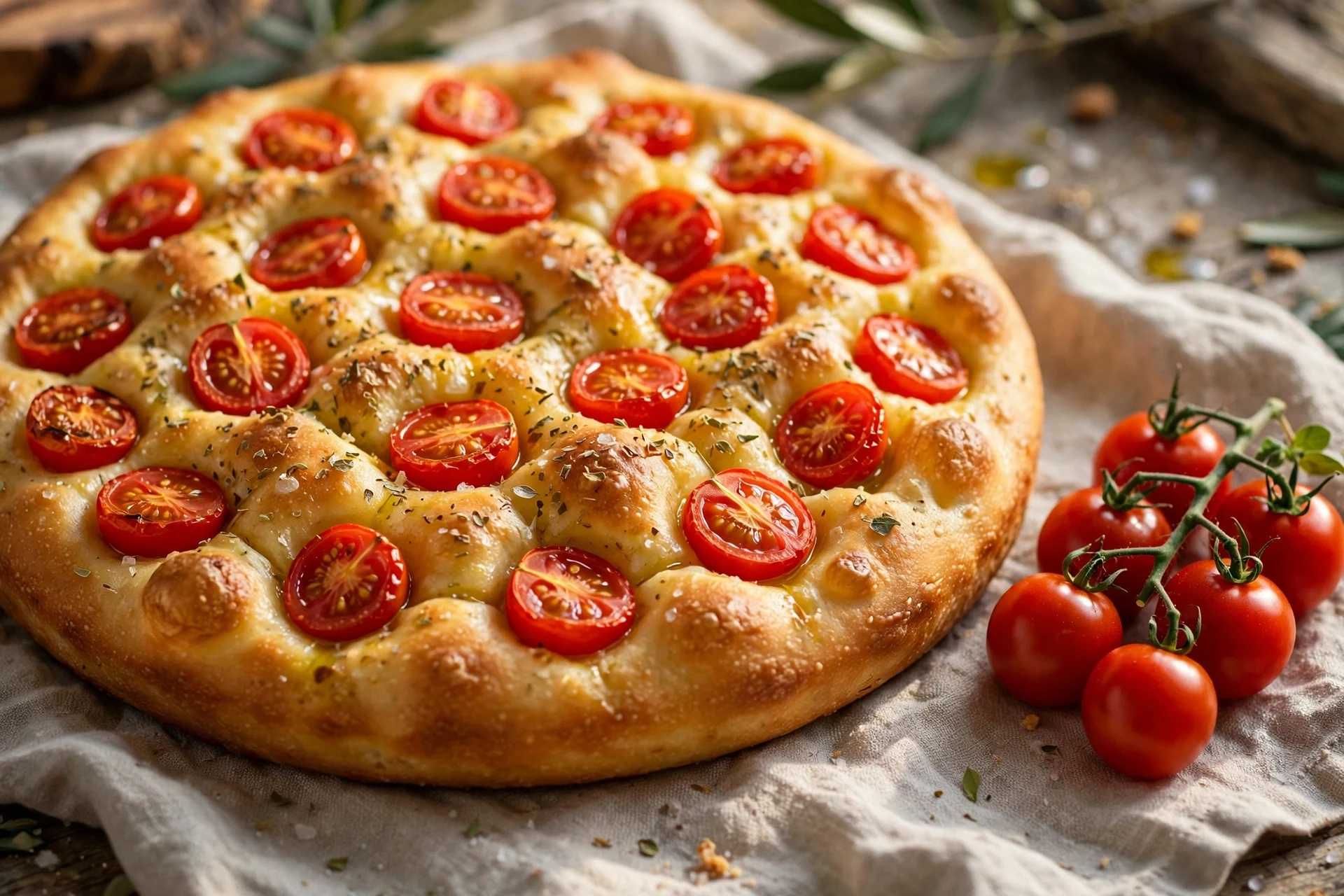
Cherry tomato and oregano focaccia is the classic with the olives left out, and the simplicity is the point. With fewer toppings, the tomato flavor comes forward, sweet and a little jammy where the tomatoes roast into the dough. Use very ripe cherry tomatoes, halved and pressed cut side down, and a generous pinch of dried oregano.
The oregano goes on before baking so it toasts lightly in the oven, and a final drizzle of olive oil after baking wakes it back up. This is the version to make when tomatoes are at their best in summer, and it is the one that disappears fastest at a picnic, because it needs nothing beside it. Serve it at room temperature, torn into pieces.
Try this: Use tomatoes so ripe they are almost too soft to slice, since their juice keeps the top of the focaccia tender.
You may also like: 22 Gluten-Free Desserts Nobody Will Guess Are Gluten-Free
3. Rosemary and Sea Salt
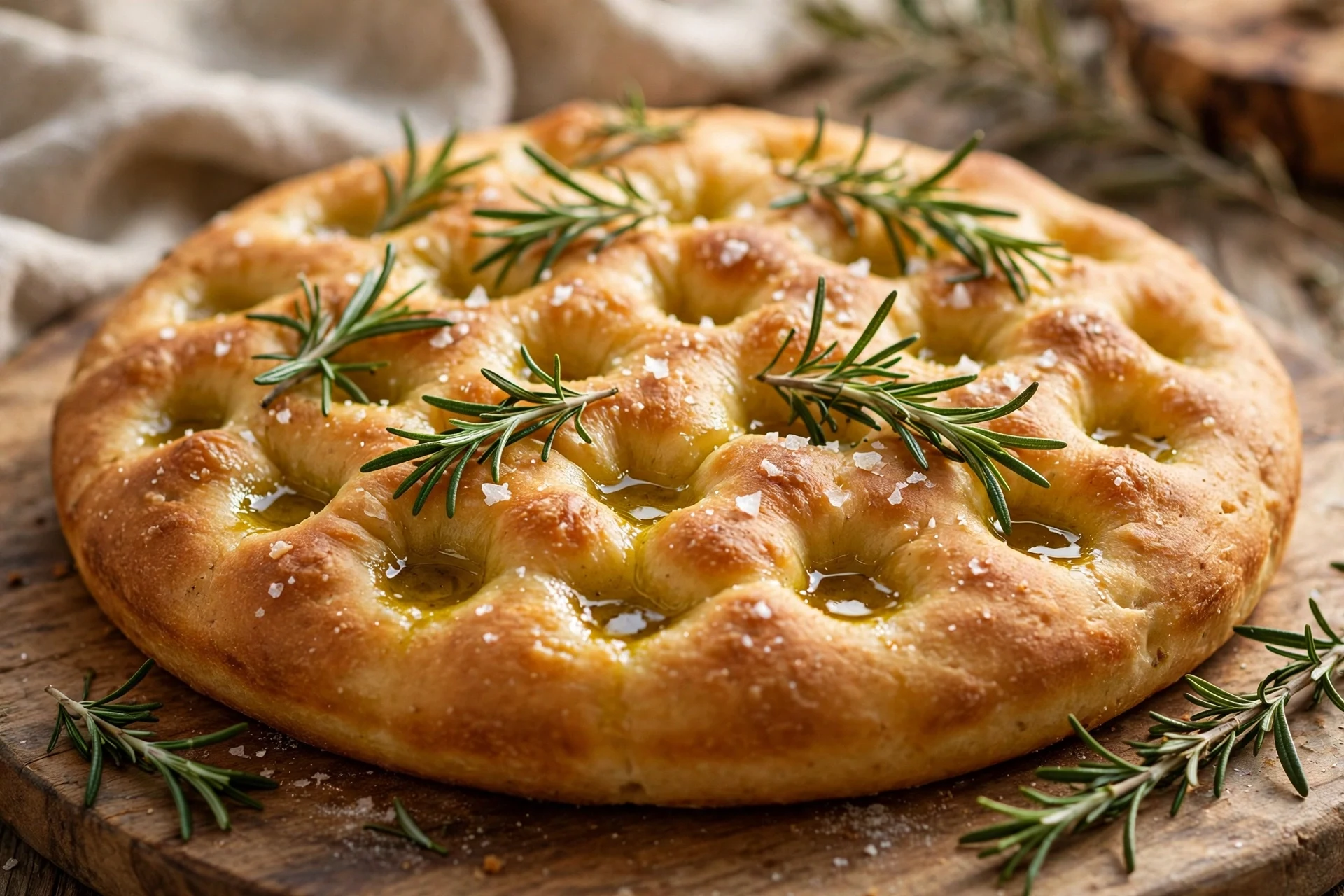
Rosemary and sea salt focaccia is the plainest idea on this list, and it is the one bread lovers ask for by name. There are no tomatoes, no cheese, just the dough, olive oil, fresh rosemary needles, and flaky sea salt. The rosemary toasts in the oven and perfumes the whole loaf, and the salt crunches against the soft crumb.
Press the rosemary sprigs lightly into the dough after the second rise, and use a good olive oil for the final drizzle, because there is nothing here to hide behind. This version is the best one to serve with soup, to use for sandwiches, or to eat warm with nothing at all. It also freezes beautifully, sliced and wrapped, for up to a month.
Try this: Strip the rosemary leaves from the stem and press them into the dough, since whole sprigs can burn at the tips.
You may also like: 22 Gluten-Free Desserts Nobody Will Guess Are Gluten-Free
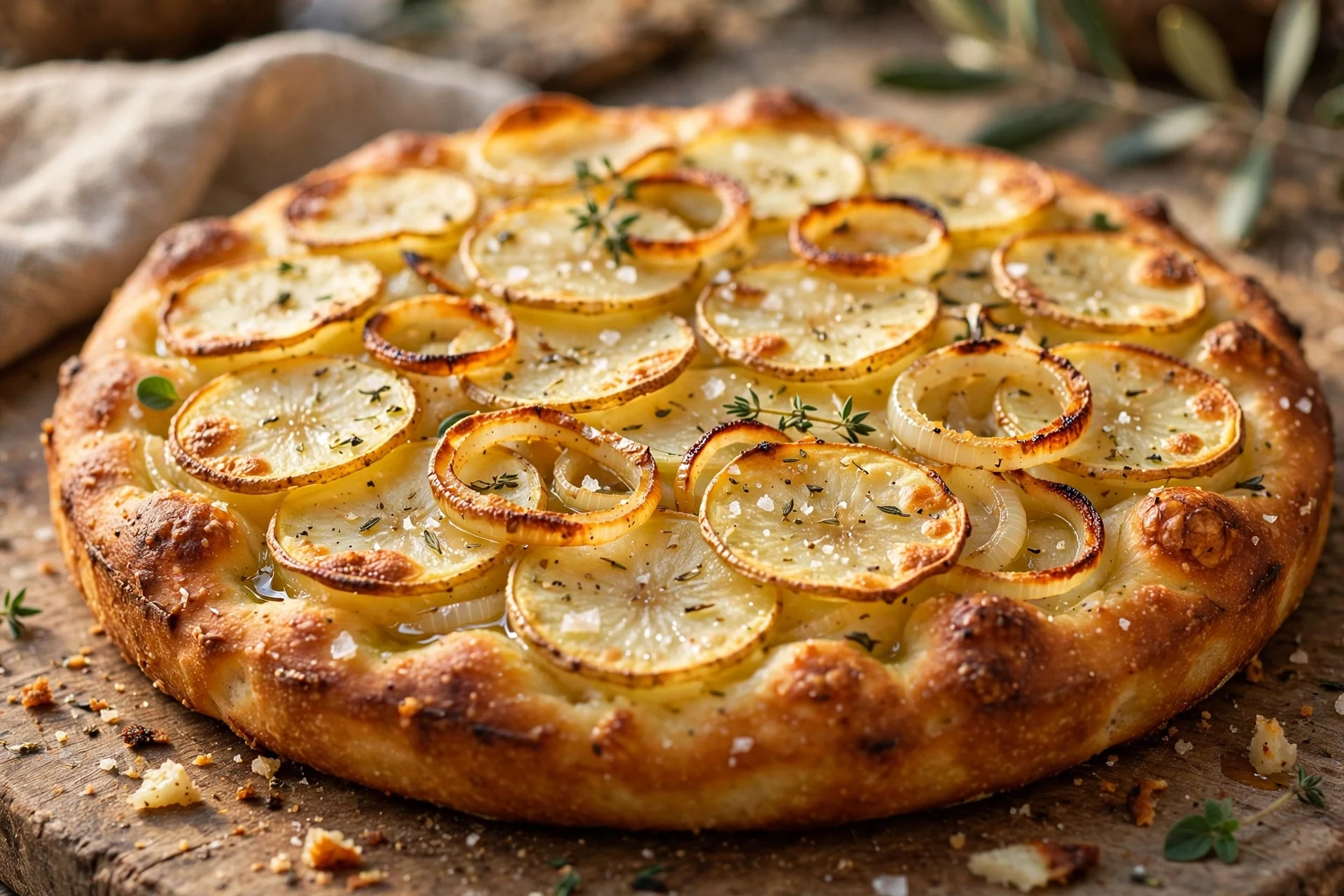
4. Potato and Onion
Potato and onion focaccia doubles down on the potato already in the dough, with thinly sliced potato and sweet onion on top. Slice a waxy potato as thin as you can, toss the slices in olive oil and salt, and lay them across the dough in overlapping rows with thin onion rings. The top crisps like roast potatoes while the inside stays soft.
This is a hearty, filling focaccia, and it works as a meal on its own with a green salad. The onion sweetens as it roasts, and the potato edges go golden and crisp. Bake it a few minutes longer than the classic, since the topping holds more moisture, and check the bottom before you take it out.
Try this: Slice the potato with a mandoline so the slices are paper thin and cook evenly on top of the dough.
You may also like: 17 Cozy Christmas Bedroom Ideas for Magical Winter Nights
5. Cheese and Tomato
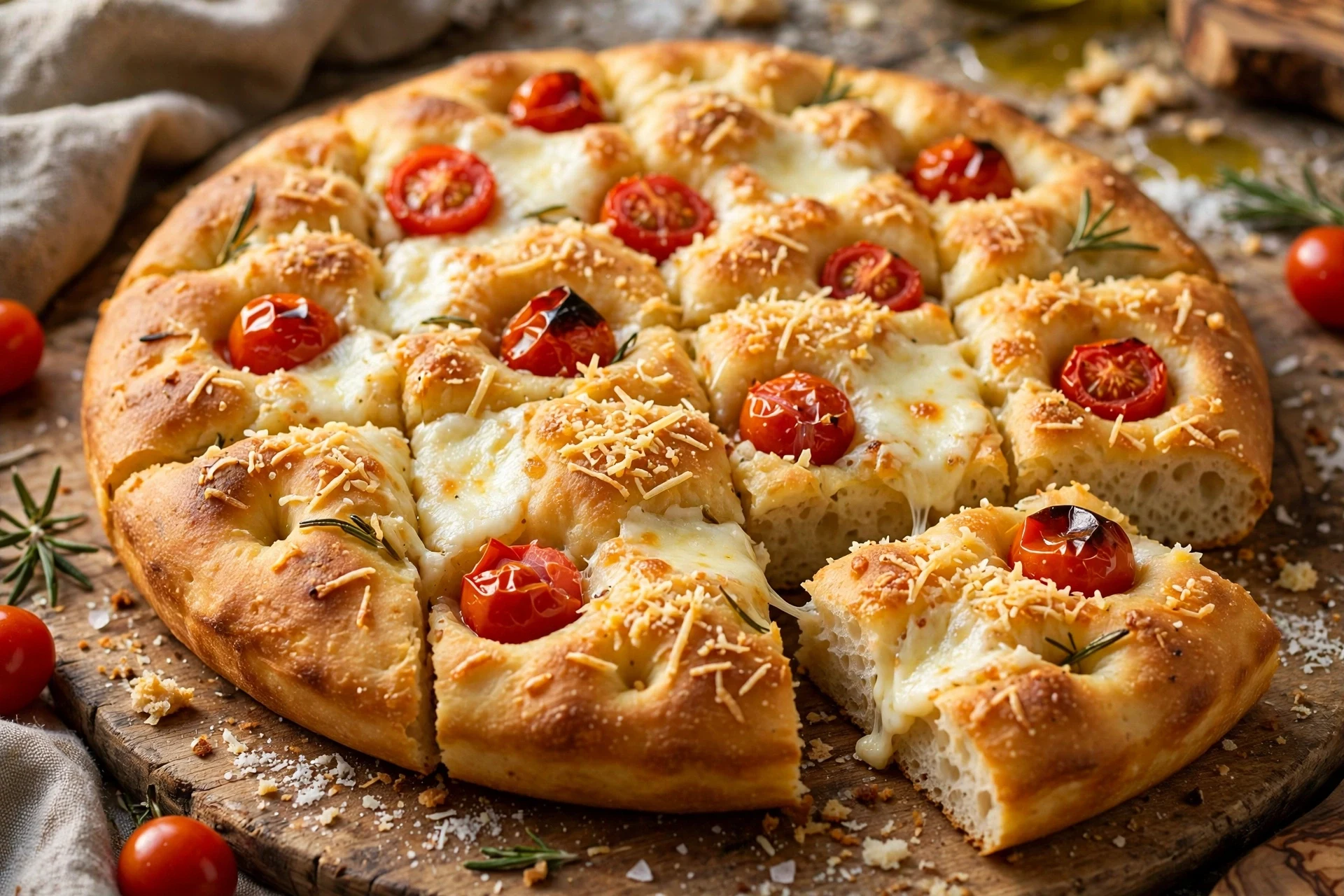
Cheese and tomato focaccia is the closest thing to a pizza this list gets, and it is the version kids ask for first. Shredded mozzarella goes on with the tomatoes, melting into the dough as it bakes, with a little parmesan on top for a golden finish. The cheese makes the top richer and the edges chewier, so serve it hot from the oven.
Keep the cheese layer thin, because too much cheese traps steam and softens the crust. A handful of mozzarella and a spoonful of parmesan is enough. Add the parmesan in the last ten minutes if you want it crisp rather than melted. This is a great party focaccia, cut into small squares for sharing.
Try this: Use low-moisture mozzarella, since fresh mozzarella releases water and can make the center soggy.
You may also like: 22 Gluten-Free Desserts Nobody Will Guess Are Gluten-Free
6. Spicy Salami
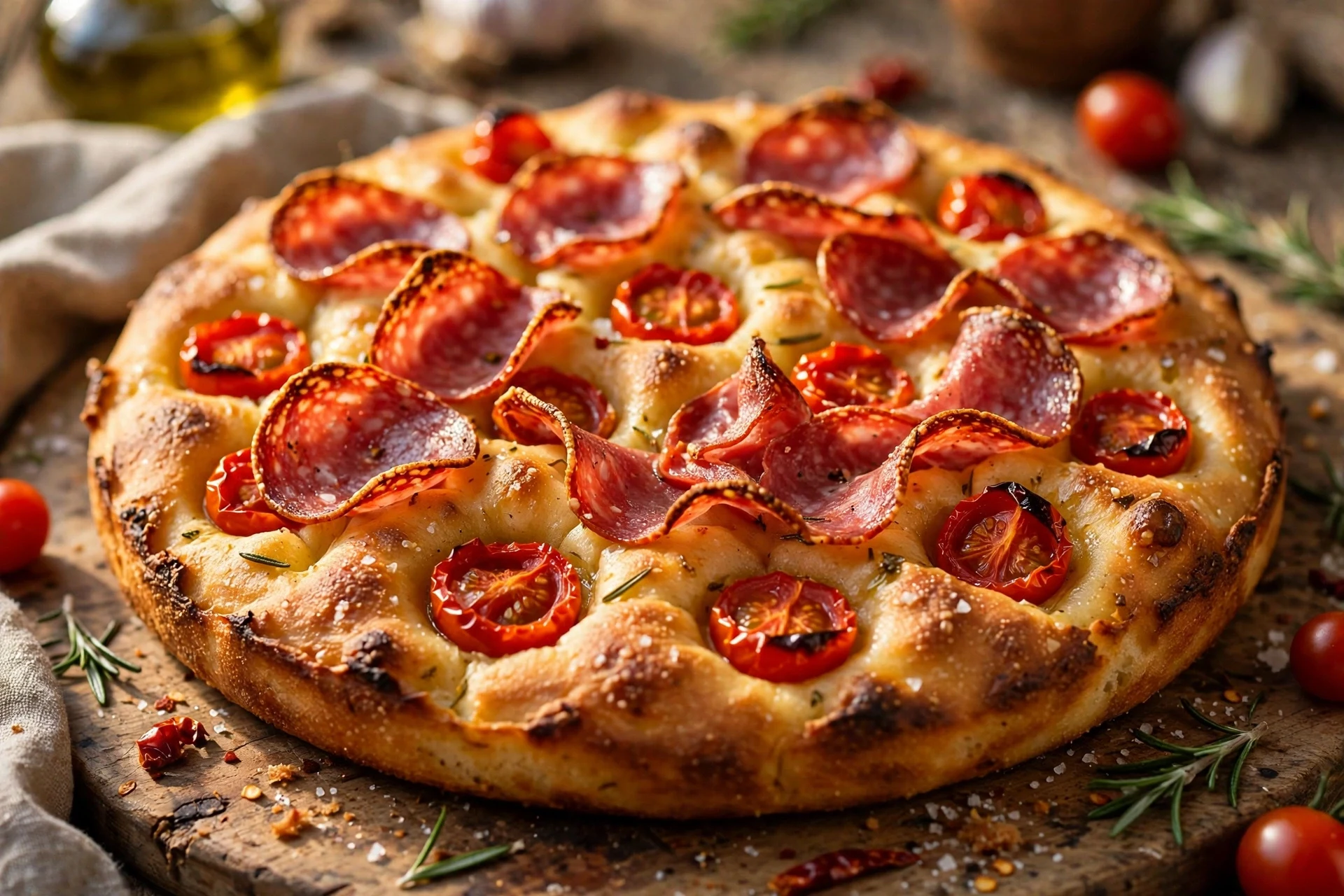
Spicy salami focaccia is for the people who want a little heat with their bread. Thin slices of spicy salami go on the dough with the tomatoes, curling and crisping at the edges as they bake, and their fat seasons the bread underneath. A pinch of chili flakes on top adds more warmth without changing the flavor.
This version is rich, so serve it in smaller pieces, with something fresh beside it like a tomato salad or a bowl of olives. The salami works best when it is sliced thin, because thick slices stay chewy instead of crisping. It is a good choice for a game night or a casual dinner, and it is even better the next day, reheated in the oven.
Try this: Tuck the salami slices slightly into the dough so they do not dry out in the oven.
You may also like: 22 Gluten-Free Desserts Nobody Will Guess Are Gluten-Free
7. Zucchini and Parmesan
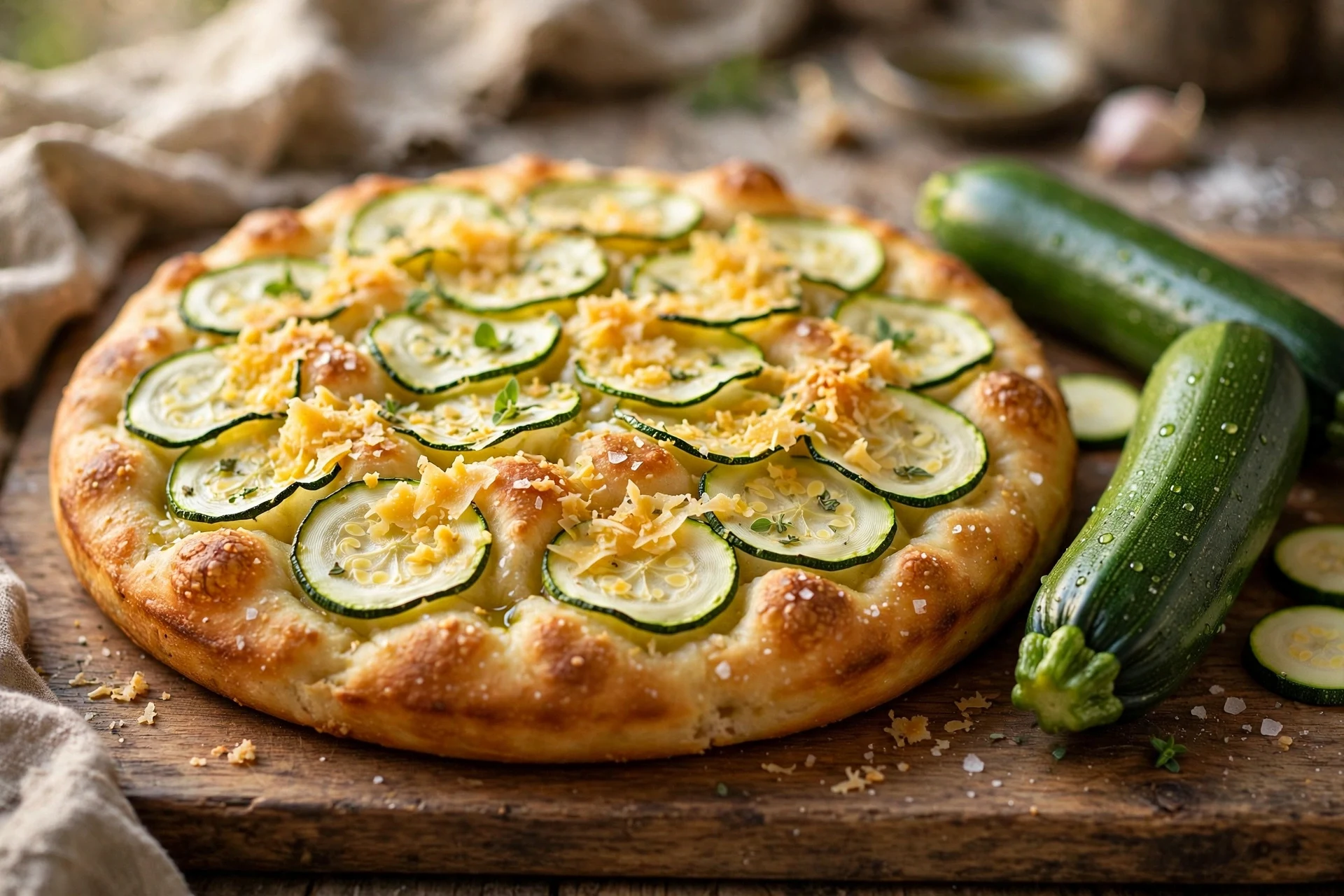
Zucchini and parmesan focaccia is light, fresh, and perfect for summer, when zucchini is everywhere. Slice the zucchini thin, salt it for ten minutes, and pat it dry, then lay it across the dough with a generous shower of parmesan. The zucchini softens as it bakes, and the parmesan crisps into a golden crust on top.
Salting and drying the zucchini matters, because wet zucchini makes the focaccia soggy. This is a gentle, delicate focaccia, and it pairs beautifully with a simple salad and a glass of white wine. Serve it warm, and use a sharp knife to slice it, since the topping can drag if the knife is dull.
Try this: Salt the zucchini slices for ten minutes and pat them dry before topping, so the focaccia stays crisp.
You may also like: 22 Gluten-Free Desserts Nobody Will Guess Are Gluten-Free
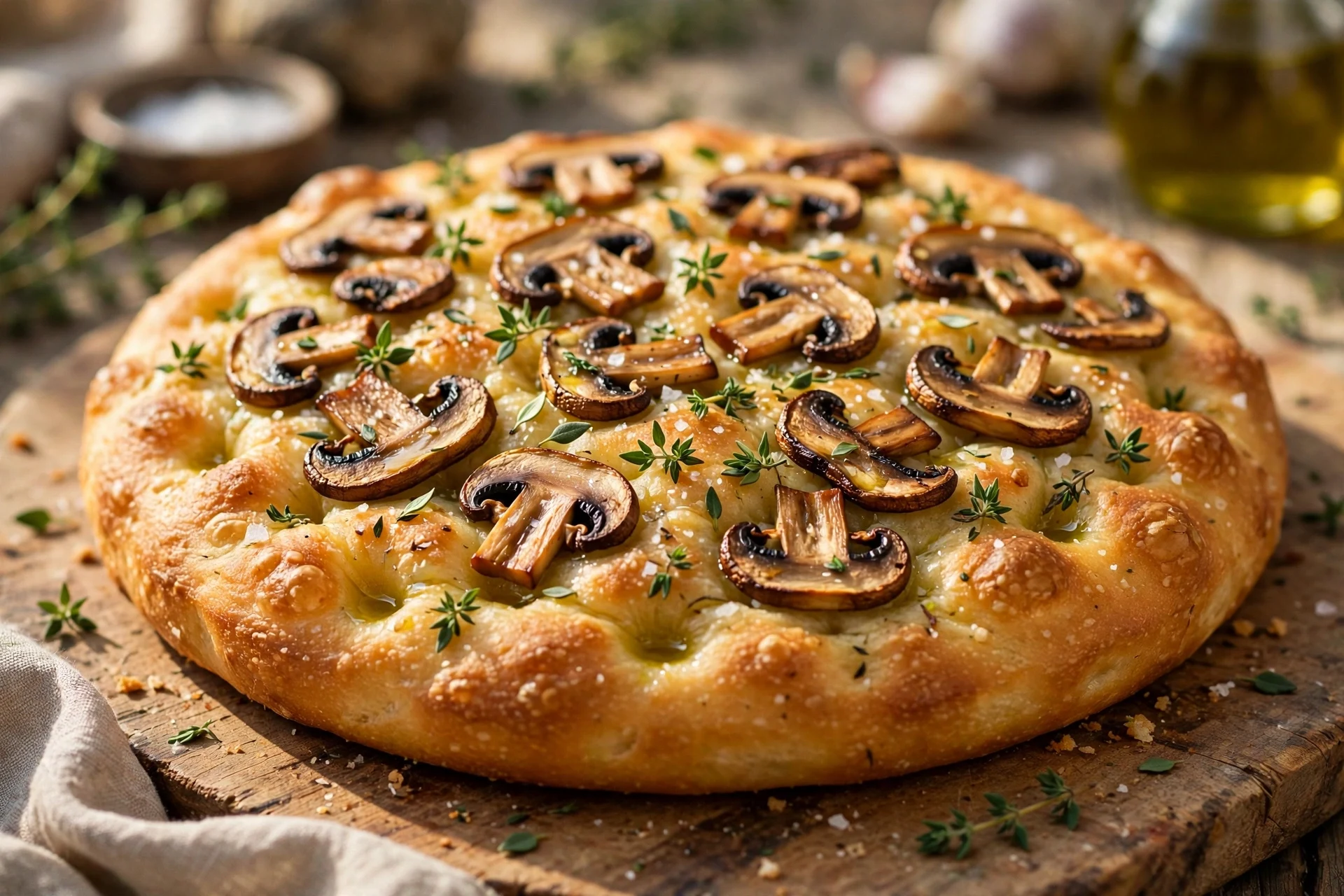
8. Mushroom and Thyme
Mushroom and thyme focaccia tastes like autumn, even in the middle of summer. Slice mushrooms thin, cook them quickly in a hot pan with olive oil until their water is gone, then scatter them over the dough with fresh thyme leaves. The mushrooms roast into the bread, and the thyme gives it an earthy, savory smell.
Cooking the mushrooms first is the key step, because raw mushrooms release water in the oven and make the top soggy. This version is wonderful with a bowl of soup, and it makes a great base for a sandwich the next day. Add a little parmesan if you want it richer, or keep it plain and let the mushrooms speak.
Try this: Cook the mushrooms in a hot dry pan first until their water evaporates, then add the oil.
You may also like: 17 Cozy Christmas Bedroom Ideas for Magical Winter Nights
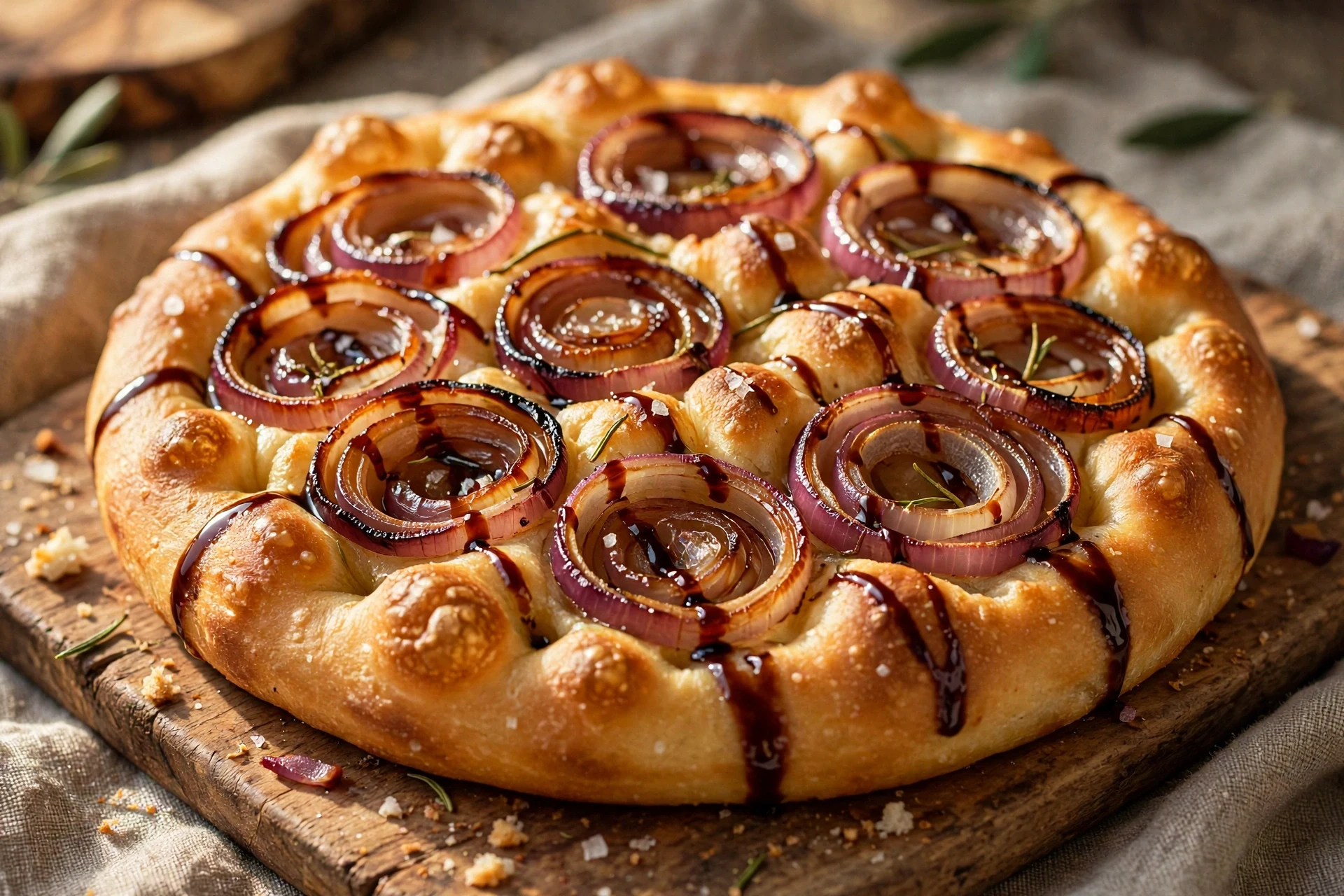
9. Red Onion and Balsamic
Red onion and balsamic focaccia is sweet, tangy, and a little bit fancy, without any extra work. Thin red onion rings go on the dough with a drizzle of balsamic vinegar, and as they bake the onion softens and sweetens while the balsamic reduces into a sticky glaze. A sprinkle of sea salt finishes it.
This is one of the prettiest focaccias on the list, with deep purple onion against the golden bread. It pairs well with strong cheese, so serve it with a wedge of parmesan or a soft goat cheese on the side. Keep the balsamic light, a thin drizzle, since too much makes the top wet.
Try this: Soak the onion rings in cold water for ten minutes first, so they lose their sharp bite before baking.
You may also like: 22 Gluten-Free Desserts Nobody Will Guess Are Gluten-Free
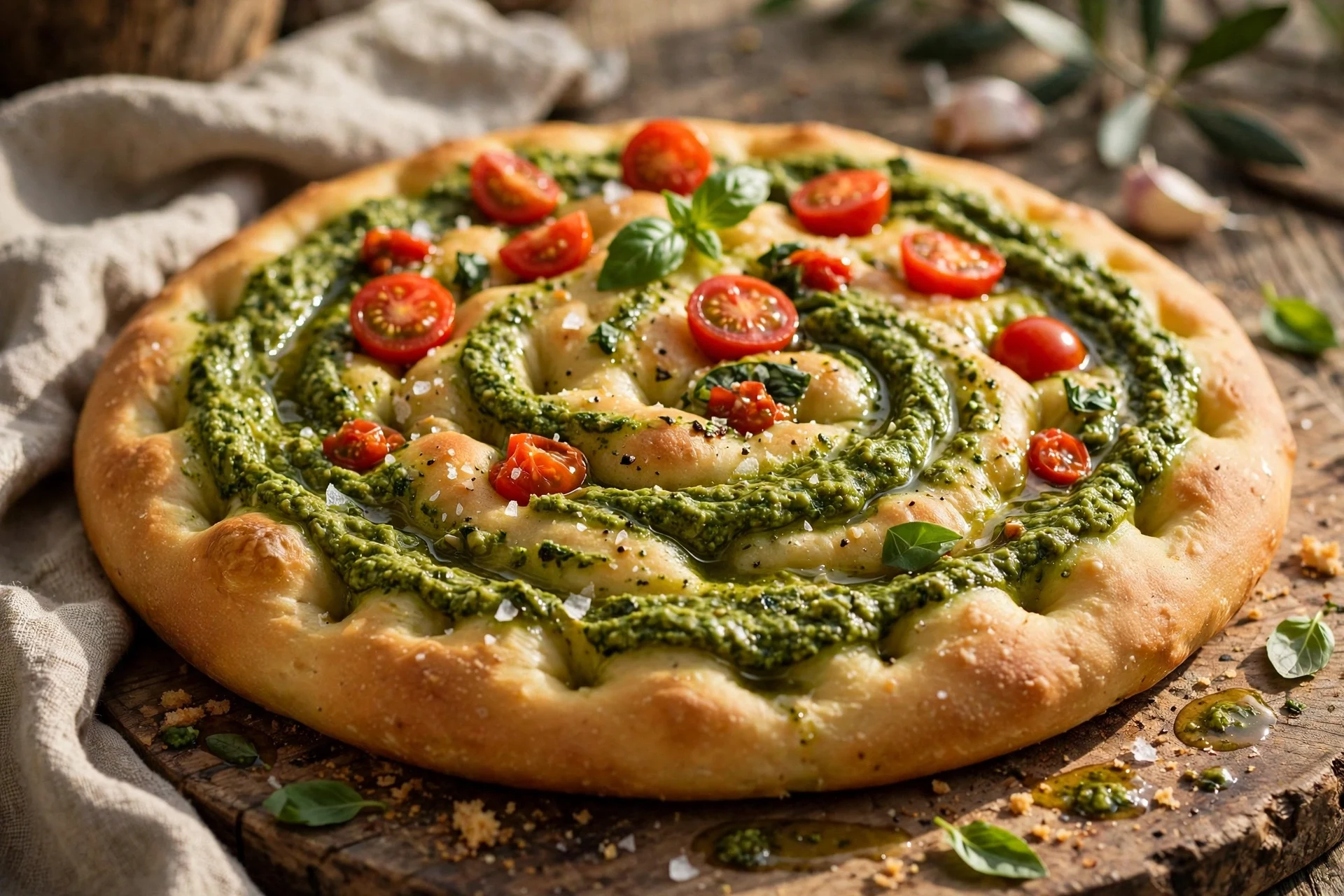
10. Pesto Swirl
Pesto swirl focaccia takes the classic dough and swirls green pesto through the top before baking, so every slice has ribbons of basil, garlic, and parmesan. Spread the dough in the pan, spoon the pesto over the top in lines, and drag a knife through it to make the swirl. Add a few cherry tomatoes if you like, or leave it plain.
The pesto darkens slightly in the oven, so use a little more than you think you need, and add a fresh spoonful on top after baking for bright color. This version is a crowd favorite at parties, cut into strips for dipping, and it is one of the easiest variations to make, since the pesto does all the flavor work.
Try this: Drag a butter knife through the pesto lines in one direction only, so the swirl stays defined instead of turning muddy.
You may also like: 22 Gluten-Free Desserts Nobody Will Guess Are Gluten-Free
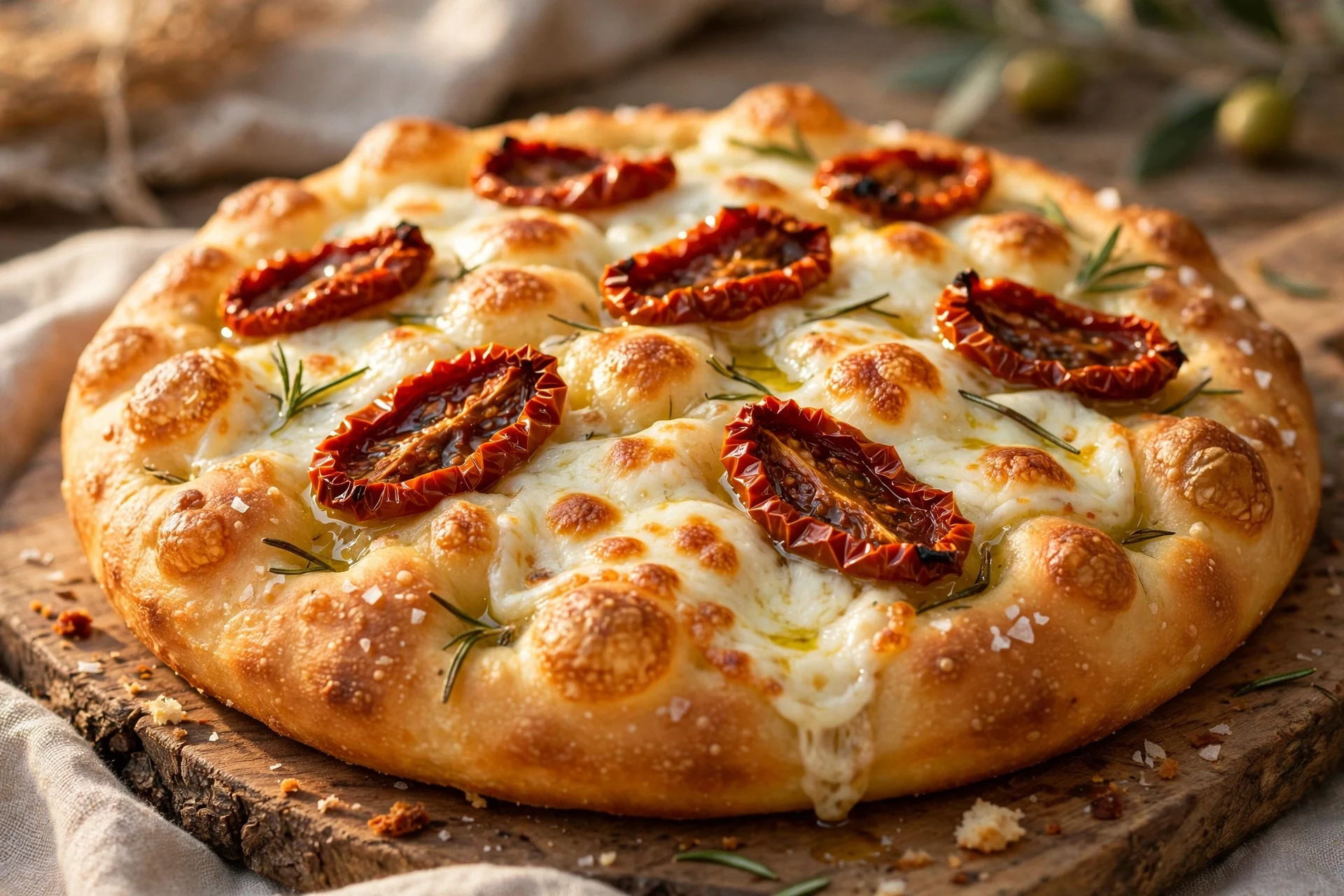
11. Sun-Dried Tomato and Mozzarella
Sun-dried tomato and mozzarella focaccia is the winter version of the classic, made for the months when fresh tomatoes are pale and disappointing. Sun-dried tomatoes are sweet, chewy, and intensely flavored, and they pair perfectly with melted mozzarella. Chop the tomatoes, scatter them over the dough with torn mozzarella, and bake until the cheese bubbles.
Because sun-dried tomatoes are already soft, they do not need the squashing step, and they will not make the focaccia wet. Use the oil-packed kind, drained well, and save a spoonful of their oil for the final drizzle. This is a rich, savory focaccia, and it makes a great lunch with a simple green salad.
Try this: Drain oil-packed sun-dried tomatoes well and pat them dry, so they do not make the top greasy.
You may also like: 22 Gluten-Free Desserts Nobody Will Guess Are Gluten-Free
12. Olive and Feta
Olive and feta focaccia is salty, tangy, and very Mediterranean. Kalamata olives and crumbled feta go on the dough together, and as they bake the feta softens into creamy pockets while the olives turn slightly wrinkled and intense. A little lemon zest on top after baking brightens the whole thing.
This version needs almost no extra salt, since the olives and feta bring plenty. Serve it warm with a cucumber salad, or cut it into small pieces for a mezze table. It is also one of the best focaccias to eat at room temperature, so it travels well to picnics and potlucks.
Try this: Add the lemon zest after baking, not before, so it stays bright and fresh.
You may also like: 17 Cozy Christmas Bedroom Ideas for Magical Winter Nights
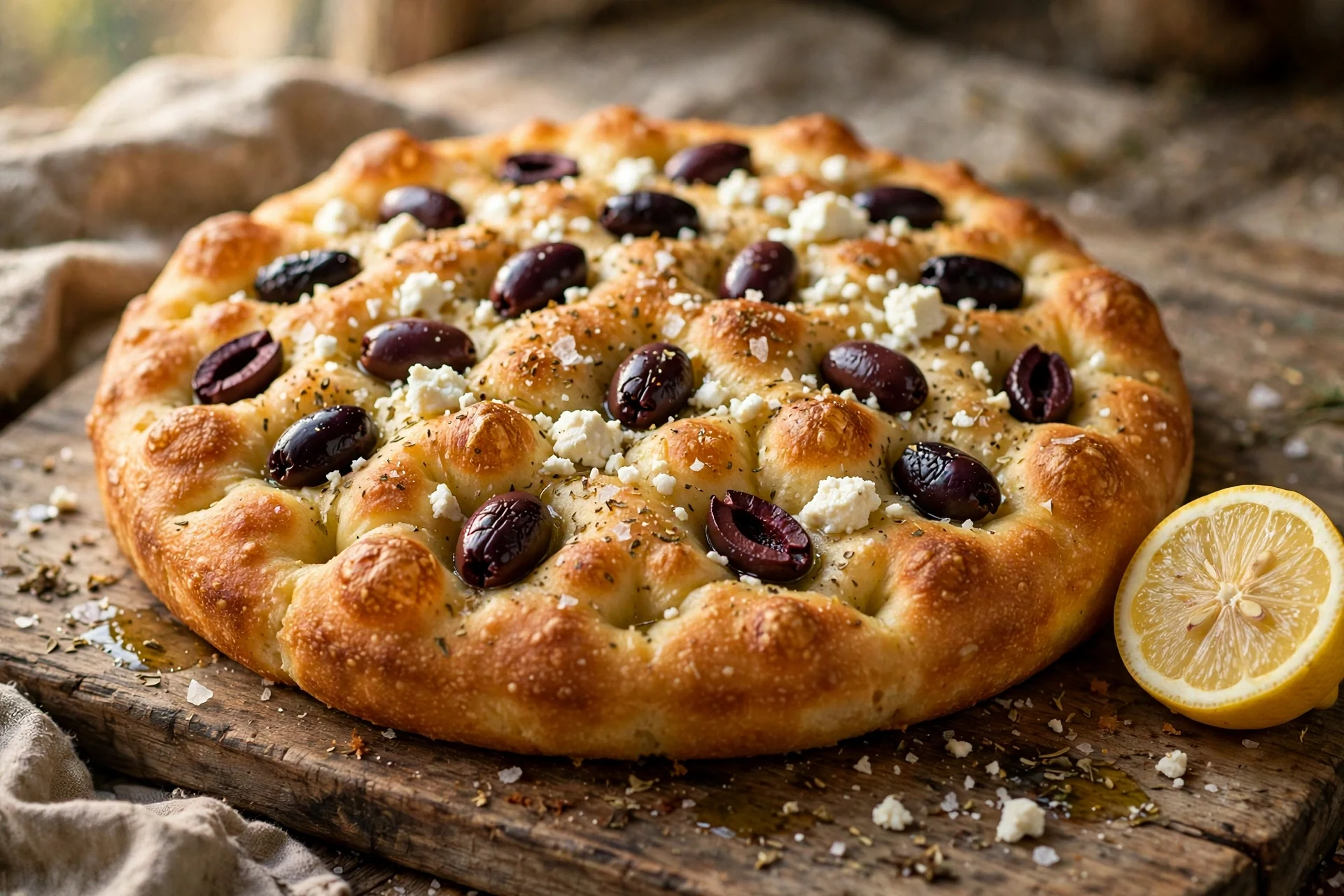
13. Garlic and Herb Butter
Garlic and herb butter focaccia is the one to make when you want the house to smell amazing. Roast a head of garlic until soft, mash it into softened butter with chopped parsley and thyme, and spread it over the dough before baking. The butter melts into the bread, and the garlic turns sweet and mellow in the oven.
This is the best focaccia for tearing and dipping, especially with soup or a bowl of olive oil. Keep the garlic layer thin, since too much butter makes the top greasy, and use fresh herbs rather than dried, because they hold up better in the heat. It is simple, rich, and very hard to stop eating.
Try this: Roast the garlic head whole until soft, then squeeze the cloves out and mash them into the butter.
You may also like: 22 Gluten-Free Desserts Nobody Will Guess Are Gluten-Free
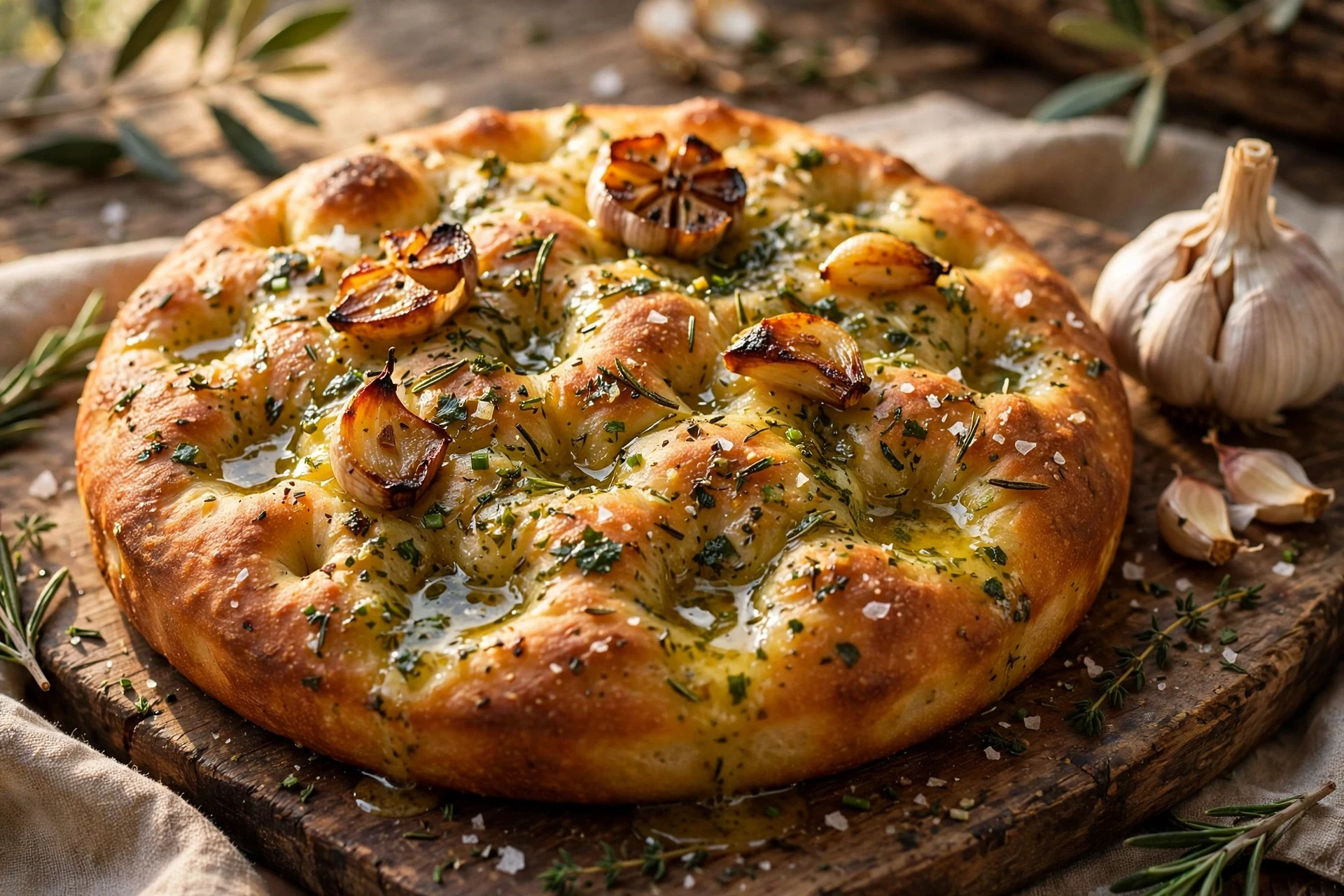
14. Fig and Gorgonzola
Fig and gorgonzola focaccia is sweet, salty, and a little bit special, the one to make when guests are coming. Fresh figs, halved, go on the dough with crumbled gorgonzola, and a drizzle of honey after baking ties it together. The figs soften and sweeten in the oven, and the cheese melts into creamy, tangy pockets.
This version is rich, so cut it into small pieces and serve it as a starter or with a glass of wine. Dried figs work too if fresh figs are out of season, just soak them in warm water for ten minutes first. It is the most elegant focaccia on this list, and it takes no more work than the classic.
Try this: Drizzle the honey after baking, while the focaccia is still warm, so it runs into the cracks.
You may also like: 17 Cozy Christmas Bedroom Ideas for Magical Winter Nights
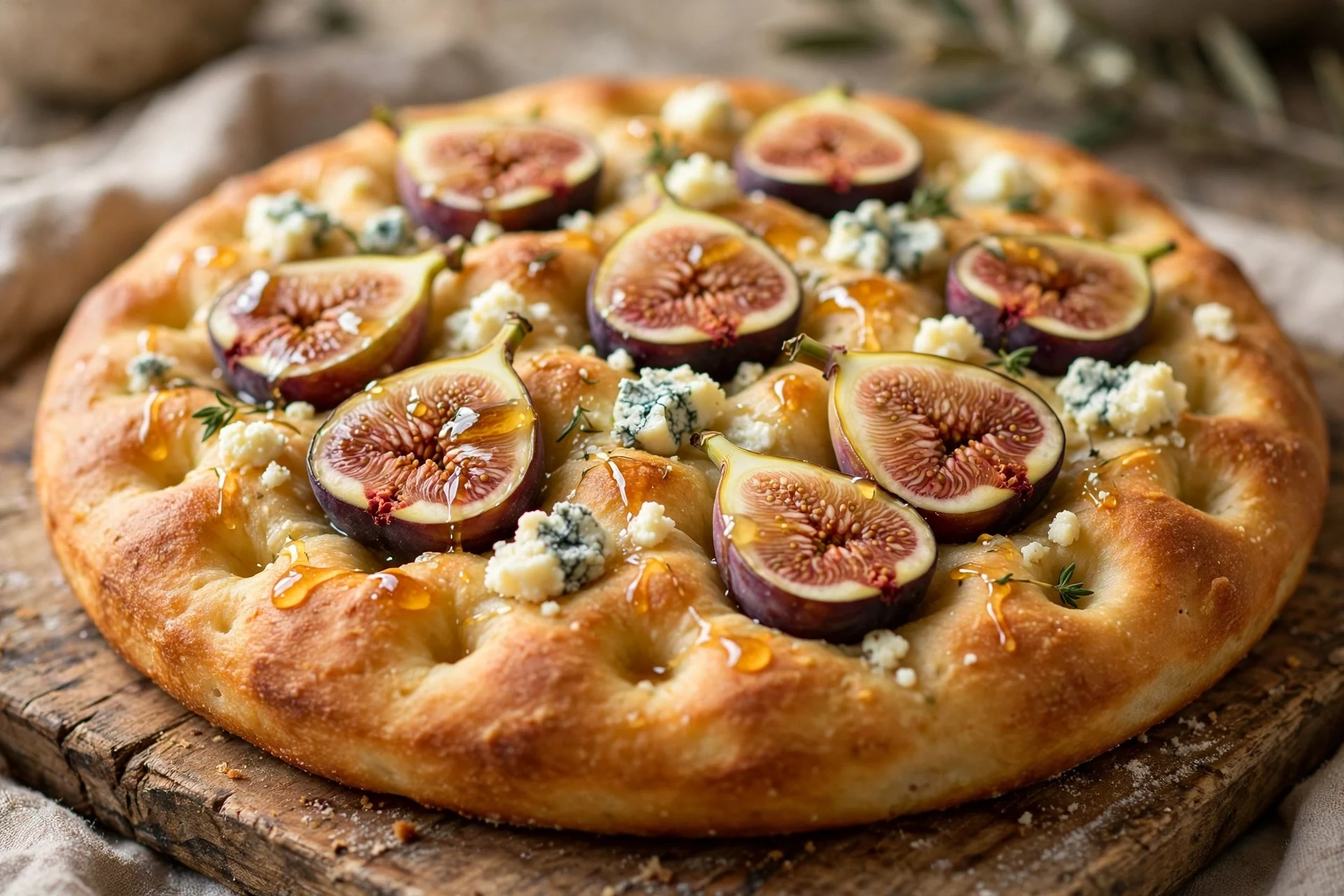
15. Asparagus and Lemon
Asparagus and lemon focaccia is spring on a plate. Thin asparagus spears go on the dough in neat rows, with lemon zest and a little parmesan, and they roast just enough to stay bright green and slightly crisp. The lemon keeps the whole thing fresh, and the parmesan adds a salty finish.
Use thin asparagus, since thick spears stay raw in the middle while the bread bakes. Snap off the woody ends, toss the spears in olive oil, and lay them across the dough. This is a light, pretty focaccia, and it works beautifully at a spring lunch or a brunch table.
Try this: Use thin asparagus spears and toss them in olive oil first, so they roast evenly instead of drying out.
You may also like: 22 Gluten-Free Desserts Nobody Will Guess Are Gluten-Free
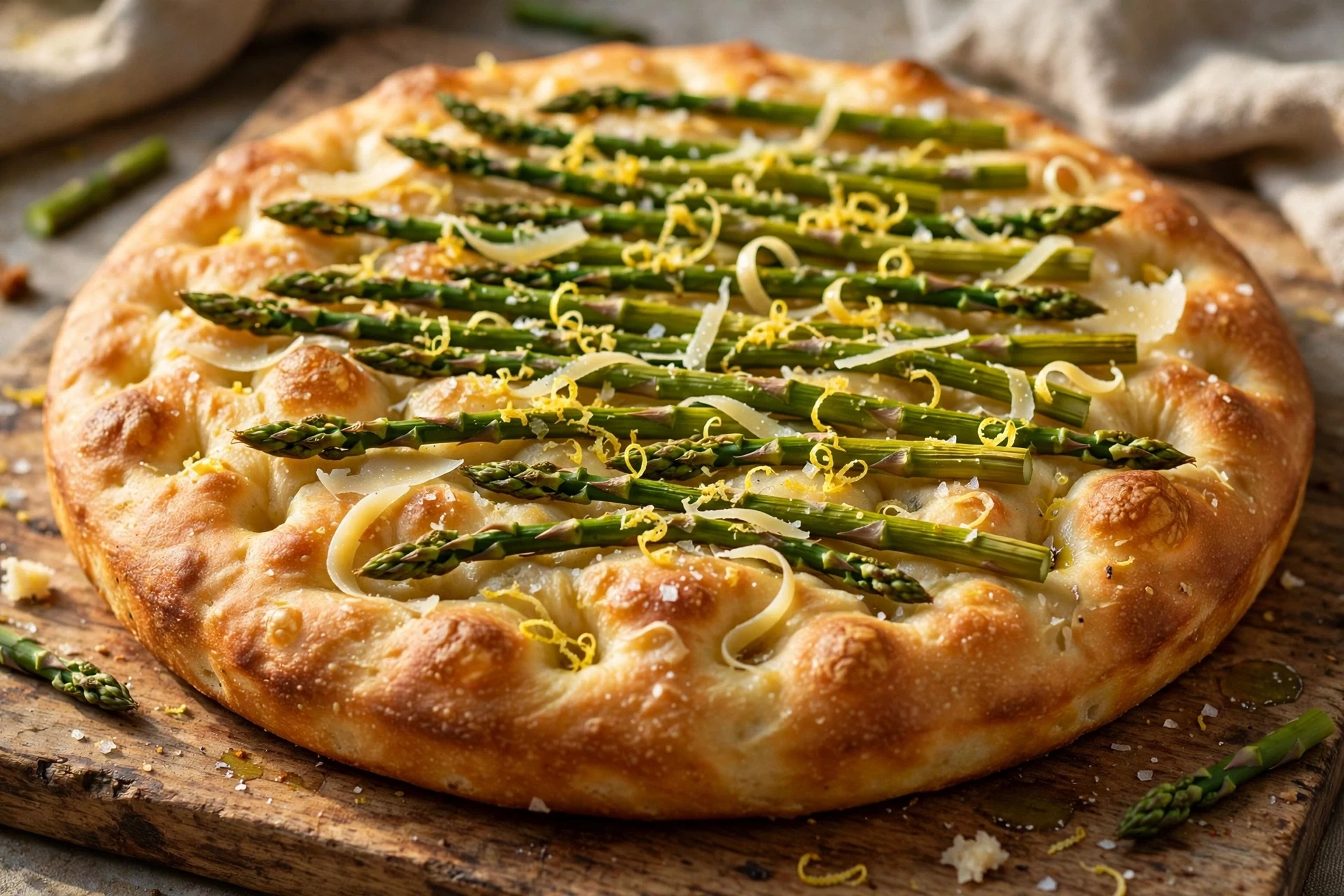
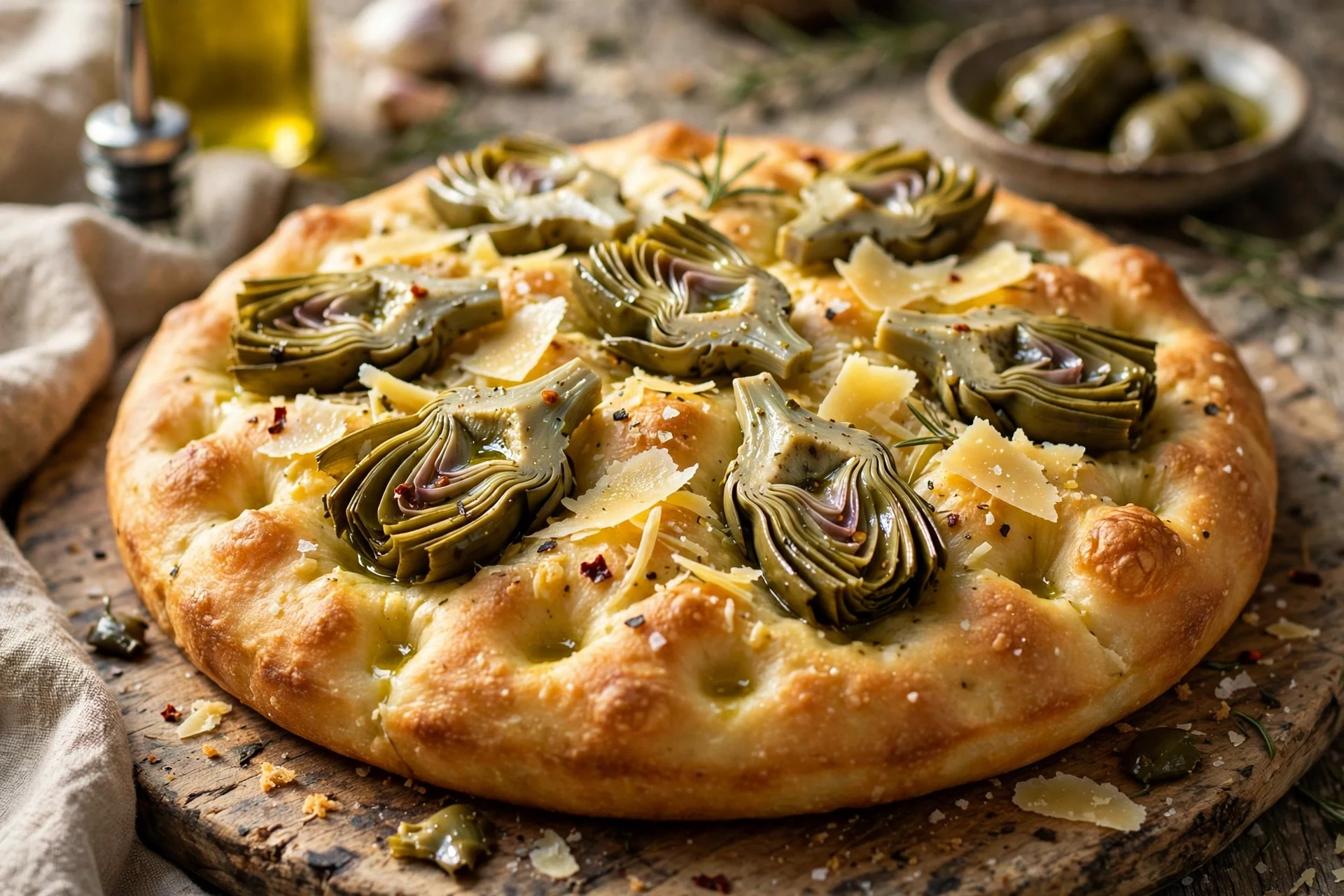
16. Artichoke and Parmesan
Artichoke and parmesan focaccia is savory, a little bit fancy, and very satisfying. Marinated artichoke hearts, drained and halved, go on the dough with a generous layer of parmesan, and they bake into tender, tangy bites against the crisp bread. A little black pepper on top finishes it.
Drain the artichokes well, since the marinade oil can make the top greasy. This version is great for a lunch table, cut into squares, and it pairs well with a simple tomato salad. It is also one of the best focaccias to make ahead, since it holds its flavor at room temperature for hours.
Try this: Pat the artichoke hearts dry with a paper towel before topping, so the marinade does not pool on the dough.
You may also like: 17 Cozy Christmas Bedroom Ideas for Magical Winter Nights
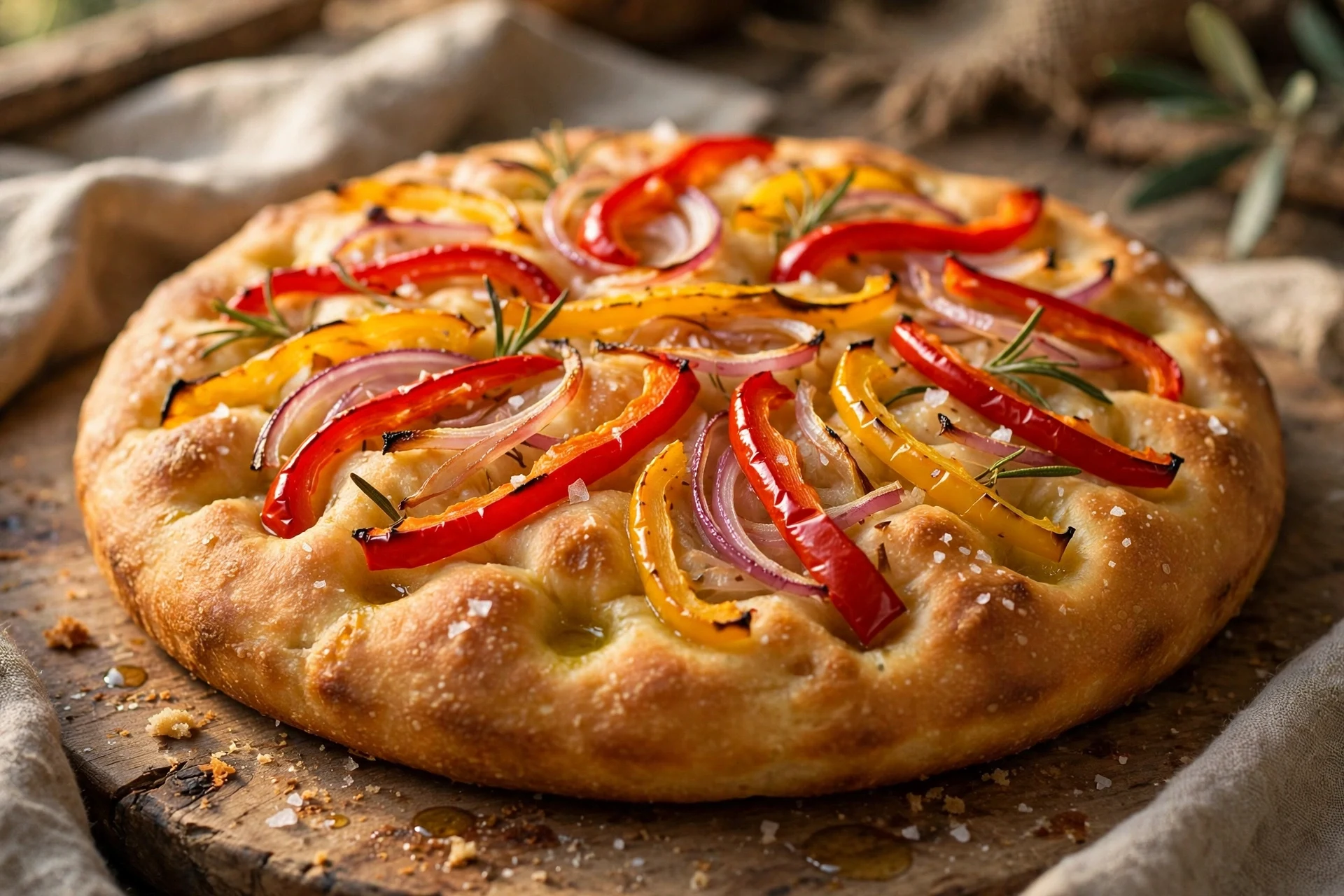
17. Sweet Pepper and Onion
Sweet pepper and onion focaccia is colorful, sweet, and very forgiving. Thin strips of red and yellow pepper go on the dough with sliced onion, and they roast into soft, sweet ribbons that contrast beautifully with the crisp bread. A pinch of oregano and a drizzle of olive oil finish it.
This is a great focaccia for using up peppers from the fridge, and it looks so pretty that it works as a centerpiece on the table. The peppers release a little water, so keep the layer thin and bake it on the lowest oven shelf, where the bottom gets the most heat. Serve it warm or at room temperature.
Try this: Slice the peppers thin and keep the layer light, so they roast instead of steaming on top of the dough.
You may also like: 22 Gluten-Free Desserts Nobody Will Guess Are Gluten-Free
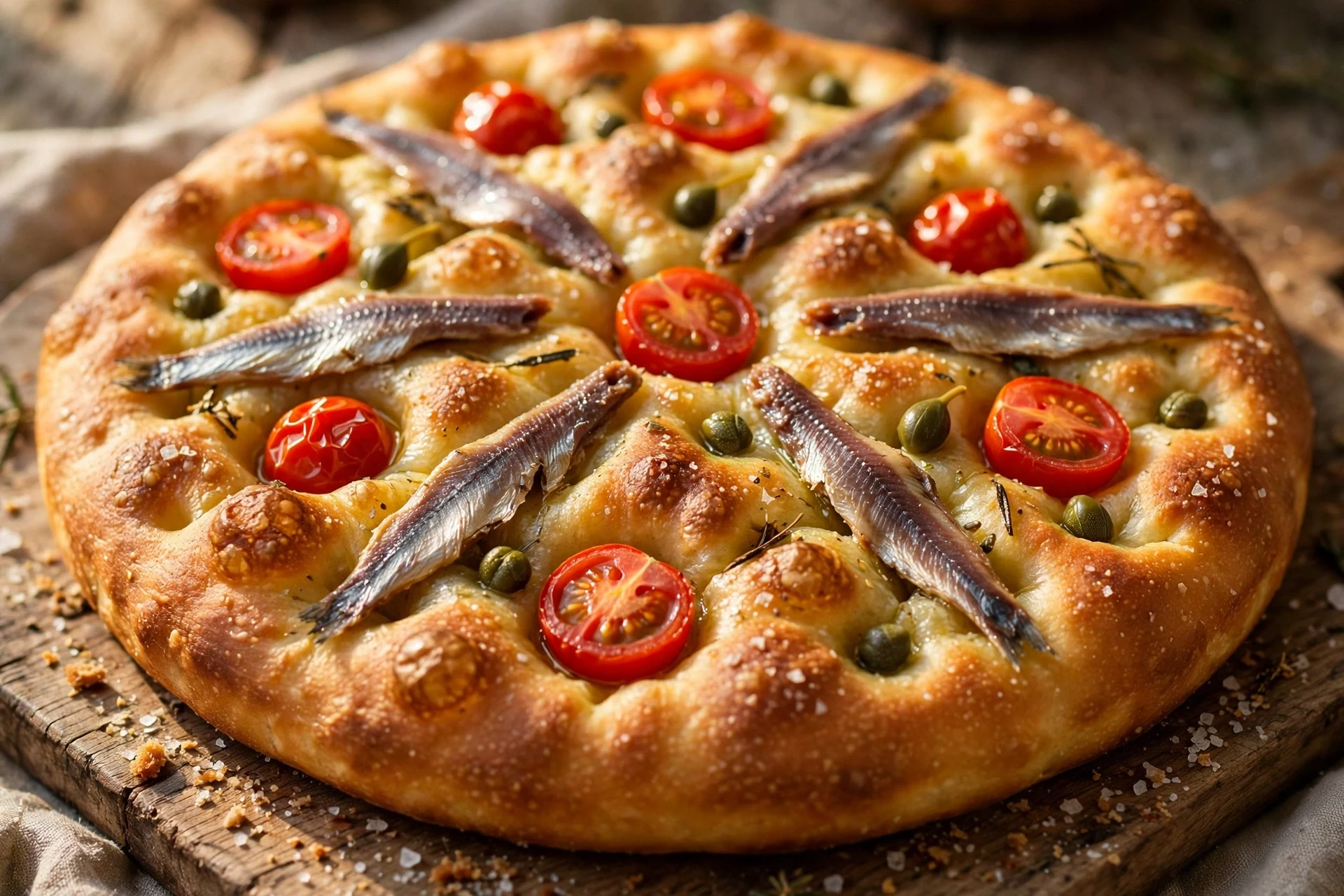
18. Anchovy and Caper
Anchovy and caper focaccia is the boldest flavor on this list, salty and briny in the best way. A few anchovy fillets laid across the dough melt into the bread as it bakes, and capers add little bursts of tang. Tomatoes on top balance the salt, and a little oregano ties it together.
Use fewer anchovies than you think you need, because their flavor spreads through the whole loaf. This is a grown-up focaccia, and it is wonderful with a cold beer or a glass of white wine. If you are nervous about anchovies, try it once with just four fillets, and you will see how they disappear into the bread.
Try this: Rinse the anchovies briefly and pat them dry, so they season the bread without making it too salty.
You may also like: 17 Cozy Christmas Bedroom Ideas for Magical Winter Nights
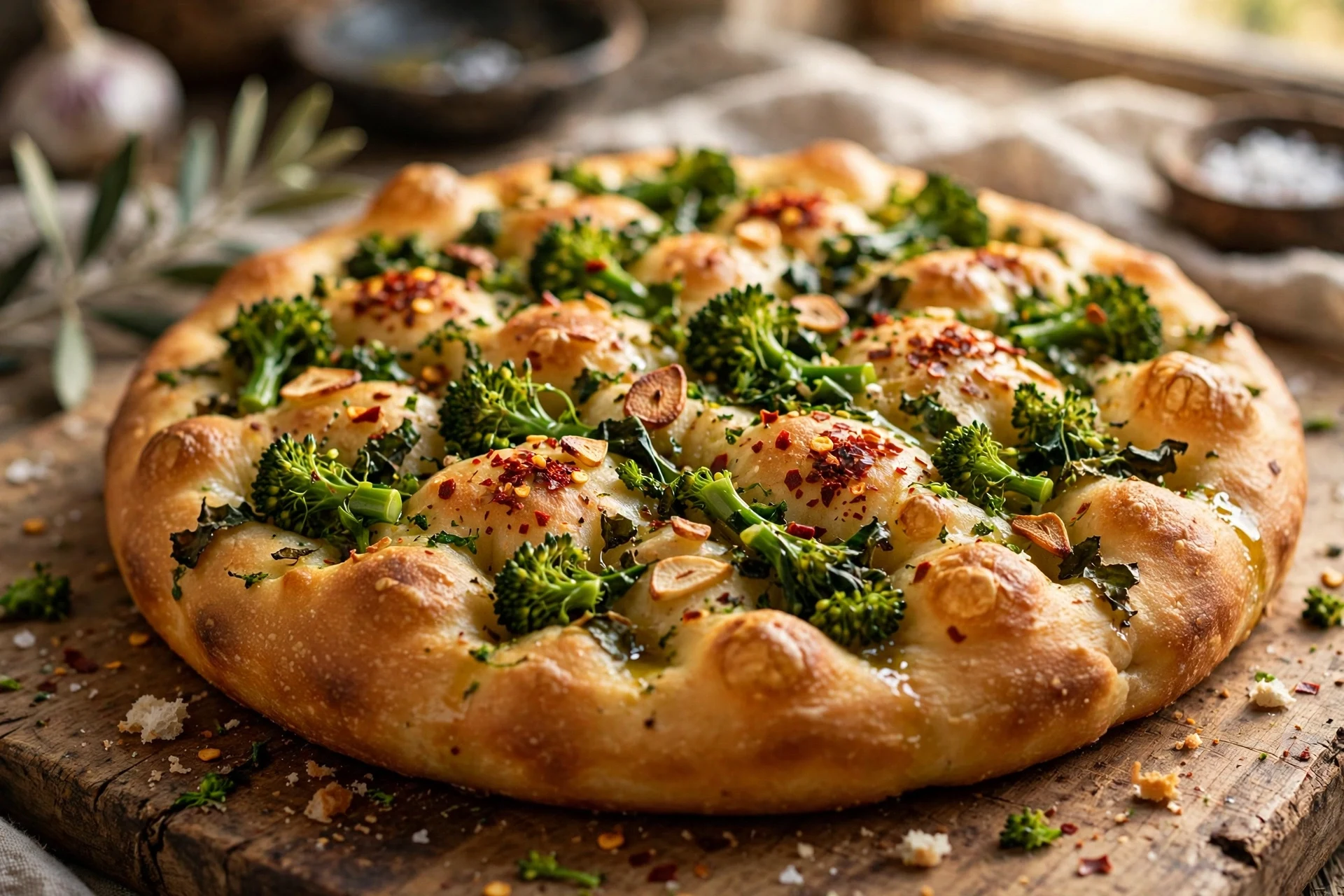
19. Broccoli Rabe and Chili
Broccoli rabe and chili focaccia is bitter, spicy, and deeply savory, the kind of flavor that makes you go back for another piece. Blanch the broccoli rabe for one minute, squeeze it dry, chop it, and scatter it over the dough with chili flakes and a little garlic. The bitterness of the greens balances the soft, oily bread perfectly.
Squeezing the greens dry is essential, because wet greens make the focaccia soggy. This version is wonderful with a fried egg on top for lunch, or on its own as a snack. It is the most Italian-tasting focaccia on this list, and it is the one that surprises people most.
Try this: Blanch the broccoli rabe for one minute, then squeeze it very dry in a clean towel before topping.
You may also like: 22 Gluten-Free Desserts Nobody Will Guess Are Gluten-Free
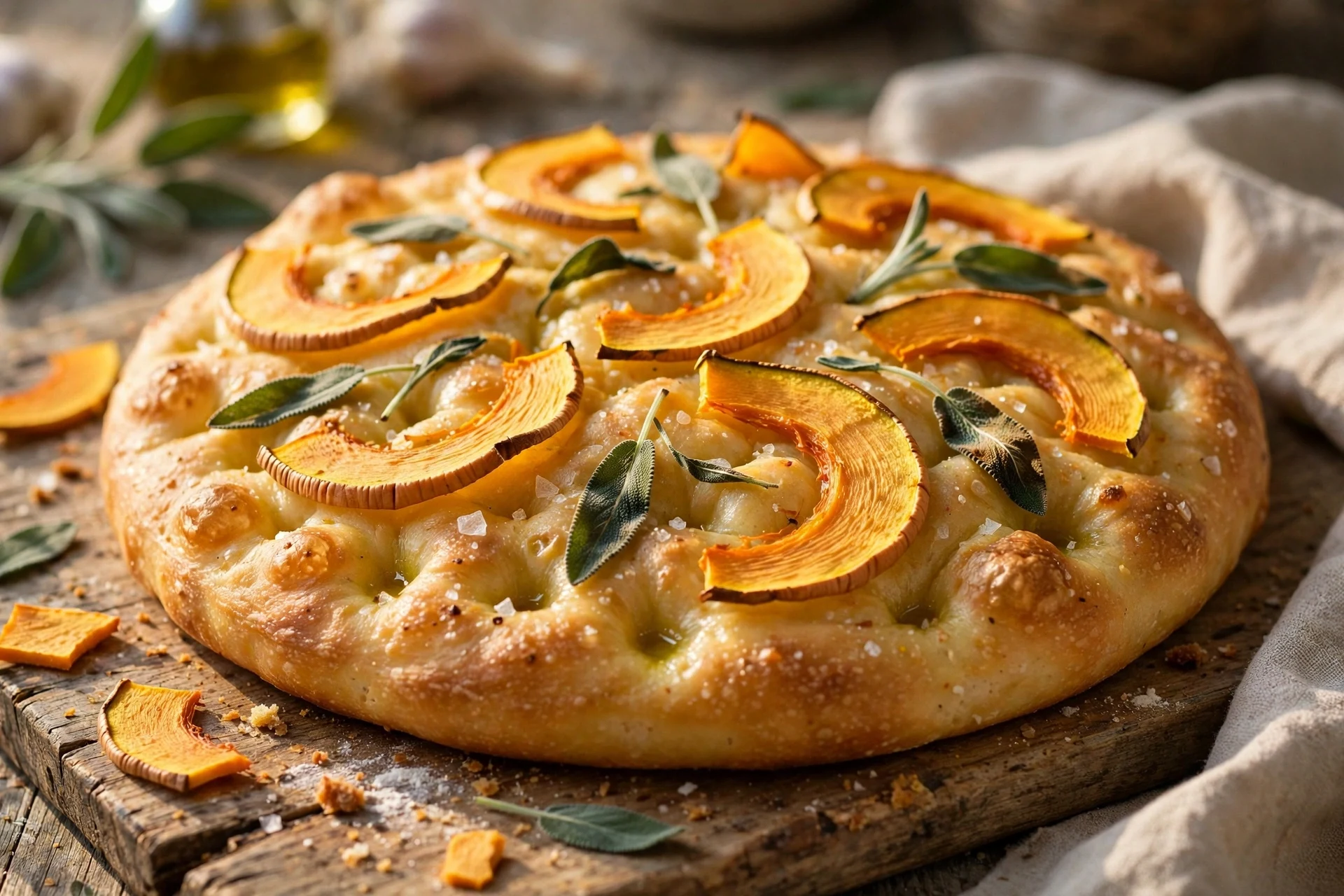
20. Pumpkin and Sage
Pumpkin and sage focaccia is fall in bread form. Thin slices of pumpkin go on the dough with fresh sage leaves, and as they bake the pumpkin turns tender and sweet while the sage crisps into fragrant chips. A little parmesan on top adds salt, and the whole loaf smells like October.
Slice the pumpkin thin, since thick slices will not cook through in the time the bread bakes. This is a beautiful seasonal focaccia, and it works as a side for a roast dinner or on its own with a salad. The sage leaves are the best part, crisp and aromatic, so scatter them generously.
Try this: Slice the pumpkin paper thin with a mandoline, and press the sage leaves into the dough so they crisp instead of burning.
You may also like: 17 Cozy Christmas Bedroom Ideas for Magical Winter Nights
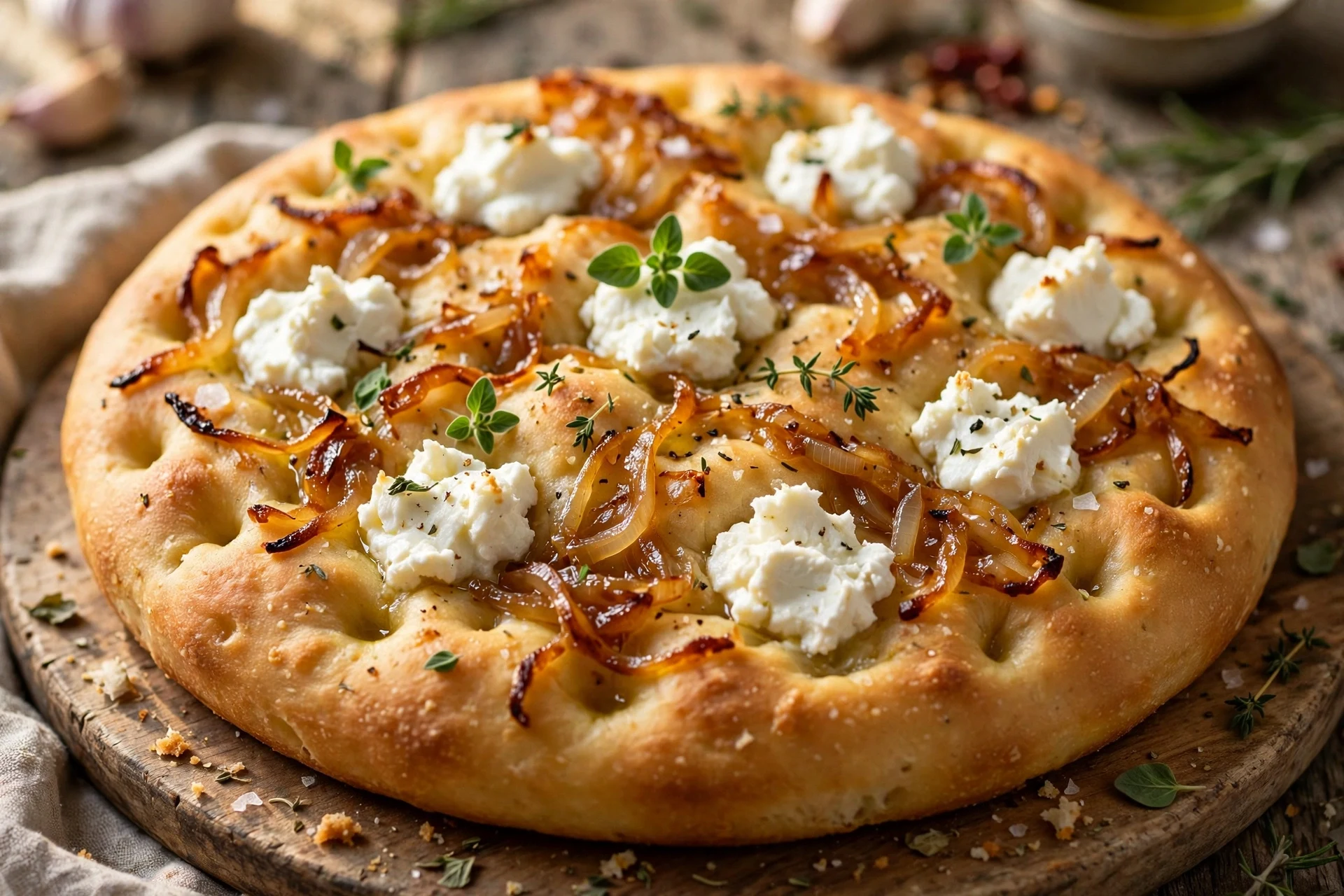
21. Caramelized Onion and Goat Cheese
Caramelized onion and goat cheese focaccia is sweet, tangy, and rich, and it tastes like it came from a bakery. Cook sliced onions slowly in olive oil until they turn deep gold and sweet, then spread them over the dough with dollops of goat cheese. The cheese softens into creamy pockets as it bakes, and a little thyme on top finishes it.
The onions take about twenty minutes to caramelize, so make them while the dough rises. This version is wonderful for a dinner party starter, cut into small squares, and it is one of the few focaccias that tastes even better the next day, reheated in a hot oven.
Try this: Cook the onions low and slow for twenty minutes until deep gold, since rushed onions stay sharp and pale.
You may also like: 22 Gluten-Free Desserts Nobody Will Guess Are Gluten-Free
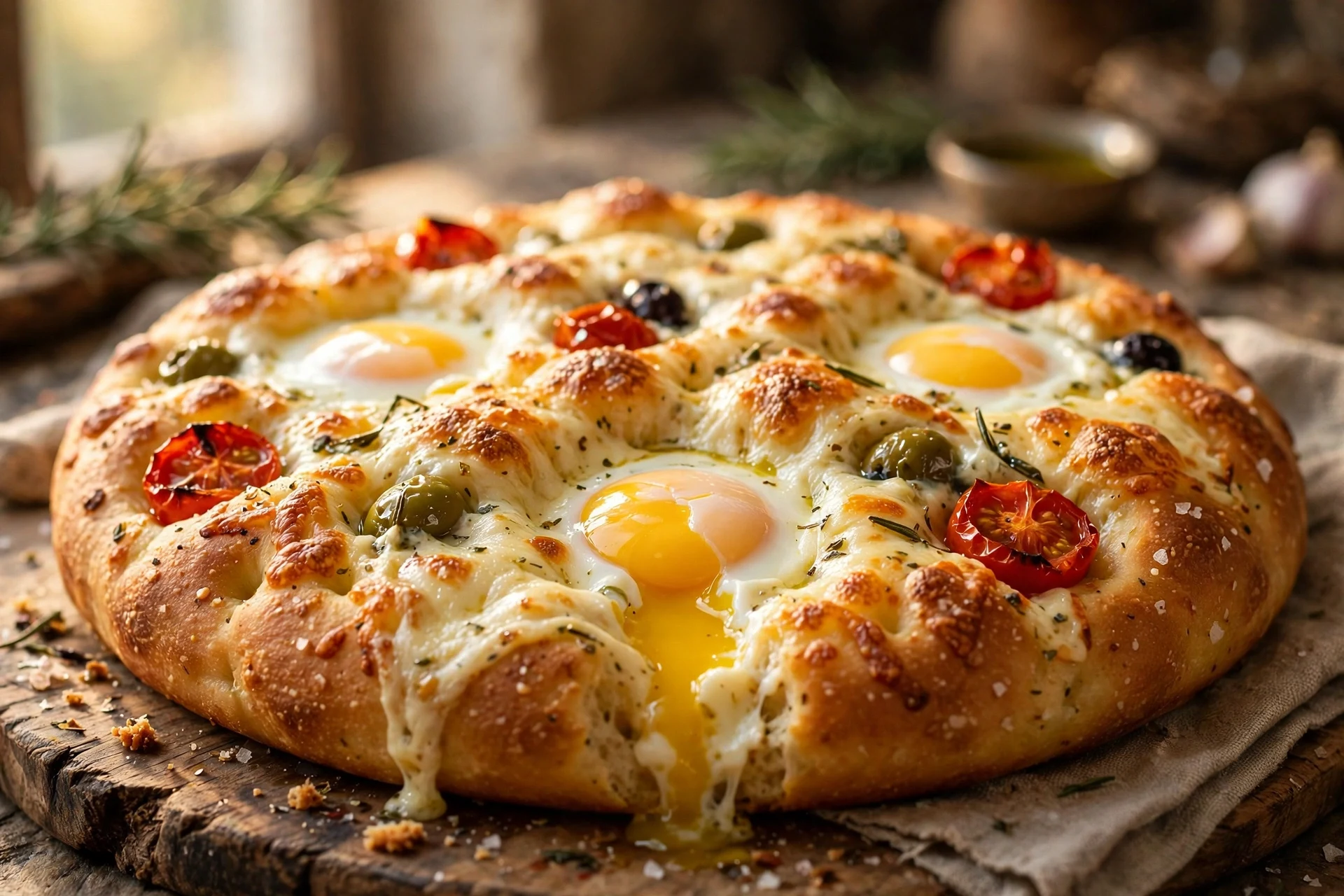
22. Breakfast Focaccia with Egg and Cheese
Breakfast focaccia with egg and cheese turns the dough into a morning meal. Bake the focaccia plain with tomatoes for fifteen minutes, then crack eggs onto the top, scatter shredded cheese around them, and return it to the oven for eight to ten minutes, until the whites are set and the yolks are still soft. The eggs bake right into the bread.
This is the best way to use leftover focaccia dough, and it makes a weekend breakfast that feels special without any extra work. Add a little chopped chive or parsley on top, and serve it straight from the pan, cut into wedges. It is rich, filling, and the yolk running into the soft crumb is the whole point.
Try this: Crack the eggs into small wells made with the back of a spoon, so the whites stay where you put them.
You may also like: 17 Cozy Christmas Bedroom Ideas for Magical Winter Nights
The 1-2-3 Focaccia Barese Method
If you remember nothing else from this guide, remember these three steps.
1
Make the base dough and let it rise.
Mix semolina, type 0 flour, mashed potato, yeast, water, salt, and olive oil, then knead for ten minutes until soft and elastic. Cover and let it rise for about two hours, until doubled in size. This is the dough for all 22 ideas, so learn it once.
2
Oil the pan, stretch the dough, and top it.
Pour 40 to 50 ml of olive oil into a round pan, transfer the dough, and stretch it gently with oiled hands. Press the topping into the dough, not on top of it, and let it rest in the pan for thirty minutes. This second rise is what makes the bread light.
3
Bake hot and check the bottom.
Bake at 400F for 25 to 30 minutes on the lowest oven shelf, until the top is golden. Lift an edge with a spatula and check the bottom: it should be deep gold and crisp. Let it cool for five minutes, then slice and serve warm.
At a Glance
Do This, Not That
| Do This | Not That |
|---|---|
| Add mashed potato to the dough for a soft crumb | Skip the potato and expect the same softness |
| Oil the pan generously, 40 to 50 ml | Use a lightly greased pan and get a pale bottom |
| Stretch the dough with oiled hands | Add more flour while shaping, which dries the dough |
| Let the dough rise two hours until doubled | Rush the rise and get a dense loaf |
| Squash tomatoes into the dough so juice spreads | Lay tomatoes neatly on top without pressing them in |
| Bake on the lowest shelf at 400F | Bake on a high shelf where the bottom stays pale |
| Check the bottom by lifting an edge with a spatula | Judge doneness by the top color alone |
| Let the focaccia cool five minutes before slicing | Cut it straight from the oven and crush the crumb |
| Cook wet toppings like mushrooms first | Put raw wet toppings on and make the top soggy |
| Reheat leftovers in the oven to crisp the crust | Microwave focaccia and make it soft and chewy |
Your Focaccia Barese Plan
If you want focaccia Barese on the table this weekend, here is the plan that keeps it simple.
Friday night: Check you have semolina, type 0 flour, yeast, potatoes, tomatoes, olives, and good olive oil. Boil and mash the potato ahead if you like, and keep it in the fridge.
Saturday morning: Mix and knead the dough, then let it rise for two hours while you prep the topping. Chop tomatoes, slice onions, or cook mushrooms while you wait.
Saturday afternoon: Stretch the dough into the oiled pan, add the topping, and let it rest for thirty minutes. Bake at 400F for 25 to 30 minutes, then cool for five minutes and serve warm.
For a party: Make two focaccias with different toppings, like the classic and the pesto swirl, and cut them into small squares. They hold at room temperature for hours and reheat well.
Leftovers: Slice, wrap well, and freeze for up to a month. Reheat in a 350F oven for eight to ten minutes to bring the crust back.
Take It Further
- Keep semolina and type 0 flour in the pantry, so focaccia is never a special shopping trip away.
- Make a double batch of dough and bake two different toppings at once for a party.
- Try the overnight fridge rise next time, since a slow rise gives deeper flavor.
- Use leftover focaccia for sandwiches, torn into the pan with eggs, or cubed into panzanella salad.
- Grow a pot of rosemary and basil on a sunny windowsill, so fresh herbs are always there for topping.
- Buy one good round pan and one bottle of extra virgin olive oil reserved for bread, because the oil is the flavor here.
- Try a new topping every time you bake, and keep a note of the ones your family asks for again.
- Serve focaccia warm with a small bowl of olive oil and balsamic for dipping, and watch it disappear.
Focaccia Barese Cheat Sheet
1
Flours: semolina plus type 0, for structure and softness
2
Potato: one medium boiled potato, mashed smooth, keeps the crumb soft
3
Rise: two hours first rise, thirty minutes in the pan
4
Oil: 40 to 50 ml in the pan, plus a drizzle on top
5
Bake: 400F, 25 to 30 minutes, lowest shelf
6
Tomatoes: 200 to 250 g, squashed into the dough
7
Bottom check: lift an edge, it should be deep gold and crisp
8
Cool: five minutes before slicing
9
Store: room temperature one day, freezer up to a month sliced
10
Reheat: 350F oven for eight to ten minutes
Questions People Ask
The potato in the dough gives it a much softer texture, and the tomatoes bake directly into the surface instead of being added afterwards. Regular focaccia is often topped after baking or with toppings laid on top, while Barese focaccia has its tomatoes pressed into the dough, so their juice keeps the top soft while the olive oil in the pan crisps the bottom. The semolina in the dough also gives it a slightly rustic flavor and structure.
Yes, but omitting the potato changes the texture. The potato contributes moisture and tenderness, so a potato-free version may have a somewhat different crumb, drier and less soft. If you skip it, add a little extra water and oil to compensate, and expect the bread to dry out faster. For the real Barese texture, the potato is worth the extra step.
Yes, the dough can rest overnight in the fridge for a slower rise and deeper flavor. Mix and knead it, place it in an oiled bowl, cover it, and refrigerate for up to 24 hours. Let it come to room temperature for about an hour before stretching it into the pan, then give it the usual thirty minute pan rise before baking.
Usually the dough needed more rising time or was overworked with extra flour during shaping. Focaccia dough should be soft and a little sticky, so resist adding flour when you stretch it, and use oiled hands instead. Check that your yeast is fresh, give the dough a full two hours to double, and do not skip the thirty minute rest in the pan before baking.
The best focaccia recipe for beginners is a simple focaccia bread with olive oil and sea salt, and any focaccia recipe works if you give the dough time to rise. For a good focaccia bread recipe, use bread flour and a long cold rise, and the best focaccia recipe is the one you make twice — the second loaf is always better. For an easy focaccia recipe, try the no-knead version, and an easy focaccia bread recipe needs only flour, water, yeast, salt and olive oil.
Yes — an italian focaccia makes the best base for a focaccia pizza, and any focaccia italian recipe works with tomato and cheese on top. For a focaccia pizza, bake the bread first, then add toppings and bake again, and a focaccia sandwich is just a thick slice split and filled. For a focaccia bread sandwich, try mozzarella and tomato, or ham and cheese with pesto.
If you bake one of these 22 focaccia Barese ideas this week, start with the classic tomato and olive. It teaches you the dough, the oil, and the timing, and it is the version everyone reaches for first. Then try the rosemary and sea salt. It is the simplest loaf on the list, and it might be the one you make most often.