What's Inside This Guide
ToggleThe Night I Slept on the Floor
My first apartment had exactly four things in it on move-in day: a suitcase, a phone charger, a bag of chips, and a lot of confidence. None of them were on a first apartment essentials list, because I had not made one. I had spent three weeks picking out a rug and a coffee table, and about ten minutes thinking about where I would sleep. That night I learned the difference between decorating an apartment and living in one. The rug looked great. The floor did not feel great.
The next morning I made a list, and I have never moved without one since. It is not a long list. It is the short list of things you need to sleep, shower, eat, and clean up, bought in the right order so the money lasts and the boxes do not take over the living room. These 22 first apartment essentials are that list. They are grouped by room and by timing, so you can buy the night-one things first, the week-one things second, and the nice things last, after you have lived in the place for a while and know what it actually needs.
One rule runs through the whole guide: buy in three waves. Wave one is the first night. Wave two is the first week. Wave three is the first month. If you try to buy everything in one weekend, you will spend too much, buy the wrong sizes, and end up with a coffee table that blocks your only walkway. Buy the essentials, move in, live in the space, then finish it.
The 3 Waves: How to Time Your Buying
Before the ideas, here is the timing, because it saves more money than any single bargain. Wave one, before move-in day, is sleep, shower, and eat: mattress and bedding, shower curtain and towels, toilet paper, one pot, one pan, a few dishes, soap, and a lamp. That is the whole wave. Wave two, the first week, is the rest of the kitchen, cleaning supplies, a bin for every room, laundry basics, and a small toolkit. Wave three, the first month, is furniture beyond the bed, curtains, rugs, and anything decorative. Live in the space first. The apartment will tell you what it needs, and it will usually ask for less than you thought.
Most guides put the furnishing cost for a first apartment somewhere between 500 and 3,000 dollars if you buy mostly new, and between 300 and 800 dollars if you buy the big pieces secondhand. The exact number depends on what you already own and what family can pass along, so ask relatives before you buy. A single phone call about spare dishes, towels, or a spare lamp can cut a surprising amount off the total.
The 22 Ideas
Before You Spend a Dollar
1. Measure Every Room, Doorway, and Window First
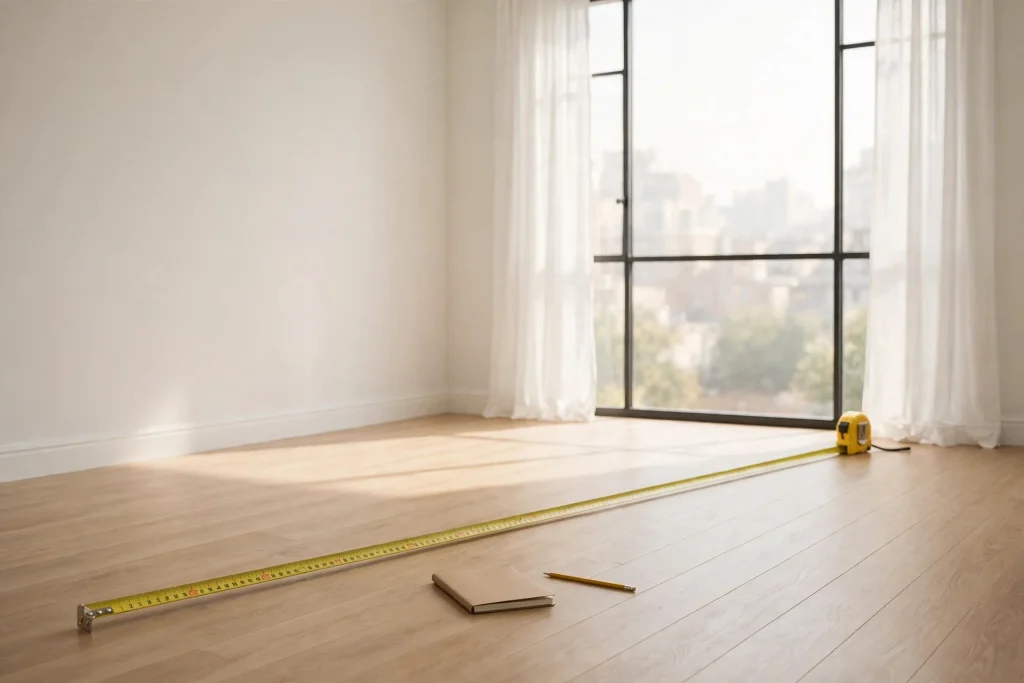
A tape measure is the cheapest first apartment essential you will ever buy, and it prevents the most expensive mistake. Measure the rooms, the doorways, the elevator, the hallway corners, and the windows before you buy any furniture. A sofa that fits the living room but not the stairwell is the classic first move mistake, and it is one you only make once. Write the numbers in your phone, and take them with you every time you shop. Measure the bed wall too, so you know whether a queen will leave room to walk around it, or whether a full is the smarter call.
Good pick: A 25 foot tape measure with a locking blade, plus a phone note with every room, doorway, and window measurement saved before your first shopping trip.
2. Find Out What the Apartment Already Has
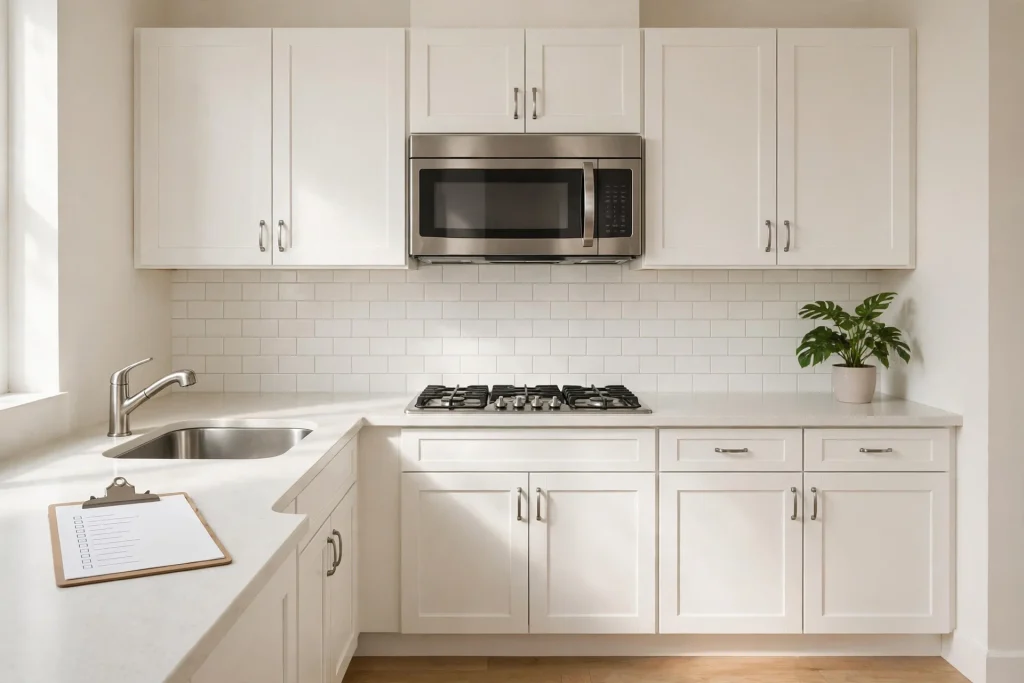
Before you fill a cart, find out what is already included. Ask the landlord or check the lease for appliances, blinds or curtains, light fixtures, bathroom fittings, and built in storage. There is no reason to buy a shower curtain rod if one is already there, or lamps for rooms that already have ceiling lights, or a microwave if one is built into the kitchen. Walk through the empty apartment with your list and cross off everything it already gives you. First time renters regularly buy two or three things they did not need because they shopped before they looked.
Good pick: A printed move-in checklist on a clipboard. Walk the empty apartment room by room, tick off what is already there, and shop only for what is missing.
3. Split the List Into Three Waves
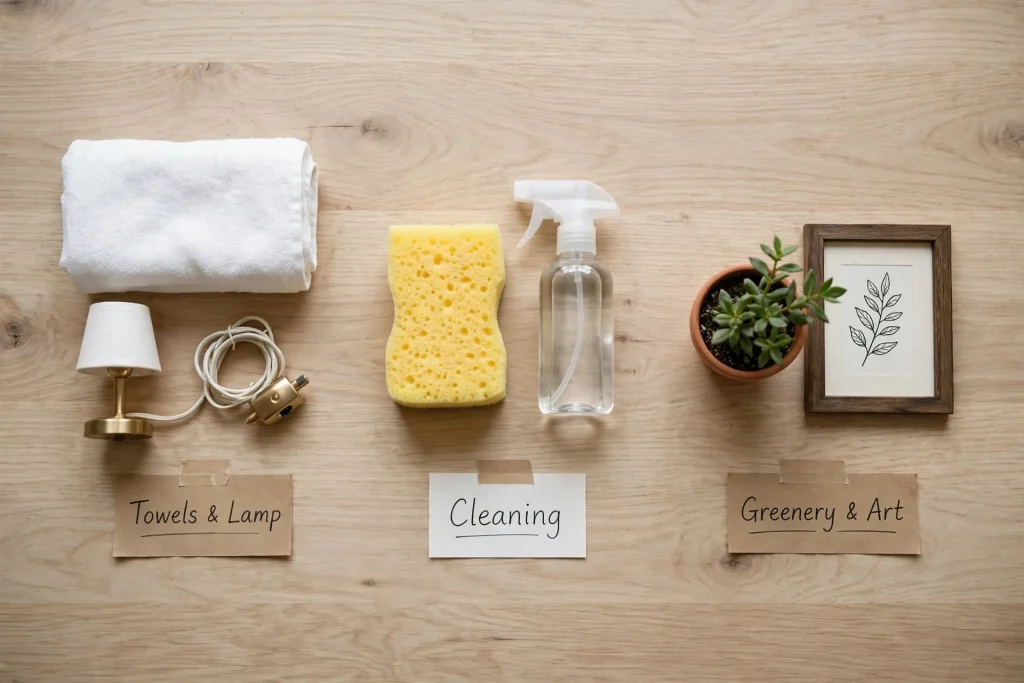
Write one list, then draw two lines through it. Everything above the first line comes before move-in day. Everything between the lines comes in week one. Everything below the second line waits until month one. This is the single habit that keeps a first apartment affordable. The night-one wave is bedding, towels, toilet paper, soap, a shower curtain, one pot, one pan, and a lamp. The week-one wave is the rest of the kitchen, cleaning supplies, and laundry basics. The month-one wave is the sofa, the coffee table, the rug, and the decor. If a shop tempts you to buy wave three in week one, walk away. The apartment is not going anywhere.
Good pick: Three labelled boxes or bags, one per wave. Pack and buy wave by wave, and keep the month-one box closed until you have lived in the place for two weeks.
The Bedroom
4. A Mattress You Can Actually Sleep On
The mattress is the most important purchase on this list, and it is one of the few things you should buy new. A decent mattress runs about 300 to 600 dollars, and it decides how you sleep, how you feel in the morning, and how your back holds up for years. Do not spend your first weeks on an air mattress if you can avoid it. If money is tight, buy the mattress first and let the bed frame wait. A mattress on the floor for a month is fine. A bad mattress for a year is not. Bed in a box brands and budget mattress stores both work well for a first apartment, and many offer a trial period, so use it.
Good pick: A medium firm mattress in a box with a sleep trial of at least 30 nights. Buy it new, and buy it before anything decorative.
5. Bedding That Makes a Bare Mattress Feel Like Home
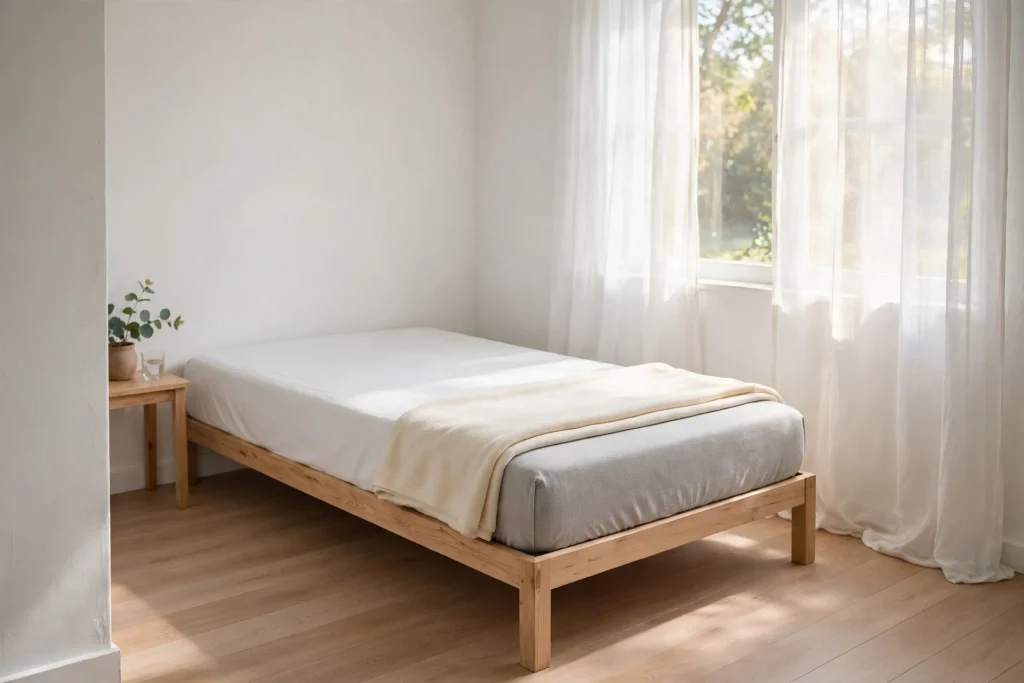
Bedding is what turns a mattress into a bed on the very first night. You need one fitted sheet, one flat sheet or duvet cover, two pillowcases, and one blanket or comforter. Cotton percale feels cool and crisp, and it washes well, which matters when you only own one set. Wash the set before the first night, and make the bed as soon as the mattress lands in the room. It takes ten minutes, and it changes the whole feeling of the first evening. Keep a second set on the list for week two, so laundry day never means sleeping on a bare mattress.
Good pick: One cotton percale sheet set plus a light all season comforter. White or cream, so it matches anything you add later.

6. Two Good Pillows, Not a Pile of Decorative Ones
Two pillows is the right number to start with. One to sleep on, one spare for reading or for a guest, and that is it. Skip the decorative cushions until the bedroom is finished, because they end up on the floor every night and back on the bed every morning. A medium loft pillow suits most sleepers, and a pillow protector underneath keeps it fresh for years. If you sleep on your side, go a little firmer and thicker. If you sleep on your back, go a little flatter. This is a small purchase that pays off every single night.
Good pick: Two medium loft pillows with washable protectors. Try one firmness in the store before you buy the pair.
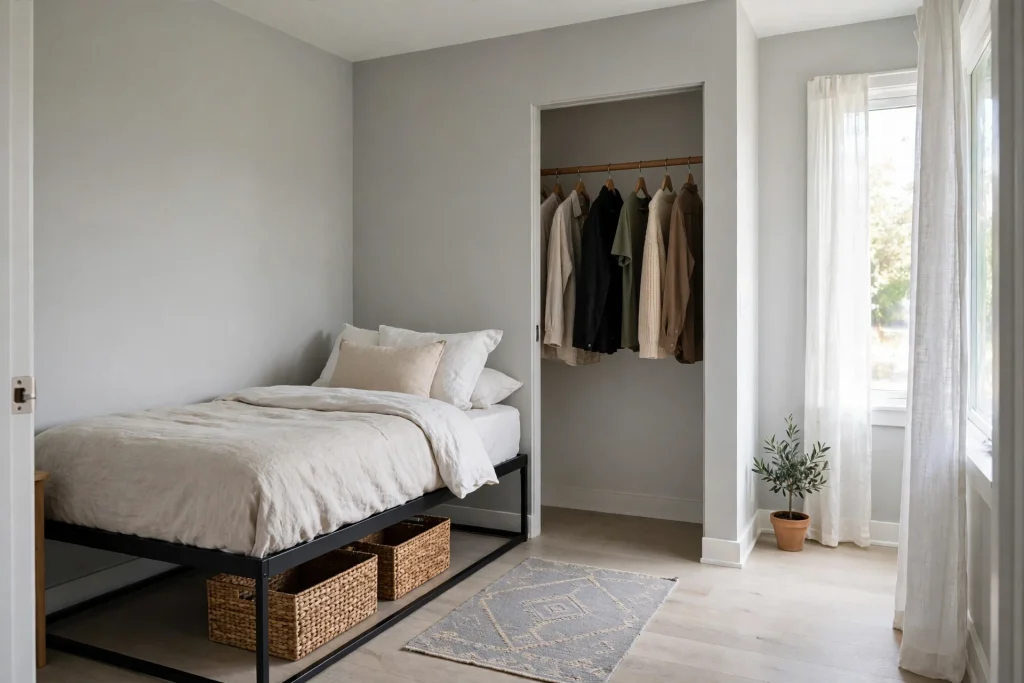
7. A Simple Bed Frame, Plus Hangers and Under Bed Storage
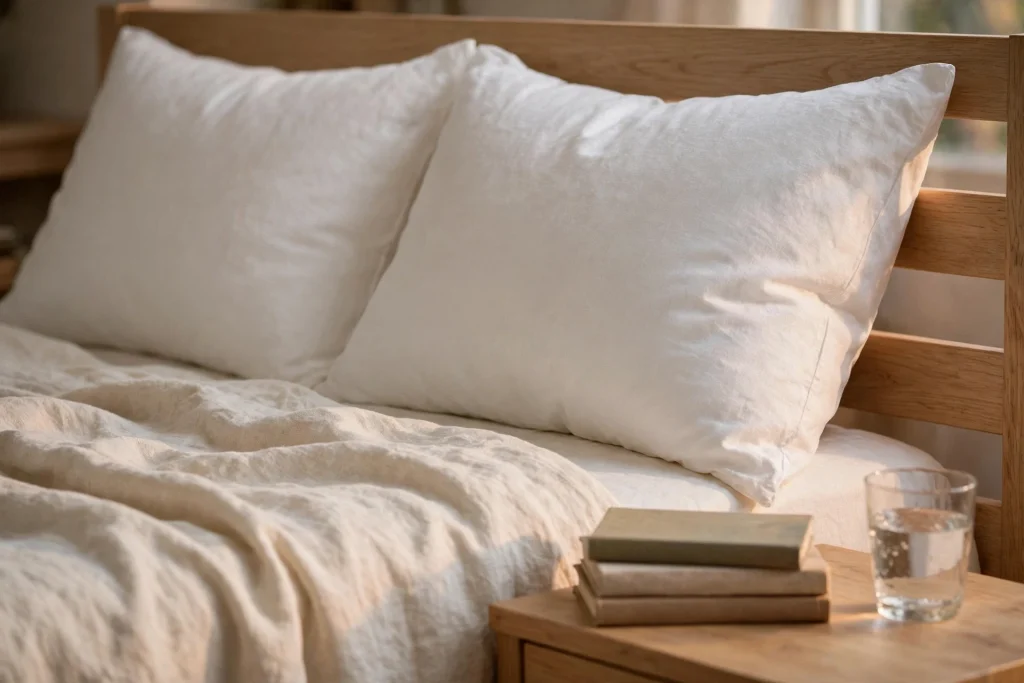
A basic metal platform frame costs little, holds the mattress off the floor, and gives you storage space underneath, which is gold in a small apartment. Add a pack of slim hangers and two under bed bins on the same trip, and the bedroom is mostly done. The hangers matter more than they sound: a closet with no hangers means clothes on chairs, and clothes on chairs means a messy room within a week. The bins take the off season clothes and the spare bedding, and they keep the floor clear. A nightstand can wait. A stack of books on the floor works fine for a month.
Good pick: A low metal platform frame, one pack of slim velvet hangers, and two flat under bed bins with lids.
The Bathroom
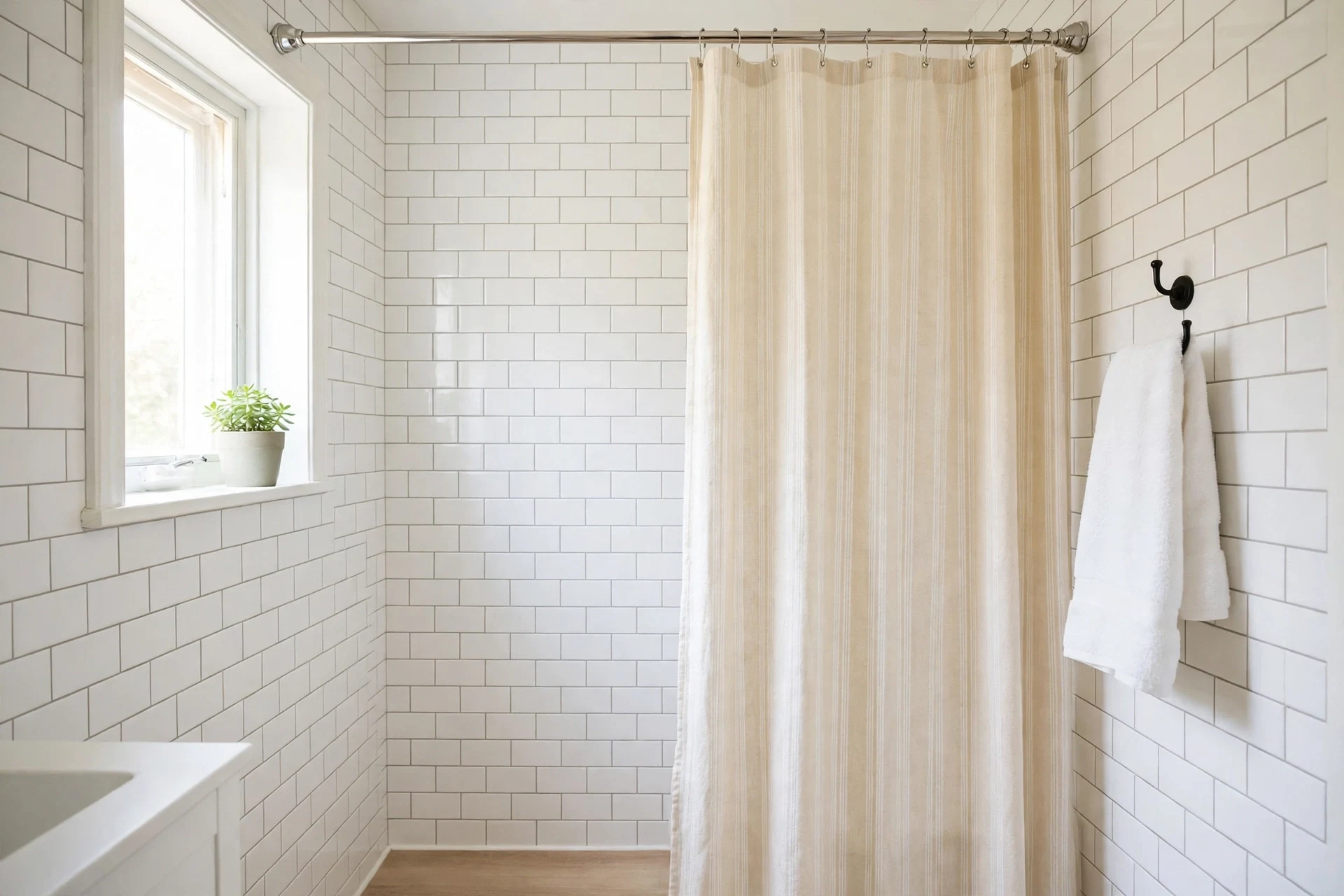
8. A Shower Curtain, Liner, and Rings Before the First Shower
If your bathroom has no glass door, the shower curtain is a move-in day purchase, not a week-one purchase. You will want a shower on the first night, and you cannot take one without it. Buy the curtain, a waterproof liner, and the rings together, in one trip, so nothing is missing. A fabric outer curtain with a simple pattern looks far better than a plain plastic one, and the liner is the part that actually keeps the water in. Hang it as soon as you arrive, before you unpack a single box. It is a five minute job that makes the bathroom usable.
Good pick: A washable fabric shower curtain, a mildew resistant liner, and a set of metal rings, bought together before move-in day.
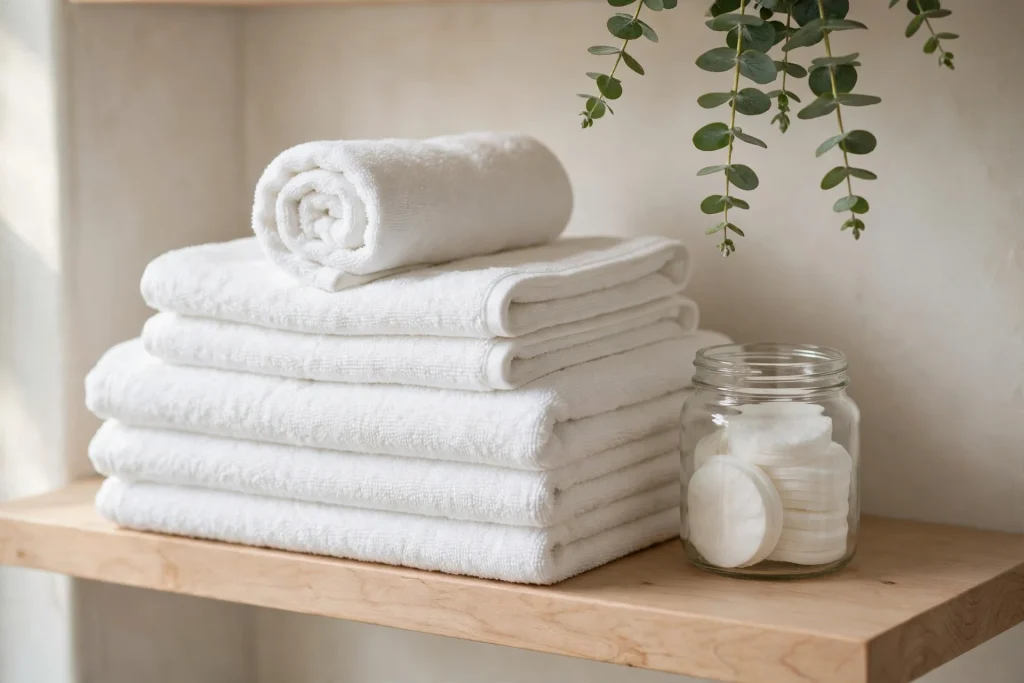
9. Towels: Two Bath, Two Hand, Four Washcloths
Two bath towels, two hand towels, and four washcloths is the right starter set for one person. Two of each means one in use and one in the wash, and the washcloths cover faces, hands, and quick cleanups. White towels are the smart choice for a first apartment because they can be bleached and they match any bathroom. Hang one set up on arrival and keep the second set in the linen closet or a bin. Buy cheap towels and you will replace them in three months. Buy mid range cotton towels and they will last until your next move.
Good pick: Two white bath towels, two hand towels, and four washcloths in thick cotton. Wash them once before the first use so they absorb properly.
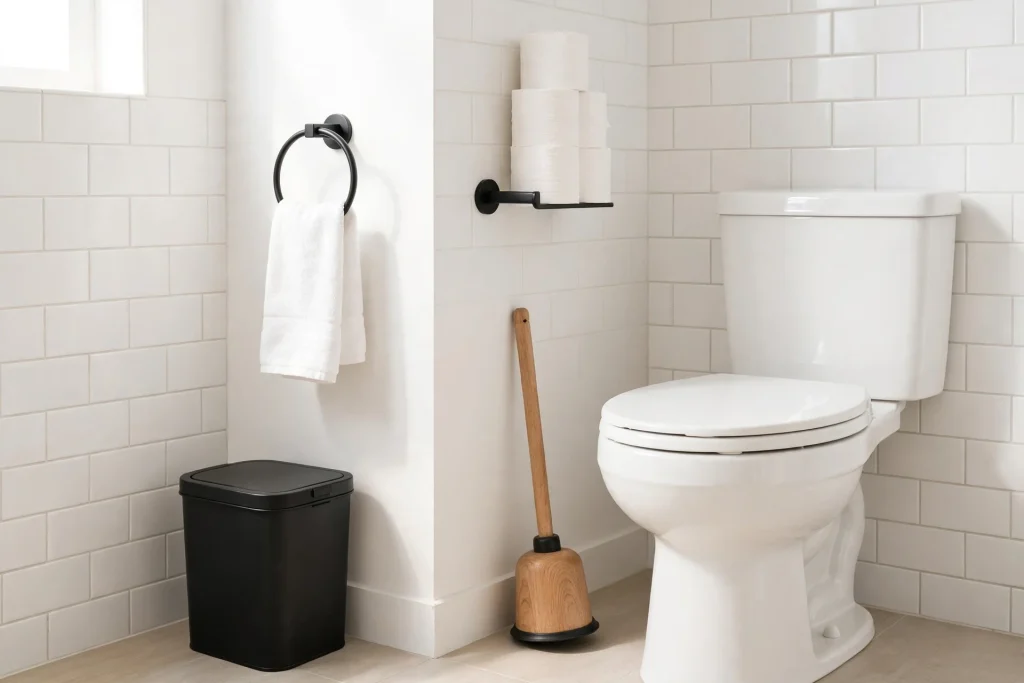
10. Toilet Paper, a Plunger, and a Small Bin
This is the trio every first time renter forgets, and it is the trio you need at the worst possible moment if you forget it. Toilet paper goes in the first night box, not in a moving box buried under books. The plunger belongs in the bathroom from day one, because buying one during an emergency is a trip nobody enjoys. A small bin with a lid keeps the bathroom tidy and saves you from carrying loose trash across the apartment. Buy the plunger before you need it. That sentence is on every first apartment checklist for a reason.
Good pick: A 12 pack of toilet paper, a sturdy flange plunger, and a small lidded bin, all packed in the first night box.
11. A Bath Mat and a Caddy for Toiletries
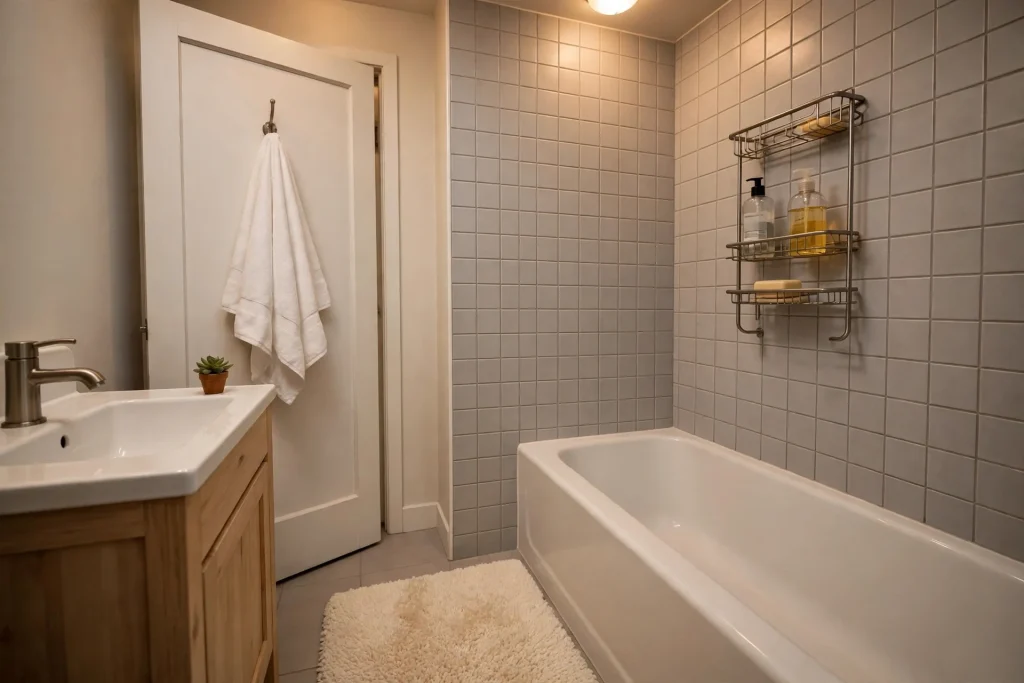
A bath mat does two jobs: it keeps your feet warm and it keeps the floor dry, which keeps the bathroom safe. A quick dry mat or a washable cotton one both work, and either beats stepping onto cold tile with wet feet. A small shower caddy or a basket for toiletries keeps shampoo, soap, and toothpaste in one place instead of spread along the edge of the tub. When the bathroom has one home for every bottle, it stays clean with almost no effort. Hang a hook on the back of the door for the towel you use every day, and the room is finished.
Good pick: A washable cotton bath mat and a rust proof shower caddy. Add one over door hook for the daily towel.
The Kitchen
12. One Good Frying Pan and One Medium Pot
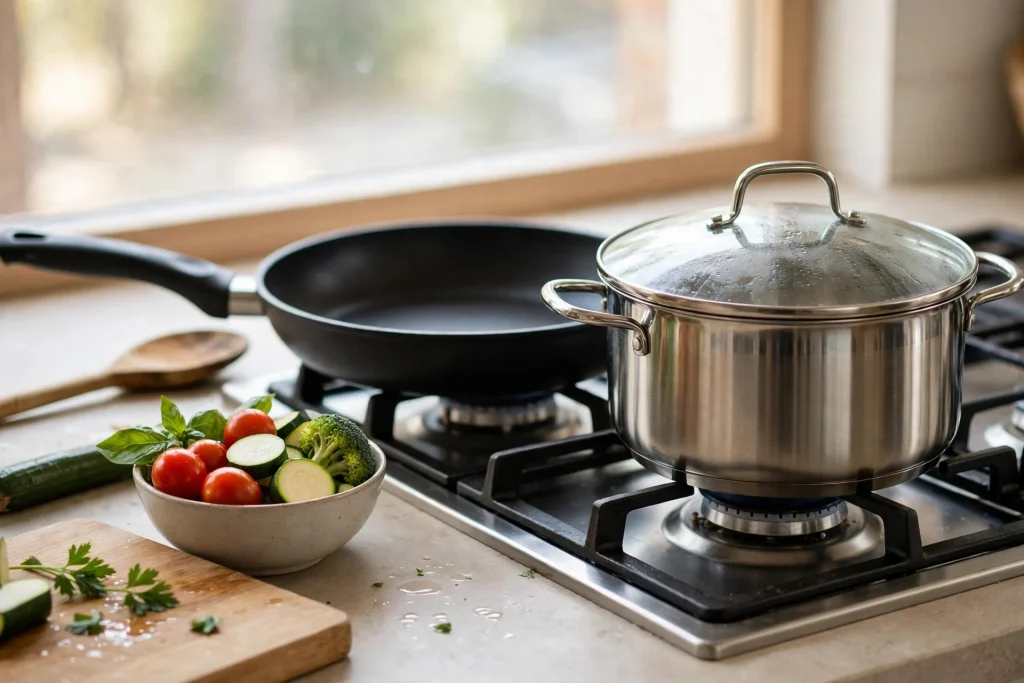
You do not need a twelve piece cookware set. You need one good frying pan, about 10 or 12 inches, and one medium pot with a lid, about 2 to 3 quarts. With those two, you can fry eggs, cook pasta, make soup, steam vegetables, and sear chicken. Buy the pan with a comfortable handle and a flat heavy base, because a pan that wobbles on the burner will annoy you every single day. A large pot for pasta can wait until you cook for more than two people. Start with the two pieces, learn what you actually cook, and add the third piece later.
Good pick: A 12 inch nonstick or stainless frying pan and a 3 quart pot with a lid. Heavy base, comfortable handle, and nothing else until you know your cooking routine.
13. Plates, Bowls, and Mugs for Two
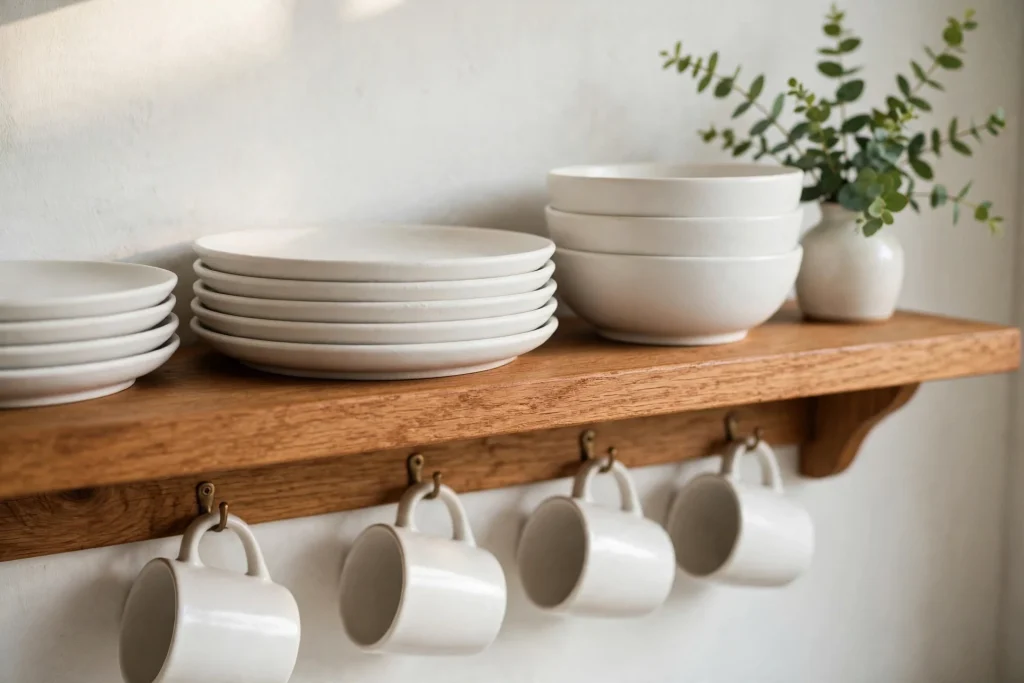
Four plates, four bowls, and four mugs is the right starter set, even if you live alone. Two is too few the moment a friend stays for dinner, and eight is too many for a small kitchen with one cupboard. Simple white stoneware matches everything, hides chips well, and stacks neatly. Add two glasses and you are done with the eating dishes. Keep the set small on purpose. A small set means the dishes get washed instead of piling up, and a small cupboard stays tidy without any organizing system.
Good pick: A four place setting of plain white stoneware, two drinking glasses, and four mugs. One style, one colour, and a cupboard that still closes.
14. Flatware and the Five Utensils You Will Reach For Daily
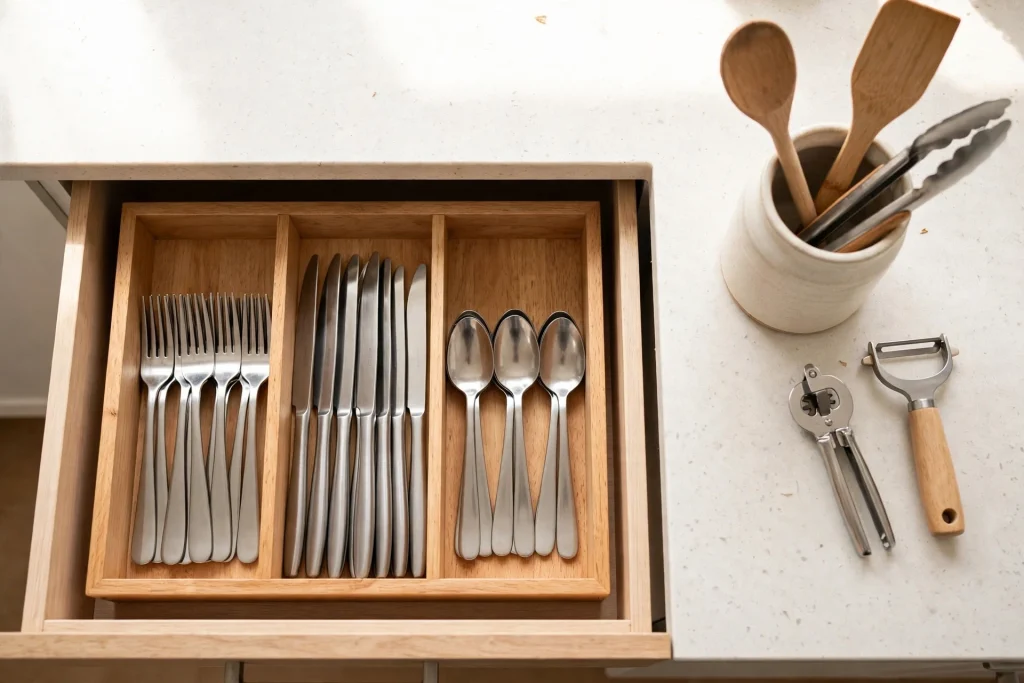
A basic flatware set for four covers forks, knives, and spoons, and it is all the cutlery a first apartment needs. On top of that, buy five utensils: a wooden spoon, a spatula, a pair of tongs, a peeler, and a can opener. Those five handle almost every meal, from scrambled eggs to a tray of roasted vegetables. The can opener is the one people always forget, and it is the one that stops dinner completely when it is missing. Keep the utensils in a jar on the counter or a drawer organizer, so you can find them without digging.
Good pick: A 20 piece flatware set for four, plus a wooden spoon, spatula, tongs, peeler, and a manual can opener.
15. A Sharp Knife and a Cutting Board
One sharp chef’s knife does the work of a whole knife block. An 8 inch chef’s knife handles vegetables, meat, bread, and herbs, and a single cutting board gives it a safe home. Buy the knife that feels balanced in your hand, not the cheapest one on the shelf, because a dull knife is the most dangerous tool in the kitchen. Keep the blade in a sheath or a knife block, and wash it by hand so the edge stays sharp. Add a small paring knife in month two if you find yourself reaching for one, but start with the one good knife.
Good pick: One 8 inch chef’s knife with a full tang handle and one large wooden cutting board. Hand wash the knife, every time.

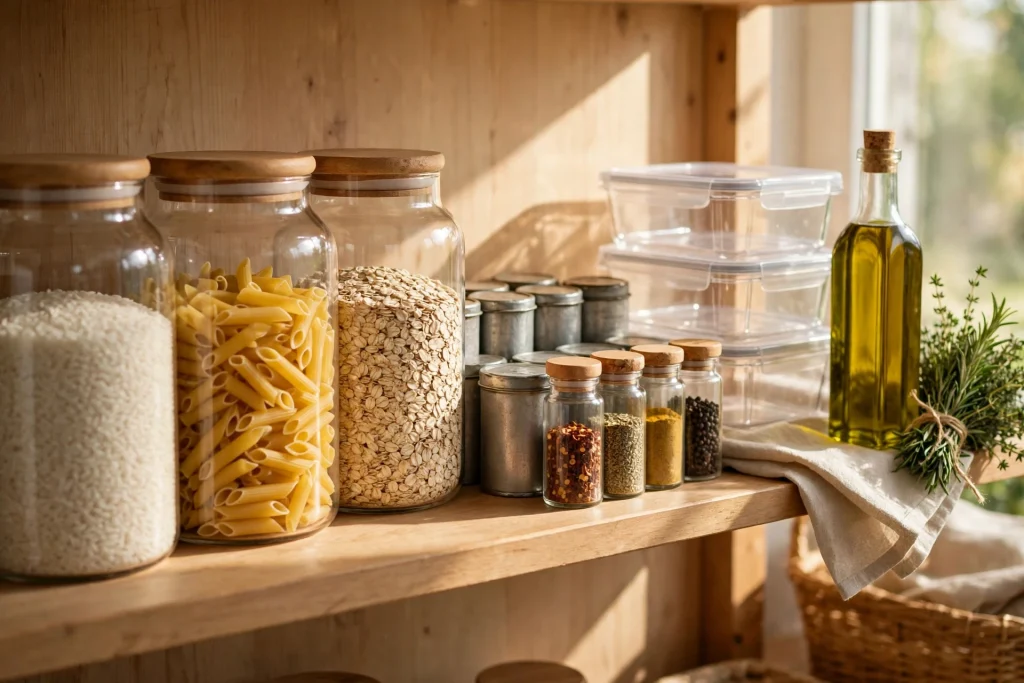
16. Pantry Starters and Food Storage That Keep Food Fresh
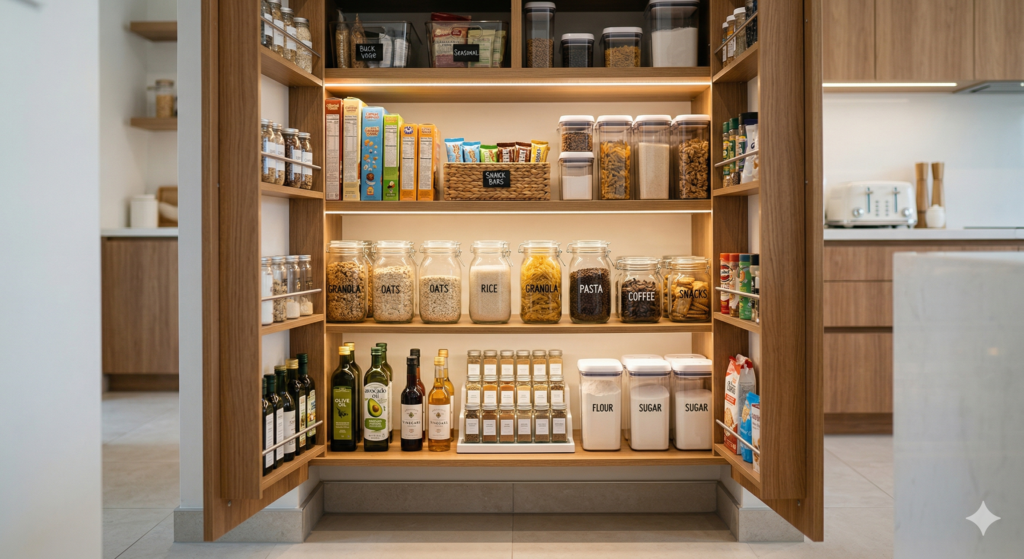
A first pantry is small on purpose: oil, salt, pepper, rice, pasta, a couple of tins, tea or coffee, and sugar. Buy those on the first grocery trip and you can cook a real meal on night one instead of ordering takeout for a week. Add a set of food storage containers with lids that actually seal, because leftovers are how a first apartment grocery budget survives. Clear containers are best, since you can see what is inside without opening five lids. Label the containers if you cook in batches, and the fridge stays organized without any extra effort.
Good pick: Cooking oil, salt, pepper, rice, pasta, coffee or tea, and a set of six clear food storage containers with sealing lids.
The Living Room
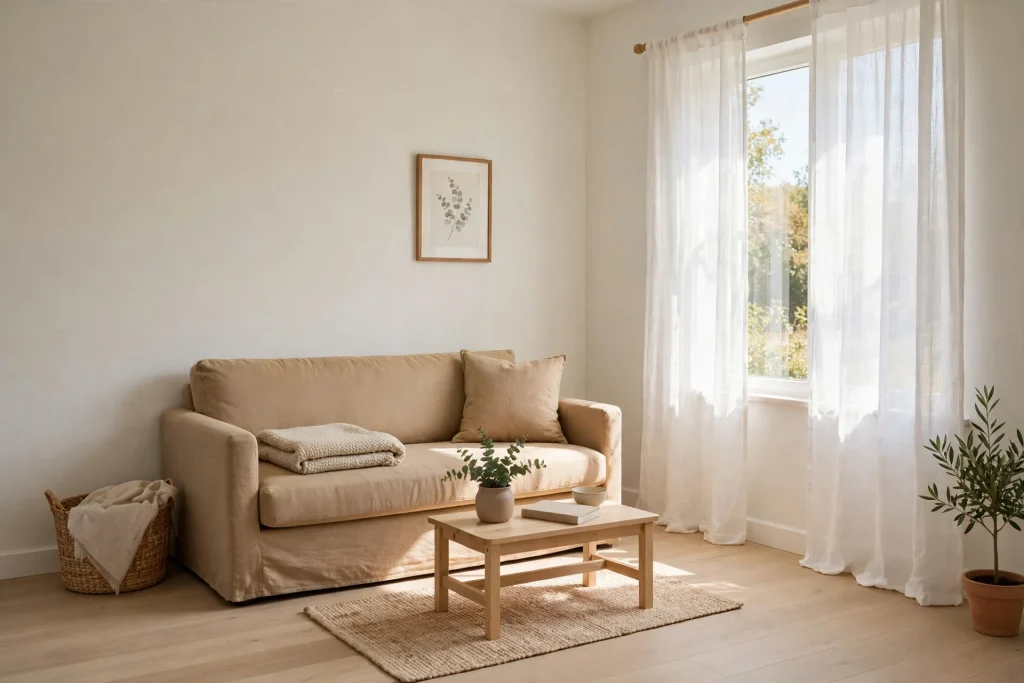
17. Somewhere to Sit That Fits Through the Door
A sofa is the biggest living room purchase, and the one most likely to go wrong on size. Measure the door, the hallway, and the wall before you buy, and remember that a sofa you love in the store is useless if it cannot get into the room. A simple two seater or a loveseat suits most first apartments better than a big three seater, and it leaves room to walk. If the budget is tight, a good armchair and a floor cushion will do for the first month, and a secondhand sofa in good shape can save hundreds. Sit on it before you buy it, and check that the cushions come off for cleaning.
Good pick: A compact two seater sofa in a washable fabric, measured against the door and the wall before ordering. Secondhand is fine if the frame is solid and the cushions are clean.
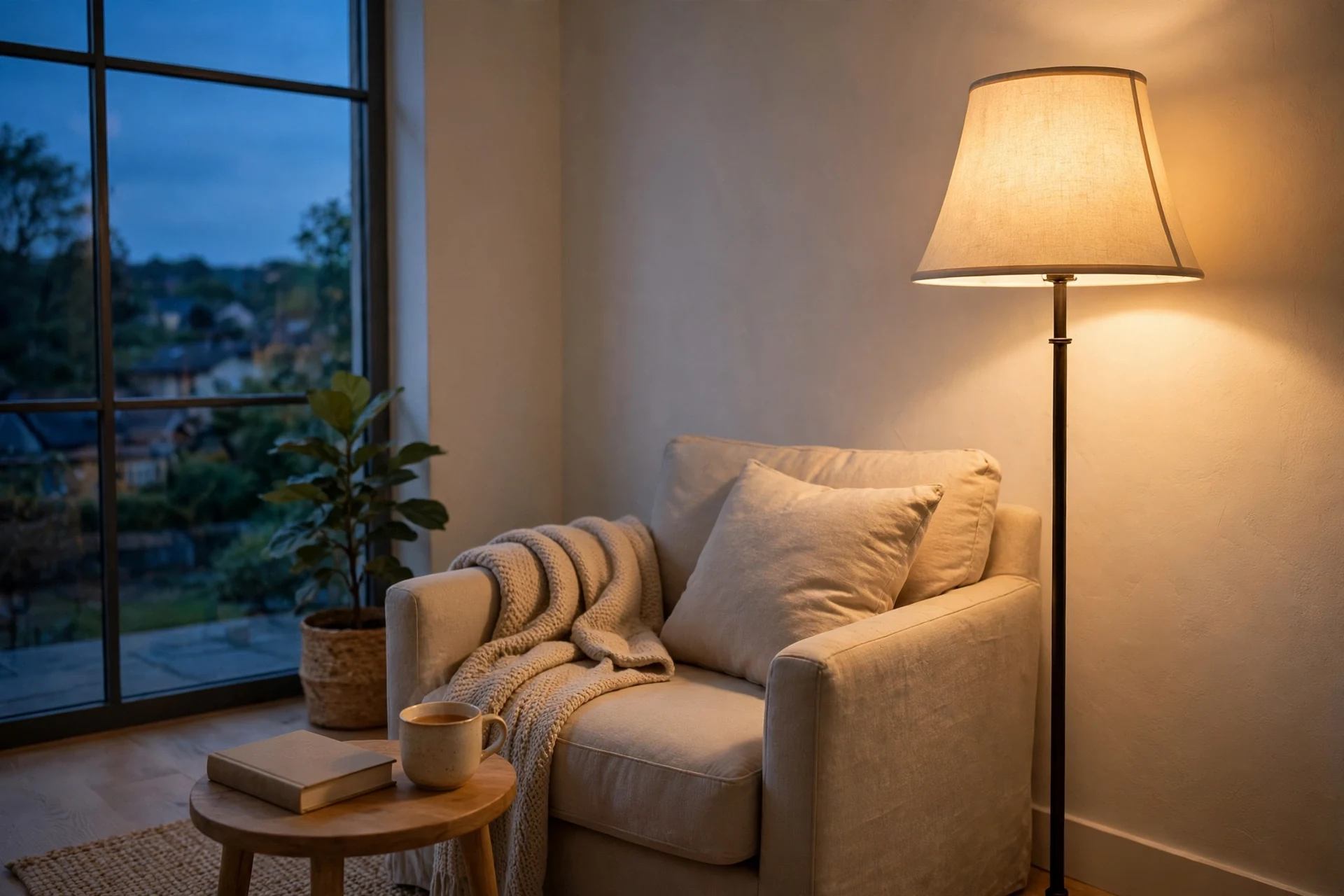
18. A Floor or Table Lamp, Because Many Rentals Have No Ceiling Lights
Many rentals have no ceiling lights in the living room or bedroom, and first time renters only discover this on the first dark evening. A floor lamp in the living room and a small table lamp by the bed fix the whole apartment in one trip. Warm light, around 2700K, makes a small room feel cozy instead of stark, and a lamp with a fabric shade spreads the light softly. Put the floor lamp in the corner where you sit to read, and the table lamp where you reach for it at night. Two lamps can make a bare apartment feel finished before a single picture goes on the wall.
Good pick: One floor lamp for the living room and one small table lamp for the bedroom, both with warm 2700K bulbs and fabric shades.
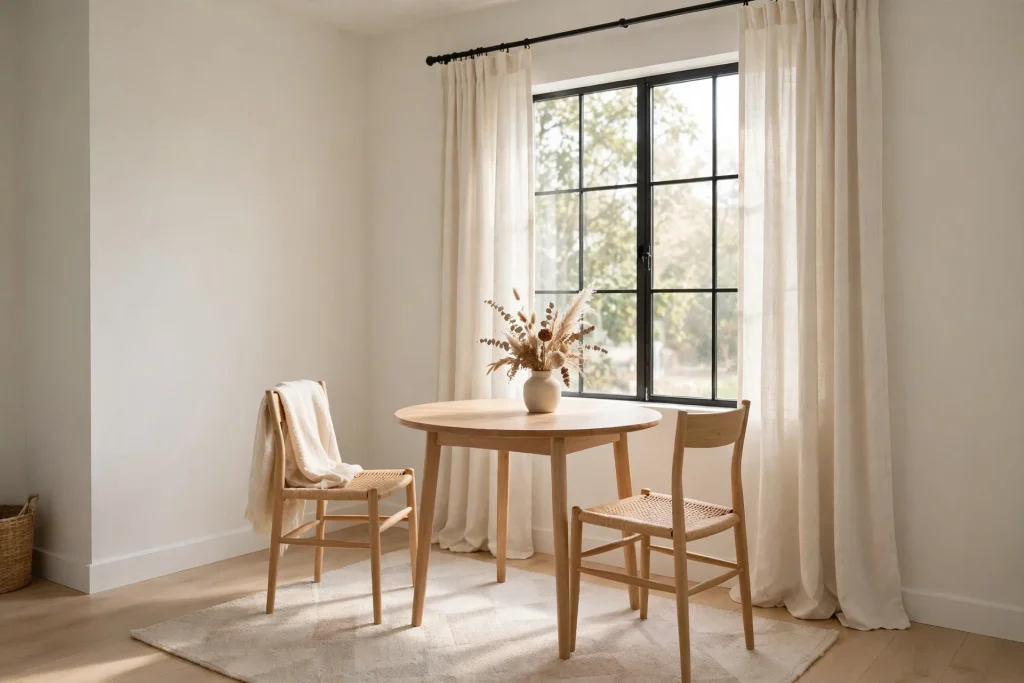
19. A Small Table and Curtains That Make the Room Feel Finished
A small table and a pair of curtains are the two things that make a living room feel like a home instead of a waiting room. The table gives you a place to eat, work, and put a coffee down, and a small round or folding table fits a first apartment far better than a big dining set. Curtains soften the windows, add privacy, and warm up pale walls, and they are one of the cheapest ways to change how a room feels. Measure the window width and the drop from rod to floor before you buy, and hang them high and wide so the window looks bigger than it is.
Good pick: A small round folding table with two chairs, and one pair of floor length curtains in cream linen, hung high and wide.
Clean, Fix, and Stay Safe
20. A Cleaning Kit and a Broom or Small Vacuum
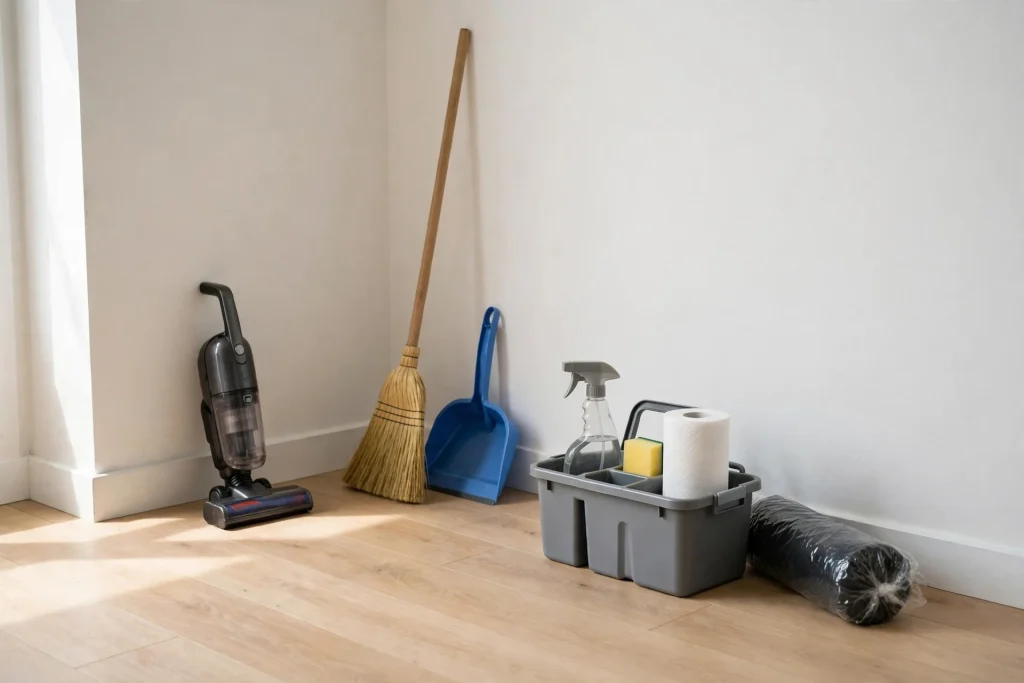
Clean the empty apartment before you unpack. It is much easier in an empty room, and it means you start fresh instead of living with the last tenant’s dust. A basic kit covers everything: all purpose cleaner, a sponge, paper towels, trash bags, a broom and dustpan or a small vacuum, and laundry detergent. Buy the kit before move-in day and carry it in with the first load, so the cleaning happens first and the boxes land in a clean room. A small vacuum suits apartments with rugs, and a broom suits hard floors. Either way, buy it before the first week ends, because dust shows up fast in an empty place.
Good pick: All purpose cleaner, sponge, paper towels, trash bags, laundry detergent, and a broom with a dustpan or a small stick vacuum.
21. A Basic Toolkit: Hammer, Screwdrivers, and a Tape Measure
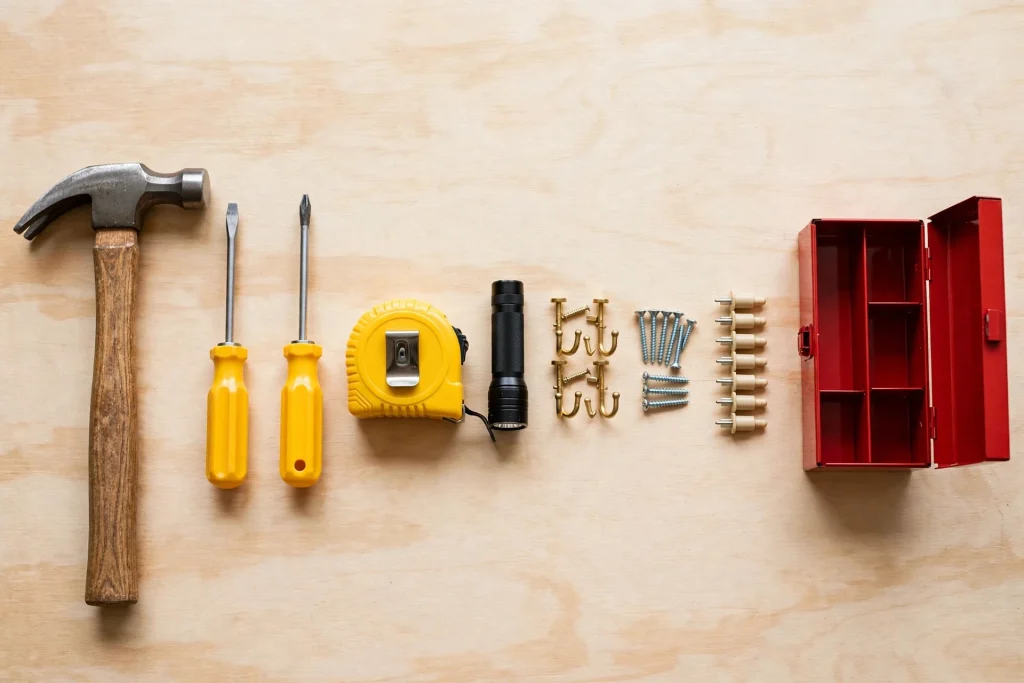
A small toolkit handles the hundred tiny jobs of a first apartment: hanging a picture, tightening a wobbly chair, assembling flat pack furniture, and changing a battery. You need a hammer, a screwdriver set with flat and cross heads, a tape measure, a flashlight, and a few picture hooks and wall plugs. Keep it in one box or bag, in the same place every time, so you can find it in the dark when something needs fixing. Buy the tools before you need them, because the night the curtain rod falls down is not the night to go shopping.
Good pick: A ready made 30 piece home toolkit in a carry case, or a hammer, screwdriver set, tape measure, flashlight, and a box of picture hooks bought separately.
22. First Aid, a Smoke Alarm Check, and Renters Insurance
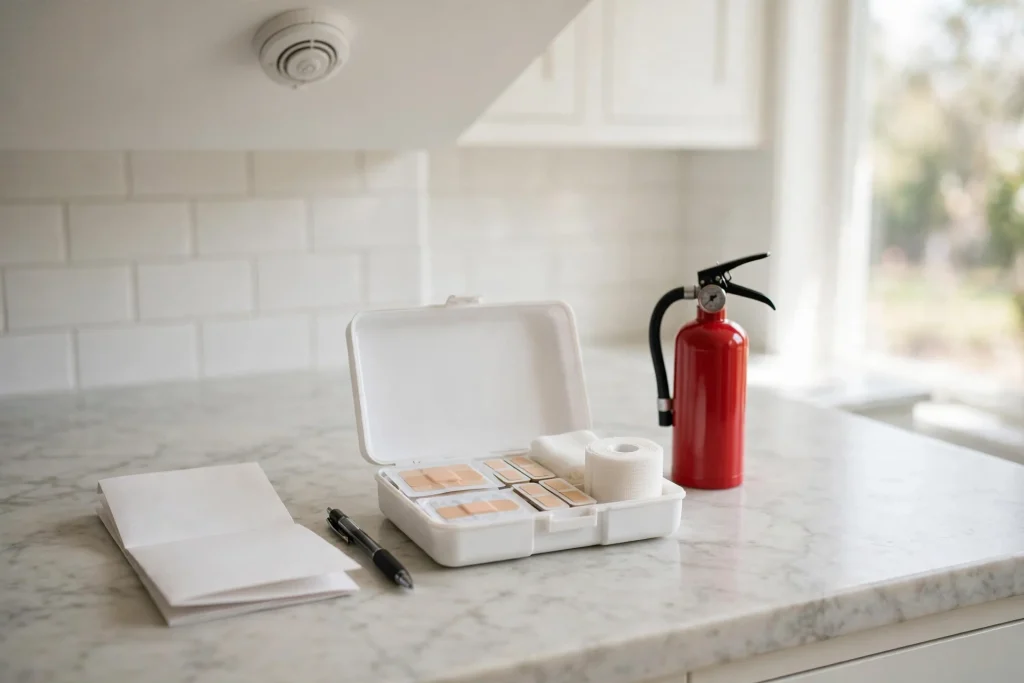
Safety items come first because they are the ones you need suddenly. Test every smoke alarm on move-in day, and tell the landlord in writing if one is missing or fails. Keep a small first aid kit with plasters, antiseptic, pain relief, and any medicine you take, plus a fire extinguisher for the kitchen, and learn how to use it. Renters insurance is often required by the lease, and even when it is not, it usually costs about 10 to 20 dollars a month and covers your things against fire, theft, and water damage. These are not exciting purchases. They are the purchases that let you sleep well on the first night.
Good pick: A compact first aid kit, a small kitchen fire extinguisher, and a renters insurance quote before move-in day. Test the smoke alarms the hour you get the keys.
Your First Night Box
Pack one clearly labelled box that comes off the truck first, and keep it with you, not buried under furniture. It should hold bedding, a pillow, towels, toilet paper, soap, a shower curtain with rings, a phone charger, a lamp, a change of clothes, snacks, water, a bin bag, and the toolkit. If you open only one box on night one, let it be this one. Everything else can wait until morning, and the first night will feel like moving in instead of camping.
What Can Wait Until Month Two
Most furniture beyond the bed can wait a month or two. A coffee table, a rug, wall art, a bookshelf, a desk, extra kitchen gadgets, and decorative cushions all belong in wave three, after you know how you use the space. Living in the apartment first shows you what you actually need and saves money on things you would never use. A sofa can wait if you have a chair. A rug can wait until you know where the traffic goes. Decor can wait until the rooms are lived in, because a home that grows slowly looks far better than a home bought in one weekend.
Questions People Ask
Most budget guides put a basic setup at 500 to 3,000 dollars if you buy mostly new from budget retailers, with a mattress as the biggest single cost at around 300 to 600 dollars. You can bring the total down to 300 to 800 dollars by buying large furniture secondhand and shopping discount stores for kitchen and bathroom items. The exact number depends on what you already own, what family can contribute, and how much you are willing to buy used.
Buy in priority order: mattress and bedding, a shower curtain and bath essentials, basic kitchen tools, a place to sit, and lamps if the apartment has no ceiling fixtures. These are the items that let you sleep, shower, and eat on night one. Everything else, from the sofa to the decor, can wait until the first week or the first month, once you know how the space works.
The small things: a shower curtain, a plunger, toilet paper, a can opener, and light bulbs. They are cheap, they are easy to miss on a big shopping list, and each one stops daily life completely when it is missing. Pack them in the first night box, not in a moving box, and buy the plunger before you need it.
Yes, with secondhand furniture and a phased approach. Essentials like the bed, kitchen basics, bathroom items, and cleaning supplies run about 400 to 600 dollars if you shop smart. Add a used sofa and a basic living room setup and you land around 800 to 1,000 dollars. Buying the big pieces used, borrowing what family can spare, and spreading the rest across three waves is how most first time renters do it.