Too Long; Didn’t Read
A plain white duvet shows every wrinkle, every dent, and every spot where the cover twisted in the night. A small print breaks up the surface, so the eye reads the pattern first and the creases second. That is the whole trick behind these 22 patterned bedding ideas: pick a small print, pick a fabric that is meant to look a little rumpled, choose one colour mood instead of a matching set, and keep the layers few enough that the bed fixes itself in ten seconds. Do those four things and the bed you left in a hurry still looks like a choice at six in the evening. The 1-2-3 Bedding Method near the end shows you how to build any bed in this guide from one print, two plain pieces, and three steps.
What's Inside This Guide
ToggleThe Morning I Stopped Making the Bed
I used to make my bed every morning. Not because I loved doing it, but because I had read somewhere that successful people make their beds, and I wanted to be the kind of person who had her life together before breakfast. So I smoothed the duvet, fluffed six pillows, folded the throw just so, and stood back to admire a bed that looked like a hotel room. Then I went to work, came home tired, and the first thing I did was mess it all up again.
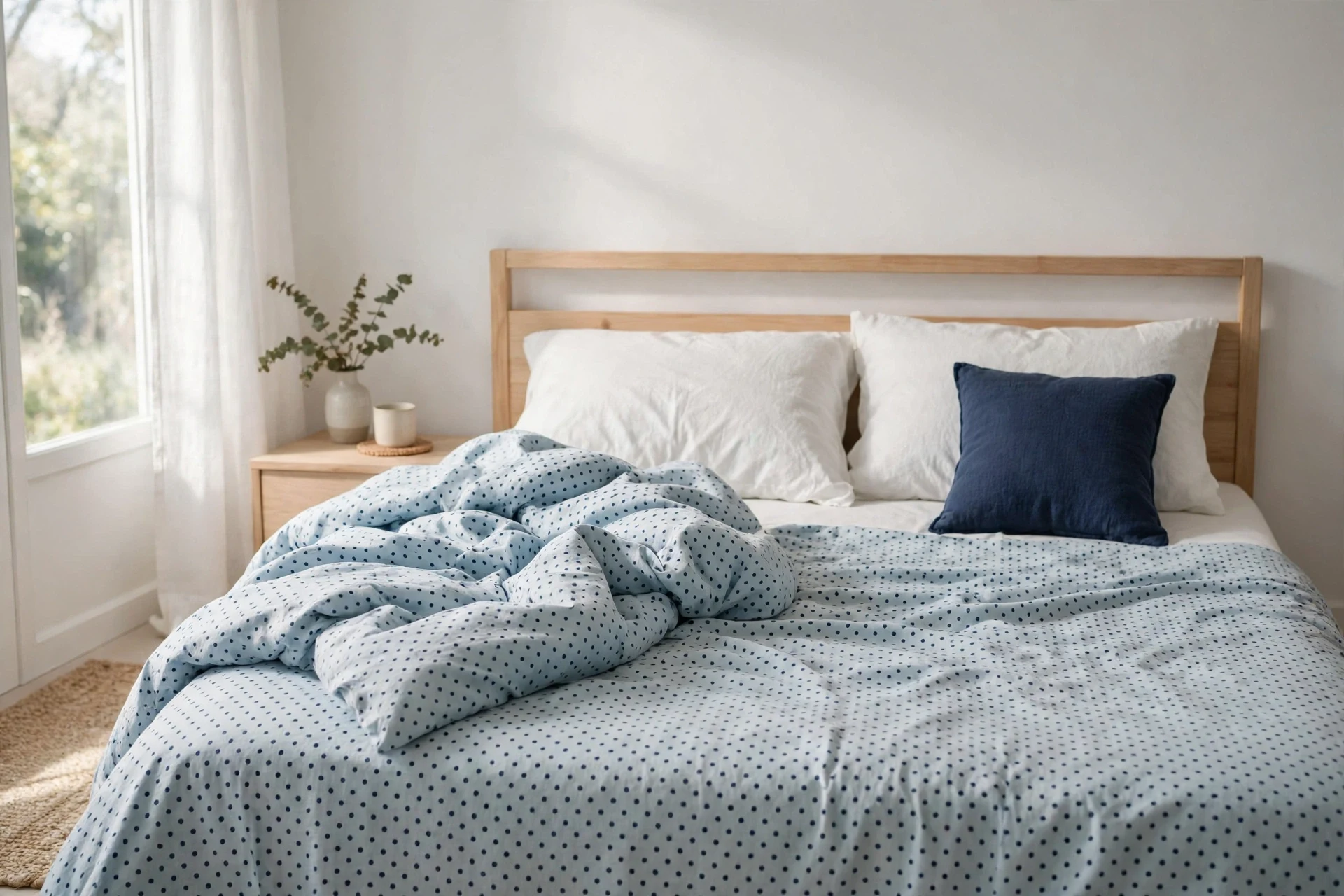
One Tuesday I ran late. I left the duvet half folded, the pillows in a heap, and the throw on the floor where it had slid in the night. I expected to come home to a room that looked like a laundry pile. Instead, the bed looked fine. Not perfect, just fine. Relaxed, a bit lived in, like a bed in a magazine that was styled to look unstyled. The difference was the bedding. That week I had put on a new duvet cover, small navy dots on pale blue, and the dots did something the plain white cover never had. They broke up every wrinkle. The eye saw the pattern first and the mess second.
That was the morning I stopped making the bed, and started choosing bedding that did the work for me. A bed that looks good unmade is not a lazy bed. It is a bed dressed in prints and fabrics that forgive. Small patterns hide what smooth fabric shows. Washed cotton and linen look better rumpled than pressed. A colour mood ties a mixed bed together without a matching set. And fewer layers mean there is less to fix in the first place.
That is what this guide is. Twenty-two patterned bedding ideas, grouped by what they do for you, so you can find the one that fits your room: small prints that hide the mess, fabrics that forgive, colour moods that pull a mixed bed together, fewer layers that fix themselves, and the small details that do the quiet work. Every idea works on a bed you do not make. Because that is the only test that matters.
What’s Inside This Guide
The 3 Things That Make an Unmade Bed Look Good
Before you buy a single duvet cover, it helps to know why some beds look good unmade and others look like a laundry pile. After years of getting this wrong and then right, I have landed on three things. Every one of the patterned bedding ideas in this list comes back to these three things. If a bed has all three, it looks relaxed on purpose. If it is missing one, it just looks unfinished.
Small prints beat big prints
A small, repeating print breaks up the surface of the bed, so the eye reads the pattern first and the creases second. A big bold print does the opposite. It gives the eye one large shape to follow, and every wrinkle cuts right across it. Small dots, small flowers, thin stripes, and small checks all work the same way. They turn the duvet into a texture, and textures do not show mess the way flat surfaces do.
Rumpled fabric beats pressed fabric
Some fabrics look their best pressed and fall apart the minute you lie on them. Others look better slept in. Washed cotton is soft and slightly crinkled from the start, so it never looked crisp and it cannot look un-crisp. Linen wrinkles naturally, and the wrinkles are part of the look. Pick a fabric that is meant to be a little rumpled and the bed is already dressed before you touch it.
One colour mood beats a matching set
A matching set, where the duvet, pillowcases, shams, and bed skirt all come in the same print, looks neat in the package and a bit stiff on the bed. Choosing one colour mood instead gives you room to mix one patterned piece with plain ones, and it makes replacing a single pillowcase later much easier. Pick two or three colours you love, repeat them across the bed, and the mix looks planned even when the fold is lopsided.
Neuman’s Note: The dotted duvet that changed my mornings cost less than the plain white set it replaced. That is the whole secret of this guide. You do not need a new bed, new furniture, or a bigger bedroom. You need one small print, one forgiving fabric, and one colour mood. Everything else is a variation on that theme, and the variations are what make it fun.
The 22 Ideas
I have grouped these by what they do for you, because that is how you actually pick bedding. You start with the problem: the bed shows every wrinkle, the fabric fights you, the colours do not match, or there are too many layers to fix. Work through one group at a time, and stop when the bed feels planned. It will feel planned sooner than you think.
Small Prints That Hide the Mess
A small print is the easiest fix in this guide. It costs one duvet cover, it works from the first night, and it hides more mess than any other single change. These five patterned bedding ideas all use prints small enough to read as texture, which is exactly why they forgive an unmade bed.
1. Small Polka Dots on Pale Blue
Polka dots are the easiest place to start. Small dark dots on a pale background, like brown on powder blue or navy on white, give the bed a graphic look that holds up whether the duvet is smoothed flat or pushed to one side. They are also one of the few patterns that work in a playful room and a minimal one. In a room with white walls and a single pendant lamp, a dotted bedding set adds just enough detail without turning busy. Keep the dots small, about the size of a pea, and keep the pillowcases plain, so the dots stay the star.
Best for: First apartments, small rooms, and anyone buying their first patterned set.
Cost: One duvet cover set. Effort: Swap the cover.
A pale ground shows the dots best and keeps the room light. Dark grounds with light dots look bolder and hide stains better, but they can make a small room feel darker, so save those for rooms with good daylight.
You may also like: 22 Cozy Christmas Apartment Decor Ideas for Small Spaces
2. Ditsy Florals on a Warm Ground
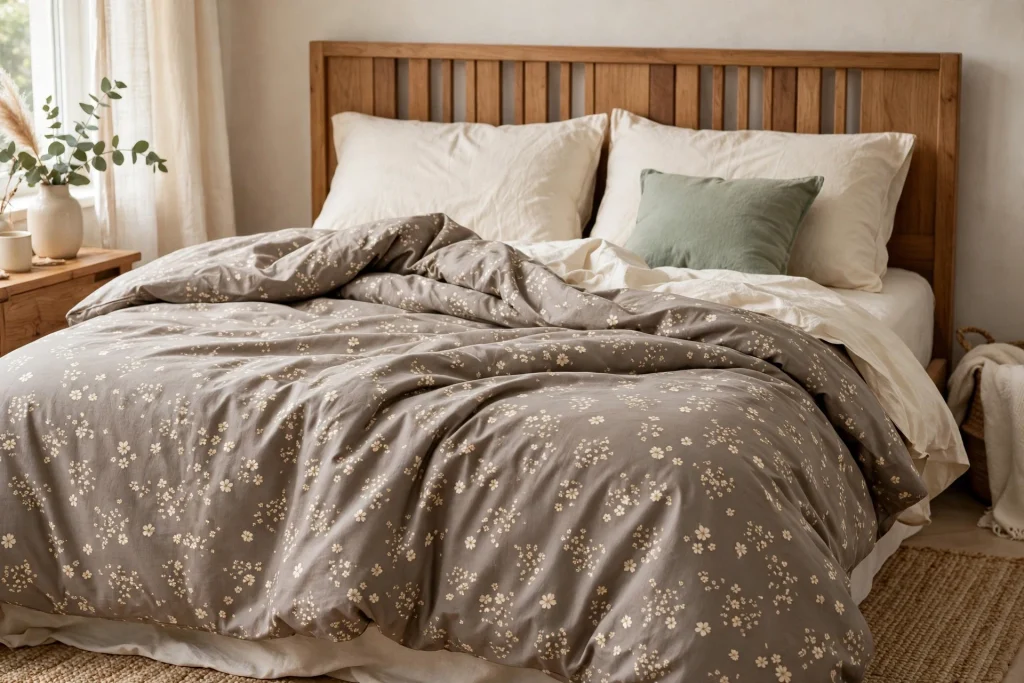
Ditsy florals work the same way as dots, with a softer mood. The flowers are small and scattered, so no single bloom draws attention, and the overall effect is closer to a texture than a print. Taupe or mushroom brown backgrounds with small cream flowers look especially calm, and they hide everyday wear better than white or pastel grounds. A ditsy floral duvet with plain cream pillowcases is the bed for a room that should feel soft, not busy. It is also the print that ages best, because small flowers never look dated the way big tropical blooms do.
Best for: Calm bedrooms, rented rooms, and anyone who wants pattern without boldness.
Cost: One duvet cover set. Effort: Swap the cover.
Choose a ground colour that already appears in your room, like the warm tone of a wooden floor or a beige rug, and the bed will look like it belongs there from day one.
You may also like: 21 Cozy Christmas Living Room Decor Ideas That Make Your Home Feel Magical
3. Thin Stripes, Reversible If You Can Find Them
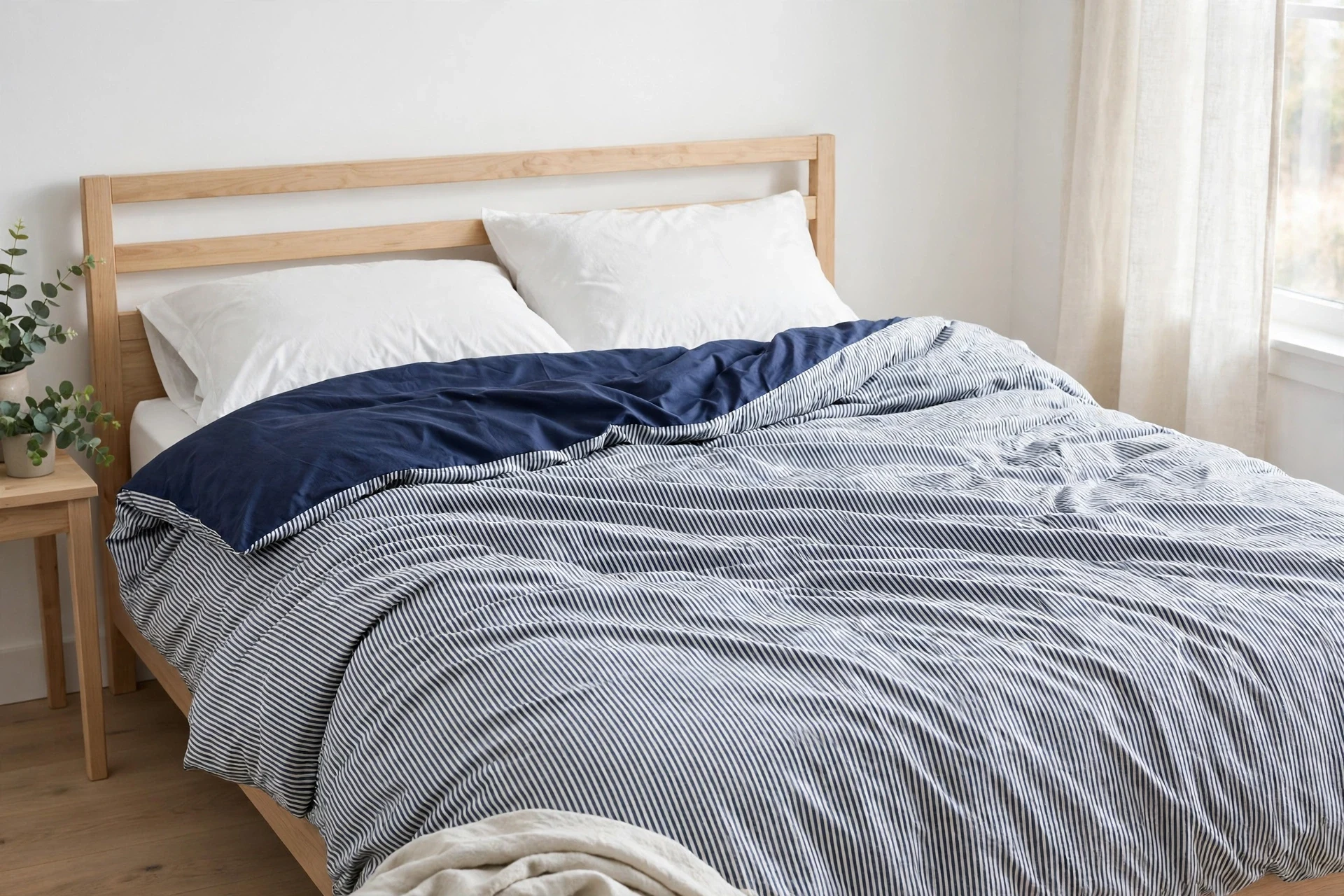
Stripes are the most forgiving print of all when the stripes are thin. A reversible duvet with stripes on one side and a solid colour on the other gives you two looks in one bedding set. Fold the top back and the contrast between the two sides looks intentional, even when the fold is lopsided. Thin stripes in navy and white, or sage and cream, read as calm even when the bed is not. Wide bold stripes are a different story. They show every fold, so keep them narrow and keep the colours close together.
Best for: Anyone who likes to change the look without buying a second set.
Cost: One reversible duvet cover. Effort: Swap the cover.
Fold the top third back loosely instead of smoothing it flat. The stripe edge against the solid side is the detail that makes the bed look styled, and it takes three seconds.
4. Gingham Checks in a Soft Colour
Gingham is the check that never tries too hard. Small checks in sage green, soft blue, or dusty pink on white read as fresh and tidy, even when the duvet is bunched at the foot of the bed. The grid gives the eye a regular rhythm to follow, and that rhythm hides lumps and folds the way dots do. Gingham works best as the only check on the bed. Pair it with plain pillowcases and one solid throw, and the bed looks like a cottage room that happens to be lived in. Two checks at once is where gingham turns busy, so let it stand alone. Best for: Cottage style rooms, spring refreshes, and guest rooms. Cost: One duvet cover set. Effort: Swap the cover. Small checks hide mess better than large ones. If the squares are bigger than your thumb, the print starts to read as blocks, and blocks show folds. Keep the checks small.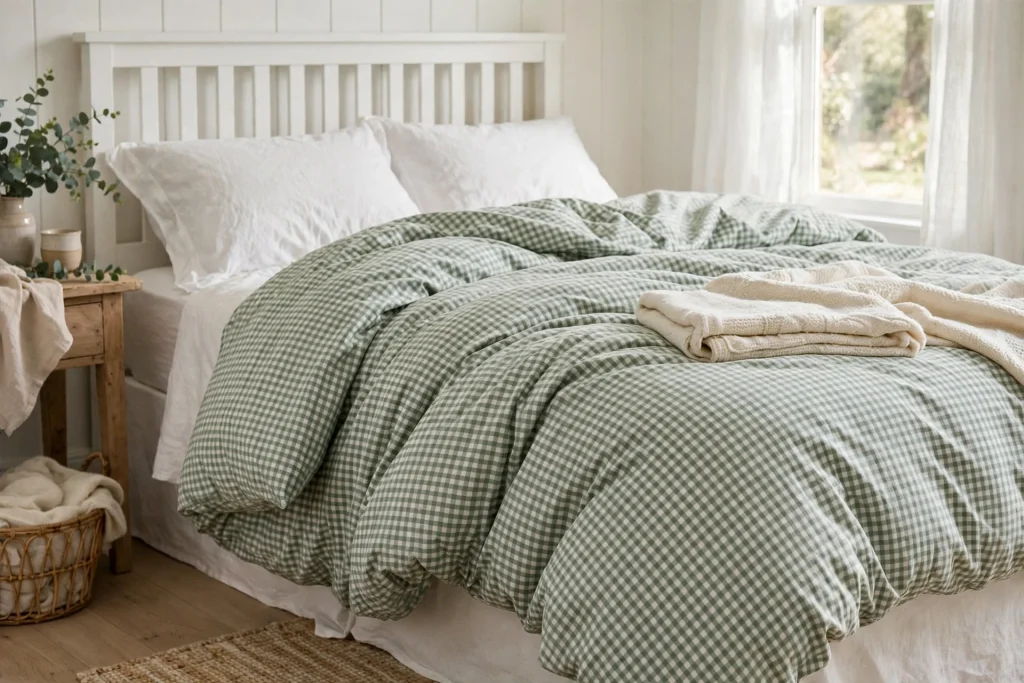
You may also like: 23 Friendsgiving Party Ideas That Make Hosting Feel Easy
5. Small Plaid for a Warm, Lived In Bed
Plaid is the warmest print in this group, and it is having a strong year. Small plaid in rust and cream, or navy and oatmeal, gives the bed a cozy cabin feel without looking heavy. The crossing lines break up the surface just like dots do, and the warm colours hide wear better than pale prints. Plaid is also the print that pairs best with texture. A plaid duvet with a knitted throw at the foot looks finished in a way a flat plaid set on its own does not. Keep the plaid small and the colours warm, and the bed will look inviting even when it is not made.
Best for: Fall and winter, cozy bedroom ideas, and rooms with wooden furniture.
Cost: One duvet cover set. Effort: Swap the cover.
Match one colour from the plaid to the throw or the rug, and the whole room will feel tied together. Two plaids in different sizes fight each other, so use only one.

Fabrics That Forgive
Pattern is half of it. Fabric is the other half. Some fabrics look their best pressed and fall apart the minute you lie on them. Others look better slept in. These five ideas are about the fabric itself, and they matter just as much as the print, because a forgiving fabric makes even a plain duvet look relaxed.6. Washed Cotton That Starts Soft
Washed cotton is the everyday pick. It goes through a washing process before it is sold, which takes away the stiff, shiny finish of new cotton and leaves it soft and slightly crinkled from the start. Since it never looked crisp, it cannot look un-crisp. A washed cotton duvet in a small print, or even a plain colour with a woven texture, looks the same at six in the evening as it did at eight in the morning. It is also the easiest fabric to live with. It washes well, it breathes, and it gets softer with every wash. Best for: Everyday beds, hot sleepers, and anyone who hates ironing. Cost: One washed cotton duvet cover. Effort: Swap the cover. Buy washed cotton, not regular cotton that claims to be soft. The label should say washed, garment washed, or stonewashed. Regular cotton starts stiff and only softens after many washes.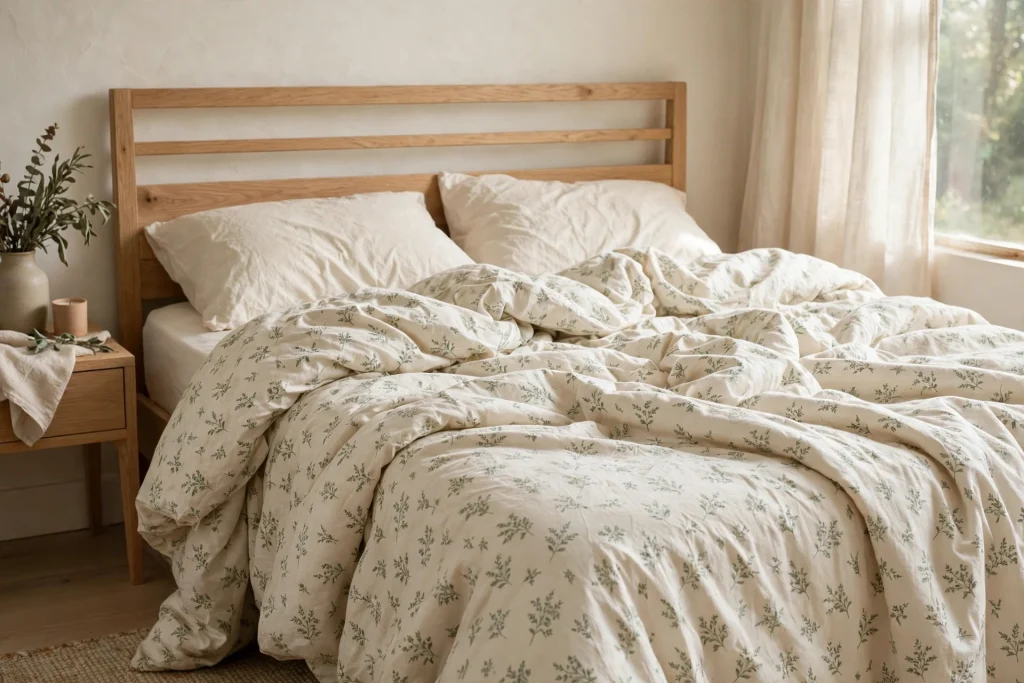
7. Linen That Wears Its Wrinkles Proudly
Linen goes further than washed cotton. It wrinkles naturally, and the wrinkles are part of the look. It is also breathable in summer and gets softer with every wash, which makes it the best fabric in this guide for warm rooms. The downside is price, and linen can feel scratchy for the first few washes, so buy a linen blend if pure linen is out of reach. A linen duvet in a muted stripe or a small check looks like a bed in a French farmhouse, and nobody in a French farmhouse makes the bed before coffee. Best for: Summer bedrooms, relaxed style, and anyone who loves natural fibres. Cost: One linen or linen blend duvet cover. Effort: Swap the cover. Wash linen in cool water and take it out while it is still slightly damp, then put it straight on the bed. The wrinkles that form on the bed are soft. The wrinkles that set in a dryer drum are sharp.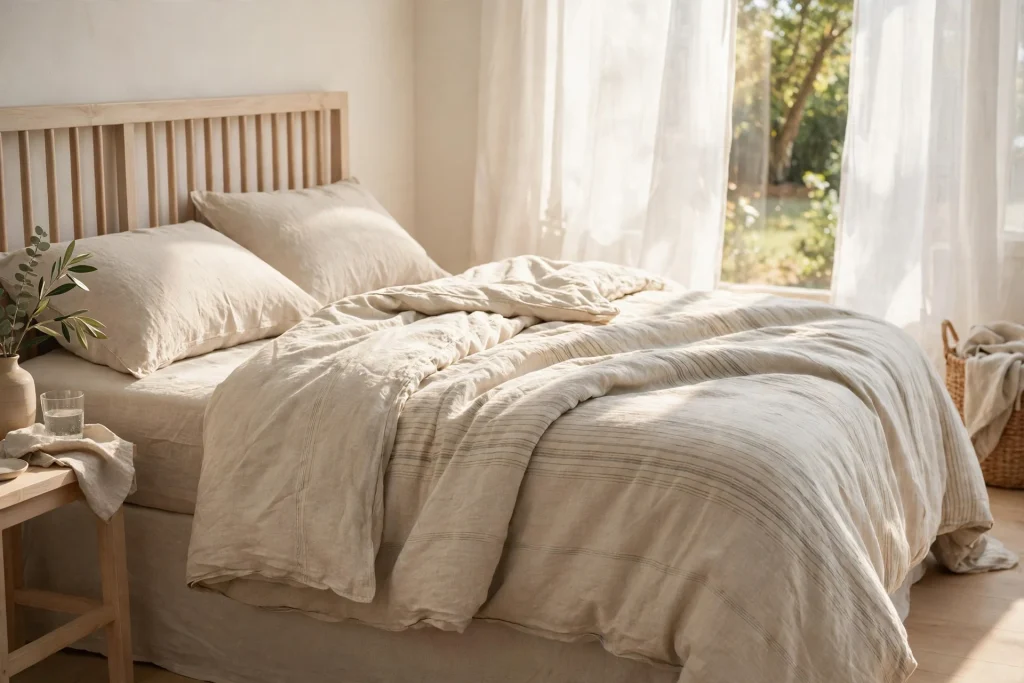
8. Quilted Cotton That Holds Its Shape
Quilted cotton has stitched lines running through it, which hold the shape of the duvet and give it a soft, padded surface that hides lumps underneath. A quilted coverlet in a small diamond or channel stitch pattern is the bed equivalent of a padded jacket. It smooths over whatever is underneath, and the stitching itself is a pattern, so you get the forgiving effect of a print without any colour at all. Use a quilted coverlet as the top layer over a plain duvet, and the bed looks dressed even when the duvet underneath is a mess. Best for: Beds with lumpy duvets, guest rooms, and anyone who likes texture over print. Cost: One quilted coverlet. Effort: Lay it on top. Pick a coverlet that reaches past the sides of the bed, so it covers the duvet edges. A short coverlet leaves the messy part showing, which defeats the purpose.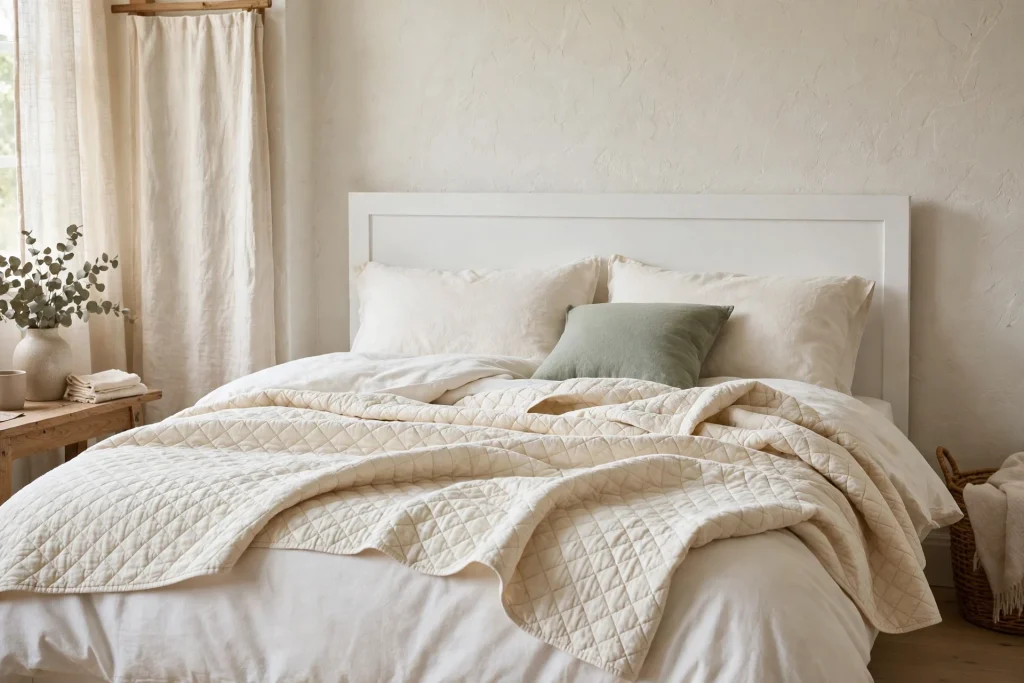
9. Percale, the Matte Cotton That Hides Creases
The weave matters too. Percale is matte and a little crisp, and its wrinkles look soft. Sateen has a smooth sheen that catches the light along every fold, so it shows creases more. If an unmade bed is the goal, percale is the safer cotton weave. A percale duvet cover in a small floral or dot print is crisp enough to feel fresh and matte enough to forgive. It is also the best weave for hot sleepers, because it breathes well and feels cool against the skin. Save sateen for the guest room you actually make. Best for: Hot sleepers, crisp fresh bedrooms, and anyone who dislikes sheen. Cost: One percale duvet cover. Effort: Swap the cover. Check the label for percale, not just cotton. A cotton sateen cover can look identical in the bag and behave completely differently on the bed.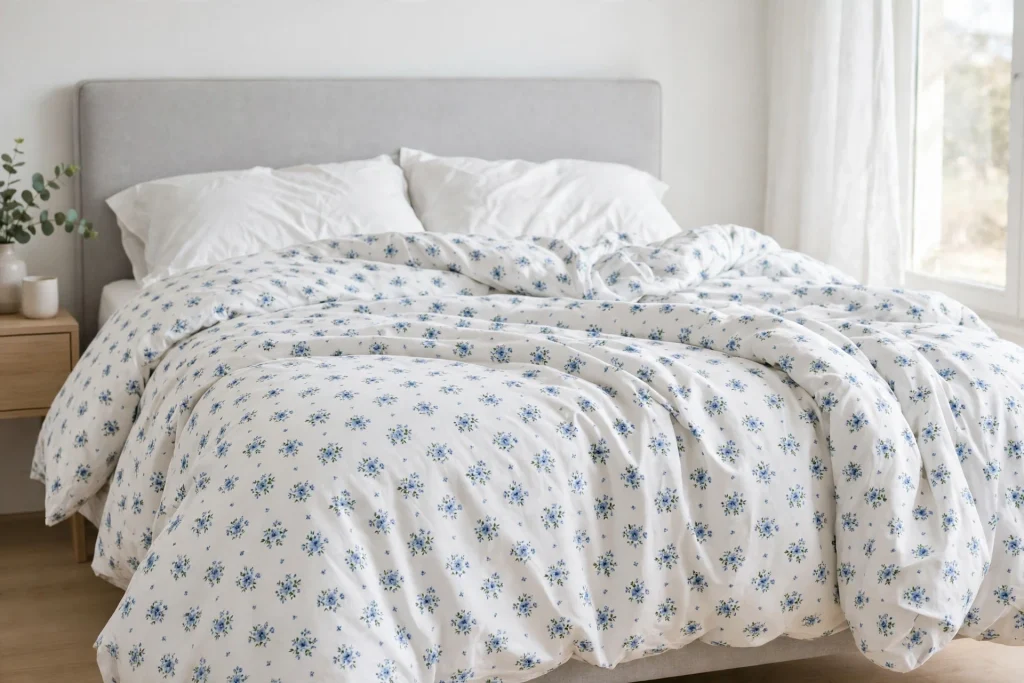
10. Brushed Flannel for Cold Mornings
For winter, brushed fabrics like brushed cotton, flannel, or fleece backed covers add warmth and a matte, fuzzy surface where creases simply disappear into the nap. A flannel duvet in a small plaid or a tiny star print is the coziest bed in this guide, and it is the one that looks most forgiving on a cold dark morning, because the fuzzy surface swallows every fold. Flannel is warm, so save it for cold months or cold rooms. In a warm room it will make you kick the duvet off by midnight, and a duvet on the floor is a different problem. Best for: Winter bedrooms, cold rooms, and anyone who sleeps cold. Cost: One flannel duvet cover set. Effort: Swap the cover. Wash flannel in cool water and skip the fabric softener. Softener coats the fibres and makes flannel less absorbent and less soft over time.
Colour Moods, Not Matching Sets
Matching sets look neat in the package and a bit stiff on the bed. Choosing a colour mood instead gives you room to mix one patterned piece with plain ones, and it makes replacing a single pillowcase later much easier. These four ideas are the moods that work best with patterned bedding, and each one is a full recipe for a bed.11. Pale Blue and Cream, the Fresh Mood
Pale blue and cream is the fresh option. It suits rooms with lots of daylight, white walls, and light wood, and it pairs well with navy or brown accents in small doses. A pale blue dotted duvet, cream pillowcases, and one navy cushion is the whole recipe. If you are after cute bedding ideas for a small room or a first apartment, pale blue with brown dots is hard to beat. It is playful, but not childish, as long as the rest of the room stays plain. A leaf or small sprig print on cream, with one dark accent colour, sits in the same family and looks light even with a full duvet. Best for: Small rooms, first apartments, and bright daylight rooms. Cost: One patterned duvet plus plain pillowcases. Effort: Swap the cover. Keep the accent colour to one piece only, a cushion or a throw. Two navy pieces and a brown piece start to look like three different moods.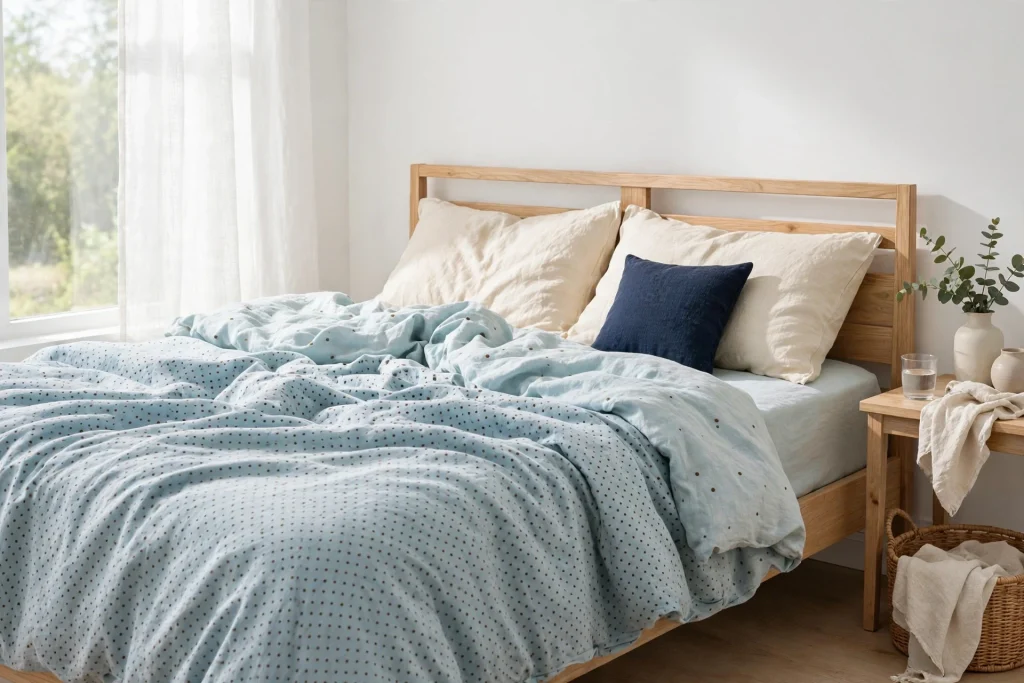
You may also like: 22 Cozy Christmas Apartment Decor Ideas for Small Spaces
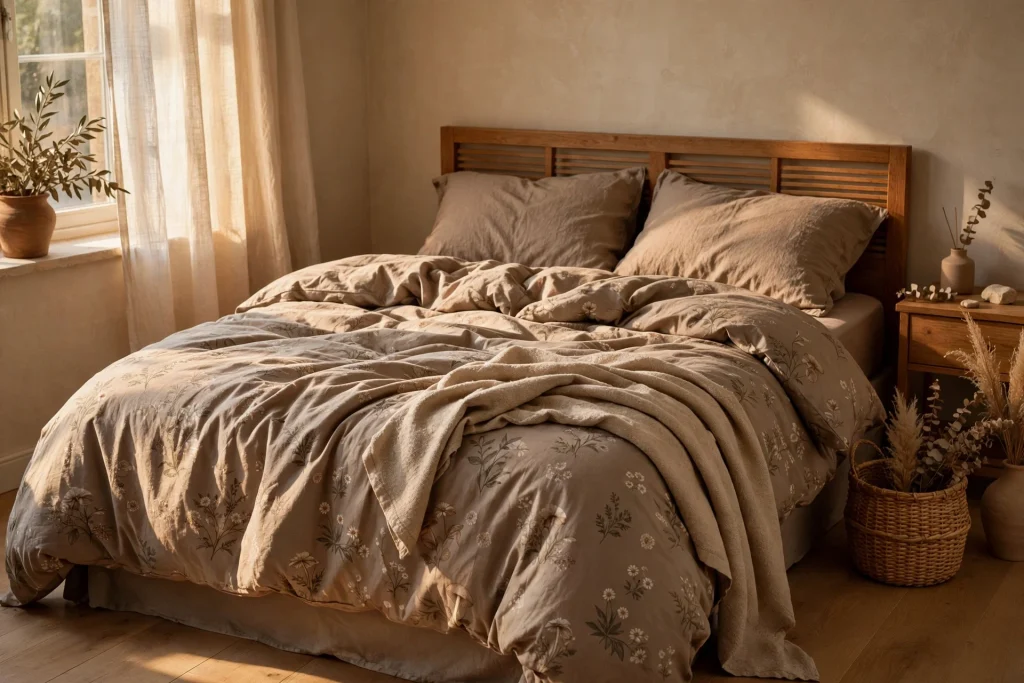
12. Taupe and Brown, the Warm Mood
Taupe and brown is the warm option. Mushroom, coffee, and sand tones layered together look calm and hide everyday life very well. A taupe ditsy floral duvet, mushroom pillowcases, and a sand coloured throw at the foot is a bed that looks like a warm hug and shows almost nothing. This mood suits rooms that already lean natural, with wooden floors, woven baskets, and plants. It is also the most forgiving mood for stains and wear, because warm mid tones hide more than pale ones do.
Best for: Natural style rooms, earthy bedrooms, and anyone who hates visible wear.
Cost: One patterned duvet plus plain pillowcases. Effort: Swap the cover.
Layer three warm tones, not one. A single taupe shade looks flat. Mushroom plus coffee plus sand gives the bed depth without adding a new colour.
You may also like: 21 Cozy Christmas Living Room Decor Ideas That Make Your Home Feel Magical
13. Dark Florals, the Moody Mood
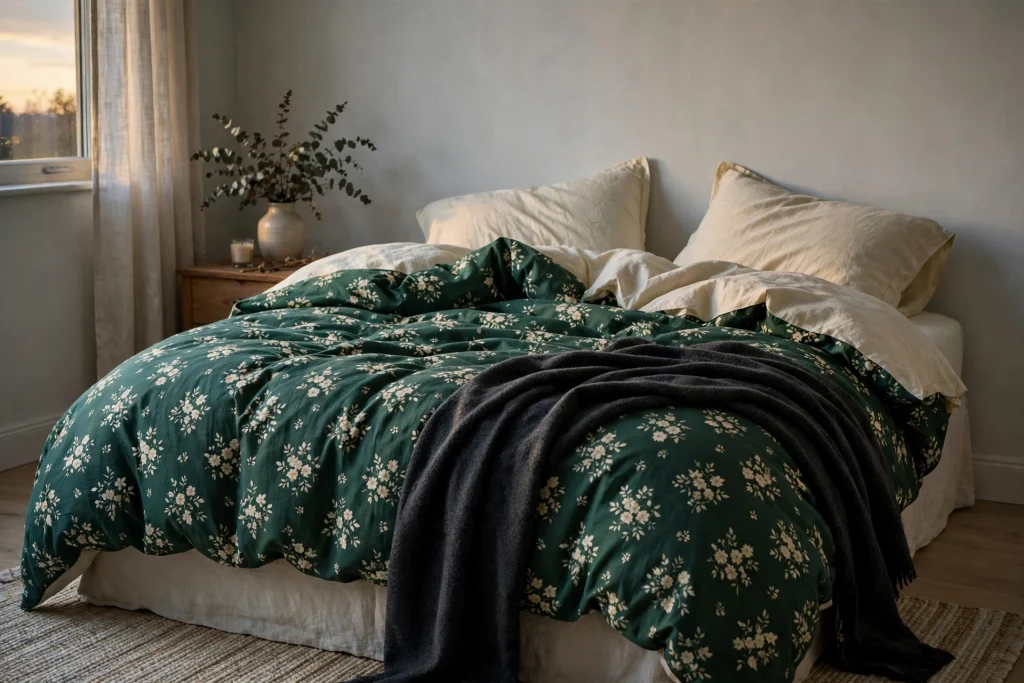
Dark florals are the moody option. Bedding sets in chocolate, charcoal, or deep green with a lighter floral pattern make a bedroom feel enclosed and quiet, especially in fall and winter. They work best when the walls are light or mid tone, so the bed becomes the darkest thing in the room. A deep green duvet with cream flowers, pale pillowcases, and a dark throw is a bed that looks like a library at night. It hides wrinkles better than any pale print, because dark grounds swallow shadows, and it makes the room feel calm the moment you walk in.
Best for: Fall and winter, moody bedrooms, and light walled rooms.
Cost: One dark floral duvet cover set. Effort: Swap the cover.
Keep the pillowcases pale. Dark pillowcases against a dark duvet turn the whole bed into one dark block, and the pattern disappears.
You may also like: 22 Black and Silver Nails That Shine Through Party Season
14. One Shared Colour Across Mixed Patterns
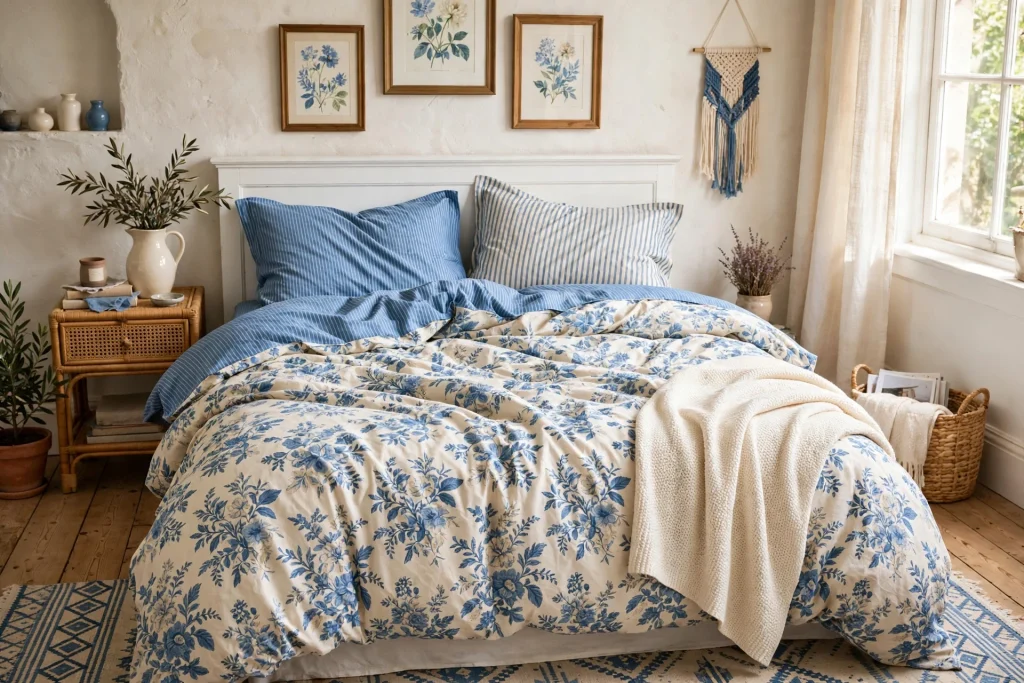
Eclectic bedding, where a floral pillowcase meets a striped duvet and a gingham sheet, can work too. The rule is one shared colour across all the patterns. Without it, the mix looks like whatever was clean that week. Pick a floral duvet in blue and cream, striped pillowcases that include the same blue, and a plain cream throw. The shared blue ties everything together, and the bed looks collected, not chaotic. Most of the mixed bedding you see saved on Pinterest quietly follows this rule, even when it looks effortless.
Best for: Collectors, maximalists, and anyone who already owns pieces in different prints.
Cost: Nothing new, if you already own the pieces. Effort: Ten minutes of sorting.
Hold every piece up against the duvet before it goes on the bed. If it shares at least one colour with the duvet, it stays. If it shares none, it goes in the cupboard.
Fewer Layers, Smarter Layers
The more layers a bed has, the more there is to put back each morning. Six decorative pillows, a bed runner, a coverlet, and a folded throw look great in a catalog and take ten minutes to rebuild. Most of that disappears onto the floor at night anyway. These four ideas cut the layers down to the ones that earn their place.15. The Three Pillow Bed
A simpler setup looks just as finished. A duvet on top, a throw folded loosely at the foot, and two or three pillows: one pair to sleep on, and maybe one smaller pillow in front. If you skip everything else, the bed still looks dressed, and pulling the duvet up takes ten seconds. The trick is choosing pillows that work while you sleep, not pillows that only look good. Two sleeping pillows in patterned cases and one small cushion is the whole setup. Anything more is a nightly chore disguised as decor. Best for: Anyone who is tired of rebuilding a pillow mountain every morning. Cost: Nothing, if you already own the pillows. Effort: Remove the extras. Store the extra pillows in the cupboard for a week before you give them away. If you do not miss them, you never needed them.
16. A Throw at the Foot That Does the Work
The throw at the foot does more work than it seems. It covers the part of the duvet that gets pushed around most, and it adds a second texture without adding a step. A folded throw in a solid colour that matches one colour in the duvet, laid loosely across the bottom third of the bed, hides the messiest part of the bed and makes the whole thing look planned. It also keeps your feet warm on cold nights, which is a better job than any decorative pillow ever did. Best for: Every bed, every season, and anyone who wants one easy win. Cost: One throw. Effort: Fold and lay it down. Fold the throw in thirds lengthways, then lay it across the foot. A throw that is bunched into a ball looks like laundry. A throw folded once looks like styling.
17. Two Single Duvets, the Scandinavian Way
For couples who sleep at different temperatures, two single duvets on one bed, the Scandinavian way, end the nightly tug of war and still look tidy under one bedspread. Each person gets a duvet in their own pattern, one striped and one floral, in the same colour mood, and the bed looks like a deliberate pair instead of a compromise. In the morning, each person pulls up their own half, which takes five seconds and needs no agreement about how a bed should look. Best for: Couples, hot and cold sleepers, and anyone tired of the duvet tug of war. Cost: Two single duvet covers. Effort: Swap the covers. Keep both duvets in the same colour mood, or the bed will look like two single beds pushed together. One shared colour is enough to tie them into a pair.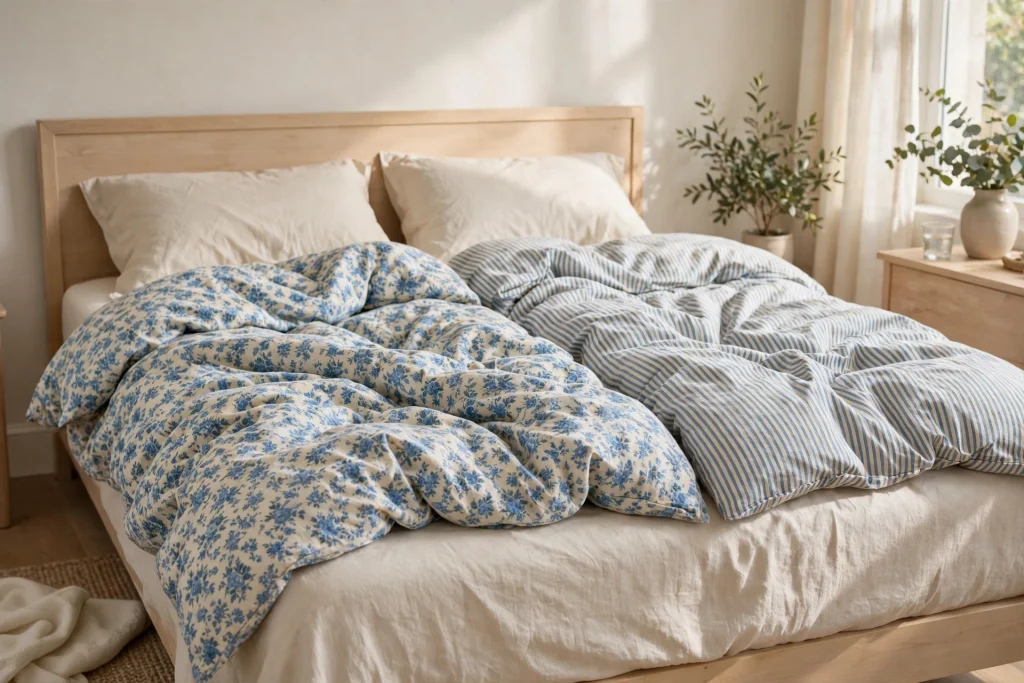
You may also like: 23 Friendsgiving Party Ideas That Make Hosting Feel Easy
18. A Reversible Duvet That Flips the Mess Away
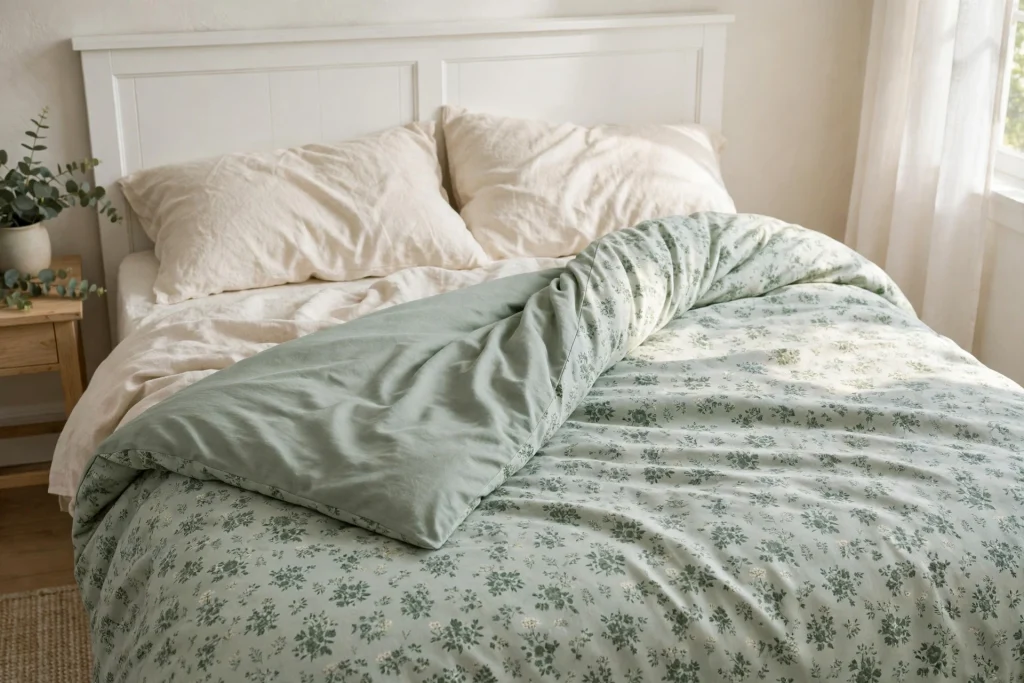
A reversible duvet with a pattern on one side and a solid on the other is the fastest refresh in this guide. When one side starts to look tired, flip it. When the pattern side is rumpled, fold the top back so the solid side shows, and the bed looks like you styled it on purpose. It is two beds for the price of one cover, and it means you can change the mood of the room in a minute without washing anything. Keep the solid side in a colour from the pattern, and the two sides will always match.
Best for: Renters, small budgets, and anyone who gets bored of one look.
Cost: One reversible duvet cover. Effort: Flip it.
Wash the cover inside out. The pattern side fades slower, and the solid side stays even, so both sides keep looking new for longer.
Details That Do the Work
The last group is the quiet one. These four ideas are small details that change how the whole bed reads, without a new duvet or a new colour scheme. They are the finishing touches that make an unmade bed look like a choice.19. Ruffled Edges That Are Messy by Design
Ruffles and lace trims deserve a mention here too. A ruffled edge on pillows and a duvet is already soft and uneven by design, so a slightly messy bed reads as romantic rather than unfinished. Ruffled bedding sets look better a little rumpled than neatly made, because the ruffles have room to fall naturally. One ruffled pillowcase or a ruffled duvet edge is enough. A whole bed of ruffles turns frilly, and frilly is a mood, not a shortcut. Best for: Romantic bedrooms, soft style, and anyone who loves texture. Cost: One ruffled pillowcase or duvet cover. Effort: Swap the cover. Keep the print small and the colour pale. Big ruffles in a bold print fight each other, and the bed ends up looking busy instead of soft.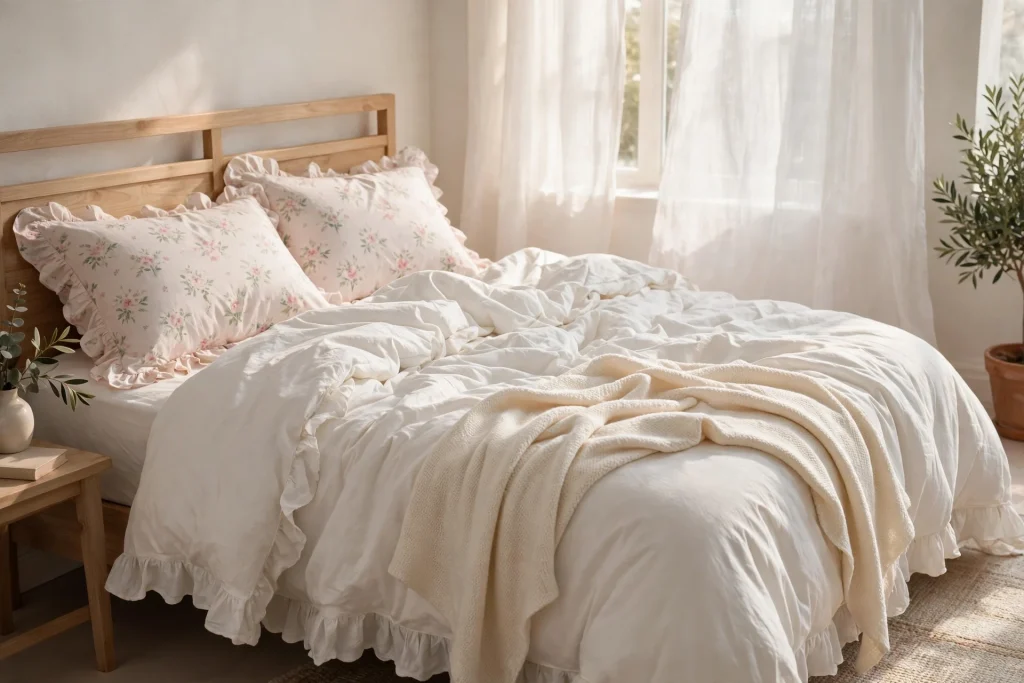
20. Jacquard Texture That Needs No Colour
Textured jacquard does the same job as a print without colour. The pattern is woven into the fabric, so light catches the raised parts and the surface already looks varied before you have touched it. A jacquard duvet in cream or oatmeal, with a woven diamond or leaf pattern, hides wrinkles the way a print does, but it works in rooms where colour would be too much. It is the most elegant idea in this guide, and the one that suits a calm, grown up bedroom best. Best for: Minimal rooms, calm bedrooms, and anyone who wants pattern without colour. Cost: One jacquard duvet cover. Effort: Swap the cover. Let the light do the work. A jacquard bed near a window shows its pattern best in morning light. In a dark corner, the texture disappears and the bed looks plain.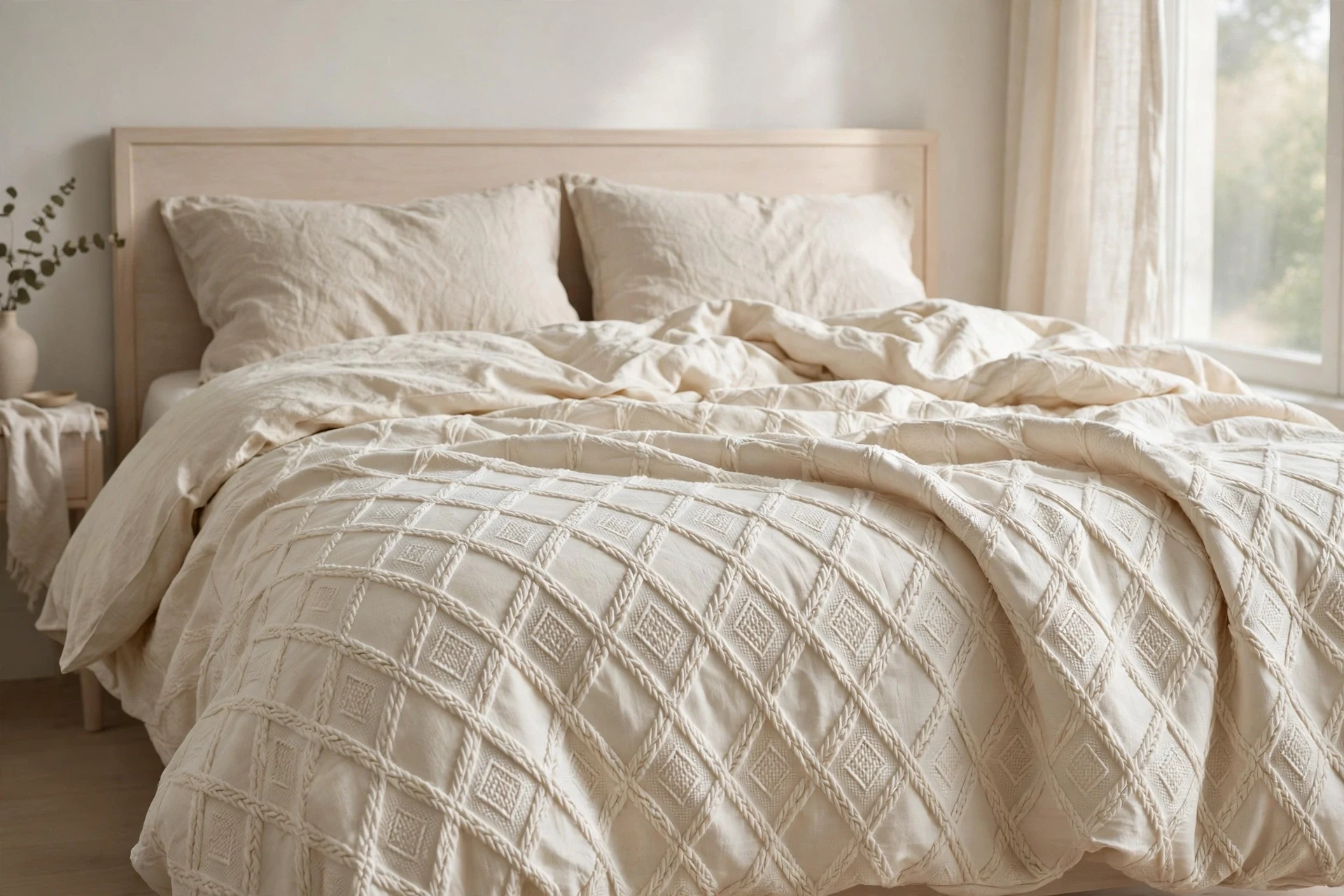
You may also like: 22 Christmas Decor Ideas 2026 That Set This Season’s Trends
21. Patterned Pillowcases Only, Plain Duvet
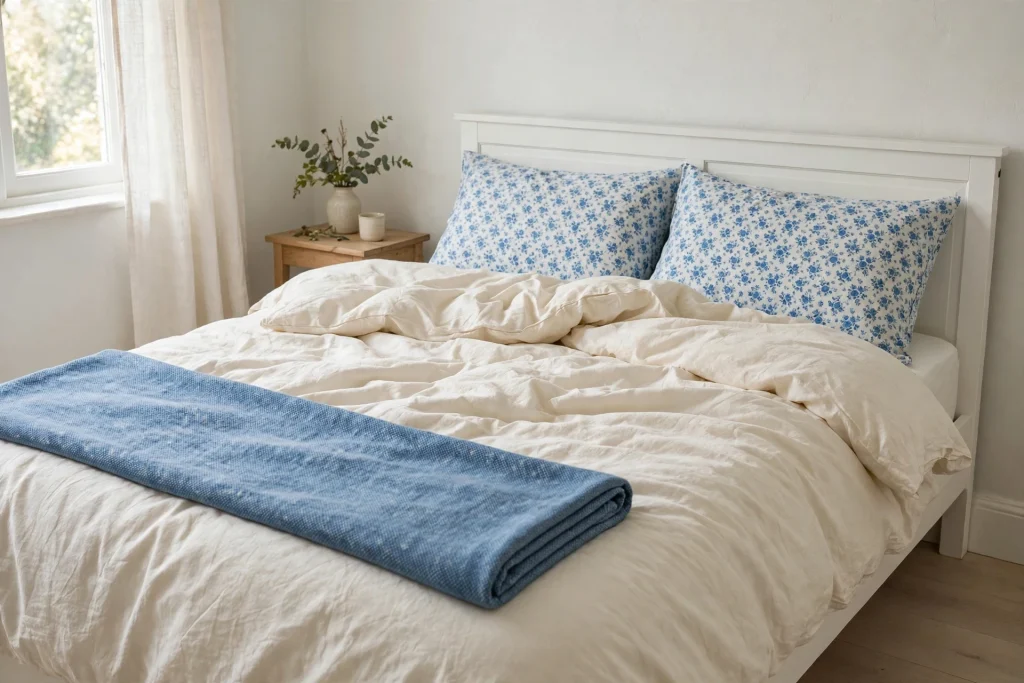
If a full patterned duvet feels like too much, put the pattern on the pillowcases and keep the duvet plain. Two pillowcases in a small floral or stripe, against a plain cream or white duvet, give the bed a patterned look with half the commitment and half the price. It is also the easiest way to test a print before you buy the whole set. If you love the pillowcases after a month, buy the matching duvet. If you do not, you have spent very little to find out.
Best for: Cautious first timers, tight budgets, and anyone who changes their mind often.
Cost: Two patterned pillowcases. Effort: Swap the cases.
Pick pillowcases in the same print family as the throw, so the two patterned pieces talk to each other across the bed. A floral case and a striped throw need one shared colour to hold together.
You may also like: 22 Cozy Christmas Apartment Decor Ideas for Small Spaces
22. Wash It Right So It Gets Softer, Not Stiffer
A good bedding set should feel better after a year than on the first night. A few habits make that happen. Wash in cool or lukewarm water rather than hot, which keeps colours from fading and fibres from shrinking. Use less detergent than the cap suggests, since leftover soap makes fabric stiff. Skip fabric softener on linen and washed cotton, because it coats the fibres and makes them less absorbent over time. Dry on low heat, or line dry and finish with a few minutes in the dryer to soften. Take the bedding out while it is still slightly damp and put it straight on the bed. Linen and washed cotton keep getting softer with every wash, so the bedding set you buy this fall should be at its best by spring.
Best for: Every bed in this guide, and every set you already own.
Cost: Nothing. Effort: Change the wash routine.
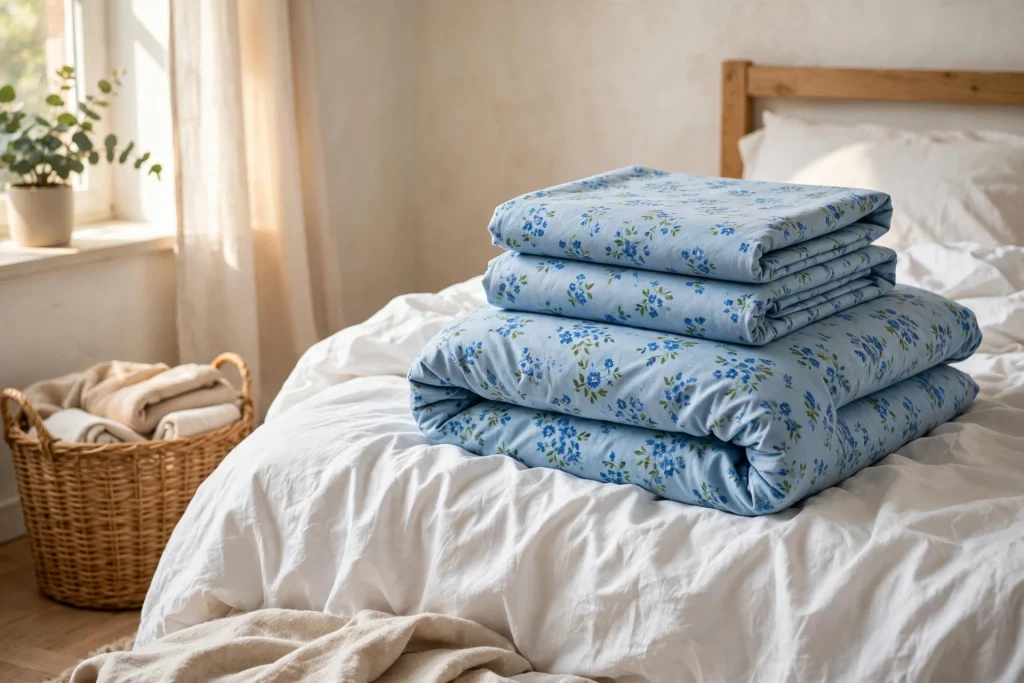
Fold the sheet and the duvet cover and tuck them inside one of the matching pillowcases, so each set stays together on the shelf. It saves a morning of hunting for the right case.
The 1-2-3 Bedding Method: One Print, Two Plain Pieces, Three Steps
If you take one thing from this guide, take this. You do not need twenty-two ideas. You need one print, two plain pieces, and three steps.
One print. Pick one small print you love, dots, ditsy florals, thin stripes, gingham, or small plaid, and put it on the duvet cover. The duvet is the largest surface on the bed, so it is where the print does its work. One print is enough. Two prints need a rule, and three need a plan.
Two plain pieces. Pick two plain pieces in colours from the print. Pillowcases in one colour and a throw in another, or a throw and a cushion, it does not matter which two. The plain pieces give the eye somewhere to rest, and they are the parts you can swap when you want a new mood without buying a new duvet.
Three steps. Put the patterned duvet on the bed. Add the two plain pieces. Pull the duvet up loosely and leave it. That is the method behind every idea in this guide, and it is the reason none of them takes more than ten minutes. The print hides the mess, the plain pieces calm it down, and you do the pulling up. Everything else in this guide is a variation on those three steps, for the rooms where the first plan does not fit.
At a Glance: Every Idea, Its Cost, and Its Effort
| # | Idea | Best For | Cost | Effort |
|---|---|---|---|---|
| 1 | Small Polka Dots on Pale Blue | First apartments | One duvet cover set | Swap the cover |
| 2 | Ditsy Florals on a Warm Ground | Calm bedrooms | One duvet cover set | Swap the cover |
| 3 | Thin Stripes, Reversible | Changing the look | One reversible cover | Swap the cover |
| 4 | Gingham Checks in a Soft Colour | Cottage rooms | One duvet cover set | Swap the cover |
| 5 | Small Plaid for a Warm Bed | Fall and winter | One duvet cover set | Swap the cover |
| 6 | Washed Cotton That Starts Soft | Everyday beds | One washed cotton cover | Swap the cover |
| 7 | Linen That Wears Its Wrinkles | Summer bedrooms | One linen cover | Swap the cover |
| 8 | Quilted Cotton That Holds Its Shape | Lumpy duvets | One quilted coverlet | Lay it on top |
| 9 | Percale, the Matte Cotton | Hot sleepers | One percale cover | Swap the cover |
| 10 | Brushed Flannel for Cold Mornings | Winter bedrooms | One flannel set | Swap the cover |
| 11 | Pale Blue and Cream Mood | Small bright rooms | Duvet plus plain cases | Swap the cover |
| 12 | Taupe and Brown Mood | Natural rooms | Duvet plus plain cases | Swap the cover |
| 13 | Dark Florals Mood | Moody bedrooms | One dark floral set | Swap the cover |
| 14 | One Shared Colour, Mixed Patterns | Collectors | Nothing new | Ten minutes sorting |
| 15 | The Three Pillow Bed | Pillow mountain haters | Nothing | Remove the extras |
| 16 | A Throw at the Foot | Every bed | One throw | Fold and lay it down |
| 17 | Two Single Duvets | Couples | Two single covers | Swap the covers |
| 18 | A Reversible Duvet | Renters | One reversible cover | Flip it |
| 19 | Ruffled Edges | Romantic bedrooms | One ruffled case or cover | Swap the cover |
| 20 | Jacquard Texture | Minimal rooms | One jacquard cover | Swap the cover |
| 21 | Patterned Pillowcases Only | Cautious first timers | Two pillowcases | Swap the cases |
| 22 | Wash It Right | Every bed | Nothing | Change the wash routine |
Do This, Not That
Do pick a small print. Small dots, small flowers, thin stripes, and small checks read as texture, and textures hide creases.
Do not pick a big bold print for an unmade bed. Big shapes give the eye one large form to follow, and every wrinkle cuts right across it.
Do pick a fabric that is meant to look rumpled. Washed cotton, linen, and brushed flannel all look better slept in than pressed.
Do not pick sateen for a bed you never make. Its sheen catches the light along every fold, so it shows creases more than matte percale does.
Do choose one colour mood, not a matching set. Two or three colours repeated across the bed look planned, and replacing one piece later is easy.
Do not mix three patterns with no shared colour. Without one colour tying them together, the mix looks like whatever was clean that week.
Do keep the layers few. A duvet, a throw at the foot, and two or three pillows is a finished bed that fixes itself in ten seconds.
Do not keep six decorative pillows on a bed you sleep in. They end up on the floor every night, and rebuilding them every morning is a chore disguised as decor.
Do wash in cool water and use less detergent. Colours last longer, fibres stay soft, and the bedding gets better with every wash.
Do not use fabric softener on linen or washed cotton. It coats the fibres, makes them less absorbent, and undoes the softness you paid for.
Your Bedroom Refresh Week Plan
Here is a week of bedding changes from this guide, one for each kind of day. Change the days to fit your life, but keep the shape: something free first, something new in the middle, and something restful at the end.
Monday, a free start. Do the Three Pillow Bed. Take the extra pillows off the bed and put them in the cupboard. Pull the duvet up loosely. Look at the bed. It already looks calmer.
Tuesday, a sorting night. Do One Shared Colour. Pull every pillowcase, throw, and duvet cover you own onto the bed, and keep only the pieces that share a colour with your favourite duvet. Put the rest away.
Wednesday, a throw night. Buy or find a throw in a solid colour from your duvet print, fold it in thirds, and lay it across the foot of the bed. It hides the messiest part and adds a second texture.
Thursday, a fabric night. Swap the duvet cover for washed cotton or percale in a small print. Sleep on it. Notice how the bed looks in the morning without you touching it.
Friday, a mood night. Build one colour mood properly. Pale blue and cream for a bright room, taupe and brown for a warm one, dark florals for a moody one. Two plain pieces, one print, and the bed is done.
Saturday, a couples fix. If you share the bed, try Two Single Duvets for one night. Each person pulls up their own half in the morning. See if anyone misses the tug of war.
Sunday, a wash day. Wash the set in cool water, use less detergent, skip the softener, and take it out slightly damp. Put it straight on the bed. Fold the spare set inside its pillowcase on the shelf, so next week starts easy.
Take It Further
If you liked these patterned bedding ideas, these Supliice guides will help you plan the rest of the room.- 22 Cozy Christmas Apartment Decor Ideas for Small Spaces, for small rooms that need every trick in this guide.
- 21 Cozy Christmas Living Room Decor Ideas That Make Your Home Feel Magical, for a living room that feels as relaxed as the bedroom.
- 22 Fireplace Mantel Ideas for Fall and Christmas That Work, for the room next door, once the bedroom is done.
- 22 DIY Candles That Make Fall Feel Warm and Truly Special, for the warm light that makes patterned bedding glow.
- 22 Holiday Cleaning Checklist Ideas for a Calm, Ready Home, for the wash routine and the tidy shelf in one place.
- 23 Friendsgiving Party Ideas That Make Hosting Feel Easy, for hosting in a home that finally feels finished.
- 22 Cozy Weeknight Dinners for Tired Nights in 30 Minutes, for dinners that leave time to enjoy the bed you just dressed.
Bedding Cheat Sheet
- One print, two plain pieces, three steps: patterned duvet on, plain pieces added, duvet pulled up loosely.
- Small prints hide mess. Big prints show it. Keep dots, flowers, stripes, and checks small.
- Washed cotton, linen, and flannel forgive. Sateen shows every fold. Percale is the safe matte cotton.
- One colour mood beats a matching set. Repeat two or three colours across the bed.
- Three pillows are enough. A throw at the foot hides the messiest part.
- Two single duvets end the tug of war. One shared colour keeps them looking like a pair.
- Wash cool, use less detergent, skip softener on linen and washed cotton. Take bedding out slightly damp.
- Store each set inside its own pillowcase, so the pieces stay together on the shelf.
- The one spare: a solid throw in a colour from the duvet. It fixes any bed in ten seconds.
- The one thing to skip: any bedding that needs ironing to look good. If it does, it is not a bed you will ever leave unmade.
Questions People Ask
Yes, and it is one of the most classic combinations that works. Pair a floral duvet with striped pillowcases in a colour pulled from the floral print, and keep the stripes thin and muted so they ground the flowers instead of competing with them. The trick is scale: one large floral with one small stripe, never two large prints side by side. Add a plain throw between them if the two prints touch and feel busy.
Follow three rules and the mix stays calm. First, stick to two or three anchor colours plus one neutral, and make sure every piece shares at least one anchor colour. Second, vary the pattern scale, with one large focal pattern on the duvet and smaller supporting prints on the pillowcases. Third, use solid textures as visual breaks, like a plain throw or plain sheets. Start with a neutral base, add your boldest pattern on the duvet, then layer the smaller prints on top.
Yes, and small patterns hide them best. A small print breaks up the surface of the bed, so the eye reads the pattern first and the creases second, which is why polka dots, ditsy florals, and thin stripes all work so well on unmade beds. Textured weaves help too: waffle weave, quilted cotton, and jacquard hide creases better than flat sateen. The combination that hides the most is a small print in a matte, textured fabric like washed cotton or linen.
Washed cotton is the best everyday choice, because it starts soft and slightly crinkled, so it never looked crisp and cannot look un-crisp. Linen is the best relaxed choice, because its wrinkles are part of the look and it gets softer with every wash, though it costs more and can feel scratchy at first. If you want the least wrinkling of all, a cotton polyester blend or microfiber resists creases best, but it sleeps warmer than cotton. For most people, washed cotton in a small print is the sweet spot.