Too Long; Didn’t Read
New year vision board ideas are at their best right now, in the last week of December and the first week of January, and that is the honest frame for this guide. The main term, new year vision board ideas, scores 0 on Google right now in November and peaks at 100 in the week of December 29 to January 4 every year, so this is a New Year guide, not an evergreen one. A vision board is a collection of images and words that represent the life you are working toward, and the best ones are not the prettiest. They are the most specific: a few clear goals, one or two pictures each, and words that sound like you. One honest note before you start: a vision board is a planning tool, not a promise. It cannot guarantee an outcome, control other people, or replace action. What it can do is keep your direction in front of you every day, with one small action next to each picture, so the year moves in the direction you chose.
What's Inside This Guide
ToggleThe January I Put Thirty Pictures on One Board
Two years ago I made my first vision board on the last day of December. I was excited, and I put everything on it: a new job, a new house, a holiday, a marathon, a book, a business, a garden, and about twenty other things. Thirty pictures, eight goals, and not one action next to any of them. It looked beautiful on the wall. By March I had stopped looking at it, because it reminded me of everything I had not done, and by June I had taken it down.
That board taught me the thing this whole guide is built on. A vision board works better when it starts with a structured review of the year ending, not a blank page. Look back at what actually moved, what you outgrew, and what you kept avoiding, then build one direction from that. A board with three clear priorities and one small action next to each picture is a plan. A board with thirty pictures and no actions is a poster.
These 21 new year vision board ideas follow that rule. Every one of them tells you what to put on the board, how to make it, and what small action goes next to it. Start with the year behind you, choose three priorities, and let the rest follow. The board will not do the year for you. It will keep you pointed in the direction you chose, and that is enough.
The 3 Things That Make a Vision Board Work
Before you collect a single image, it helps to know what you are aiming for. After a few New Years of getting this wrong and then right, I have landed on three things. Every one of the new year vision board ideas in this list comes back to these three things. If a board has all three, it guides the year. If it is missing one, it becomes a poster you stop looking at by March.
A review before a single picture
The biggest change in how I make a board is that I start with the year ending, not the year beginning. Before you collect a single image, sit down with your calendar, your photos, your bank statements, and your messages, and answer five questions about the year just gone. What actually moved? What did you keep avoiding? What did you outgrow? The look back is most of the work of a good board, and it is the part most people skip.
Three priorities, not thirty pictures
The second thing is focus. A board covering every area of your life gives you guidance about none of them, and January is the month people most want to cover everything. Choose three priorities for the year, give those three the biggest space on the board, and let everything else stay small in the background. Three priorities, one image each, and one small action next to each one. That is a plan. Thirty pictures is a wish list.
One action next to every picture
This is the one people skip, and it is the one that matters most. A picture on its own is a wish. A picture with one small action next to it is a plan. For every image, write one small step you can take this week, in the form of when X happens, I will do Y. The board shows you where you are going. The weekly step is how you start moving. Without the action, the board is decoration. With the action, it is a tool.
Neuman’s Note: The year I learned this, I made a board with a picture of a marathon on it. I had never run further than five kilometres, and I had no plan to start. The picture stayed on the wall for a year, and I never ran once. The next year I put a picture of running shoes on the board, and next to it I wrote one line: when I finish my morning chai, I will walk for twenty minutes. I walked every day in January, I ran in March, and I finished a ten-kilometre race in October. The picture did not make me run. The small action next to it did.
The 21 Ideas
I have grouped these by step, because that is how you actually make a board. Start with the year behind you, choose your direction, build the board, then live with it all year. Work through one group at a time, and stop when the board feels done. It will feel done sooner than you think.
Start With the Year Behind You
A good board starts with a look back, not a blank page. These four ideas are the review that makes the rest of the board honest.
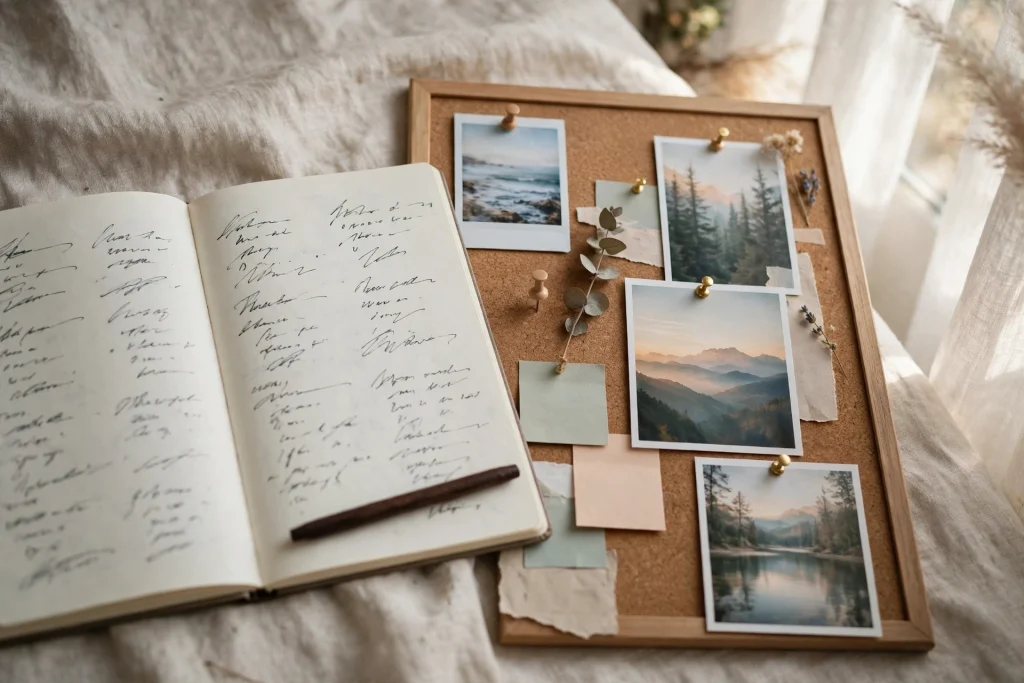
1. The Five Questions Review
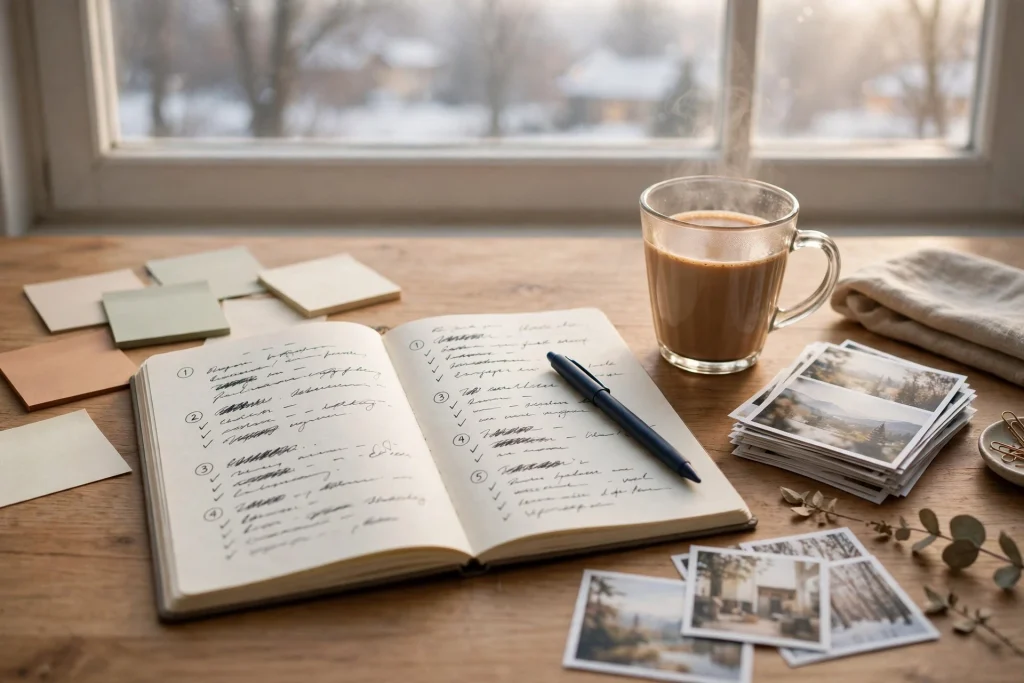
Before you collect a single image, answer five questions about the year just gone. What actually moved? What did I keep avoiding? What did I outgrow? What gave me energy? What drained me more than I admitted? Write the answers down, honestly, and let them shape the board. The review produces three piles: what to carry forward, what to leave behind, and what to start. Sorting them honestly is most of the work of a good new year board.
Do this with a pen and paper, not on a screen, because writing by hand slows you down enough to think. Give yourself an hour, a quiet room, and a cup of chai. The answers will surprise you, and the board will be better for it.
Best for: Anyone making their first board, and anyone who wants an honest start.
Cost: A notebook and a pen, 0 to 10 dollars. Time: About 1 hour.
Include the small things in what actually moved, because there will be more of them than you expect, and they are the honest measure of a year. A small thing that moved is worth more than a big thing you meant to do and did not.
You may also like: 22 Christmas Makeup Looks for a Glow That Lasts All Night
2. The Year in Photos Look Back
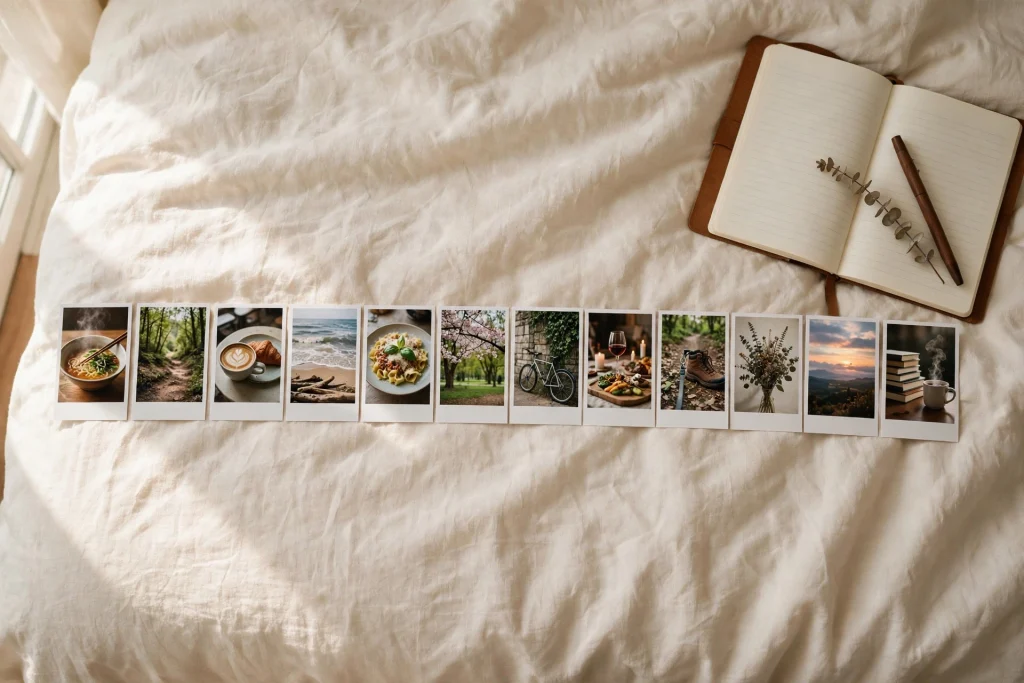
Go through your phone photos from the year just gone, month by month, and pick one photo from each month that shows something that mattered. A photo of a meal, a walk, a friend, a finished project. Put the twelve photos in a row and look at them together. The pattern will tell you what the year was actually about, and it is often not what you expected.
This is the fastest review in this guide, because the photos do the remembering for you. You do not need to write anything. You need to look, and notice what keeps appearing.
Best for: Visual thinkers, and anyone who keeps photos on their phone.
Cost: Free, using photos you already have. Time: About 30 minutes.
Pick the photos that make you feel something, not the photos that look best. A blurry photo of a laugh is worth more than a perfect photo of a sunset. The feeling is the guide, not the quality.
You may also like: 21 Christmas Hairstyles That Feel Festive Without the Fuss
3. The What I Outgrew List
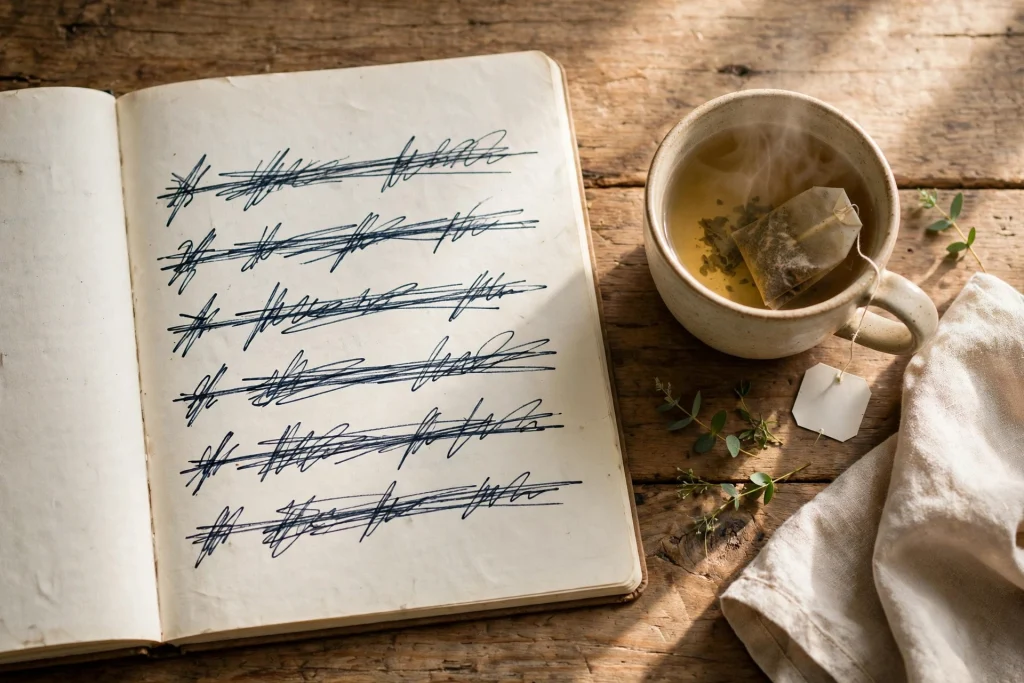
Make a list of the things you wanted in January that you no longer want. A goal you have outgrown, a habit that no longer fits, a plan that belonged to an older version of you. Naming it stops it being carried silently into another year. This is a success, and it will not feel like one, because letting go of a goal feels like giving up. It is not. It is making room.
Write the list, read it once, and then cross each item out with a pen. The crossing out is the point. It is a small ceremony, and it frees the space on the board for what you actually want now.
Best for: Anyone carrying old goals that no longer fit.
Cost: Free, a pen and paper. Time: About 20 minutes.
Do not put the outgrown goals on the board. The board is for what you want next, not what you are leaving behind. The list lives in your notebook, and the board stays clear for the new direction.
You may also like: 22 Matching Christmas Pajamas for the Whole Family to Love
4. The One Image From the Year That Worked
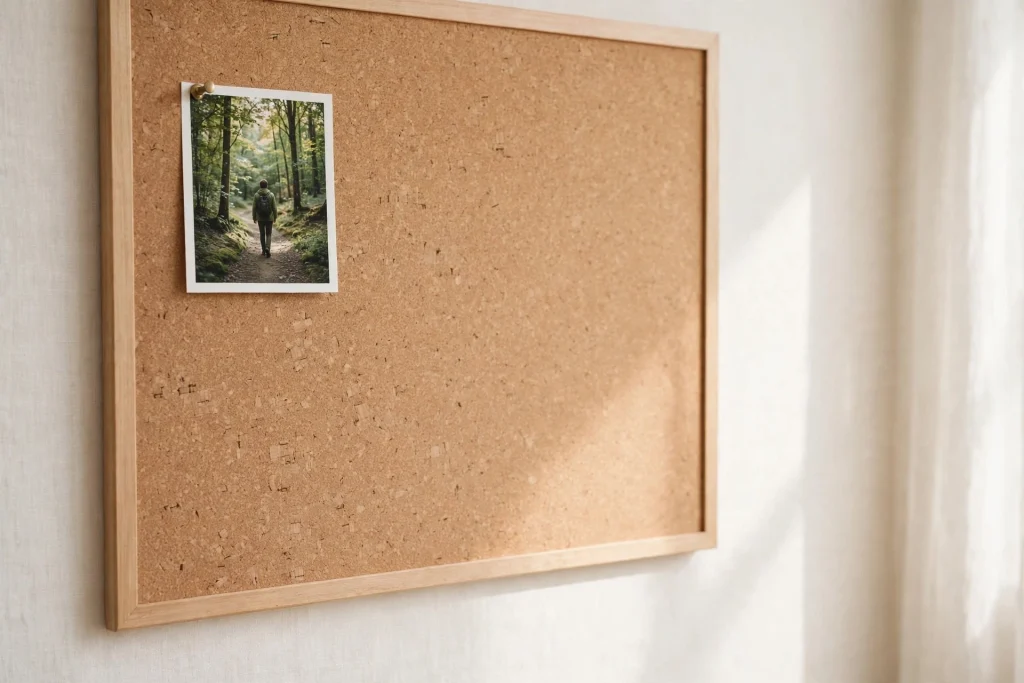
Pick one image from the look back, something that already happened this year and worked, and put it on the new board. A board made entirely of things you do not yet have is a daily reminder of distance. A board with one image of something you already did is a reminder that you can do things, and it makes the rest of the board feel possible.
This image goes in a corner of the board, not the centre. It is a quiet reminder, not the main event. But it is the image that keeps you looking at the board in February, when the new goals feel far away.
Best for: Anyone who doubts their own follow-through.
Cost: Free, a photo you already have. Time: About 10 minutes.
Pick an image of a process, not an outcome. A photo of you cooking, walking, or writing is better than a photo of a finished product, because the process is what you can repeat. The outcome is the result. The process is the work.
You may also like: 22 Christmas Decor Ideas 2026 That Set This Season’s Trends
Choose Your Direction
Once you know what the year was, you can choose what the next one will be. These five ideas are about picking a direction that fits.
5. One Word for the Year
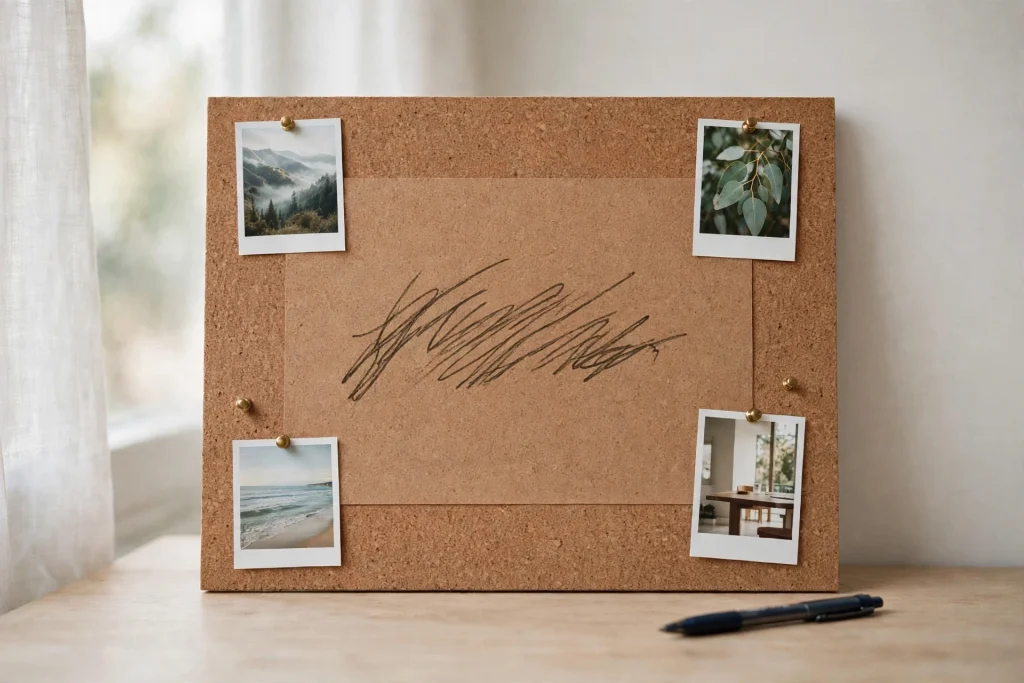
Choose one word for the year and put it in the middle of the board. Not a goal, not a sentence, just one word. Steady. Brave. Rooted. Visible. Less rushing. The word is the direction, and everything else on the board points back to it. When you are not sure what to do, the word tells you.
Pick the word from the review, not from a list. The word that comes from your own year is the word that will guide you. A word you borrowed from someone else’s board will not.
Best for: Anyone who wants a simple, clear direction.
Cost: Free. Time: About 15 minutes.
Write the word by hand on the board, in your own handwriting, not in a printed font. Your handwriting makes it yours, and a board that looks like you is a board you will keep looking at.
You may also like: 21 New Year Vision Board Ideas for a Year That Feels Yours
6. Three Priorities, Big and Clear
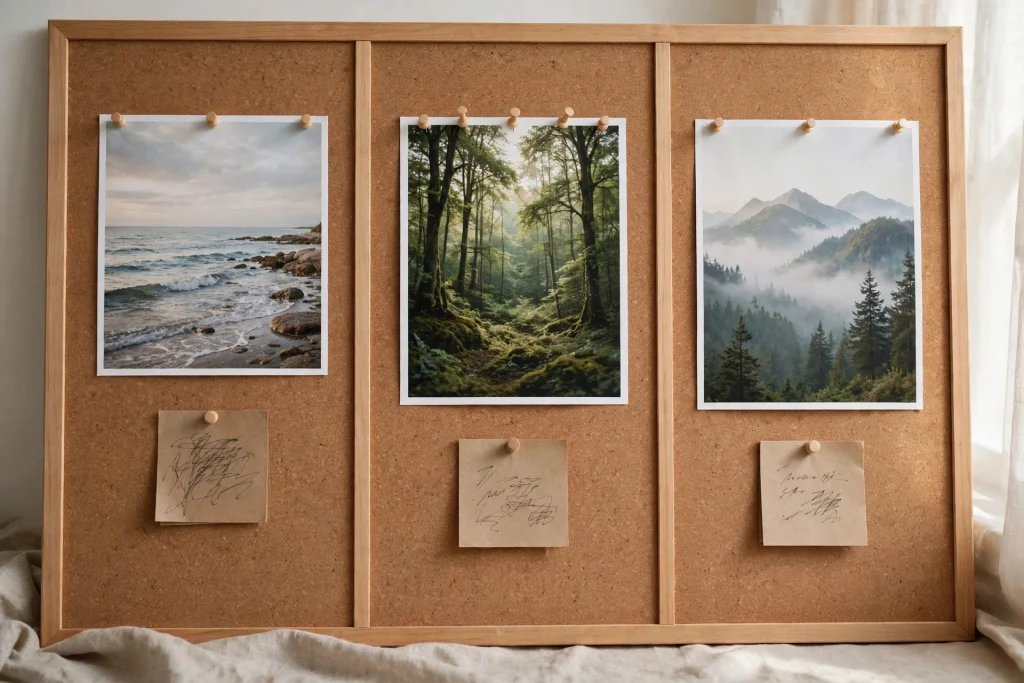
Choose three priorities for the year, and give those three the biggest space on the board. Everything else can stay on the board as background, but these three get the most space and your weekly attention. A board with thirty pictures feels exciting, but it gives you no direction. A board with three clear priorities gives you a year.
Pick the three from different areas of life, if you can: one for work or money, one for health or home, and one for people or creativity. Three priorities in the same area leave the rest of your life out, and the board feels lopsided by March.
Best for: Anyone who wants focus instead of a wish list.
Cost: Free. Time: About 30 minutes.
Write one sentence for each priority, in plain words, not in fancy language. A sentence you would actually say to a friend is a sentence you will actually follow. A sentence that sounds like a poster is a sentence you will ignore.
You may also like: 22 Christmas Makeup Looks for a Glow That Lasts All Night
7. A Theme for Each Quarter
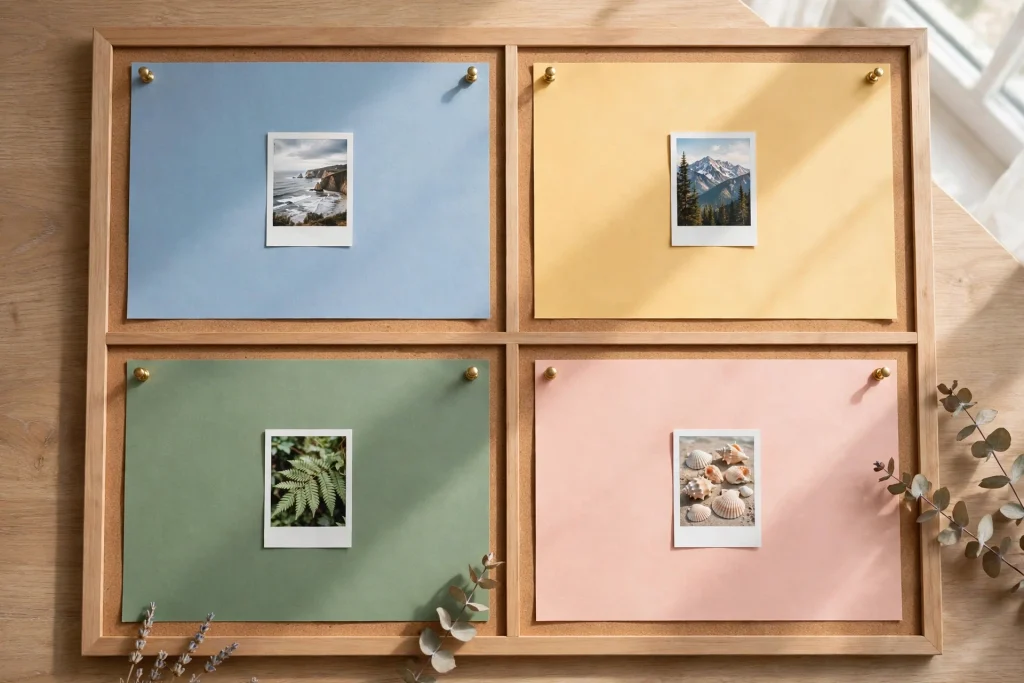
Break the year into four quarters, and give each quarter a theme. Q1: clear out, choose focus, set routines. Q2: practise, publish, apply, save. Q3: deepen, travel, connect, review. Q4: finish, celebrate, simplify, rest. A year with four themes is easier to live than a year with one giant promise, because each quarter has its own job.
Put the four quarters on the board as four small boxes, one in each corner. Each box has one theme word and one small image. The quarters keep the board alive all year, because there is always a next quarter to look forward to.
Best for: Planners, and anyone who likes a rhythm.
Cost: Free. Time: About 30 minutes.
Do not plan all four quarters in detail in January. Plan Q1 in detail, and leave the other three as themes. A year that is planned in detail in January will be wrong by March, because life changes. A year with themes is flexible enough to survive.
You may also like: 21 Christmas Hairstyles That Feel Festive Without the Fuss
8. A Vision Board for One Area Only
If a whole-year board feels too big, make a board for one area only. A career board, a money board, a health board, or a home board. One area, three goals, one image each, and one action each. A board for one area is easier to finish, easier to look at, and easier to act on, and it is a good first board for anyone who has never made one.
A single-area board also works well as a second board, next to a whole-year board. The whole-year board is the direction. The single-area board is the detail. Together, they cover the year without overwhelming it.
Best for: First-time board makers, and anyone who feels overwhelmed.
Cost: A small board or a sheet of paper, 0 to 10 dollars. Time: About 30 minutes.
Pick the area that matters most right now, not the area that sounds most impressive. A health board you actually use beats a career board you ignore. The area that matters is the area that will change your year.

You may also like: 22 Matching Christmas Pajamas for the Whole Family to Love
9. A Vision Board for 2027, Not Just January
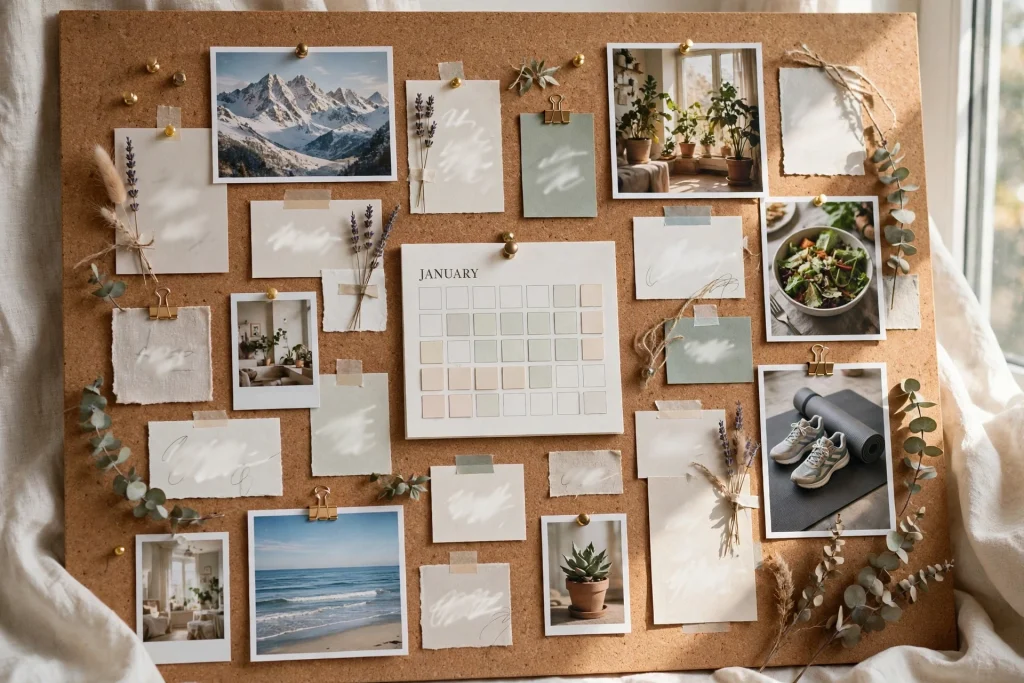
Make the board for 2027, not just for January. A 12-month board works best for most people, because it is long enough to dream and short enough to act. A board for one month is too small. A board for five years is too vague. Twelve months is the sweet spot, and it matches the way a year actually feels.
Put the year on the board, 2027, in the corner, so the board has a date. A board without a date feels like a dream. A board with a date feels like a plan, and it reminds you, every time you look at it, that the year has an end and the time is real.
Best for: Anyone who wants a board that lasts the whole year.
Cost: Free. Time: About 15 minutes.
Do not put a deadline on every picture. A board with a deadline on every goal feels like a test. A board with a date for the year, and a small action for each picture, feels like a guide. The date is enough.
You may also like: 22 Christmas Decor Ideas 2026 That Set This Season’s Trends
Build the Board
Now you build it. These six ideas are about the board itself: what goes on it, how it is laid out, and how to make it in an afternoon.
10. The Paper Board in 30 Minutes
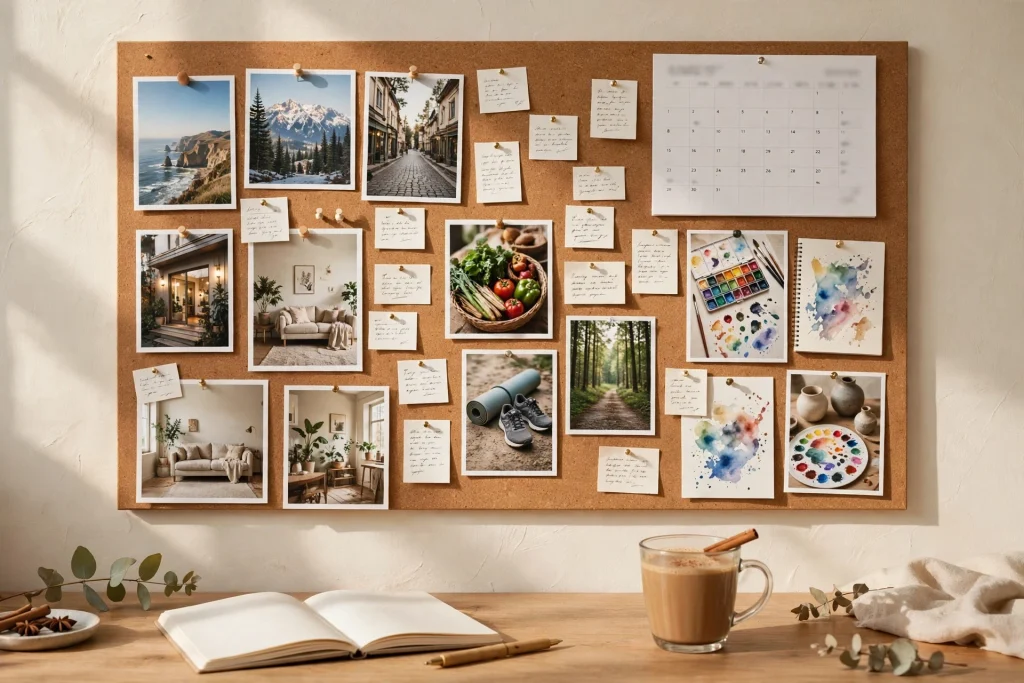
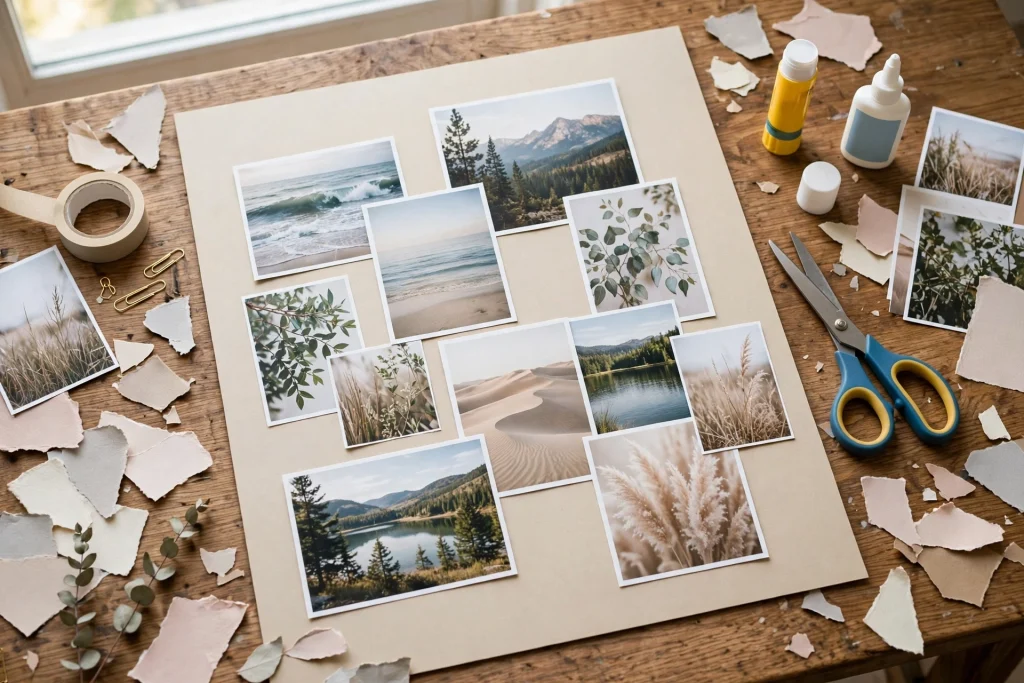
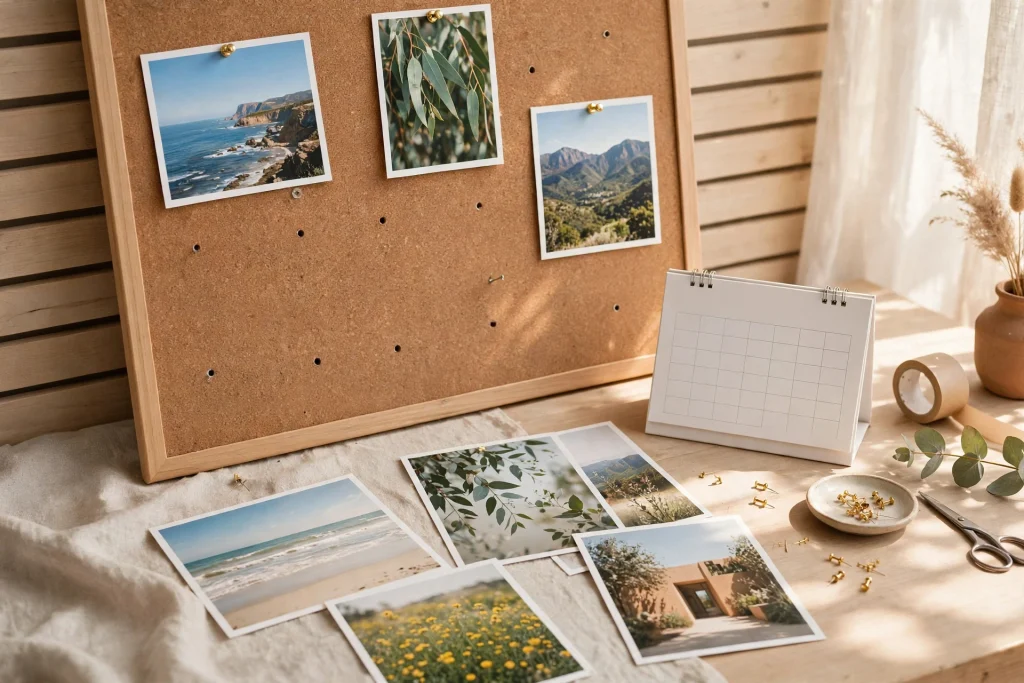
You do not need a free weekend. Set a timer and do this: write down three to six goals for 2027, find one or two pictures for each, add one word or phrase per goal and your word of the year, and put the board where you will see it daily, on a wall or as your phone wallpaper. Thirty minutes, and the board is done.
Make the ugly version first. A useful board beats a beautiful board you never finish. A board that is finished in thirty minutes and hung on the wall works. A board that is still being perfected in February does not.
Best for: Anyone who wants a board today, not next weekend.
Cost: A cork board or a sheet of card, 5 to 15 dollars. Time: About 30 minutes.
Use magazines, printed photos, and cut-out words, or use your own photos and saved images. Either works. The source does not matter. What matters is that the pictures show a specific moment you want to live, not a generic symbol of success.
You may also like: 22 Christmas Makeup Looks for a Glow That Lasts All Night
11. The Digital Board as Your Phone Wallpaper
A digital board is the easiest board to see every day, because it lives on your phone. Make it in Canva or any free app, arrange your photos and words, and set it as your phone wallpaper. You will see it fifty times a day, and that is the point: a board you see is a board that works.
Keep the digital board simple, because a phone screen is small. Three priorities, one image each, and your word of the year. A digital board with thirty pictures is unreadable on a phone. A digital board with three images is clear every time you unlock the screen.
Best for: Anyone who lives on their phone, and anyone without wall space.
Cost: Free, using a free app. Time: About 30 minutes.
Export the board at a high resolution, so the images stay sharp on the screen. A blurry board looks like a mistake, and you will stop looking at it. A sharp board looks intentional, and you will keep it all year.

You may also like: 21 Christmas Hairstyles That Feel Festive Without the Fuss
12. The Six-Box Layout You Can Copy
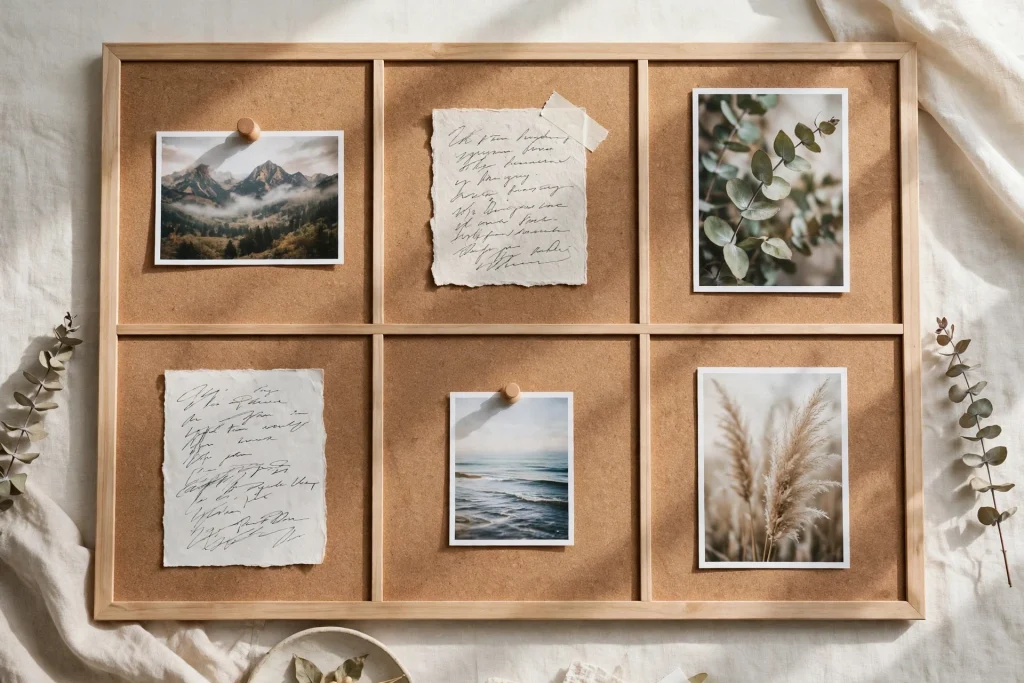
Use a simple layout, on paper or on a phone. Create six boxes: theme of the year, three priorities, one process image, and one reason. The centre box is your word for the year. The three largest spaces are one image for each of your three priorities. The process box is a picture of the work, not the outcome. The reason box is one line about why the year matters to you.
This layout works because it is simple enough to copy and structured enough to guide you. You do not need to design a board. You need to fill six boxes, and the board is done.
Best for: Anyone who wants a layout to copy, not a blank page.
Cost: A board or a sheet of card, 5 to 15 dollars. Time: About 45 minutes.
Fill the centre box first, with your word of the year, then the three priority boxes, then the process and reason boxes. The order matters, because the centre sets the direction, and the rest follows it.
You may also like: 22 Matching Christmas Pajamas for the Whole Family to Love
13. Process Pictures, Not Just Outcome Pictures
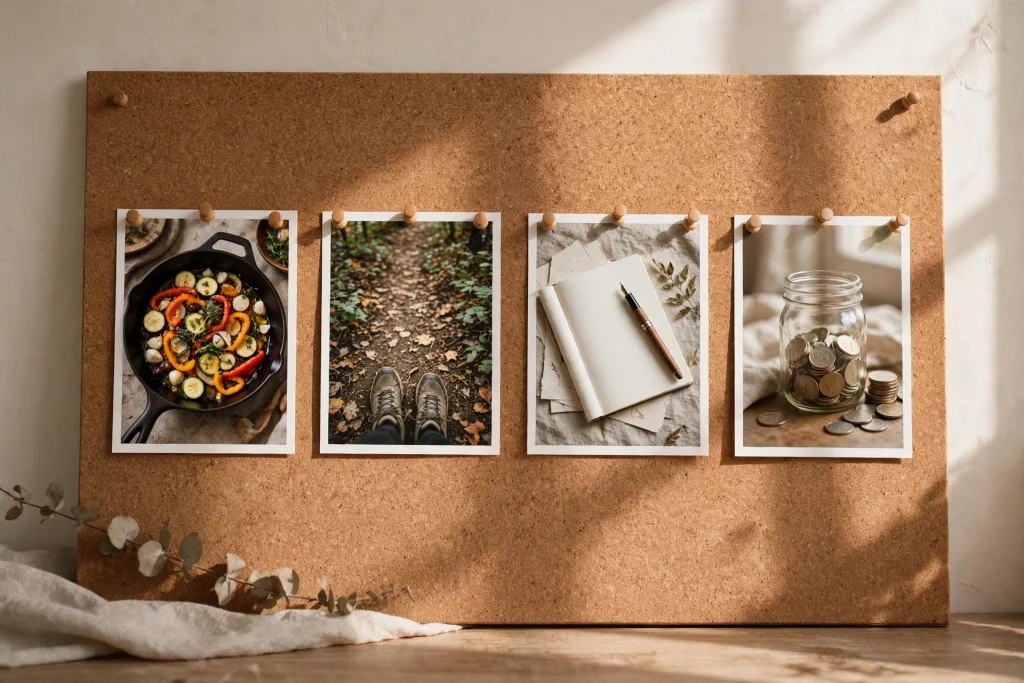
Collect twelve to fifteen images at roughly four process images to every outcome image. A process image shows the work: cooking, walking, writing, saving, practising. An outcome image shows the result: a house, a holiday, a finished book. Most boards are all outcomes, and that is why they feel distant. A board with process images feels like something you can do today.
Add boring pictures. The boring images are often the habit images, and the habits are what make the year. A picture of a pair of walking shoes is boring, and it is also the picture that gets you out the door.
Best for: Anyone whose board feels like a dream, not a plan.
Cost: Free, using photos you already have. Time: About 20 minutes.
Use verbs, not only nouns, on the board. Cook, save, rest, write, ask, train, repair. A board with verbs tells you what to do. A board with only nouns tells you what to want, and wanting is not doing.
You may also like: 22 Christmas Decor Ideas 2026 That Set This Season’s Trends
14. Three Lines of Text, No More
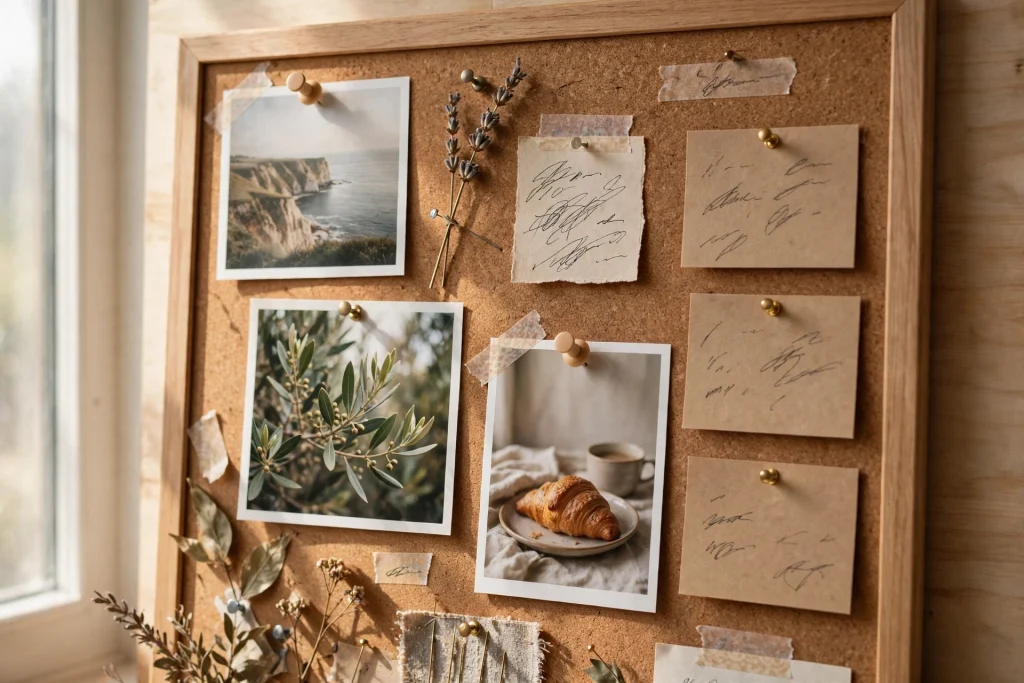
Add three lines of text to the board, and no more. One about the direction, one about the process, and one about the reason, phrased so your own mind does not argue with them. Three lines are enough to guide you. Thirty lines are noise, and a board with too many words is a board nobody reads.
Write the lines by hand, in plain words, in your own voice. A line that sounds like you is a line you will believe. A line that sounds like a poster is a line you will ignore by February.
Best for: Anyone who loves words, and anyone whose board feels empty.
Cost: Free. Time: About 15 minutes.
Put the three lines in different places on the board, not all together in one corner. A line next to each priority is a reminder where you need it. Three lines in one corner are a paragraph nobody reads.
You may also like: 21 New Year Vision Board Ideas for a Year That Feels Yours
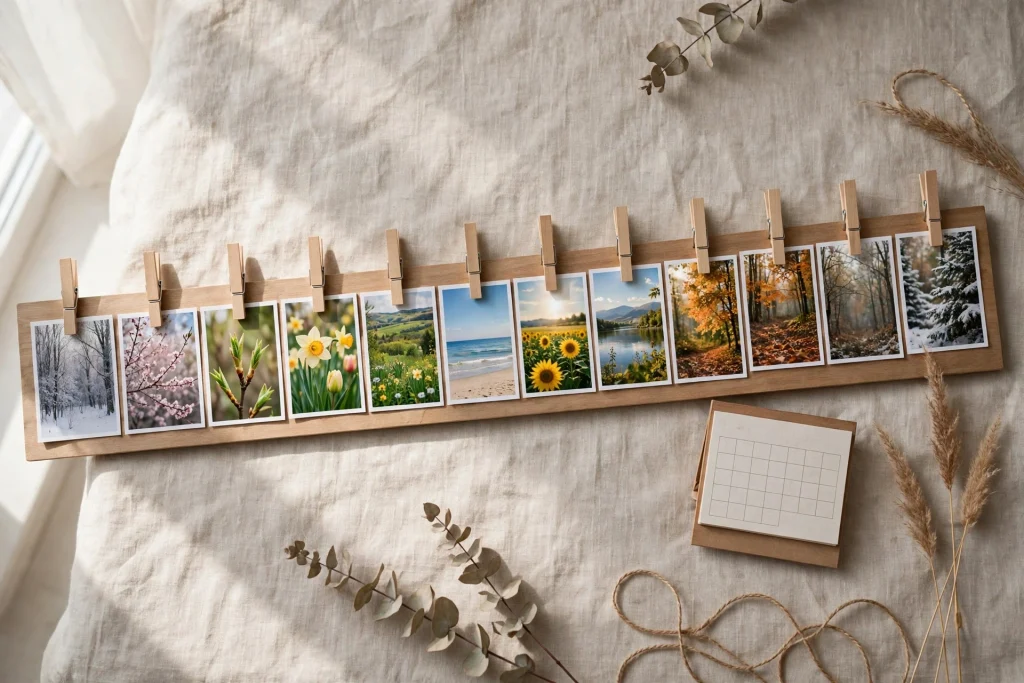
15. A Board for Each Month
Make a board with one image or phrase for each month, twelve small images in a row, one for each month of the year. January: clear space. February: rebuild sleep. March: update portfolio. April: reconnect with friends. May: save for the trip. June: make the thing. A monthly board turns a giant year into twelve small steps, and each month has its own job.
You can change the months later. The point is to stop the new year from becoming one giant, vague promise. Twelve small months are easier to live than one big year.
Best for: Anyone who likes a monthly rhythm.
Cost: A board or a sheet of card, 5 to 15 dollars. Time: About 45 minutes.
Do not fill all twelve months in detail in January. Fill January and February in detail, and leave the rest as one image each. A year that is planned in detail in January will be wrong by March. A year with a monthly rhythm is flexible enough to survive.
You may also like: 22 Christmas Makeup Looks for a Glow That Lasts All Night
Live With It All Year
A board is not finished when it is hung. These six ideas are about living with it, reviewing it, and letting it change as the year changes.
16. One Daily Action With a Trigger
Attach one daily action with a trigger, in the form of when X happens, I will do Y. When I finish my morning chai, I will walk for twenty minutes. When I open my laptop, I will write for ten minutes. When I get paid, I will move money to savings. This is the step that separates a board from a poster, and it is the most important idea in this whole guide.
Write the action on a small card and pin it next to the picture it belongs to. The picture shows you where you are going. The card tells you what to do today. Without the card, the picture is a wish. With the card, it is a plan.
Best for: Anyone, and every board in this guide.
Cost: Free. Time: About 10 minutes per action.
Pick an action so small you cannot fail it. Ten minutes of walking, not an hour. One page of writing, not a chapter. A small action you actually do beats a big action you plan and never start.

You may also like: 21 Christmas Hairstyles That Feel Festive Without the Fuss
17. The Weekly Look and the Quarterly Review
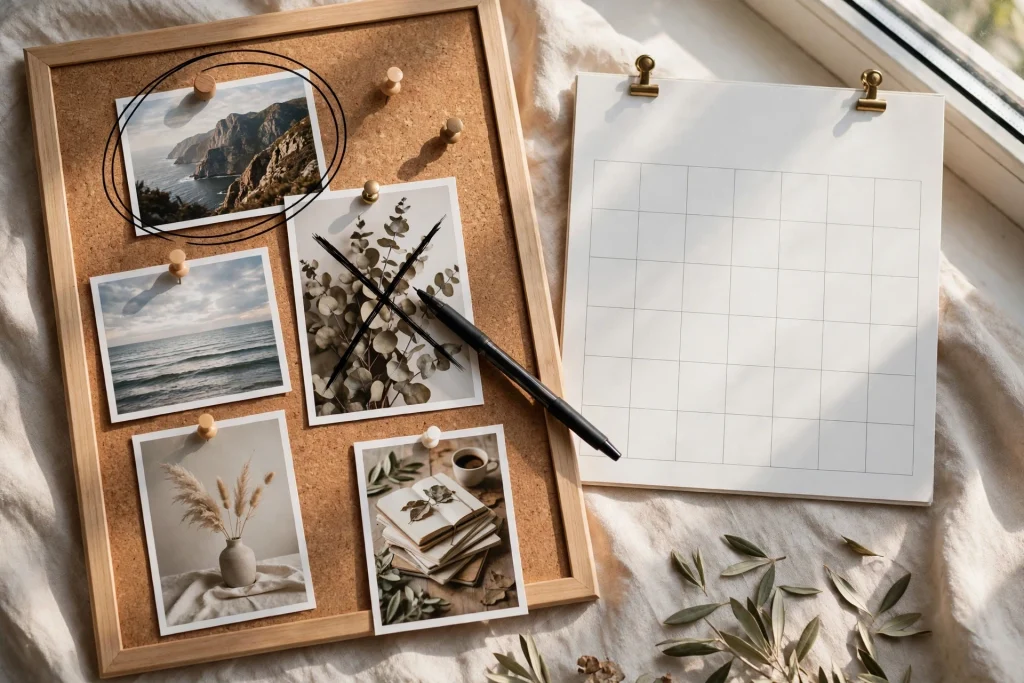
Look at the board briefly every week, and review it properly once a quarter, in March, June, September, and December. Each time, ask three questions: do I still want this? What step actually worked? What keeps slipping? Keep what still matters, change what keeps slipping, and drop what no longer fits.
Set the review date before you finish the board. Put a monthly reminder in your calendar in the same session, because if you do not do it now, you will not do it in March. A board that is never reviewed is a board that is forgotten by spring.
Best for: Anyone who wants the board to last the whole year.
Cost: Free. Time: 5 minutes weekly, 30 minutes quarterly.
Do not treat a review like a pass or fail test. Circle what still matters, cross out what no longer fits, and notice what you did move toward, even if it looked different than you expected. A review is a check-in, not a judgment.
You may also like: 22 Matching Christmas Pajamas for the Whole Family to Love
18. A Board You Can Change
A good board is a board you can change. If a goal stops fitting, take its picture down and put a new one up. If a priority shifts, move the images around. A board that cannot change becomes a reminder of a plan that no longer fits, and you will stop looking at it. A board that changes with you stays honest all year.
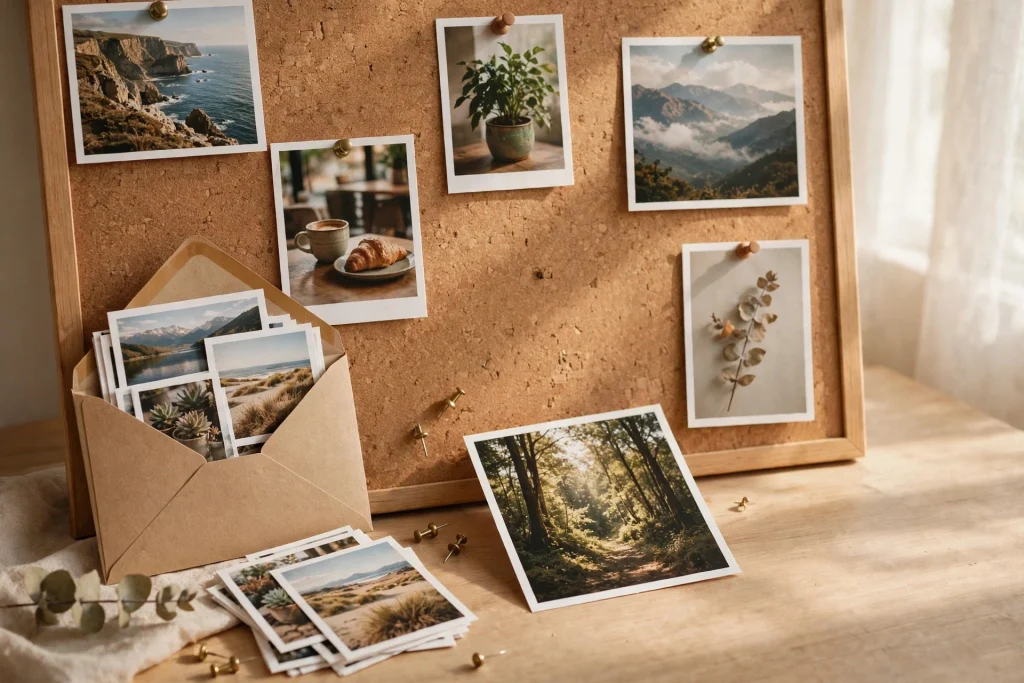
Keep a small envelope of spare pictures and words near the board, so changing it is easy. If changing the board means finding new pictures and printing them, you will not do it. If the spares are right there, you will.
Best for: Anyone whose year changes, which is everyone.
Cost: Free. Time: About 10 minutes per change.
Change one thing at a time, not the whole board at once. A board that changes completely every month has no direction. A board that changes one picture at a time keeps its direction and stays honest.
You may also like: 22 Christmas Decor Ideas 2026 That Set This Season’s Trends
19. A Family Board for the Whole Household
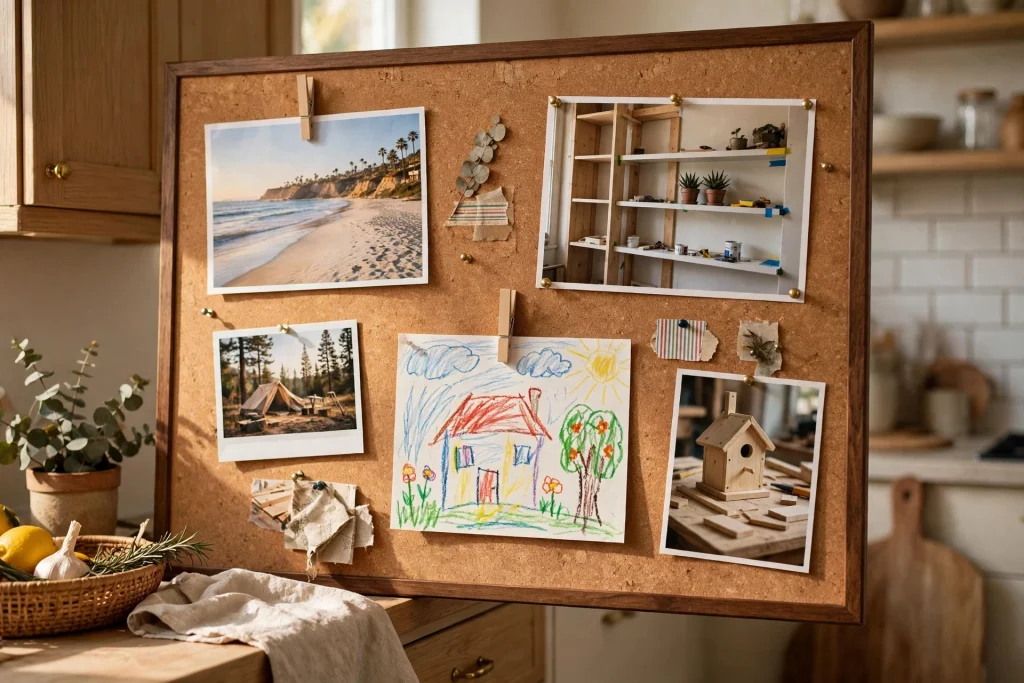
Make a board for the whole household, not just for you. A family board has one shared goal, like a holiday or a home project, and one small goal for each person. It hangs in a shared room, like the kitchen, and everyone can see it. A family board turns a personal tool into a shared plan, and it is the one board the kids will actually look at.
Let each person pick their own picture for the family board. A picture a child chose is a picture the child will look at. A picture a parent chose for the child is a picture the child will ignore.
Best for: Families, and anyone who shares a home.
Cost: A large board, 10 to 20 dollars. Time: About 1 hour together.
Put the family board where everyone sees it, not in a bedroom. A board in the kitchen is seen fifty times a day. A board in a bedroom is seen twice a day, and only by one person.
You may also like: 21 Christmas Hairstyles That Feel Festive Without the Fuss
20. A Vision Board Journal for the Year
Keep a vision board journal next to the board, a simple notebook where you write one line a week about what moved. What did I do this week that pointed toward the board? What got in the way? What do I want to try next week? One line a week, fifty-two lines a year, and by December you have a record of the year that is more honest than any photo.
The journal is the part of the board that nobody sees, and it is the part that matters most. The board shows the direction. The journal shows the journey, and it is the journal that tells you, in December, whether the year actually moved.
Best for: Writers, and anyone who likes to track progress.
Cost: A notebook, 5 to 10 dollars. Time: 5 minutes a week.
Write the line on the same day every week, like Sunday evening, so it becomes a habit. A journal you write when you remember is a journal with three entries. A journal you write every Sunday is a journal with fifty-two entries.
You may also like: 22 Christmas Makeup Looks for a Glow That Lasts All Night
21. The Refresh in June, Not Just January
Refresh the board in June, not just in January. A board made in December is a board for a year you have not lived yet, and by June you know more about the year than you did in January. Take the board down, look at what moved, take down what no longer fits, and put up what the year actually needs now. A June refresh is the difference between a board that lasts a year and a board that lasts a month.
The refresh takes an hour, and it is the most honest hour of the year. It is the moment you admit what changed, celebrate what moved, and choose the direction for the second half of the year. A board that is refreshed in June is a board that still matters in December.
Best for: Anyone who wants the board to last past spring.
Cost: Free. Time: About 1 hour in June.
Do the June refresh with the same five questions you used in December. What actually moved? What did I keep avoiding? What did I outgrow? The questions work twice a year, because the year changes, and the board should change with it.
You may also like: 21 Christmas Hairstyles That Feel Festive Without the Fuss
The 1-2-3 Vision Board Method
The 1-2-3 Vision Board Method is the whole guide in one line: 1 review, 2 words, 3 priorities with actions. If you follow it, you cannot go wrong. If you ignore it, you will make a poster and wonder why it did not work.
1 review. Start with one review of the year ending, five questions, an hour, a pen and paper. The review is most of the work of a good board, and it is the part that makes the board honest.
2 words. Choose two words: your word for the year, and one word for the reason the year matters. Two words, in the centre of the board, in your own handwriting. The words are the direction, and everything else points back to them.
3 priorities with actions. Choose three priorities, give them the biggest space on the board, and write one small action next to each one. A picture with an action is a plan. A picture without an action is a wish.
Before the 1-2-3 Vision Board Method
Before I learned this method, my December looked like this: thirty pictures, eight goals, and not one action next to any of them. It took a whole weekend, it looked beautiful on the wall, and by March I had stopped looking at it, because it reminded me of everything I had not done. By June I had taken it down.
After the 1-2-3 Vision Board Method
After the method, my December looks like this: one review, two words, and three priorities with actions. It takes an afternoon, it fits on one board, and on a grey Wednesday in February I look at it and I know what to do next, because the action is right there next to the picture. That is the whole point.
At a Glance: Every Idea, Its Cost, and Its Time
| Idea | Cost | Time | Best for |
|---|---|---|---|
| 1. The Five Questions Review | 0 to 10 dollars | 1 hour | First-time board makers |
| 2. The Year in Photos Look Back | Free | 30 minutes | Visual thinkers |
| 3. The What I Outgrew List | Free | 20 minutes | Letting go of old goals |
| 4. The One Image From the Year That Worked | Free | 10 minutes | Doubters |
| 5. One Word for the Year | Free | 15 minutes | Simple direction |
| 6. Three Priorities, Big and Clear | Free | 30 minutes | Focus |
| 7. A Theme for Each Quarter | Free | 30 minutes | Planners |
| 8. A Vision Board for One Area Only | 0 to 10 dollars | 30 minutes | First-time makers |
| 9. A Vision Board for 2027, Not Just January | Free | 15 minutes | Whole-year planning |
| 10. The Paper Board in 30 Minutes | 5 to 15 dollars | 30 minutes | Anyone who wants it today |
| 11. The Digital Board as Your Phone Wallpaper | Free | 30 minutes | Phone users |
| 12. The Six-Box Layout You Can Copy | 5 to 15 dollars | 45 minutes | Anyone who wants a layout |
| 13. Process Pictures, Not Just Outcome Pictures | Free | 20 minutes | Dreamers |
| 14. Three Lines of Text, No More | Free | 15 minutes | Word lovers |
| 15. A Board for Each Month | 5 to 15 dollars | 45 minutes | Monthly rhythm lovers |
| 16. One Daily Action With a Trigger | Free | 10 minutes per action | Everyone |
| 17. The Weekly Look and the Quarterly Review | Free | 5 minutes weekly | Whole-year users |
| 18. A Board You Can Change | Free | 10 minutes per change | Everyone |
| 19. A Family Board for the Whole Household | 10 to 20 dollars | 1 hour together | Families |
| 20. A Vision Board Journal for the Year | 5 to 10 dollars | 5 minutes a week | Writers |
| 21. The Refresh in June, Not Just January | Free | 1 hour in June | Whole-year users |
Do This, Not That
| Do This | Not That |
|---|---|
| Start with a review of the year ending, not a blank page | Start with a blank page and thirty pictures |
| Choose three priorities and give them the biggest space | Cover every area of life and guide none of them |
| Write one small action next to every picture | Put up pictures with no actions and call it a plan |
| Use process pictures, not just outcome pictures | Fill the board with outcomes and wonder why it feels distant |
| Make the ugly version first, and finish it in thirty minutes | Spend a month perfecting a board you never hang |
| Put the board where you will see it daily | Hide the board in a drawer and forget it by February |
| Review it weekly and properly once a quarter | Never review it, and wonder why it stopped working |
| Change one picture at a time as the year changes | Leave a board that no longer fits on the wall all year |
| Use verbs, not only nouns, on the board | Fill the board with nouns and no idea what to do |
| Remember it is a planning tool, not a promise | Claim the board guarantees results, money, or healing |
Your Vision Board Weekend
Saturday: Review and Choose
Morning: Do the five questions review with a pen and paper, an hour, a quiet room, and a cup of chai. Write the answers down honestly. Afternoon: Go through your phone photos, pick one photo from each month, and make the what I outgrew list. Cross the outgrown goals out with a pen. Evening: Choose your word for the year and your three priorities. Write one sentence for each priority, in plain words, and put the board where you will see it.
Sunday: Build and Hang
Morning: Collect twelve to fifteen images, four process images to every outcome image, and add three lines of text. Fill the six boxes, or use the thirty-minute paper board. Afternoon: Add one daily action with a trigger next to each picture, and set a monthly review reminder in your calendar. Hang the board where you will see it daily, on a wall or as your phone wallpaper. Evening: Look at the finished board, take a photo of it for your records, and write the first line in your vision board journal. The year has a direction now. Enjoy it.
Take It Further
If you liked this guide, these are the next ones to read. They build on the same ideas, step by step.
- 22 Christmas Makeup Looks for a Glow That Lasts All Night
- 21 Christmas Hairstyles That Feel Festive Without the Fuss
- 22 Matching Christmas Pajamas for the Whole Family to Love
- 22 Christmas Decor Ideas 2026 That Set This Season’s Trends
- 22 Cozy Christmas Apartment Decor Ideas for Small Spaces
- 21 Cozy Christmas Living Room Decor Ideas That Make Your Home Feel Magical
- 22 Nancy Meyers Christmas Ideas for a Cozy Movie-Like Home
- 21 Christmas Window Painting Ideas to Brighten Your Home
Vision Board Cheat Sheet
If you read nothing else, read this.
- The rule: 1 review, 2 words, 3 priorities with actions. That is the 1-2-3 Vision Board Method, and it is the whole guide in one line.
- The three things: A review before a single picture, three priorities not thirty pictures, and one action next to every picture. If a board has all three, it guides the year.
- The budget: Most boards cost under 15 dollars, and many cost nothing but time.
- The time: One weekend to build it, five minutes a week to live with it.
- The picture rule: Four process images to every outcome image, and one image from the year that already worked.
- The action rule: One small action with a trigger next to every picture, in the form of when X happens, I will do Y.
- The mistake to avoid: Thirty pictures, eight goals, and not one action next to any of them.
- The one thing to do first: Do the five questions review. It costs nothing and it changes every decision after it.
- The honesty note: A vision board is a planning tool, not a promise. It cannot guarantee an outcome, control other people, replace action, or prove you did anything wrong if life is hard. It can keep your direction in front of you every day, with one small action next to each picture, and that is enough. New year vision board ideas interest peaks at 100 in the last week of December and the first week of January every year, and scores 0 right now in November. This guide is at its best around January 1. It is not evergreen, and it does not pretend to be.
Questions People Ask
Any time from late November to the end of January works well. Many people make it in the last week of December, after looking back at the year. A board made in the last week of December has the review fresh in mind, and a board made in January still has the whole year ahead of it. The best time is the time you will actually do it, so pick a weekend, set a timer, and make the thirty-minute version first.
Put three to six goals on your vision board, each with one or two pictures and a few words. Good categories are career, money, love, health, home, travel, friendship, and personal growth. Choose images that show a specific moment you want to live, not a generic symbol of success, and add one word or phrase that tells you how it should feel. Add one small action next to each picture, so the board is a plan, not just a wish.
For every image, write one small step you can take this week, in the form of when X happens, I will do Y. The board shows you where you are going, and the weekly step is how you start moving. Look at the board briefly every week, review it properly once a quarter, and keep what still matters while changing what keeps slipping. A picture with an action is a plan. A picture without one is a poster.
No. A vision board is a planning tool, not a promise. It cannot guarantee an outcome, control other people, replace action, or prove you did anything wrong if life is hard. What it can do is keep your direction in front of you every day, remind you of the small actions that move you forward, and help you notice when a goal no longer fits. The board supports the work. It does not replace it.
A new year is a strange kind of permission. Nothing actually changes at midnight, and yet it feels like the right moment to decide what you want the next twelve months to look like. Start with the year behind you, choose three priorities, and put one small action next to each picture. The board will not do the year for you. It will keep you pointed in the direction you chose, and on a grey Wednesday in February, that is enough.
Happy New Year. I will see you in the next one.
Neuman A.
—