Too Long; Didn’t Read
A Friendsgiving party does not need a whole turkey or a formal table to feel special. It needs one main dish, a potluck plan that actually works, and a table people can talk across. These 23 friendsgiving party ideas cover the invitations, the decor, the friendsgiving food, the games, and the small touches that turn a crowded potluck into a night people remember. Most of them cost under 25 dollars, most take less than an hour, and the 1-2-3 Friendsgiving Method near the end shows you how to put a few of them together without cooking the whole meal yourself.What's Inside This Guide
ToggleThe Year Everyone Brought Dessert
The first Friendsgiving I hosted, I made one mistake and it shaped every party since. I sent a group text that said, “Come over Saturday, bring something.” That was the whole plan. Six people brought pie. Nobody brought a main dish. Nobody brought a side. I had a turkey breast in the oven and a folding table with paper plates, and by seven o’clock we had seven pies, one turkey breast, and a bag of chips someone had grabbed on the way over. We ate pie for dinner and laughed about it for a year. It was still a good night, because the people were right. But I went to bed thinking about how close it had come to being a great night, and the only thing missing was a plan. Not a big plan. Just a list of who was bringing what, and one person in charge of the main dish. That person was me, and I had not told anyone else what to do. That is the whole point of this guide. A Friendsgiving party is not a dinner party and it is not Thanksgiving with your family. It is a meal with the people you chose, and the host’s job is not to cook everything. The host’s job is to give everyone a clear job, set a table people can sit at comfortably, and then get out of the way. These 23 friendsgiving ideas follow that rule. Pick the ones that fit your room and your friends. Leave the rest for next year.What’s Inside This Guide
- The 3 Things That Actually Make a Friendsgiving Feel Like a Party
- The 23 Ideas, Grouped by What They Do
- The 1-2-3 Friendsgiving Method: How to Host Without Doing Everything Yourself
- At a Glance: Every Idea, Its Cost, and Its Time
- Do This, Not That
- Your Friendsgiving Week
- Take It Further
- Designer’s Cheat Sheet
- Questions People Ask
The 3 Things That Actually Make a Friendsgiving Feel Like a Party
Before you buy a single pumpkin or send a single text, it helps to know what you are actually aiming for. After a few Novembers of getting this wrong and then right, I have landed on three things. Every one of the friendsgiving party ideas in this list comes back to these three things. If the night has all three, it feels like a party. If it is missing one, no amount of food will fix it.One main dish
The host cooks one main dish. That is it. One turkey breast, one roast chicken, one big lasagne, one tray of something vegetarian. It does not have to be a whole turkey, and it does not have to impress anyone. It has to be hot, it has to be enough for everyone, and it has to be the one thing nobody else is bringing. When the host tries to cook the main and three sides and the dessert, the host spends the whole night in the kitchen. When the host cooks one main dish and lets the friendsgiving food come from everyone else, the host gets to sit down. That is the whole trick. One main dish, done well, and the rest is potluck.A table people can talk across
A Friendsgiving table is not a display. It is a place where ten people sit for two hours and talk. That means the centerpiece stays low, the candles stay in jars where they cannot be knocked over, and there is enough elbow room for everyone to reach the food without standing up. It also means the chairs match badly and nobody cares, because mismatched chairs are part of the charm. If your guests have to shout over a tall flower arrangement or pass every dish hand to hand because the table is too crowded, the food could be perfect and the night would still feel awkward. Keep the middle of the table low and clear, and the conversation will do the rest.One moment that is not about the food
Food fills the first hour. The second hour needs something else. One moment that is not about eating. A gratitude round before dessert, a game of trivia about the people at the table, a photo everyone squeezes into, a jar of notes read out loud. It does not have to be big or clever. It has to give people a reason to look up from their plates and at each other. That is the moment people remember on the drive home, and it is the moment that turns a good dinner into a tradition. Pick one. Just one. Then let the night run itself.Neuman’s Note: The year we started the gratitude round, I was sure it would be awkward. I handed out small cards and asked everyone to write one thing they were thankful for this year. There was a long silence while everyone wrote. Then my friend Dan read his out loud, and it was about his dad, who had been sick all year. Nobody laughed. Nobody checked their phone. We went around the table and every single card was honest. We have done it every year since, and it takes ten minutes. It is the best ten minutes of the night.
The 23 Ideas
I have grouped these by what they do, because that is how you actually plan a party. You start with the invitations, then you set the room, then you sort the food, then you think about the games, and then you handle the last little things. Work through one group at a time, and stop when the night feels planned. It will feel planned sooner than you think.The Invitations and the Plan
The best friendsgiving party ideas start before anyone cooks anything. They start with a clear invite, a list that tells people what to bring, and a plan that keeps the host out of the kitchen for most of the night. These four ideas are the whole plan. Get them right and everything after them gets easier.1. Send the Invite Three Weeks Out, With the Date, the Time, and the Ask
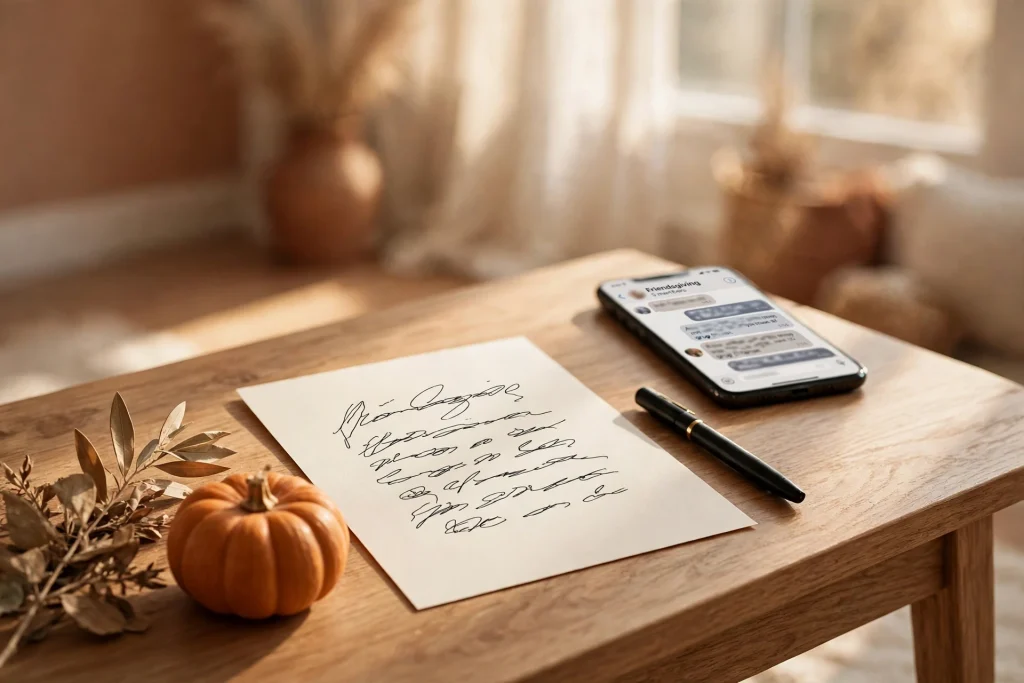
Send one message, three weeks before the party, and put everything in it. The date, the time, the address, and the ask. “Friendsgiving at mine, Saturday November 21, 6pm. I have the main dish. Bring a side or a dessert, and tell me what you are bringing so we do not end up with four pies.” That is the whole invite. Specific beats warm here. A vague message like “sometime in November?” gets a lot of yeses and no real answers, and then you spend two weeks chasing people down. A specific invite gets real replies, and it tells people this is a real plan, not a vague idea.
Best for: First-time hosts, big groups, and anyone who has ever ended up with seven pies and no main dish.
Cost: Free. Time: About 10 minutes to write and send.
Send it in the group chat where everyone already talks, not in a new app nobody will open. And put the date in the first line, because half your friends will read the first line and reply before they read the rest.
You may also like: 7 Entryway Ideas That Make Your Home Feel Put Together Instantly
2. Run a Potluck Sign-Up List With Categories, Not an Open Free-For-All
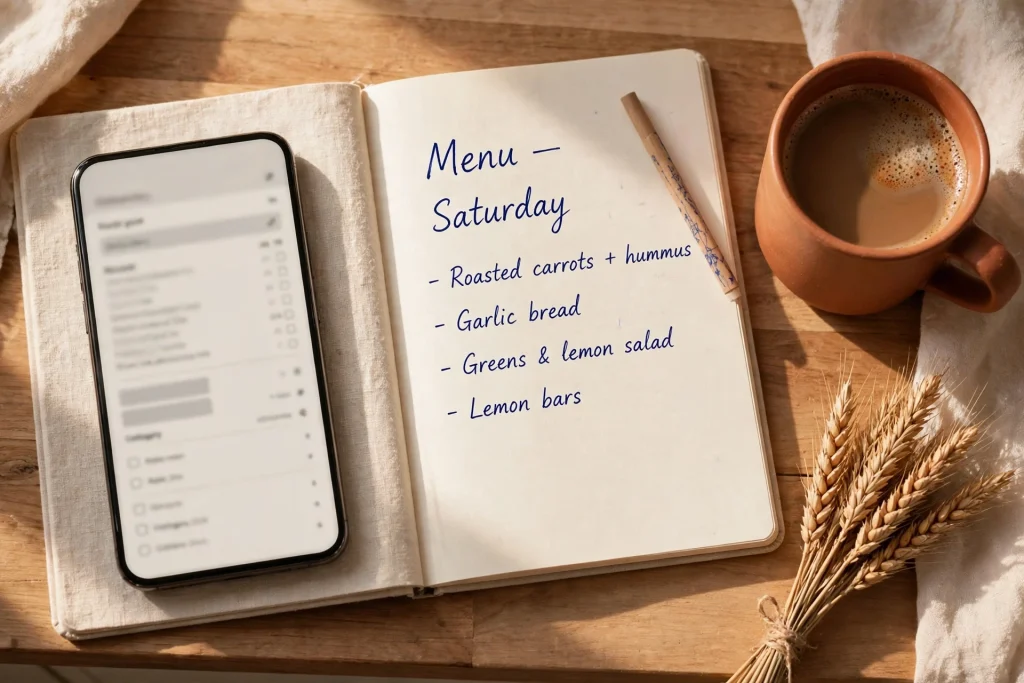
This is the single most useful of all the friendsgiving ideas in this guide, and it takes ten minutes. Make a shared note or a simple list with categories and numbers: 1 main (you), 3 sides, 2 salads, 1 bread, 2 desserts, drinks and ice. Then let people claim a slot. The categories are the whole trick. An open list where everyone writes whatever they want always ends the same way, with three bowls of mac and cheese, no vegetables, and no ice. A list with categories and numbers makes the menu balanced before anyone shops, and it stops the same dish turning up three times. When a category is full, it is full, and the next person picks something else.
Best for: Groups of eight or more, and any host who has ever opened the fridge on party day and found four identical dishes.
Cost: Free. Time: About 15 minutes to set up, then it runs itself.
Put the list in the same group chat as the invite, and pin it so it does not get buried under memes. Check it once, two days before the party, and message anyone who has not claimed a slot yet. A gentle nudge beats a missing side dish.
You may also like: 7 Easy Desserts Anyone Can Make at Home (No Fancy Skills Needed)
3. Ask About Allergies and Diets in the Invite Itself
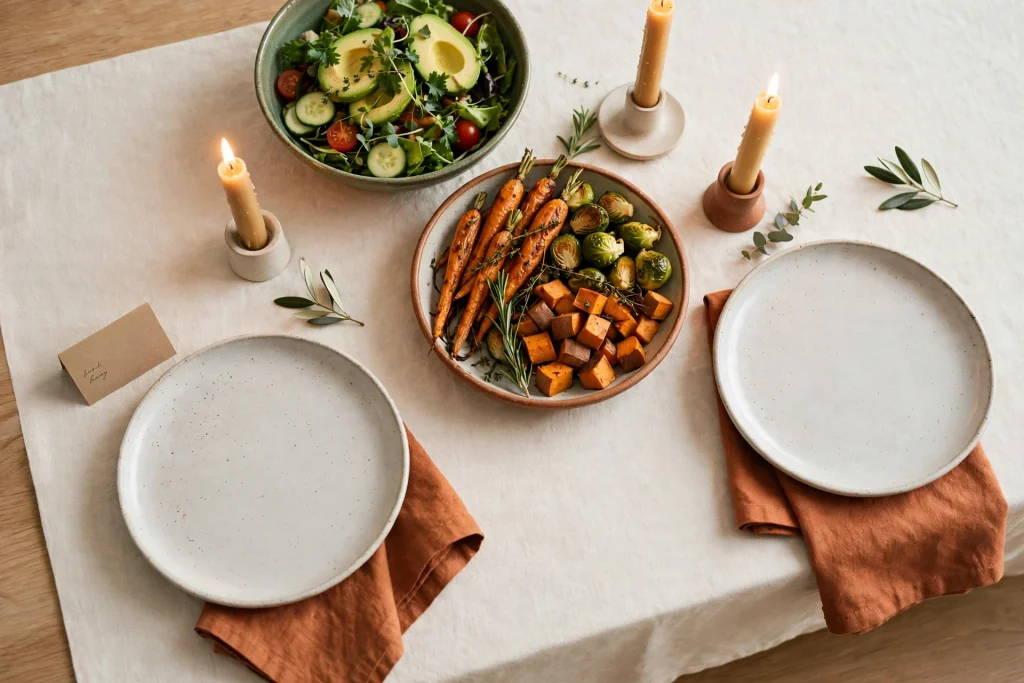
Ask the question in the same message as the invite, not later, not in a separate text nobody reads. “Tell me about any allergies or diets when you reply, so we can cook for you.” That one line does three things. It keeps someone with a nut allergy safe, it tells the vegetarian in the group that they will actually have something to eat, and it tells your cooks what they can and cannot put in their dishes. Pass the answers on to the group when you share the sign-up list, so the person bringing the salad knows to skip the nuts. Nobody wants to sit at a Friendsgiving table and eat bread while everyone else eats the meal.
Best for: Every group, and especially any group with a vegetarian, a vegan, or someone with a serious allergy.
Cost: Free. Time: One extra line in the invite.
Do not make a big deal of it, and do not ask people to explain themselves. Just ask, write the answers down, and share them with the cooks. Then make sure at least two dishes on the table work for everyone, so nobody has to eat around the edges of the meal.
You may also like: Living Room Decor Ideas That Feel Cozy and Clean
4. Pick a Simple Theme So Guests Know What to Expect
A theme is not a costume party. It is one sentence that tells your guests what kind of night this is. “Classic harvest dinner, turkey and pie, candles on the table.” Or “Pajama Friendsgiving, wear your softest clothes.” Or “Pie night, bring your best pie and we will rank them.” That one sentence tells people what to wear, what kind of dish to bring, and whether the night will feel like dinner or like a night in on the sofa. It also makes the friendsgiving decor easy, because you only need the decorations that fit the sentence. A theme is the difference between a party that feels planned and a party that feels thrown together, and it is one of the simplest friendsgiving ideas you will ever use. It costs nothing.
Best for: Groups who have never done this before, and hosts who want the night to feel special without spending a fortune on decorations.
Cost: Free. Time: About 5 minutes to choose.
Pick the theme that fits your friends, not the one that looks best on the internet. If your group loves to cook, do a global potluck and ask everyone to bring a dish from their family or a place they love. If your group is tired and busy, do pajamas. The theme should make the night easier, not harder. If it starts to feel like work, pick a simpler one.
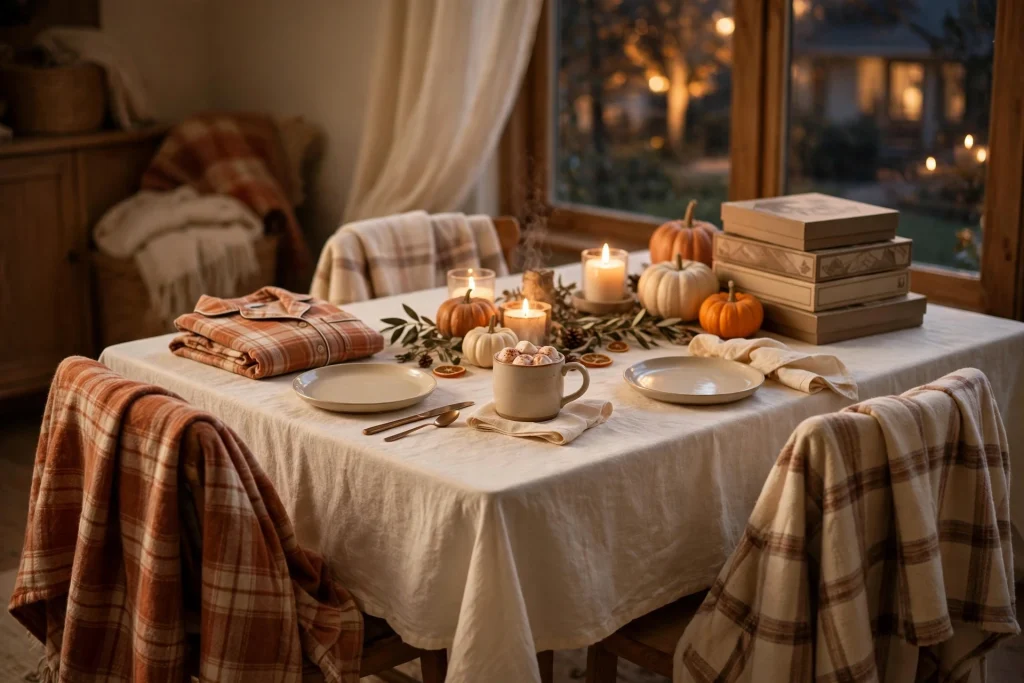
You may also like: How to Style a Boho Apartment: A Complete Guide to a Warm and Relaxed Space
The Room and the Table
Once the plan is set, the room is next. Friendsgiving decor does not need to be expensive or elaborate. It needs to make a normal living room feel like somewhere worth gathering, and it needs to leave the table clear enough for people to eat and talk. Good friendsgiving table decor is simple and low, and these five ideas do that for very little money, and most of them take under an hour.
5. Set One Hero Table and Let the Rest of the Room Stay Simple
Pick one table to be the star and let the rest of the room stay the way it is. The dining table gets the tablecloth, the candles, the centerpiece, and the good plates. The sofa, the sideboard, and the kitchen counter stay simple, maybe one pumpkin each and nothing else. One beautiful table looks intentional. Decorations spread thin across every surface look like clutter, and they cost five times as much. Your guests will spend the whole night at the table, so that is where the effort goes. That is the whole point of friendsgiving table decor. One table, done well, and the room takes care of itself. The rest of the room just needs to be clean, warm, and lit well.
Best for: Small apartments, first-time hosts, and anyone on a tight budget.
Cost: A tablecloth and candles, about 15 to 25 dollars. Time: About 30 minutes to set the table.
Stand in the doorway and look at the room the way a guest will. Your eye should land on the table first. If it lands on three different decorated corners, take two of them away. The table is the hero. Everything else is background.
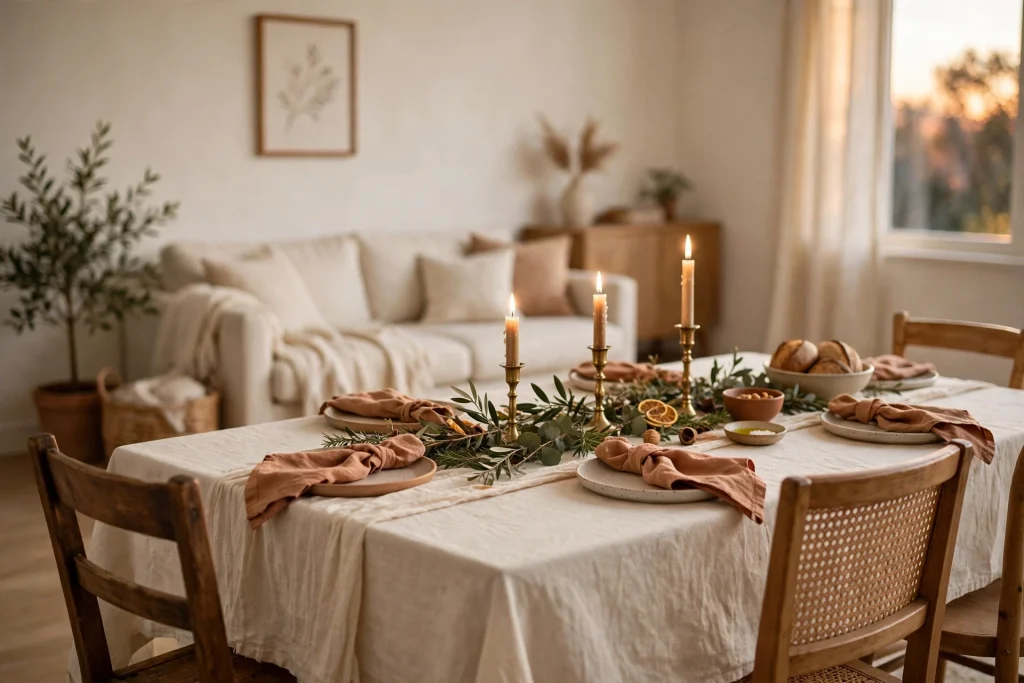
You may also like: Living Room Decor Ideas That Feel Cozy and Clean
6. Run a Kraft Paper Tablecloth and Leave Pens Out for Notes and Doodles
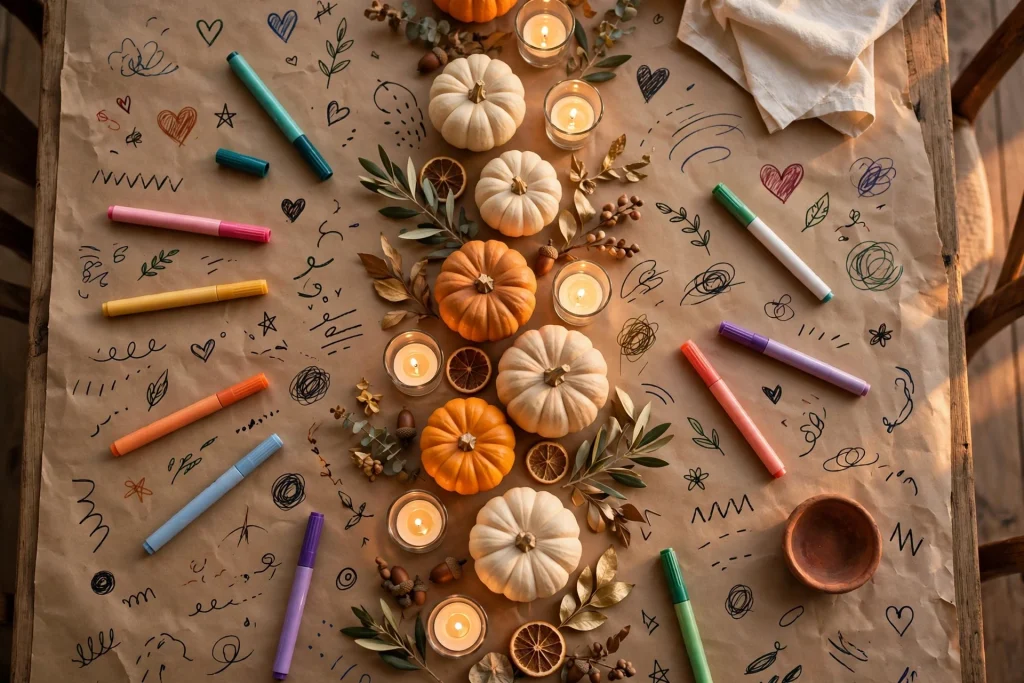
Roll brown kraft paper down the whole length of the table and leave pens and markers on it. That is the whole idea, and it is the best decoration in the room by the end of the night. People doodle, they write notes to each other, they draw terrible turkeys, and by dessert the tablecloth is covered in jokes and messages. It costs almost nothing, it protects the table underneath, and when the night is over you roll it up and throw it away. No washing, no folding, no storing a tablecloth you will use once a year. Put a few pens at each place, not just one in the middle, or nobody will reach for them.
Best for: Casual groups, groups with kids, and any host who hates laundry.
Cost: A roll of kraft paper and a pack of pens, about 8 to 12 dollars. Time: About 5 minutes to roll out.
Use the thick paper, not the thin stuff that tears when someone leans on it. And put a real tablecloth underneath if your table is precious, because a spilled glass of cider will soak straight through paper. The pens should be fine-tipped markers, not ballpoints, or the writing will be too faint to read by candlelight.
You may also like: Cozy Studio Apartment Ideas That Make Small Spaces Feel Bigger and Warmer
7. Make Mini Pumpkins Your Place Cards
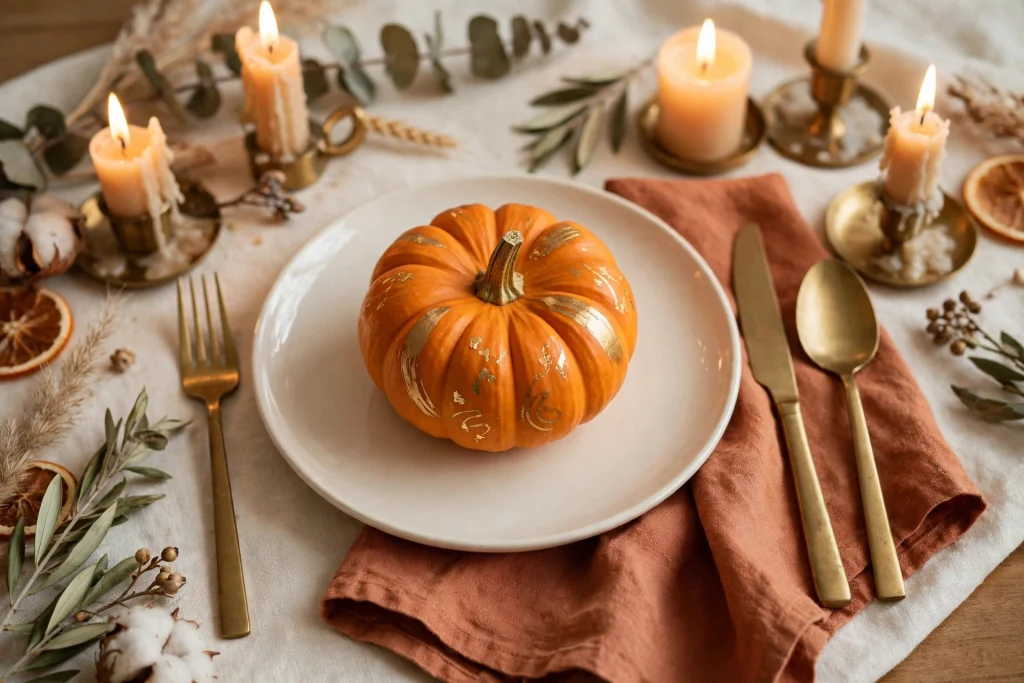
Buy one small pumpkin per guest, write each name on it with a gold paint pen, and put one at each place. That is the place card, the decoration, and the party favour all in one, and it costs about a dollar per person. It also solves the seating question without an awkward announcement, because people find their name and sit down. Mini pumpkins last for weeks, they do not wilt like flowers, and guests take them home, which means you do not have to store them. Buy them a week early so they are not picked over, and write the names the night before so the paint is dry.
Best for: Groups of six to twelve, and any host who wants the table to look thoughtful without spending hours on it.
Cost: About 1 dollar per pumpkin, plus a gold paint pen for about 3 dollars. Time: About 15 minutes to write the names.
Put the pumpkin slightly to the left of the plate, not in the middle of it, or it will be in the way of the food. And if someone in the group has a long name, write it small and neat, or it will wrap around the pumpkin and look like a label on a jar. Test the pen on one pumpkin first, because some paint pens bleed on pumpkin skin.
You may also like: 7 Entryway Ideas That Make Your Home Feel Put Together Instantly
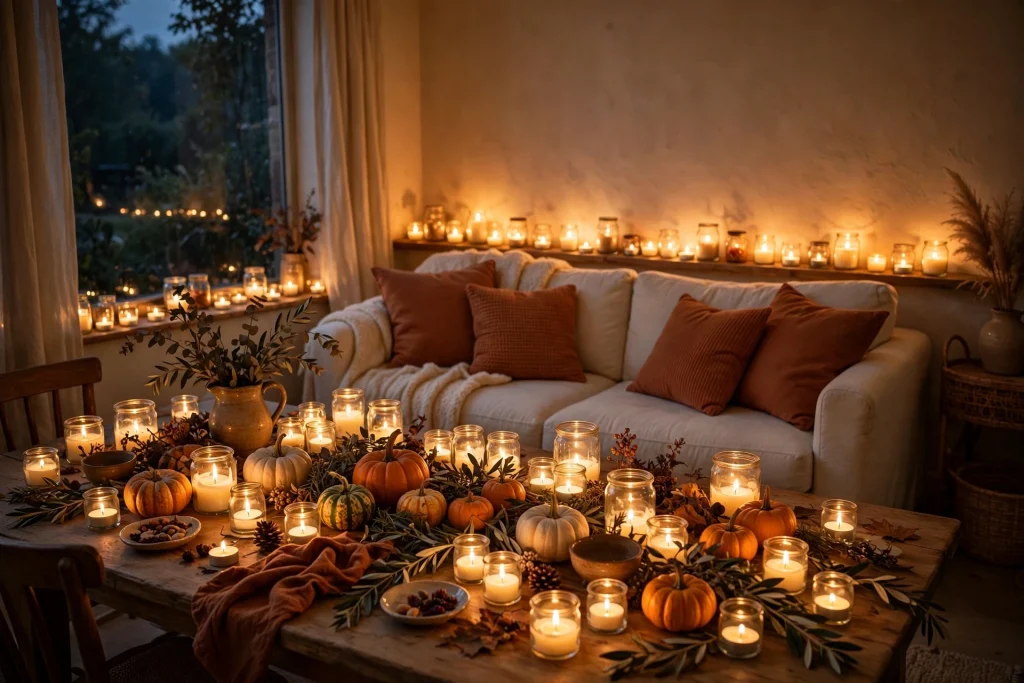
8. Light the Room With Tea Lights in Jars, Not the Overhead Light
Put tea lights in glass jars, dozens of them, all over the room. On the table, on the windowsill, on the sideboard, on the kitchen counter. Then turn the overhead light off. Candlelight does more for a room than any decoration you can buy, and it is the cheapest friendsgiving decor there is. It costs almost nothing. It makes everyone look good, it makes the food look good, and it makes a plain room feel like somewhere special. The overhead light makes the same room feel like a kitchen at noon. Use the little battery tea lights if you have kids or a cat, because nobody wants to spend the night worrying about a knocked-over candle.
Best for: Evening parties, small rooms, and any host who wants the biggest change for the least money.
Cost: A bag of tea lights and a few glass jars, about 10 to 15 dollars. Time: About 10 minutes to set them out.
Put the jars on a tray or a plate, not directly on the wood, because hot glass marks a table. And light them all at once, right before the first guest arrives, so the room is already glowing when the door opens. If you light them one by one as people arrive, the room never quite gets there.
You may also like: Mirror Wall Decor Ideas That Make Your Living Room Feel Bigger and Better
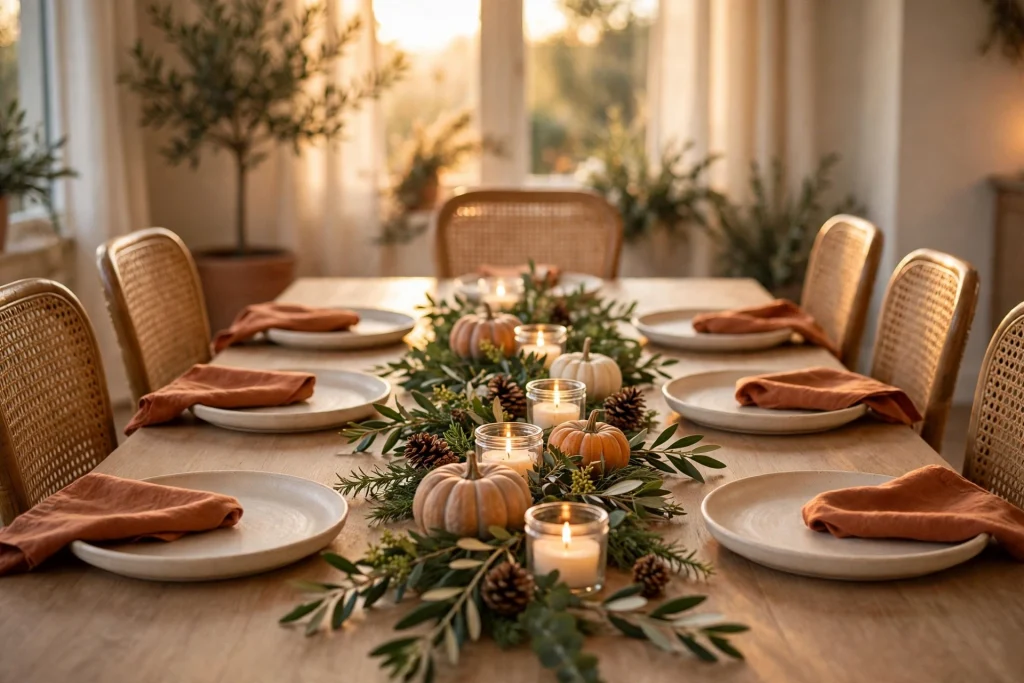
9. Build a Low Centerpiece So People Can See Each Other Across the Table
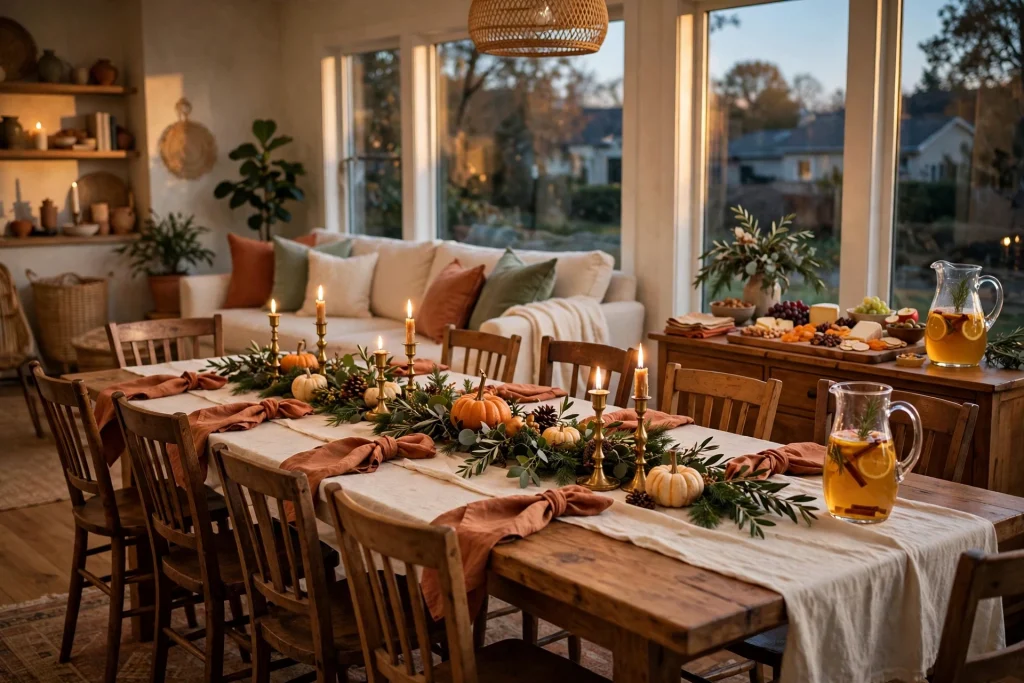
The centerpiece should be low, long, and flat. A runner of greenery, a few small pumpkins, some pinecones, and tea lights in jars, all sitting no higher than a coffee mug. That is it. The moment the centerpiece gets tall, with flowers or branches sticking up, the people across the table disappear behind it, and the whole night becomes a conversation with the person next to you instead of the person across from you. A low centerpiece keeps every face visible, and it leaves room for the serving dishes, which is the whole point of the table. Build it the morning of the party, in about twenty minutes, and then leave it alone. This is friendsgiving table decor at its simplest, and it works because it stays low and out of the way.
Best for: Any table, and especially long tables where people sit across from each other.
Cost: Greenery from the garden or the grocery store, plus pumpkins and pinecones, about 10 to 20 dollars. Time: About 20 minutes to build.
Walk around the table after you build it and sit in every chair. If you cannot see the face of the person opposite you, take something out. The centerpiece is there to make the table look good, not to hide the guests from each other. When in doubt, take the tallest thing out first.
You may also like: Wall Decor Ideas That Look Clean and Modern
The Food and the Drinks
Food is the reason everyone comes, and it is the part most hosts overthink. Friendsgiving food does not need to be fancy. It needs to be hot, it needs to be enough, and it needs to arrive at the table without the host disappearing into the kitchen for an hour. These five friendsgiving dinner ideas cover the main dish, the sides, the first hour, the dessert, and the drinks, and none of them asks the host to cook the whole meal.
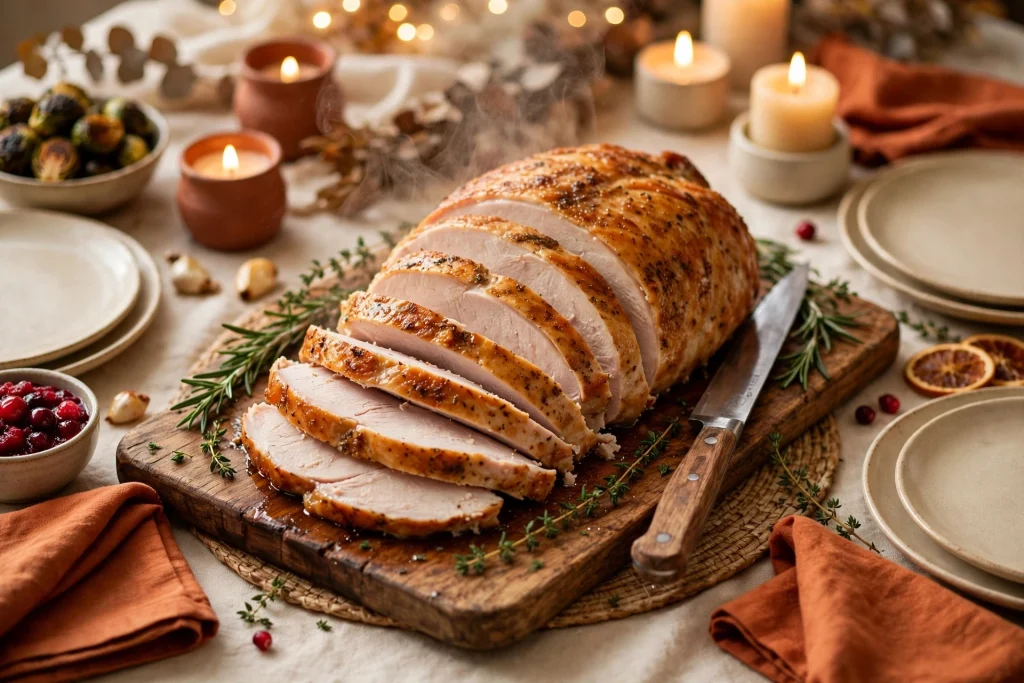
10. Cook a Turkey Breast, Not a Whole Bird
A whole turkey for eight people means a day of roasting, a fridge full of leftovers, and a host who is too tired to enjoy dinner. A turkey breast roasts in a fraction of the time, carves in five minutes, and still feels like the centrepiece of the meal. Buy one breast, or two if your group is big, rub it with butter and herbs the night before, and roast it while the guests are arriving. Use a meat thermometer and take it out at 165 degrees in the thickest part. Let it rest for fifteen minutes while everyone finds their seat, then carve it at the table so people can see it. Nobody at a Friendsgiving has ever complained that the turkey was not a whole bird. They complain when it is dry, so do not overcook it. That is why the best friendsgiving dinner ideas keep the main dish simple. One breast, done well, and the rest is potluck.
Best for: Groups of six to twelve, first-time hosts, and anyone with a small oven.
Cost: A turkey breast runs about 20 to 35 dollars. Time: About 15 minutes of prep, 1 to 1.5 hours in the oven, mostly hands-off.
If you have a vegetarian in the group, roast a tray of stuffed squash or a big lasagne at the same time, so they have a real main dish and not just the sides. And save the pan juices for gravy, because a little gravy makes a turkey breast taste like it took all day.
You may also like: 7 Easy Desserts Anyone Can Make at Home (No Fancy Skills Needed)
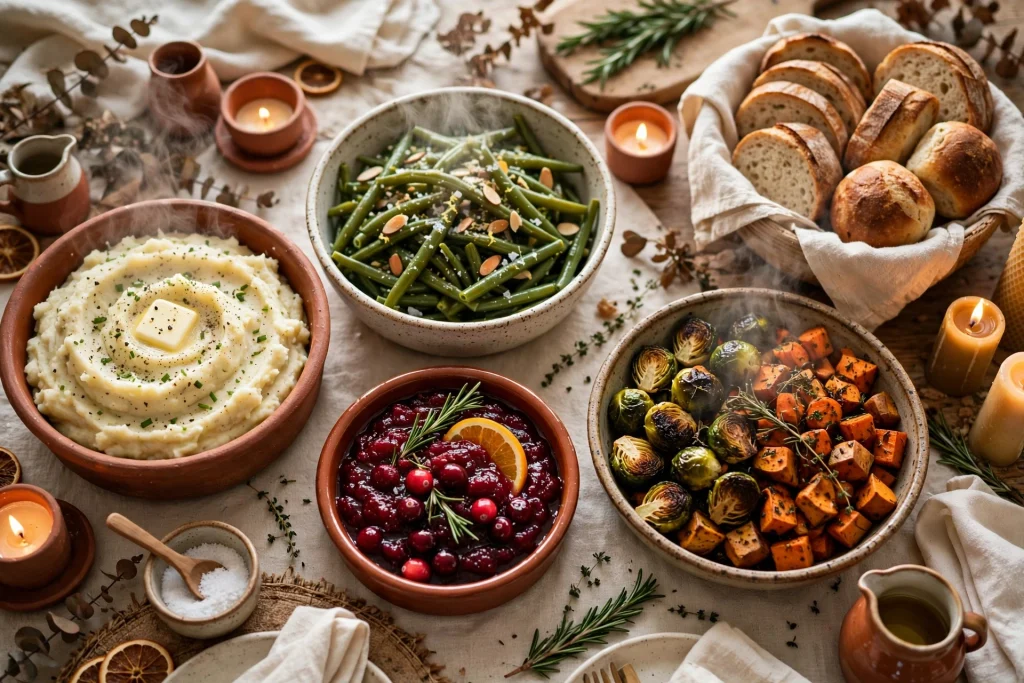
11. Let the Potluck Cover the Sides, and Give Each Guest a Category
You cook the main. Everyone else cooks the sides. That is the deal, and it is the whole reason a potluck works. But do not just tell people to bring a side. Give each person a category from the sign-up list: one person brings the mashed potatoes, one brings the green beans, one brings the cranberry sauce, one brings the bread. When the categories are assigned, the menu covers itself, and nobody shows up with the same dish as the person next to them. These are the friendsgiving recipes people ask for by name, and they are the reason the potluck works. Tell people to cook at home and bring the dish ready to serve, because your oven will be full and your counter will be covered. A dish that arrives hot and ready is a gift. A dish that needs forty minutes in your oven is a problem.
Best for: Every Friendsgiving, and especially groups where everyone likes to cook.
Cost: Free for the host, the guests cover the sides. Time: About 10 minutes to assign the categories.
Keep a copy of the list on your phone and check it when each dish arrives. If a side is missing, you will know before everyone sits down, and you can stretch what you have. And keep the serving spoons near the dishes, because the one thing every potluck forgets is the serving spoon.
You may also like: Cozy Studio Apartment Ideas That Make Small Spaces Feel Bigger and Warmer
12. Set Up a Grazing Table for the First Hour
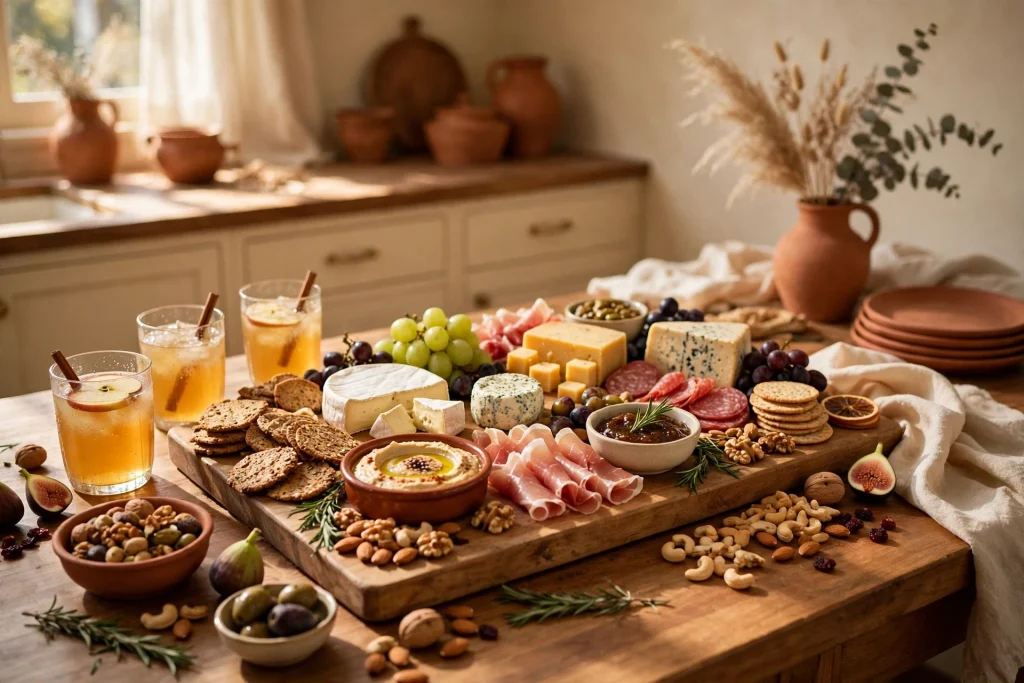
People arrive hungry and the main dish is not ready yet, so give them something to eat while they wait. A grazing table is a big board, or the kitchen counter, covered with cheese, crackers, grapes, nuts, cured meat, and a few dips. No cooking, no heating, just good things laid out so people can pick at them while they talk. It keeps everyone out of the kitchen while you finish the main dish, and it turns the awkward first twenty minutes, when nobody knows where to stand, into the easiest part of the night. That is friendsgiving food doing its job, keeping people happy while the real cooking finishes. Put it away from the dining table, near the drinks, so people gather there instead of crowding the stove.
Best for: Groups that arrive at different times, and any host who wants the first hour to run itself.
Cost: About 25 to 40 dollars for the board, depending on how generous you are. Time: About 20 minutes to lay it out.
Buy the cheese and the meat the day before, and cut everything up before the first guest arrives, so you are not slicing cheese while people are standing around. And put a small sign or a label by anything with nuts, because someone at every party has an allergy and they should not have to ask.
You may also like: Living Room Decor Ideas That Feel Cozy and Clean
13. Run a Dessert Bar and Let Guests Vote for a Winner
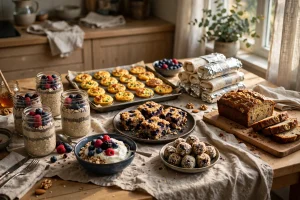
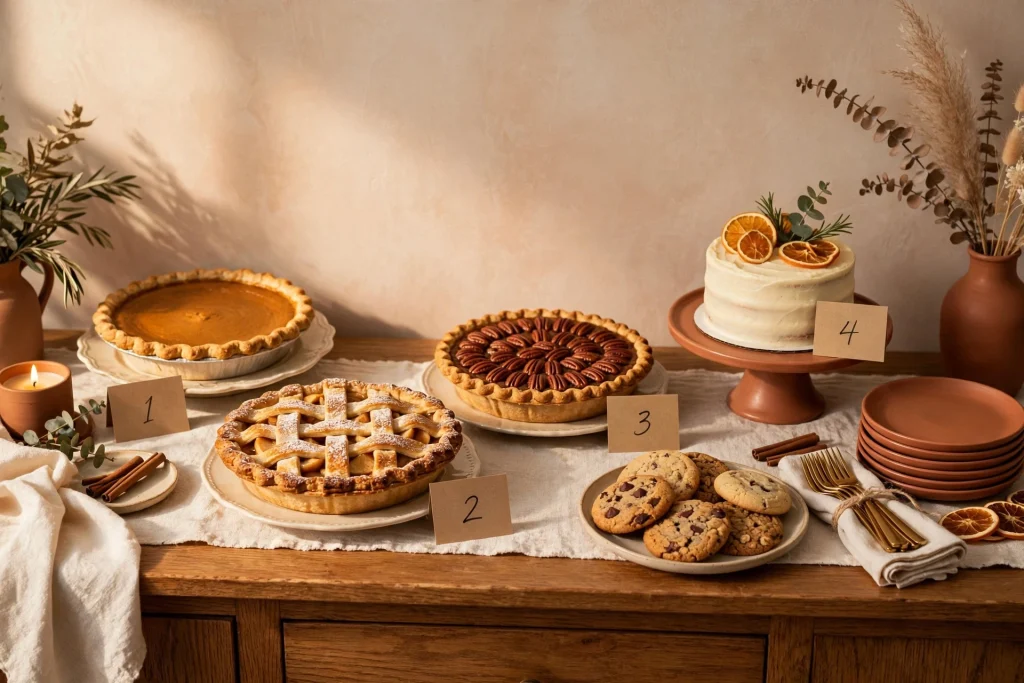
Put all the desserts on one table, or one end of the sideboard, and let people help themselves. Pies, cookies, a cake, whatever your guests brought. Then hand out small cards and let everyone vote for their favourite. Announce the winner before the night ends, and give them something silly, like a wooden spoon with a ribbon on it, or the honour of choosing next year’s theme. A dessert bar turns the end of the meal into an event instead of an afterthought, and the vote gives everyone a reason to try everything. It also solves the problem of six pies, because when there is a contest, six pies is a feature, not a mistake.
Best for: Groups who love to bake, and any party where the desserts outnumber the sides.
Cost: Small cards and pens, about 3 to 5 dollars. Time: About 10 minutes to set up the table.
Cut the pies into small slices for tasting, not big wedges, or nobody will try more than one. And number the desserts instead of naming them, so people vote on taste and not on who made it. Announce the winner while everyone is still at the table, not after half the group has gone home.
You may also like: 7 Easy Desserts Anyone Can Make at Home (No Fancy Skills Needed)
14. Mix One Signature Drink and Keep the Rest Simple
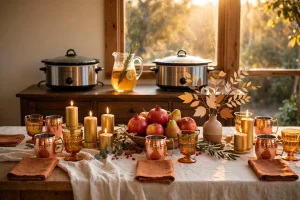
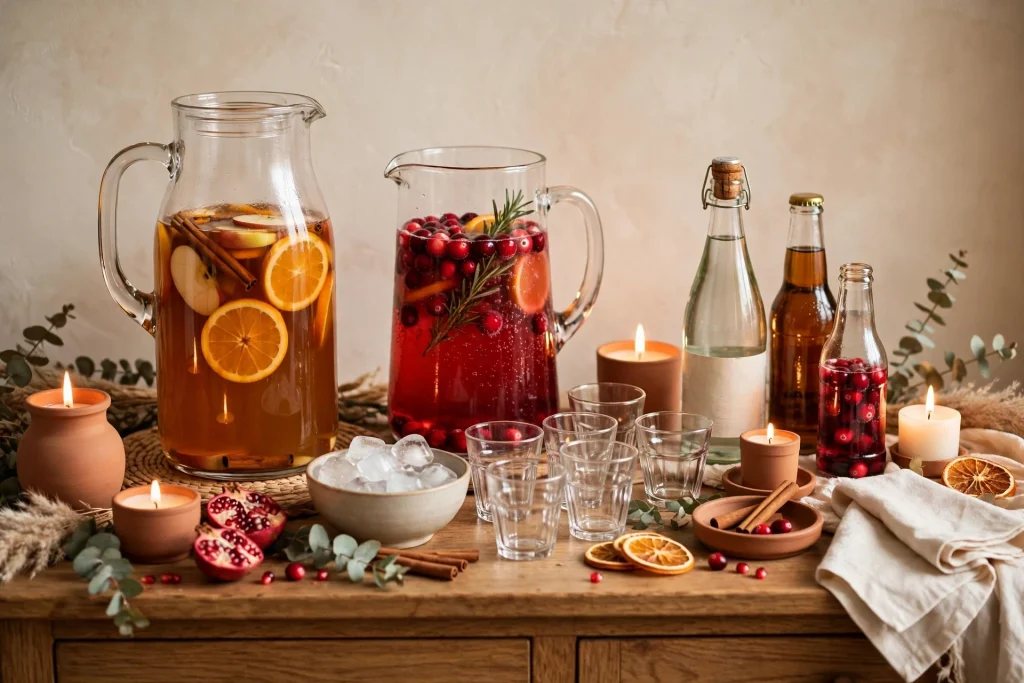
Pick one drink and make it the drink of the night. A big pitcher of apple cider with cinnamon sticks, a cranberry spritzer, a spiced hot chocolate for the kids and the non-drinkers. Make a big batch before anyone arrives, put it in a pitcher or a slow cooker on the sideboard, and let people help themselves. Then keep the rest simple: a few bottles of wine, some sparkling water, and a bottle of something stronger for whoever wants it. One signature drink gives the night a flavour and it gives you something to offer people the moment they walk in. Ten different cocktails means ten trips to the kitchen and a host who never sits down.
Best for: Evening parties, and any host who does not want to play bartender all night.
Cost: A pitcher of cider or spritzer, about 10 to 15 dollars. Time: About 15 minutes to mix.
Make a non-alcoholic version of the same drink, in a second pitcher, so nobody has to ask for something special. Label them clearly, and put both pitchers in the same place, so the choice is quiet and easy. And put the glasses next to the pitchers, not across the room, because people will not cross the room for a glass.
You may also like: 21 Cozy Christmas Living Room Decor Ideas That Make Your Home Feel Magical
The Games and the Moments
Food fills the first hour. The second hour needs something to do. Friendsgiving games work best when they are light, short, and about the people in the room, not about winning. Nobody wants homework after dinner. They want a reason to laugh together for twenty minutes and then go back to talking. These four ideas do that, and none of them needs much preparation.
15. Play Friendsgiving Trivia About the People at the Table
Write ten questions about the people in the room, not about Thanksgiving in general. Who has known the host the longest? Who once got lost in an airport? Who makes the best pie in the group? Who has moved house the most times? Read them out after the main course, hand out small cards for answers, and give a silly prize to the winner. Trivia about the group is funny because everyone in the room knows the answers, or thinks they do. That is what makes friendsgiving games work. They are about the people in the room, not about a quiz book. Trivia about history is a quiz, and nobody came to a party for a quiz. Keep it to ten questions and twenty minutes, then stop, even if people are enjoying it. Ending early is what makes people ask for it again next year.
Best for: Groups who have known each other a while, and any party that needs a little energy after dinner.
Cost: Paper and pens, about 2 to 3 dollars. Time: About 20 minutes to write the questions, 20 minutes to play.
Write the questions the day before, not on the day, or you will be writing them while the turkey rests. And keep the questions kind. The point is to laugh with people, not to embarrass anyone. If a question could make someone uncomfortable, leave it out.
You may also like: Cozy Bedroom Ideas That Feel Relaxing
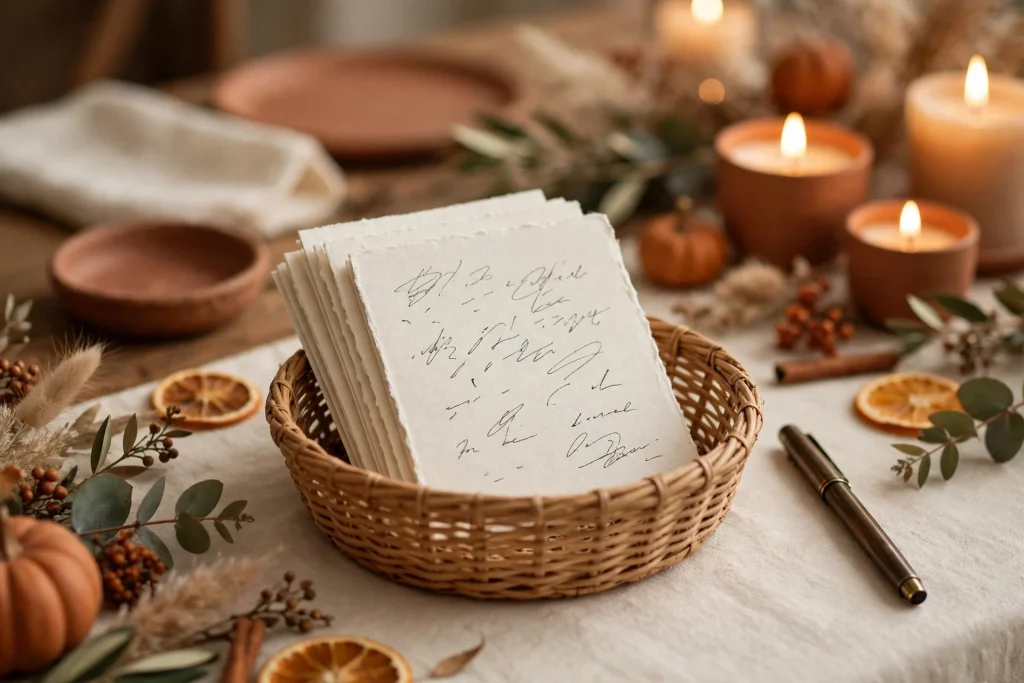
16. Run the Gratitude Guessing Game
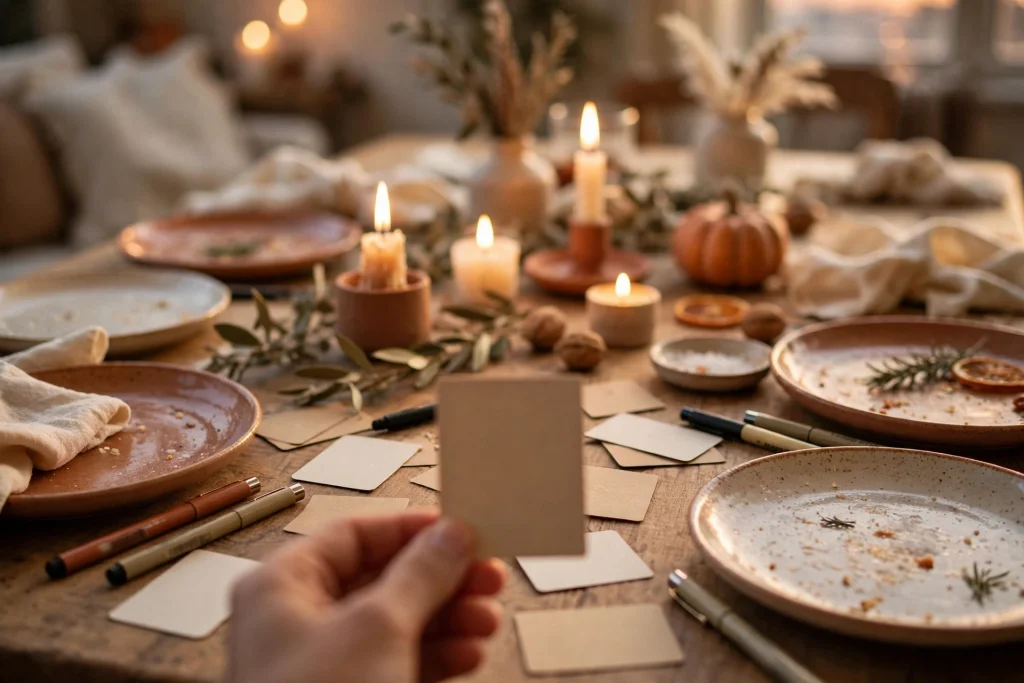
Hand out a small card to each person and ask them to write one thing they are grateful for this year, without their name on it. Collect the cards, shuffle them, and read them out loud one by one. After each one, the group guesses who wrote it. It sounds simple, and it is, but it turns into the best part of the night, because the guesses start arguments, the arguments start stories, and the stories are the reason everyone came. Some cards will be funny. Some will be honest in a way that surprises you. Both are fine. Keep the cards anonymous and let people guess, because guessing is what makes it a game instead of a speech. It is the kind of friendsgiving game that works in any group, because it needs nothing but cards and people who know each other.
Best for: Close groups, and any party where you want one real moment in the middle of the fun.
Cost: Small cards and pens, about 2 to 3 dollars. Time: About 15 minutes to play.
Read the cards yourself, as the host, so the pace stays quick. If you hand the reading to the group, it slows down and people start performing. And do not force anyone to claim their card. Some people would rather stay anonymous, and that is fine. The game works either way.
You may also like: 10 Creative Kids Room Design Ideas That Feel Fun, Cozy, and Practical
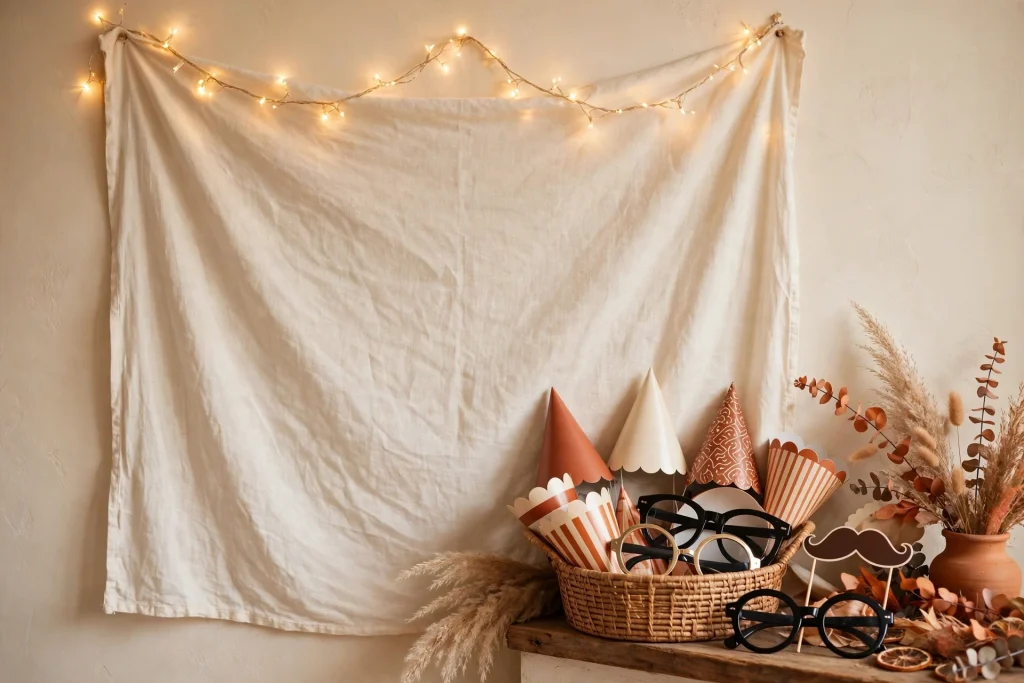
17. Set Up a Photo Booth Corner With a Few Silly Props
Pick one corner, hang a plain sheet or a piece of fabric on the wall, and put a small basket of props beside it. Paper turkey hats, oversized glasses, a cardboard sign that says something silly, a few fall leaves. That is the whole photo booth. People will use it on their own, in small groups, all night, and by the end of the evening you will have a dozen photos that are better than any posed group shot. Do not hire anything, do not buy a kit, and do not put the photo booth in the middle of the room, or it will block the walkway. A corner, a sheet, a basket of props. That is enough.
Best for: Groups who love photos, and any party where you want pictures without organising a photoshoot.
Cost: A sheet you already own, plus a few props for about 5 to 10 dollars. Time: About 15 minutes to set up.
Put the photo booth near the drinks, not near the dining table, so people drift to it naturally between courses. And put a small sign that says where to send the photos, like a shared album or the group chat, or the photos will live on twelve different phones and nobody will ever see them together.
You may also like: Mirror Wall Decor Ideas That Make Your Living Room Feel Bigger and Better
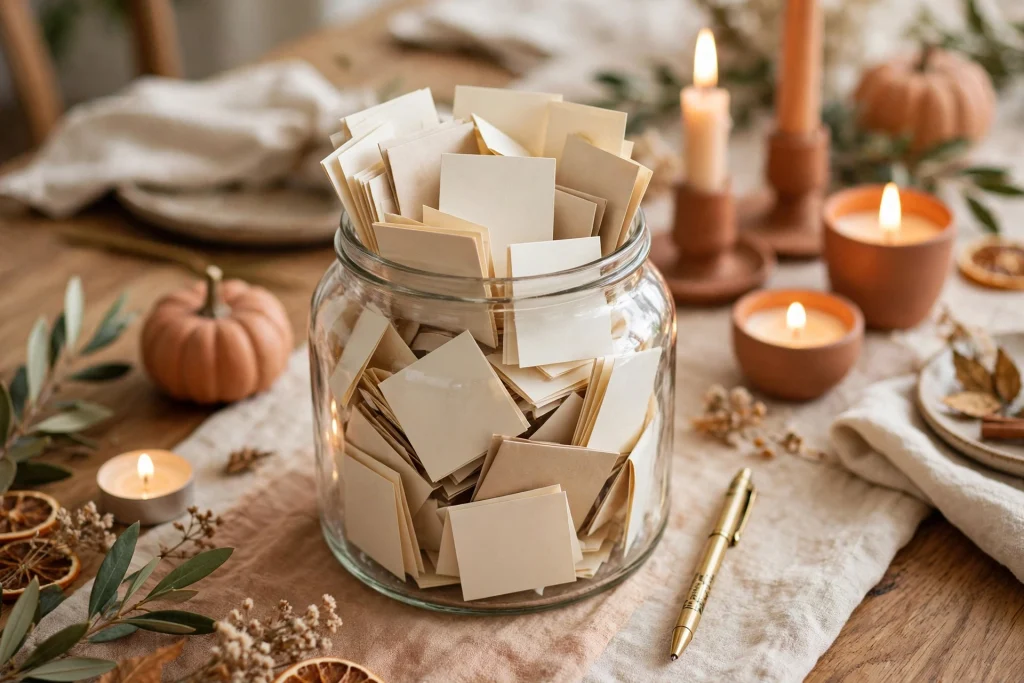
18. Pass Around a Gratitude Jar and Read the Notes Aloud
Put an empty jar on the table when people arrive, with small slips of paper and a pen beside it. Ask everyone to write a note to someone at the table, one sentence, and drop it in the jar. No names on the outside, just the note. After dessert, pass the jar around and let each person pull out a note and read it aloud, then guess who it was for. It is quiet, it is kind, and it is the thing people talk about on the drive home. Some notes will be jokes. Some will be the nicest thing someone has heard all year. Both are worth reading out loud. Keep the jar on the table all night, not hidden away, or people will forget it is there.
Best for: Any group, and especially groups who have been through a hard year together.
Cost: A jar, paper, and a pen, about 2 to 3 dollars. Time: About 15 minutes to read the notes.
Use small slips, not big cards, or people will write essays and the reading will take an hour. One sentence is the rule. And if someone pulls out their own note, let them read it and laugh, then pull another one. It happens every time and it is always funny.
You may also like: Cozy Warm Bedroom Aesthetic with Simple Bedding Ideas That Actually Work
The Outfits and the Finishing Touches
The last group is the small stuff, and small stuff is what makes a party feel finished. Friendsgiving outfits, music, recipe cards, leftovers, and a thank-you. None of these takes more than a few minutes, and none of them costs much. But leave them out and the night feels a little unfinished, like a meal with no dessert.
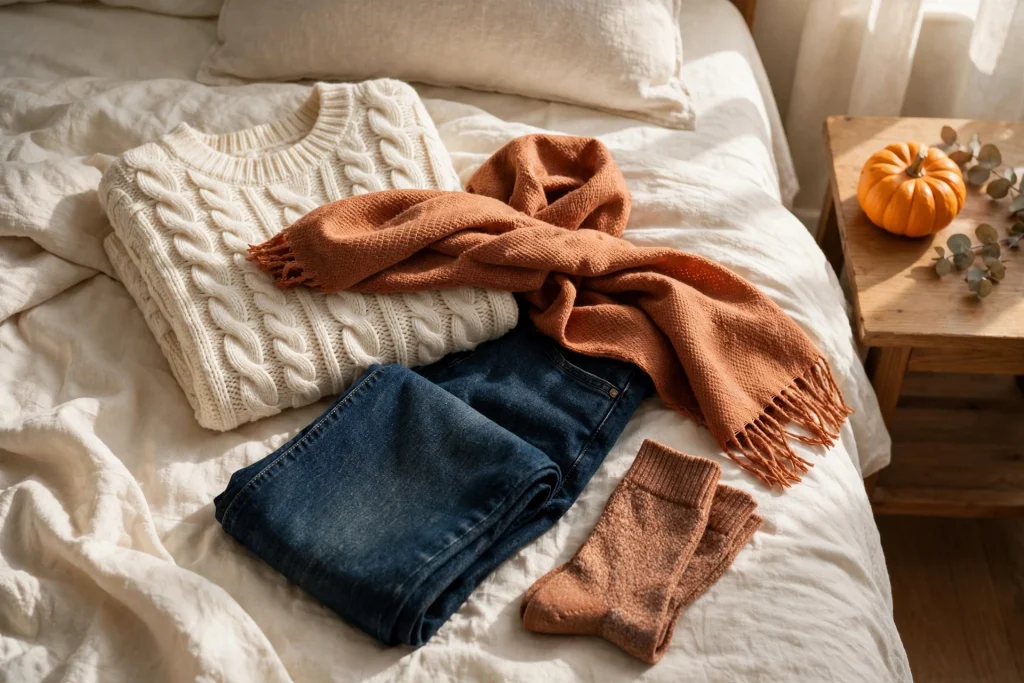
19. Tell Guests the Dress Code in Plain Words
Say what to wear in the invite, in plain words. “Come as you are, cozy clothes, no need to dress up.” Or “Smart casual, a nice sweater is plenty.” That is the whole idea. People stress about what to wear to a party more than they admit, and a clear dress code takes that stress away. Most Friendsgiving outfits should be comfortable, because people will be sitting for two hours and eating a lot, and nobody wants to spend the night tugging at a tight waistband. If you are doing a pajama theme, say so clearly, because the one person who shows up in jeans while everyone else is in flannel will remember it for a year. Plain words, in the invite, and the problem is solved.
Best for: Every party, and especially any party with a theme.
Cost: Free. Time: One extra line in the invite.
Do not make the dress code a joke or a riddle. “Dress fancy” means different things to different people, and half your guests will guess wrong. Say exactly what you mean, and give an example if it helps. “A sweater and jeans is perfect” is clearer than “smart casual” will ever be.
You may also like: How to Style a Boho Apartment: A Complete Guide to a Warm and Relaxed Space
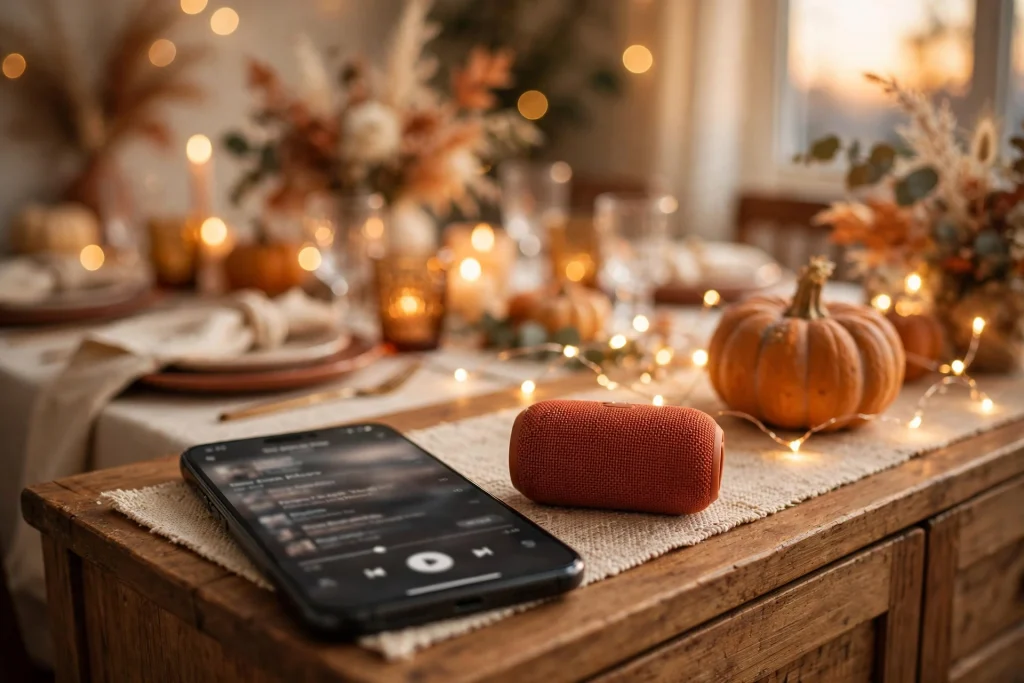
20. Make a Playlist Before Anyone Arrives and Let It Run Itself
Make the playlist the day before, put it on, and do not touch it again all night. Three hours of music, a mix of soft acoustic songs, a few old favourites, and nothing too loud. The music should be loud enough to fill the silence when nobody is talking, and quiet enough that nobody has to raise their voice. That is the whole job of a party playlist. Do not let guests take turns choosing songs, or the night becomes a debate about music. Do not play one album on repeat, or people will notice by the third song. Make the playlist, press play, and forget about it. It is one of those friendsgiving ideas that costs nothing and changes the whole room. If someone asks for a song, add it to the end of the list and move on.
Best for: Every party, and especially hosts who want the room to feel warm from the moment the door opens.
Cost: Free, with any music app. Time: About 30 minutes to build the list.
Start the music before the first guest arrives, not after, so the room is already alive when the door opens. A silent room makes the first guest feel like they are too early. A room with soft music feels like a party that has already started, and that is exactly what you want.
You may also like: Wall Decor Ideas That Look Clean and Modern
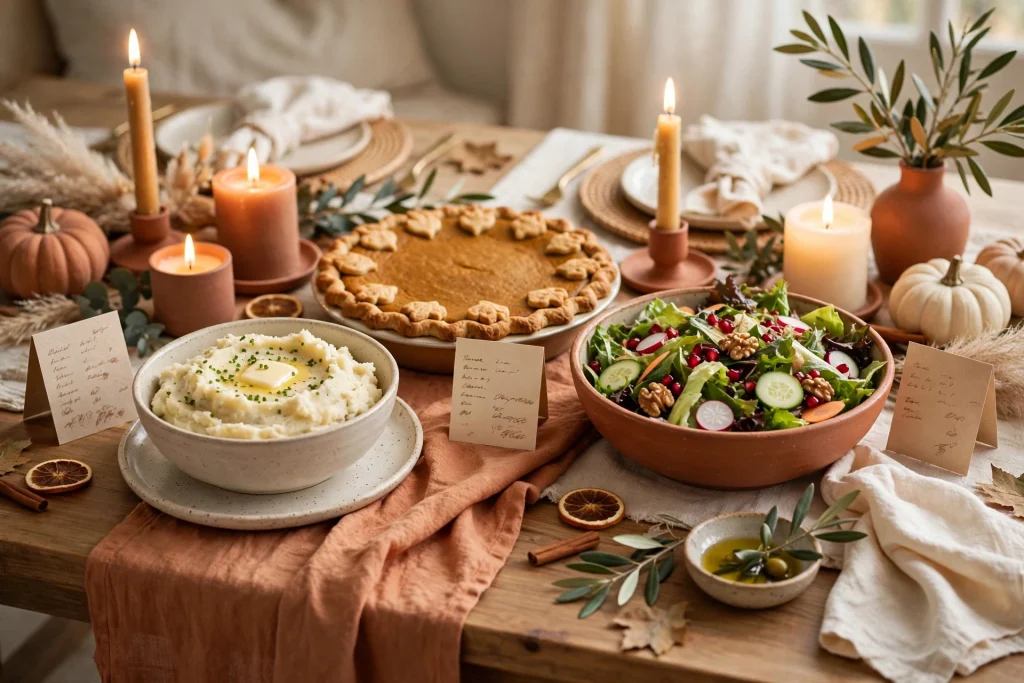
21. Put a Recipe Card by Every Dish So Nobody Has to Ask Who Made What
At the end of every potluck, someone asks who made the sprouts, and someone promises to send the recipe, and nobody ever does. Fix it with a small card by every dish. The name of the dish, who made it, and the recipe written out or a code that links to it. It takes five minutes, it costs almost nothing, and it is the thing your guests will thank you for most, because everyone goes home with the friendsgiving recipes they actually wanted. Put the cards out when the dishes arrive, not after dinner, or the dishes will be half empty and the cards will be an afterthought.
Best for: Groups who love to cook, and any potluck where the food is the star.
Cost: Small cards and pens, about 2 to 3 dollars. Time: About 5 minutes to write the cards.
Ask each guest to bring their friendsgiving recipes on a card with their dish, so you are not writing twelve cards yourself. A handwritten card is better than a printed one, because it feels personal, and because a handwritten card is the one people keep. If someone forgot their card, hand them a blank one and a pen when they arrive. It takes thirty seconds.
You may also like: 7 Easy Desserts Anyone Can Make at Home (No Fancy Skills Needed)
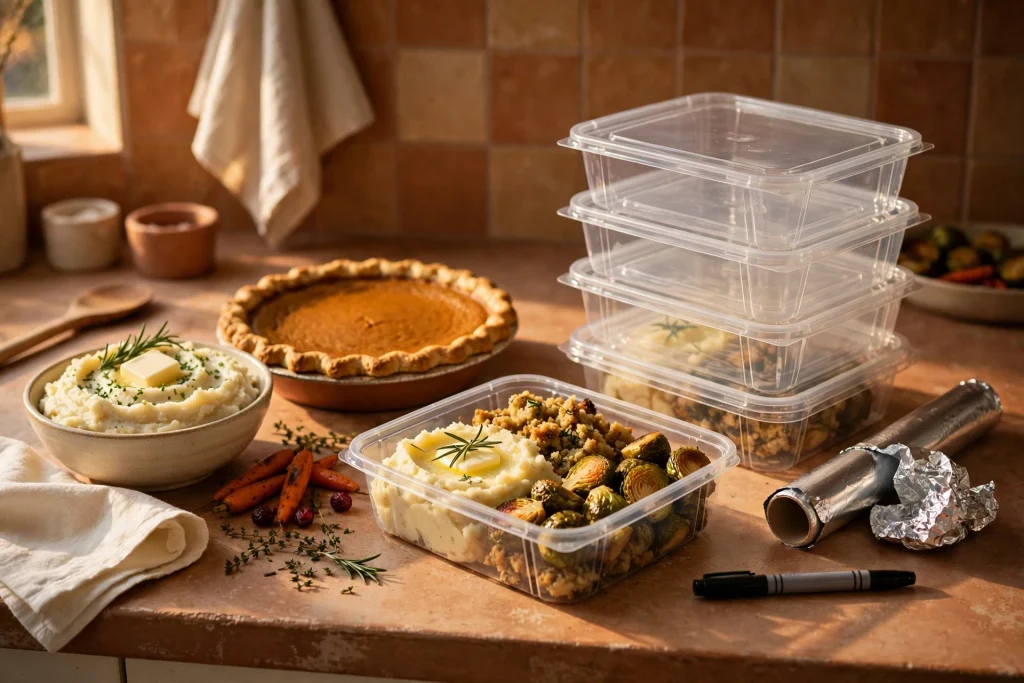
22. Pack Leftovers Into Take-Home Boxes Before People Leave
Have take-home boxes ready, and start packing leftovers before people leave, not after. A stack of small containers, some foil, and a marker to write names on the lids. When the meal is over, fill a box for each person with a little of everything, and hand it to them at the door. People love leftovers, and they love them even more when they do not have to ask for them. It also solves the problem of a fridge full of food that nobody eats, because the food goes home with the people who want it instead of sitting in your fridge for a week. Buy the boxes a few days early, because the shops sell out of them in November.
Best for: Every party, and especially any party where the food outnumbers the guests.
Cost: A pack of take-home containers, about 5 to 8 dollars. Time: About 10 minutes to pack.
Do not pack the leftovers after everyone has gone, or you will be standing alone in the kitchen with a fridge full of food and no appetite. Pack them while people are still there, while the table is being cleared, so it feels like part of the night and not a chore. And keep a little back for yourself, because you will want it for lunch tomorrow.
You may also like: Cozy Studio Apartment Ideas That Make Small Spaces Feel Bigger and Warmer
23. Send a Short Thank-You the Next Morning With the Group Photo
The morning after, send one message to the group. Thank everyone for coming, name one thing that was good, and attach the group photo. That is it. “Thank you all for last night. The pie contest was the best part, and Dan’s trivia questions were brutal. Here is the photo, and here is the recipe for the turkey breast for anyone who asked.” A short thank-you the next morning does two things. It tells people the night mattered, and it keeps the group talking for another day. It also sets up next year, because the people who got a thank-you are the people who will say yes first when you invite them again. Send it before noon, while the night is still fresh, or it will feel like an afterthought.
Best for: Every host, and especially anyone who wants this to become a yearly tradition.
Cost: Free. Time: About 5 minutes to write and send.
Pick the best group photo, the one where everyone is laughing, not the one where everyone is posed and stiff. And do not send twelve photos. One good photo is worth more than a whole album nobody opens. If someone in the group hates photos of themselves, ask before you send it to the whole group, or crop them out kindly.
The 1-2-3 Friendsgiving Method: How to Host Without Doing Everything Yourself
Here is the part most Friendsgiving lists skip. A list of 23 ideas is not a plan. It is a wish list. If you try to do all 23, you will spend the whole week cooking and the whole night in the kitchen, and you will not enjoy your own party. So here is the simple ratio I use when I host, and it works every time.
The 1-2-3 Friendsgiving Method
1 Main Dish — Cook 1 main dish and nothing else from the oven. A turkey breast, a roast chicken, a lasagne, a tray of stuffed squash. That is the one thing you are responsible for, and it is the only thing that needs the oven. Everything else comes from your guests, from the grazing table, or from the shop. When the host cooks one main dish, the host gets to sit down. When the host cooks five dishes, the host gets to wash up. Pick your one dish and do it well.
2 Jobs per Guest — Every guest does 2 small jobs. They bring one dish, and they do one small thing. Bring a side and bring the ice. Bring a dessert and take the group photo. Bring the drinks and bring the game. Two jobs each, both small, and the whole night gets shared out. Nobody carries the evening alone, and nobody shows up empty-handed. When you give people a second job, you are not being demanding. You are giving them a way to belong to the night, and people like belonging to something.
3 Days of Prep — Spread the work over 3 days, not one frantic day. Two days before, you shop and set the table. One day before, you prep what can be prepped and chill the drinks. Party day, you cook the main dish and open the door. Three days of light work beats one day of panic every time, and it means nothing is left to the last hour. If a job cannot be done in one of those three days, it does not need doing.
That is it. 1 main dish, 2 jobs per guest, 3 days of prep. No Friendsgiving needs more than that to feel like a party.
Before the 1-2-3 Friendsgiving Method
- A host cooking five dishes and missing the whole night
- Six people bringing pie and nobody bringing a side
- A vague invite with no date, no time, and no ask
- A table so crowded with decorations that nobody can see each other
- A fridge full of leftovers nobody takes home
- A night that feels like a potluck that got out of hand
After the 1-2-3 Friendsgiving Method
- 1 main dish, cooked well, and the host sitting down to eat it
- 2 jobs per guest, so the whole night is shared out
- 3 days of light prep, so nothing is left to the last hour
- A table people can talk across, with room for the food
- Leftovers packed into boxes before anyone leaves
- A night that feels like a party, and a tradition worth repeating
Pick your 1, your 2, and your 3 from the 23 friendsgiving ideas above. Write them down. Then stop. The night is planned.
At a Glance: Every Idea, Its Cost, and Its Time
| Group | Ideas | Budget | Time to do them all |
|---|---|---|---|
| The Invitations and the Plan | 1 to 4 | Free to 10 dollars | About 30 minutes |
| The Room and the Table | 5 to 9 | 15 to 40 dollars | About 1 hour |
| The Food and the Drinks | 10 to 14 | 30 to 80 dollars (the main dish is the big cost) | 2 to 3 hours |
| The Games and the Moments | 15 to 18 | Under 15 dollars | About 30 minutes |
| The Outfits and the Finishing Touches | 19 to 23 | Under 20 dollars | About 30 minutes |
Most of these ideas cost under 25 dollars on their own, and most of them take under an hour. The main dish is the only expensive piece, and it feeds everyone. Everything else is small, cheap, and easy to skip if you do not need it.
Do This, Not That
| Do This | Avoid This |
|---|---|
| Send the invite three weeks out with the date and the ask | A vague “sometime in November” text that gets no real answers |
| Give each guest a category on the sign-up list | An open list where six people bring pie |
| Ask about allergies in the invite | Finding out about an allergy at the table |
| Cook one main dish and let the potluck do the rest | Cooking the whole meal yourself and missing the party |
| Keep the centerpiece low so people can see each other | Tall flowers that block faces across the table |
| Light candles and turn the overhead light off | Bright ceiling light all night |
| Plan two games and let the rest happen on its own | A rigid schedule nobody follows |
| Pack leftovers into boxes before people leave | A fridge full of food nobody takes home |
Your Friendsgiving Week
You do not need a whole month to plan a Friendsgiving. One week is enough if you split it right. The invite goes out earlier, but the real work fits into three days.
Two Weeks Out: The Invite and the List
Send the invite with the date, the time, and the ask, and set up the potluck sign-up list with categories and numbers. Ask about allergies in the same message. Pick your theme and tell people what to wear. This is the planning day, and it takes about half an hour. Once the invite is out and the list is pinned in the group chat, the party is already half planned, and you can stop thinking about it for a week.
The Week Of: The Shopping and the Table
Three days before, buy the main dish, the candles, the pumpkins, and the take-home boxes. Two days before, set the table, put the mini pumpkins out as place cards, and build the low centerpiece. One day before, make the signature drink, lay out the grazing table ingredients, and write your trivia questions. Chill the drinks. Charge the speaker. Put the recipe cards and the pens by the door so you do not forget them in the morning. By the night before, the room should already look like a party, and the only job left is the cooking.
Party Day: The Main, the Meal, and the Goodbye
Morning: Put the turkey breast in the oven and let it roast while you set out the grazing table and light the first candles. The best friendsgiving dinner ideas all work this way, the main dish cooks itself while you welcome people in.
Afternoon: Carve the main dish, put the sides on the table, and open the door.
Evening: Eat, play one of the friendsgiving games, do the gratitude round, and vote on the desserts. Before people leave, pack the leftovers into boxes and hand them out at the door. Then turn the lights down, sit on the sofa for ten minutes, and enjoy the quiet. The party is done. Do not start cleaning until tomorrow, and only if you still want to.
Take It Further
If you liked this guide, these are the next ones to read. They build on the same ideas, room by room, and they will help you get the house ready for the people you love.
- 7 Easy Desserts Anyone Can Make at Home (No Fancy Skills Needed)
- Living Room Decor Ideas That Feel Cozy and Clean
- Cozy Studio Apartment Ideas That Make Small Spaces Feel Bigger and Warmer
- 7 Entryway Ideas That Make Your Home Feel Put Together Instantly
- 21 Cozy Christmas Living Room Decor Ideas That Make Your Home Feel Magical
- How to Style a Boho Apartment: A Complete Guide to a Warm and Relaxed Space
- Wall Decor Ideas That Look Clean and Modern
- Mirror Wall Decor Ideas That Make Your Living Room Feel Bigger and Better
Designer’s Cheat Sheet
If you read nothing else, read this.
- The rule: 1 main dish, 2 jobs per guest, 3 days of prep. That is the 1-2-3 Friendsgiving Method, and it is the whole guide in one line.
- The three things: One main dish, a table people can talk across, one moment that is not about the food. If the night has all three, it feels like a party.
- The budget: Most ideas are under 25 dollars. The main dish is the only big cost, and it feeds everyone.
- The time: Three days of light prep, and about 2 hours of cooking on the day.
- The guest rule: Six to twelve people is the sweet spot for one table and one conversation.
- The mistake to avoid: Telling everyone to “just bring something” with no categories. That is how you end up with seven pies and no sides.
- The one thing to do first: Send the invite with the date, the time, and the ask. Everything else follows from that one message.
Questions People Ask
There is no fixed date. Most people hold it on the weekend before Thanksgiving, often the Saturday before, so it does not clash with family plans on the Thursday. In 2026 that Saturday is November 21. Any evening in November works, though, and some groups hold it the weekend after Thanksgiving instead, when everyone is back in town and there are leftovers to share.
Bring a dish that is ready to eat or nearly so, because the host’s oven will be full. Sides, a salad, bread, drinks, or a pie all work. Tell the host what you are bringing first, so you do not end up with five bowls of mashed potato and no dessert. Bring a serving spoon too, because the host will not have twelve, and a dish that arrives ready to serve is worth more than a dish that needs forty minutes in the oven.
No. A turkey breast, a roast chicken, a lasagne, or a big tray of something vegetarian all do the job. The point is the table, not the bird. Most guests will not notice or care what the main dish is, as long as there is enough of it and it is hot when everyone sits down. Pick the main dish you can cook well and enjoy making, and let the potluck cover the rest.
As many as fit around your table, which for most homes is six to twelve. Fewer than six can feel quiet, and more than twelve usually splits the table into two conversations and doubles the dishes. If your list is longer than the table, keep it to the people you would call if something went wrong, and save the rest for the next one. A smaller table with the right people beats a crowded room every time.
A Friendsgiving does not need a perfect house. It needs a warm one, a table where everyone can sit together, and friends who show up with food and stay for the stories. Start with one idea from this list, the one that made you smile, and let the rest follow. Your table will be ready long before the first guest knocks.
Happy hosting. I will see you in the next one.
Neuman